The Week God Claimed the Ordinary

The Week God Claimed the Ordinary
Holiness in Leviticus. For sixteen chapters, the book of Leviticus has been about one thing: how to come to God. Where to stand. What to carry in your hands. How to be clean enough to get close. It is all sanctuary, altar, and priest. And then, over these five days, something changes. God gets up and walks out of the tent.
He doesn't walk out to abandon the ordinary. He walks out to claim it. And He does it one room at a time.
The field. Leviticus 17 insists that every animal be brought to one door, one priest, one God, because Israel kept slipping off to sacrifice in the open country to the se'irim, the hairy ones, the goat-demons of the field. A private altar is how a whole nation drifts. And then comes a small, strange instruction: when a hunter kills, he must pour out the blood and cover it with dust. Alone. In a hurry. With nobody in Israel watching. God bothers to legislate the one moment no one would ever audit, because what you do when nobody is checking is the truest measure of what you actually believe.
The house. Leviticus 18 and 20 walk straight through the front door and legislate for the people inside with no legal standing and no way out. And when the text reaches the children passed through the fire, it says something we rush past: if the community hides its eyes and does nothing, God sets His face against them too. The bystander is named, not just the offender. And notice how God frames the danger. He does not tell Israel they are better than the nations. He says you came out of Egypt and you are going into Canaan, so do not do what either of them did. He assumes they packed some of it. The thing most likely to undo you is rarely out ahead of you. It is usually what you carried in.
The shop and the road. Leviticus 19 opens with be holy, for I am holy, spoken to the whole congregation, and then defines holiness in the least religious terms imaginable. Leave the corners of your field unharvested so the poor can gather with their dignity intact. Pay the worker before sundown. Do not curse the deaf or trip the blind, the two victims who can never catch you. Do not stand idly by while your neighbor bleeds. Holiness here is proximity. It is who you refuse to walk past when walking past would cost you nothing.
The table. Leviticus 21 bars the priest with a physical defect from the altar, and most readers stop there and conclude God is cruel. Three verses later the same passage says he shall eat the bread of his God, both the most holy and the holy. His function is restricted. His belonging is not. The church has been terrible at that distinction, quietly letting people drift to the edge the moment they can no longer perform. Your seat was never contingent on your usefulness at the altar.
The calendar. Leviticus 23 hands Israel the moadim, the appointed times, and the first one listed is not a festival at all. It is the seventh day. Weekly. Ordinary. And the one almost nobody keeps. God's answer to an exhausted, forgetful people was not a feeling. It was a schedule, fixed into the sun and the moon, because rest that is not scheduled does not happen and remembrance that is not scheduled fades.
Lay the five rooms side by side and the thread is unmistakable. In every chapter, God stands beside the person with the least power in the room, and He almost never argues for it. More than a dozen times in a single chapter He simply says, I am the LORD. An ethic built on reasoning can be out-reasoned; an ethic grounded in the character of God does not move when the arguments shift. And He gives the reason His people must protect the powerless only once, because it is always the same reason: you were strangers in the land of Egypt. Their whole ethic is the memory of their own rescue, turned outward.
Which means holiness was never distance from the world. It is the rescued treating others the way they were rescued. And that cannot stay in a building. It has to go home.
Every room this week has Yeshua standing in it. He is the blood God gave rather than demanded. He is the man who raised the moral standard the highest and never once used it against the powerless. He is the traveler who crossed the road toward the man in the ditch. He is the High Priest without blemish who then sent servants into the streets to bring in the poor, the maimed, the lame, and the blind, the exact people the law had kept from the altar. And He is the fulfillment of the calendar itself, crucified at Passover, raised on Firstfruits, pouring out the Spirit at Shavuot, on the day.
So here is the question the whole week leaves on the table. Which room have you been keeping for yourself? The field nobody sees, the house where you hid your eyes, the road where you kept walking, the table where someone stopped being welcome, or the calendar with no time on it for God at all. He is not content with the hour. He walked down the hall, put His hand on the door you thought was yours, and said the truest thing anyone has ever said about your life. This part belongs to Me too.
© 2026 Dr. Shawn M. Greener. All Rights Reserved.
MooseWorks Bible Rebinder: Your Bible carries prayers, tears, notes, promises, and memories. If it needs restoration or rebinding, I recommend Melissa of MooseWorks Bible for careful, beautiful work.




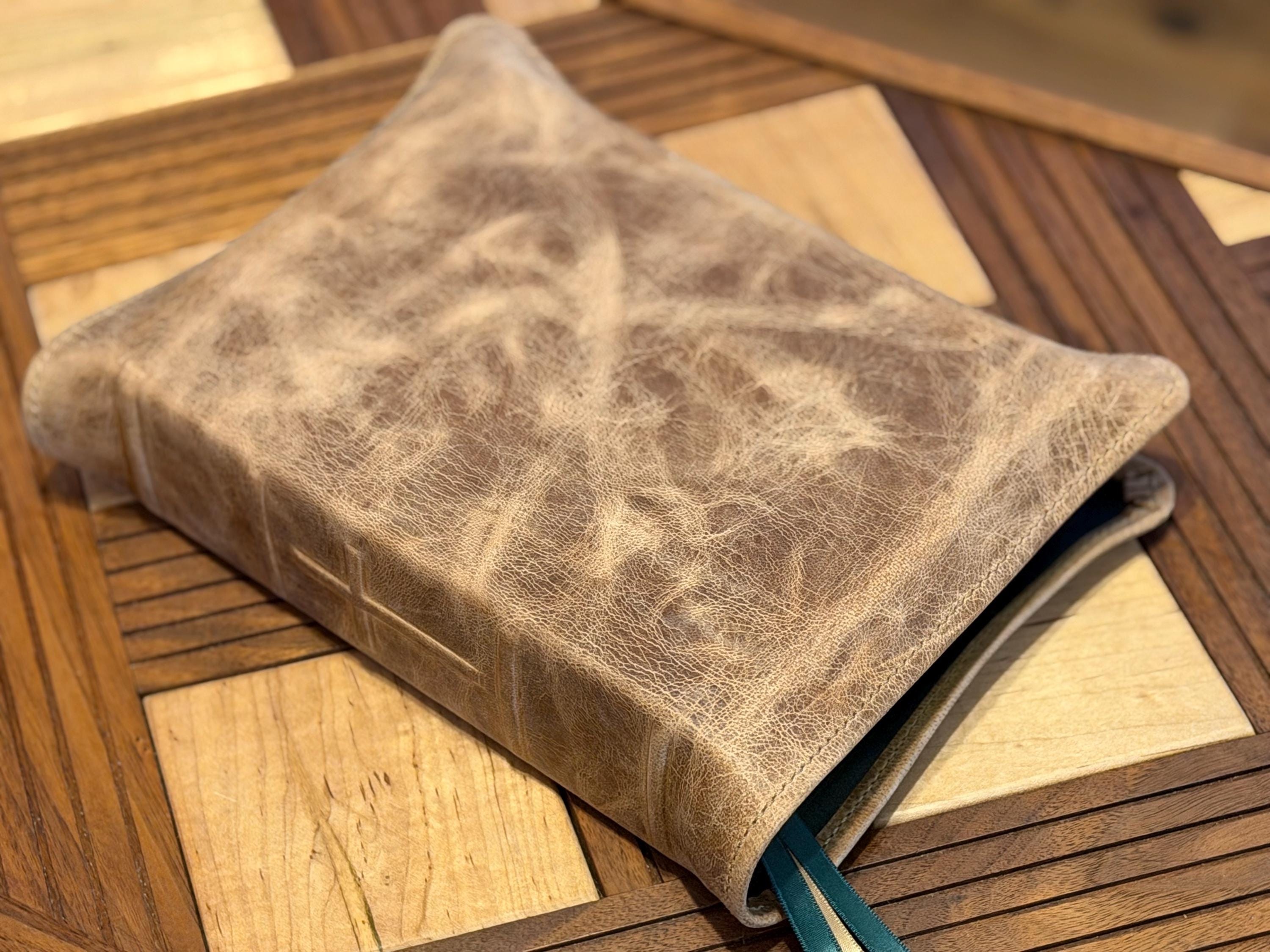

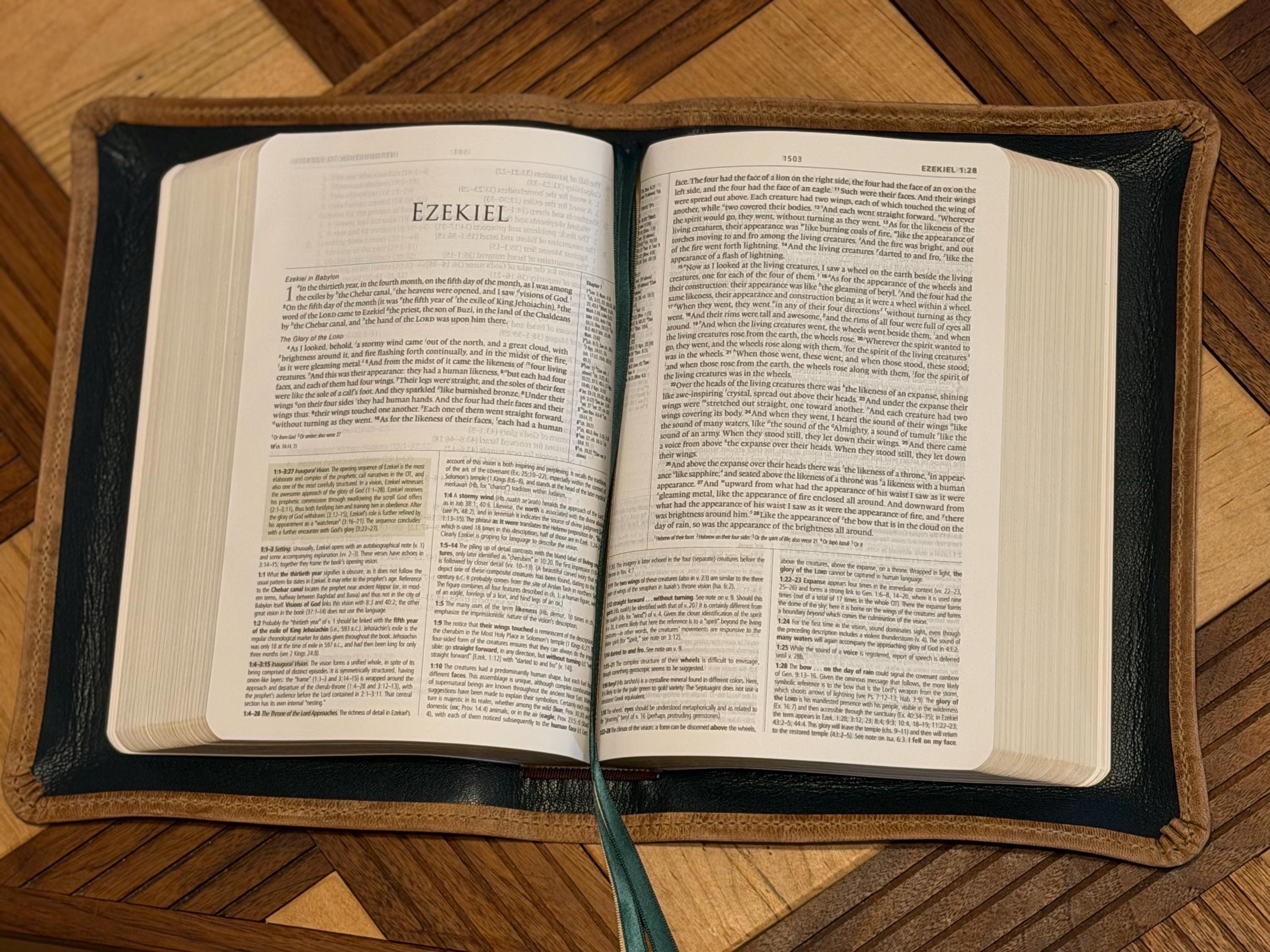
https://www.etsy.com/shop/MooseworksBibles
STUDY GUIDE
THE WEEK GOD CLAIMED THE ORDINARY
A Study Guide to Leviticus 17 to 23 (Days 100 to 104)
Purpose. This guide supports the Sunday Summation and Deepening covering Leviticus 17 through 23. It is built for personal study and small-group discussion, and it leans on the Hebraic and Ancient Near Eastern lenses that shape this ministry, drawing on Baruch Levine and Gordon Wenham for Leviticus specifically, John Walton for the wider Ancient Near Eastern frame, Michael Heiser on the se'irim, and the Hebrew word-study tradition associated with Skip Moen. Where a page number could not be verified against a physical volume, sources are cited by lexicon entry (s.v.) or by the verse the commentary treats (ad loc.), and open questions are flagged for the host to confirm.
I. THE ARGUMENT OF THE WEEK
The Holiness Code (Leviticus 17 through 26) turns outward from sanctuary regulation to lived community, and this week traces its opening movement across five settings: the field (17), the household (18 and 20), the marketplace and road (19), the priesthood and the table (21 and 22), and the calendar (23).[1] The unifying claim is that holiness, qodesh, is not primarily separation from defilement but conformity to the character of God expressed toward the vulnerable: "You shall be holy, for I the LORD your God am holy" (Lev 19:2).[2]
II. KEY HEBREW TERMS
1. qodesh / qadosh (holy, holiness). The root sense is set apart, but in Leviticus 19 the content of that set-apartness is overwhelmingly ethical and relational rather than merely cultic.[3]
2. se'irim (Lev 17:7), literally "hairy ones," rendered "goat demons," "goat idols," "satyrs," or in older versions "devils." The term denotes wilderness spirits associated with the open country, also appearing in Isaiah 13:21 and 34:14.[4] The centralization of sacrifice in Leviticus 17 is, in part, a polemic against this open-field cult.
3. nephesh and dam (life and blood). Leviticus 17:11 grounds the entire sacrificial system: "For the life [nephesh] of the flesh is in the blood [dam], and I have given it to you upon the altar to make atonement for your souls." The verb "given" (Hebrew natan) is decisive; atonement is a divine provision, not a human achievement.[5]
4. moed / moedim (appointed time, fixed meeting), Leviticus 23:2. The same term appears in Genesis 1:14, where the luminaries mark the "appointed times," indicating that Israel's sacred calendar is woven into creation itself. The common English gloss "feast" obscures the note of summons.[6]
5. miqra qodesh (holy convocation), from the root qara, "to call, summon." The phrase denotes a called assembly, not a voluntary gathering.[7]
6. mum (blemish, defect), Leviticus 21 and 22. The same standard of wholeness is applied first to the priest who may not approach the altar (21:17-23) and then to the animal that may not be offered (22:17-25), even as the blemished priest retains his right to eat "the bread of his God" (21:22).[8]
III. ANCIENT NEAR EASTERN CONTEXT
Agricultural festivals were universal across the Ancient Near East and were typically tied to the cycle of nature and to dying-and-rising fertility deities.[9] Israel's calendar is distinctive in anchoring each appointed time to a historical act of God rather than to the agricultural cycle alone; Passover commemorates the Exodus night, and Sukkot commemorates the wilderness dwelling (Lev 23:43).[10] Similarly, the prohibition of child sacrifice to Molech (Lev 18:21; 20:1-5) and the polemic against the se'irim situate Israel's worship against concrete regional practices, and the extension of guilt to the community that "hides its eyes" (20:4-5) is notable in an ancient legal setting for holding bystanders accountable.[11]
IV. TRANSLATION TENSION WORTH NAMING ALOUD
Two divergences change what a listener understands. First, se'irim (17:7): to render it "devils" (KJV) or flatten it to "idols" loses the wilderness-spirit specificity that explains why the open-field altar was so dangerous.[12] Second, moadim (23:2): "feasts" points a modern reader toward celebration and food, while the underlying sense is "appointed times" or "designated meetings," which is why the Sabbath, not a festival, heads the list.[13]
V. THE THEOLOGICAL CENTER
Two features distinguish the week. First, the refrain "I am the LORD" recurs throughout Leviticus 19 without accompanying rationale, grounding the ethic in God's identity rather than in consequential reasoning.[14] Second, the motive clause "you were strangers in the land of Egypt" (Lev 19:34; compare 18:3) roots Israel's obligation to the powerless in Israel's own experience of rescue, making covenant memory the engine of covenant ethics.[15] Holiness, therefore, is the rescued extending to others the treatment they received from God.
VI. CANONICAL AND MESSIANIC TRAJECTORY
The week reads forward to Yeshua at every point. The blood theology of Leviticus 17 undergirds John 6:53-56, a claim so pointed that many disciples withdrew (John 6:66).[16] The inward extension of the moral law appears in Matthew 5:21-30, while the Gospels present Yeshua as consistently protective of the powerless (John 4; John 8:1-11; Mark 5:34).[17] The command "you shall not stand up against the life of your neighbor" (Lev 19:16) is dramatized in the parable of the Samaritan (Luke 10:25-37).[18] The banquet of Luke 14:13, 21 gathers "the poor, the maimed, the lame, and the blind," precisely the categories excluded from priestly service in Leviticus 21, and Matthew 21:14 reports the blind and the lame coming to Yeshua within the temple.[19] Finally, the spring feasts of Leviticus 23 find their fulfillment in the Passion, resurrection, and Pentecost: 1 Corinthians 15:20-23 names the risen Messiah the "firstfruits," and Acts 2:1-4 sets the outpouring of the Spirit at Shavuot.[20]
VII. DISCUSSION QUESTIONS
1. Leviticus 17:13 legislates a moment no one could observe. Where in your own life does reverence operate only when someone is watching?
2. Leviticus 20:4-5 indicts the community that hides its eyes. What have you known and left unnamed because naming it would cost you something?
3. The gleaning law (19:9-10) protects dignity, not merely need. How does leaving a margin for others differ from ordinary charity?
4. Leviticus 21:22 separates function from belonging. Where has the church you know confused the two?
5. Leviticus 23 lists the Sabbath first. What would it change to treat rest as an appointment rather than a leftover?
VIII. FOOTNOTES
[1] Gordon J. Wenham, The Book of Leviticus, New International Commentary on the Old Testament (Grand Rapids: Eerdmans, 1979), on the structure of the Holiness Code, Leviticus 17-26.
[2] Baruch A. Levine, Leviticus, The JPS Torah Commentary (Philadelphia: Jewish Publication Society, 1989), on Leviticus 19:2.
[3] Wenham, Book of Leviticus, on Leviticus 19.
[4] Michael S. Heiser, The Unseen Realm: Recovering the Supernatural Worldview of the Bible (Bellingham, WA: Lexham Press, 2015), on the se'irim and wilderness spirits [chapter and page to be verified against the volume]; Francis Brown, S. R. Driver, and Charles A. Briggs, A Hebrew and English Lexicon of the Old Testament (Oxford: Clarendon Press, 1907), s.v. "sa'ir."
[5] Levine, Leviticus, on Leviticus 17:11; Brown, Driver, and Briggs, Hebrew and English Lexicon, s.v. "nephesh."
[6] Brown, Driver, and Briggs, Hebrew and English Lexicon, s.v. "mo'ed"; Nahum M. Sarna, Genesis, The JPS Torah Commentary (Philadelphia: Jewish Publication Society, 1989), on Genesis 1:14.
[7] Brown, Driver, and Briggs, Hebrew and English Lexicon, s.v. "miqra" and "qara."
[8] Levine, Leviticus, on Leviticus 21:16-24.
[9] John H. Walton, Ancient Near Eastern Thought and the Old Testament: Introducing the Conceptual World of the Hebrew Bible (Grand Rapids: Baker Academic, 2006), on festival calendars and the cycle of nature [pages to be verified].
[10] Levine, Leviticus, on Leviticus 23:42-43.
[11] Walton, Ancient Near Eastern Thought, on Molech and child sacrifice [pages to be verified]; Levine, Leviticus, on Leviticus 20:1-5.
[12] Heiser, Unseen Realm, on se'irim [verify]; compare the Complete Jewish Study Bible, ed. David H. Stern (Peabody, MA: Hendrickson, 2016), note at Leviticus 17:7.
[13] Robert Alter, The Five Books of Moses: A Translation with Commentary (New York: W. W. Norton, 2004), on Leviticus 23:2; Complete Jewish Study Bible, note at Leviticus 23:2.
[14] Levine, Leviticus, on the refrain "I am the LORD" in Leviticus 19.
[15] Levine, Leviticus, on Leviticus 19:33-34.
[16] D. A. Carson, The Gospel According to John, Pillar New Testament Commentary (Grand Rapids: Eerdmans, 1991), on John 6:53-66.
[17] Alter, Five Books of Moses, on Leviticus 19:18 [on love of neighbor and its scope].
[18] Wenham, Book of Leviticus, on Leviticus 19:16-18.
[19] Levine, Leviticus, on Leviticus 21:17-23; on the Gospel parallels, see the discussion in the episode.
[20] Complete Jewish Study Bible, notes at Leviticus 23:9-16 and at Acts 2:1.
Note on sources: The JPS Torah Commentary volume on Leviticus is by Baruch A. Levine; Nahum Sarna authored the Genesis and Exodus volumes in that series and served as its general editor, so Sarna is cited above only for Genesis 1:14. Citations using "s.v." (by dictionary entry) and "on [verse]" (ad loc.) are given where a page number could not be verified against the physical volume; please confirm pagination in your own copies before publishing this guide. The account of John 7:53 to 8:11 is textually disputed in the manuscript tradition and is treated here as canonically received. The Sukkot water-drawing ceremony behind John 7 derives from later Jewish tradition describing Second Temple practice (Mishnah, Sukkah 4), not from the biblical text itself.
book of Leviticus explained, Leviticus 19 love your neighbor, gleaning law, moadim appointed times, Sabbath rest, Molech Leviticus 20, Yeshua in Leviticus, Hebraic Bible study
© 2026 Dr. Shawn M. Greener. All Rights Reserved.
Now, a word from our sponsor! (We don't have a sponsor!)
Thought about picking up a Bible, but something always stopped you? Like a room where everyone knows the words and you don't?
You're not behind. It's one Story, from the start, in plain language, about a God who won't quit on people.
Page one starts here. Weekdays 7:00 AM Eastern, Sundays 6:30 PM, live with Dr. Shawn M. Greener.

Author / Host / Theologian/Ret. SlamDancer
I am just a beggar who found Bread, helping other hungry beggars to find Him too. My life has certainly been complex and I and my halo has many dents. Heschel said; "Something Sacred hangs in the balance of every moment." I live like it. I teach like it.
As a person who survived a fatal 92 mph vs 51 mph head on crash, after dying and re-animating, and surviving several other brushes with death, my perspective is, let's say, unique. I haven't always been a theologian and I'm living REAL life, just like you... I have my hurts, habits and hangups too.
I've learned a few very important things along the way that I'm confident you'll find useful... butter for the Gluten free Bread so to speak.. Oh, you may chuckle or full on snort along the way, but you might also shed a few tears... Faith for LIFE... That's how it happens.