

 Apple Podcasts
 Spotify
 DAY 30: DOES GOD SEE YOU WHEN PEOPLE DON’T?
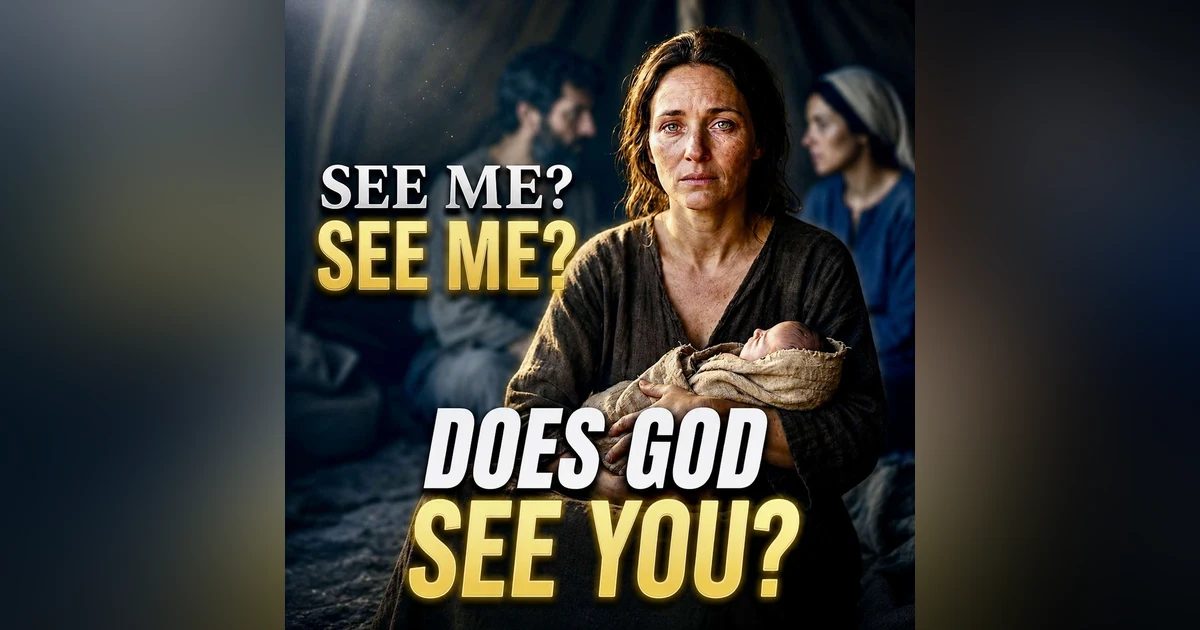
What if the pain you thought nobody noticed is the very place where God is already working? In this episode of Through the Bible in a Year: Walking the Story of God, Dr. Shawn M. Greener walks through Genesis 29:31 to 35 and the story of Leah, the woman who was present in the house, fruitful in the family, but still unloved. This passage speaks to anyone who’s ever felt overlooked, compared, dismissed, or treated like second place. Leah’s story reminds us that God sees what people miss, hears...
Key Takeaways
- God actively sees and notices individuals even when they feel invisible or unloved by others.
- Leah's story from Genesis demonstrates God's attention to those who feel like second-best.
- You can find redemption and purpose in the very places where you feel overlooked or dismissed.
- The lineage of Messiah includes those who were not initially preferred, highlighting God's inclusive plan.
- Believing that God truly sees you can profoundly change how you navigate feelings of being overlooked.
What if the pain you thought nobody noticed is the very place where God is already working?
In this episode of Through the Bible in a Year: Walking the Story of God, Dr. Shawn M. Greener walks through Genesis 29:31 to 35 and the story of Leah, the woman who was present in the house, fruitful in the family, but still unloved.
This passage speaks to anyone who’s ever felt overlooked, compared, dismissed, or treated like second place. Leah’s story reminds us that God sees what people miss, hears what people ignore, and can bring redemption through the very place others overlooked.
Through a Hebraic worldview and Ancient Near Eastern context, we’ll look at Leah, Reuben, Simeon, Levi, Judah, household honor, inheritance, identity, and the stunning truth that Messiah comes through the line of the woman people didn’t prefer.
Question for your heart:
Where have you felt overlooked, and what would change if you believed God really sees you?
Watch on YouTube:
https://www.youtube.com/live/4NHonemVps0?si=lE96Tv00Aw3yYvtf
More resources:
https://www.truewordfaithforlife.com
#BibleInAYear
#Genesis29
#GodSeesYou
MooseWorks Bible Re-Binder
A Bible is more than a book. It can carry prayers, notes, memories, and a lifetime of seeking God. If you have a treasured Bible that deserves to be preserved with excellence, I’m honored to recommend Melissa of MooseWorks Bible.
Visit MooseWorks Bible:
https://www.etsy.com/shop/MooseworksBibles
Music Licenses, audiio
Artist Name: Michael Ellery; Song Name: The Last Time (Instrumental); License #: 9183437241.
Artist Name: Proteus; Song Name: Disappearing Grace (Instrumental); License #: 5835150630; Project Type: Shortfilm.
Artist Name: Andrew and Jared Depolo; Song Name: Far Away Places Pt. 2 (Instrumental); License #: 9061437866.
Artist Name: Distant Moon; Song Name: In the Shadows (Instrumental); License #: 0218631093; Project Type: Shortfilm.
Artist Name: Ian Taylour; Song Name: Test Of Time (Orchestral) (Instrumental); License #: 3366363945; Project Type: Shortfilm.
Artist Name: Annasara; Song Name: A Lifetime Rolls By (Annasara Rework); License #: 6286683193; Project Type: Shortfilm.
Artist Name: Brad Hill; Song Name: Ray of Light (Instrumental); License #: 2755679505; Project Type: Shortfilm.
Artist Name: Ryan Moore; Song Name: Light Between The Trees (Instrumental); License #: 2805863068; Project Type: Shortfilm.
Artist Name: Philip Yoo; Song Name: Pure (Instrumental); License #: 0935885096. Artist Name: Morgan St. Douglas Song Name: Better Way to Fly (Instrumental); License #: 8801073913; Project Type: Shortfilm
© 2026 Dr. Shawn M. Greener. All Rights Reserved.
True Word, Faith for LIFE!
Send Dr. Shawn a Message. Please leave your contact information if you’d like a reply!
Thank you so much for listening! Please subscribe to the True Word, Faith for LIFE! YouTube channel, please click this link. Thank you again!
Shawn
https://www.youtube.com/channel/UCo1sLYz6J4FTUFwR5yjReMw
Frequently Asked Questions
What is the main message of "DAY 30: DOES GOD SEE YOU WHEN PEOPLE DON’T?"?
The episode's core message is that God sees and values you even when others overlook you, using Leah's story in Genesis to illustrate this.
Who is Leah in the Bible, and why is her story relevant?
Leah was Jacob's first wife, who felt unloved compared to her sister Rachel. Her story is relevant because it shows God's deep awareness of her feelings of being overlooked and his redemptive work through her.
How does the episode explain God seeing you when people don't?
By examining the historical and cultural context of Leah's life, the episode reveals that while human perception can be flawed and comparative, God's perspective is comprehensive and sees the true value and pain in individuals.
What lessons can be learned from Leah's children mentioned in Genesis 29?
Leah's children—Reuben, Simeon, Levi, and Judah—were significant figures, with Judah eventually being in the lineage of Jesus. This shows that even from a position of perceived disadvantage, God can bring forth life, honor, and salvation.
Good morning, y'all. How's everybody doing? Good lands is good to see ya. Look like Rumble ain't working. Sorry, y'all. Rumble is not working. Good to see you here. I hope you got a chance to listen last night. Last night, uh well, it was a little bit off the hook. I don't really know what that means. Off the hook. That means you'd miss the fish. I think. Right? Is that what it is? I don't know what the answer is. You guys will have to tell me what off the hook means. Really? Where did it come from? What's the etymology of that term? I don't know. Anyway, hey, we're here. It's 7 a.m. It's uh, well, it's not really 7 a.m., 701 Eastern Standard Time. And look, let me tell you. Last week it was pretty intense. I wish I could tell you that this week's gonna be not as intense, but sorry, it is, it's gonna be. Hope the sound is good. We are we are here, and we're gonna let it rip. Right? Because that's what we do. What do you what do you do when you're in the room, but you still feel invisible? What do you do? This is gonna hit some of you. What do you do when you're faithful? You're doing all the things, you're living all the things, you're you're sincere. Right? You're faithful. What do you do when you're faithful, but you're not favored? Stuff doesn't go your way. What do you do when you? Ooh, this one. This one is tricky. What do you do when someone else gets the attention? Somebody else gets the attention. They get the affection, they get the applause. And you're left wondering, does anybody even see me? Genesis twenty-nine answers all of those with one of the most tender sentences in the entire Bible. Three words. The Lord saw. The Lord saw. That's it. That's the thunderclap. The Lord saw, not Jacob, not the household, not the people impressed with Rachel. The Lord saw Leah.
SPEAKER_00The Lord saw Leah.
SPEAKER_01Love you, brother. Tough morning. Good morning. Good morning. Good morning, Tammy. Good to see you. Thank you. Maybe some of you can uh identify. We've got a bunch of people listening from a bunch of different locations. I'm sorry to the rumble folks. For whatever reason, it just the stream didn't work. We gotta replace the computer that we run this show off of. This one is cooked. We overdid it. We overworked it. So we're running with band-aids and gum. It's crazy. Maybe you can identify with this. The Lord saw Leah. Not all of those other things that were happening. The Lord saw Leah, the one nobody. Look, if you've ever been overlooked, and maybe you have, I don't know. I don't know what you're going through. I don't know what you're living through. Maybe you felt like that. I'm gonna I'm gonna just tell you, I've felt like that. I'm the youngest of five. When I was born, I was 2.6 pounds. Yeah, I was two and a half months premature. Yeah. I was super petite. I was unexpected. All of that. Every bit of it. Overlooked, underloved, compared, dismissed, replaced, tolerated. Is that you? If I'm telling you, if you've ever been, I don't want you to be real with yourself here. You can you can fake it with me. Can't fake it with God. Can't fake it with yourself. Look, if you're gonna be honest with somebody, be honest with God, be honest with yourself. If you've ever been overlooked, underloved, compared, dismissed, replaced, tolerated, or maybe treated like the backup plan in somebody else's story, not your story, somebody else's. It's not even your story. You're the backup plan in their story. Well, this passage is for you. So if you want, where and where have you felt overlooked? And what will you change if you believe God really sees you? You can put that in the comments if you want. I can't force you. You better take a deep breath, because this one's gonna come at you. So welcome. I don't know, maybe some maybe you don't know, you just fumbled on to this. You say, I don't know even where I am. Welcome to Through the Bible in a year, walking the story of God. I'm Sean. Dr. Sean. As if that matters. Anyway, today we're walking through Genesis 29, 31 to 35. Not that many verses, huh? So, by the way, this episode is brought to you by this book I'm holding in my hand, True Word Faith for Life. I know. Super hard to remember the title. True Word Faith for Life. It's available at see if you can remember this one, true Word FaithforLife.com slash store. Use it as a resource. Resource for growing, daily growth. You can also use it as a resource going through the Bible in a year, going through the Bible in however long. Just going through the Bible. What does it mean? What's the context of each book of the Bible? Super, super concise. There's some places where I kind of go off a little bit. You're gonna laugh. You're gonna you don't drink your coffee. Don't take a drink and then read. Stop reading, take a sip, swallow it, then go back to reading. Because sometimes coffee's gonna go down your nose. You'll be laughing. So yeah. What do I think of orthodoxy? I mean, the word the word can be applied to many things. Orthodoxy can be applied to many things, by the way. Hello, you the other Taurus Jesus consciousness. Yeshua Yeshua all the time. Thank God for him. You know, all of this points to him. I don't know if you guys know. This all of this, the Old Testament, and all everything points to Messiah. We we draw those tethers and show everybody how that works. So as it relates to the book, uh use it as a resource for growing as a true disciple of Yeshua, Jesus. Today's passage is short, but it's not small. Short passages, they can carry very deep wounds. Short passages can carry family systems, they can carry cries people never say out loud. Look, that's for real, for real. In Genesis 29, 31, 235.
SPEAKER_00Four verses.
SPEAKER_01The ache of a woman who was married. It goes like this when when the Lord saw that Leah was hated, he opened her womb. But Rachel was barren. Now we need to slow this down. Just to smidge. The word translated hated doesn't always mean active hatred the way we would use it in modern English. So in this household context, it carries the idea of being unloved, less loved, rejected, or disfavored. That's why the ancient Near Eastern language, culture, and context is so important. That's why I studied it for literally decades. My masters and my doctorates. Heavy focus. It's so important. I study it all the time. Genesis 29, 31 to 35. Epic.
unknownEpic.
SPEAKER_01So we've got to understand the words, we've got to understand the context. Yeah, we do. There's no way we can get through this. Understanding scripture. Well, it was meant to be understood. You imagine. Unloved, less loved, rejected, or disfavored, Leah may not have been thrown out of the tent. She may not have been openly abused every day. That's what makes this wound so easy to miss. Some wounds don't come from open cruelty. Some wounds come from being emotionally unwanted. Have you ever been there? Is that you? Whether you're listening live or you're listening on playback, is that you? You feel emotionally unwanted. That's a tough place to be. Some wounds come from sleeping beside someone who doesn't and didn't really choose you. Some wounds come from doing everything right. And still not being the one someone hearts someone's heart turns to. They really love you? Because it doesn't feel like it. Says the Lord saw. Says the Lord Saul. Things were jacked up in that family. Maybe you come from a jacked-up family. Look, in the ancient Near Eastern world, this wasn't just a private romantic disappointment. Marriage was household. It was inheritance. It was labor. It was covenant continuity, family security, and future survival. Remember, I've talked about that quite a bit. Look, children weren't treated as a lifestyle accessory. Not in the ancient Near East. Maybe now they are, but not in the ancient Near East. Children then weren't a lifestyle accessory. They weren't, you know, well, I guess no one's supposed to have children. Children were tied to legacy, protection, provision, inheritance, and honor. It was way different, man. Lady, way different. Somebody sent a comment that I misgendered her. Him. Her them. You misgendered me in a comment. I don't know. From these titles. Who? I don't know. You can't tell. Man a man. Look, a woman's position in the household could be very deeply affected by whether she bore sons. Sons. This doesn't mean the Bible endorses every cultural value in that world or in this world, in any world. Doesn't mean the Bible, and especially here, it doesn't mean people attribute that to God. Well, if God let that happen, then He was clearly for it. And that means God isn't that kind of God, that kind of God isn't the kind of God I would serve. I don't serve no God like that. Well, you don't understand God. That's why I'm here to help you understand. That doesn't mean the Bible endorses some of the crazy things that were going on. You have to let go of that. You have to let go of that. And for years I struggled with that. I said, oof, man, I hate that that was allowed to go on. Well, free will. It means the Bible showing us the real world people lived in. It's important for us, you know, when you believe in something, hey, is it sanitized? Because if it is, I don't know if I can believe it. Yeah, it's easier to read, it's easier to place myself into. You know, my mind. But the reality is, it was it was jacked up, it was dirty. It was a mess. Real world. You live it. They were living it. They didn't have the benefit of all the stuff that we have to make our lives easier, simpler, and more complex. So into that world, God does something quite shocking. The very loved wife, Rachel, is barren. The unloved wife, Leah, is fruitful.
unknownMan.
SPEAKER_01Rachel has Jacob's affection. Always has. The dude worked and worked and worked and worked for years to be able to marry her. I mean, worked, worked. Rachel, Rachel absolutely has Jacob's affection. It's unmistakable. Says the years went because of his great love for her. Leah receives God's attention, though. Human affection can be unstable. It can. It can be so unstable. It can be so disquieting sometimes how completely unstable some of us are. Our affections, our emotional attachments. A lot of times they're weak. Connection is very, very weak. But God's sight is covenantal. Jacob preferred Rachel, but God saw Leah. Breathe that in. That matters because many people live in Leah's house emotionally. You go to work and somebody else gets noticed. You serve your family, and no one says thank you. Well, we're coming off of Mother's Day. Coming off of Mother's Day, and I know lots of mothers out there, and they didn't get celebrated. Nobody noticed them. Nobody noticed them. Not even a card. Not even a dollar tree or dollar store card. Nothing. Spouse didn't notice them. Husband didn't notice them. Didn't do anything for them. Didn't make anything easier for him. Just one day. Come on. You can do it. One day. One day. Maybe it's you. Maybe you you're listening and listen, I have a great buddy. He's a single dad of four children. Dad of four children. He's raised them unreal, how he's raised these kids. He's an amazing human. I I'm fortunate to call him friend. The best shooter I've ever seen, by the way. Left or right. It's crazy. Look, you've served your family and no one says thank you. Not even a thank you. You show up for people. You show up. But when you need someone, the room suddenly goes quiet. You're always the one to send the text. You're always the one to make the call. Maybe you've got a friend. Maybe it's an inequitable relationship. You've got a friend, maybe you've had that friend for decades. And you look back, one day it occurs to you, you just look back and you go, you know, that's how come I'm always the one to initiate communication? How come I'm how come I show up for everything for them? And they show up for nothing for me. I show up even when I'm not asked. And they don't show up even when I say, please, I really need you here, if there's any way. And you know they have the capacity. They have physical capacity, they have the financial capacity, but they don't have the will. And one day you realize I've poured out all this love, all this friendship, all of the relationship. You know what? I'm not getting it back. You're there, you're all there. Yeah, you're right. They tolerate you only while you resolve the problem, for sure. You pour out love, you don't get it back. You're present, but not preferred, you're useful, but not shared. Dependable but not celebrated. And after a while, you start asking questions, dangerous questions. Maybe this is you. And I know some of you will hear this, these questions, and you'll go, yeah, that's me. And you'll say that inside your hurting heart, choking back tears. After a while you start asking the very, very dangerous questions. What's wrong with me? Why am I not enough? What is wrong with me? Why? Why am I not enough? Why do they always choose someone else? Why do I have to keep proving my worth? Amen. Henriette. When empaths realize they're actually all alone, yeah. May God's light and love shine in all people's hearts. God sees. Amen. Amen. Thank you. By the way, thank you to you all for listening, for plugging in, for being all in. Yeah, ask yourself, why? All of those things, and imagine Leah. She asked, What's wrong with me? Leah wasn't uh homely. Not by what we read in the scripture. I've read it in all the languages, and I can tell you, there's no there's no indication in context or verse by verse that she was ugly. She wasn't. God bless her. Does your heart not go out for her? Maybe you look at you, you look at Leah and you go, yeah, been there. You have to wonder sometimes. What do I have to do to be seen? Genesis 29 doesn't begin by telling Leah to toughen up. It doesn't. Before Leah names a son, God names the situation. He sees the affliction, he sees the imbalance, he sees the rejection nobody else wants to talk about. But then Leah conceives and bears a son. She conceives a baby, a son, a son. Remember what I just said? Coveted. Sons were coveted in the ancient Near Eastern world. She names the son Reuben. And in Hebrew, Reuben sounds like see a son. See a son. And Lee explains this name by saying, Because the Lord has looked upon my affliction, for now my husband will love me. Oh, can you imagine? Oh, come on. Doesn't your heart hurt for her? Doesn't your heart hurt for her? She knows God. This is the thing that's amazing. What could she have done with her pain? She did a beautiful thing. She knows God has looked on her pain. She knows she's been seen by God. But she still hopes Jacob will finally love her. So love for now, well, here the baby is. He's a boy baby. So he'll love me. Forgiving him a boy baby, a son. She still holds out hope that Jacob will actually love her. That's brutally human. God blessed her, but her heart still says, Maybe now I'll be enough. Maybe now I'll be enough. Maybe now he'll notice. Maybe now he'll turn toward me. Maybe now the comparison between me and Rachel will stop. And before we judge Leah too harshly or at all, look, I've talked a lot about being on the receiving end of this, right? Being the one that nobody saw for whatever reason. Nobody chose for whatever reason. Doesn't matter. Reason doesn't matter at this point. But now I'm also talking to that person who was the Rachel in the story. You were seen. You are seen. We cannot judge Leah. We can't. Not harshly, not at all. Because we need to ask, how often do we do the same thing? How often do we do the same exact thing? God gives us mercy, but we still chase approval. We say, God, I just need your mercy. And he gives it to us. Unmerited favor. But we still chase approval. Approval of this person, this person, this person, this person. Hey, look, I get it. I get it. 100%. God gives us identity.
SPEAKER_00Right?
SPEAKER_01He gives us identity. But we still beg for validation. God sees us. We still keep handing our worth to people who don't know what to do with it. We keep handing our emotional value. The meter of our emotional value. We hand it to the very people that devalue us and disvalue us the most. And yet, God sees us. God doesn't get any bigger, doesn't get any better. Keep handing our worth to people who don't know what to do with it. When they don't, they're careless with it. Look, then Leah conceives again and bears another son. She names him Simeon. Simeon is connected with the language of hearing. She says, Because the Lord has heard that I am hated, he has also given me, he has given me this son also. Now the picture grows. God sees, God hears. Leah isn't invisible to heaven. Her pain, her cries, her pleas, her prayers haven't gone unheard. Her quiet tears haven't evaporated into nothing. Her story has been. It's been placed well. Her story has not been misplaced. Wow. In her life. Finally. Finally. That's not sentimental language. It's not. It's covenantal language. The God of the Bible isn't distant, cold, and uninterested. Maybe distant, cold, and uninterested. You say this person, this person, this person, and this person. The people, the very people who were supposed to see me. Don't and didn't. The very people that were supposed to. Amen, Henriette. Henriette says, God catches all our tears in a bottle. When we get the psalm, I do a whole sermon on that particular verse. Keeps an account of our sorrows. Captures our tears in a bottle. He is the look, the God of the Bible, which who he's the God of today. He's the God of your life. He's the God of your heart. He's the God where you are. He isn't distant. He isn't cold. He isn't uninterested. He's the God who sees Hagar in the wilderness. Do you remember? He's the God who hears Israel groaning in Egypt. He's the same God who sees Leah in this complicated, broken family system. And he is the God who sees you when people around you don't. But Leah is still hurting. Understandable. She just wants to be loved by someone right there. You know, she didn't get those sons by just walking into the tent. Hey Jacob, poof, here she is pregnant. No, no, no. There was some intimacy that had to happen. Leah's still hurting because she goes into that tent. The deepest intimacy happens. It seems like no problem. She gets pregnant, bears a healthy child, a son, and then another one. But that thing she's always wanted, that that person. You know, people use that, they say this, I just want to find my person. I hate that term. It isn't always obvious at first. That person may not be what you think. And sometimes that person, oh, wrong, wrong, wrong person. We understand in this scripture, Leah is still hurting, and that's super important because the Bible doesn't pretend one blessing, one blessing, I got blessed. I'm blessed, I'm blessed. I see it tattooed on people. Blessed. And that they're still wounded. They're still the walking wounded. The Bible doesn't pretend one blessing instantly heals every wound. He knows we're people, we're human. He created us. Leah knows God has heard her, but she still defines herself through the rejection of Jacob. And really, what if, think about this, think about this in the scripture. What if some handsome fella, and really for Leah, it wouldn't even have to be that handsome, but he was kind and he was loving. He was, he saw her, he cared for her. And he said, Hey, I want to be. I want to be with you. I want to have a family. I want to grow old with you. Yeah. She couldn't be with him now. She's with Jacob, and Jacob doesn't really want her. He was tricked into her by her father, can you imagine? Can you imagine a father like Laban? Maybe you can, maybe you live there. She still defines herself through the rejection, Leah does. Her theology is growing, but her wound is still speaking. Maybe you can identify. And that's where many believers, not just you, see, that's the thing. We've the enemy wants us to feel alone, wants you to feel alone. Wants you to feel unseen. You believe God is good, but you still feel unwanted. You believe God provides. You believe it provides, but you you still feel forgotten. You you believe, you, you really believe God loves you, but you still measure yourself by who didn't call, who didn't stay, who didn't choose, who didn't apologize, and who didn't come back. Faith doesn't mean pretending your pain isn't real. Faith means refusing to let pain become your final name. Don't let the enemy's tools and tricks name you. Are you ready for this? Then Leah conceives again. She bears Levi another son. And she says, Look, my heart hurts for her. She says, Now this time my husband will be attached to me because I have borne him three sons. That line hurts. This time. Have you ever lived on this time? This time they'll notice. This time they'll appreciate me. This time they'll understand. This time they'll love me right. This time I won't be the afterthought. That phrase alone can become your prison. And Reuben said, Maybe now. Maybe now he'll love me. Simeon said, God heard that I'm unloved. Levi says, now he'll be attached to me. Three sons, three blessings, three attempts to turn fruitfulness into affection. And still the ache remains. But no human being can carry the full weight of your identity. No. No human being can do that. No human being. They can't carry that. They can't carry the full weight of your identity. Don't give it to them. Even if they are great people, don't do it. Your identity doesn't belong there. Not a spouse, not a parent, not a child, not a friend, not an audience, not a church, not a platform, not an algorithm, not a comment section even. If you hand your worth to people, they will drop it. Not always because they're evil, but because they were never designed to hold it. The band dire straits, take love over gold and mind over matter, to do what you feel that you must, for the heart that you hold can fall and shatter and slip through your fingers like dust. Then Leah conceives again. This is where the room changes. She bears a fourth son and says, This time I will praise the Lord. Oh come on. Growth. Are you kidding me? This time, this time, I will praise the Lord. I'm not going to lament, I'm not going to cry about all these other things. I'm going to praise the Lord. Oh man. Oh man. Let's be kind in comments. Just because someone has a certain name doesn't mean they're a certain way. We'll be kind to each other. That's the way we do here. This time I will praise the Lord. She names this child, this son, Judah. Judah is closely connected with praise. Now don't miss this. The text doesn't say Jacob finally changed. Doesn't say Jacob changed. Doesn't even hint at it. In fact, quite the opposite, it says, I will praise the Lord. It doesn't say the household suddenly became healthy and recognized Leah for who she is. Doesn't say Rachel stopped being loved either. Look, Rachel, look, as tricky as she was, she didn't, you know, I mean, Laban did that to her too. Yeah, she was favored. But Laban did that to her. Can you imagine being in that place? She wanted a simpler deal, and that's not what she got because of her father. Sometimes you're the favored one, and you come out more hurt than any of the others. Consequences. I talked about it last night. If you missed last night's episode, I encourage you to listen to it. Why do bad choices stick? That's what it's called. Why are bad choices so sticky? Look, it doesn't say Rachel stopped being loved. It doesn't say Leah finally got everything she wanted either. She didn't get all, it doesn't say that. She didn't say, Oh, everybody in this household has given me. Everybody around me that I wanted to see me has seen me. I created the thumbnail. If you're listening on audio, uh, you'll see a square version of this. But if you're watching, either live or on playback, she's got the baby there, Leah. But in the background, Jacob and Rachel are just chatting it up. And here she is with the baby. His son. And look, don't get it twisted. She was part of the, she was part of the trick. Laban said, this is what you're gonna do, Leah. You're gonna go in there. Thank you, Henriette. I appreciate that. Hassan, you're welcome here. Look, some of you live in that hurt, some of you have been in that hurt. You don't feel seen. But here's the thing: it says Leah's focus shifted. This time I will praise the Lord. Not this time Jacob will love me. Not this time I'll finally win. Not this time they'll see my value. This time I will praise the Lord. That's not denial. This is deliverance. This is what deliverance looks like. It's not pretending rejection doesn't hurt either. That's refusing to let rejection rule you. You can absolutely be a person of great joy. I am. I'm probably the happiest, most upbeat, positive person you'll ever meet. Not fluffy positive, reality positive. Leah moves from naming her sons around what she lacks to naming her son around who God is. And that's what we need to do. We're talking about names, and in live chat on playback, you you won't see this. But a person has a certain name in the in the chat. That's just the name in their profile. And someone, I think, probably with no intent to hurt, made a comment about their name. And the God they serve. That's an assumption. We don't make assumptions. We just don't. Not here, we don't. So I appreciate your apology. That was lovely. Sometimes we make mistakes. Sometimes we're the one that makes the assumption. Sometimes we're the one that shines just so easily. And we we don't see the people around us. Sometimes we're the one. Leah moves from naming her sons around what she lacks to naming her son around who God is. Who God is. She moves from, well, maybe he'll love me. I'm not making fun. I'm just saying, maybe he'll love me. You know? To I will praise the Lord. Not some bumper sticker deal either. She moves from craving human attachment to declaring divine faithfulness. And that's the place many of us need to reach. Not because people don't matter. They do. They do. Love does matter. Marriage matters. Family matters. Recognition matters. Kindness matters. But none of those can become your God. Listen, here's the thing. I did an episode on what do you do when your family is toxic? It's free. The YouTube channel, True Word Faith for Life with Dr. Sean, S-H-A-W-N. It's there. The audio is also on anywhere you listen. Apple Podcasts, Spotify, Amazon, Music, iHeartRadio, 27 others, literally 27 others. If you search that, you'll find it. And that's a powerful episode. Look, none of those things can become your God because when human approval becomes your God, rejection becomes your hell. God loves you too much to let your identity live in someone else's unstable hands. True. It's truth. You don't know my life. But I'm serious. A lot of people don't know your life. They don't. And it's that's something. When someone takes their own life. Sometimes we're shocked. And we say, I don't I don't know that I can believe this. They were a happy person, it seemed. They had everything. No worries, Henriette. No worries at all. I'm so happy to have you here. My point is, is you know, a lot of times we have to give people a little bit of time. And and everyone else that has been here a long time, which I hope you're a person that is here a long time too, and I hope you'll subscribe and hit the little bell and all that stuff and hit the like, whatever. I don't know how it all works, but it works. Um you'll find that I don't tolerate um anybody. We had this last night with Satanists. They always run around or pretend Satanists, they always run around YouTube. They don't have their own channel, they don't have their own podcast. They just they go through and they try to disrupt. And uh it comes a certain point where I may minister to them. And I I had one who is listening right now, who turned the corner, not because of me, but because of God. He just needed somebody to hear him. And to and to, he needed to hear this a certain way. He needed to hear about God a certain way. Because he'd never been able. He was one of those people, the unseen. And in the Satanist or Satanist wannabe world online, he was seen. He felt valued. And now he knows he is a child of God. And in a few minutes, we're gonna pray. He prayed that prayer. Placed his faith in Christ. Powerful. It's the only reason I do this. I mean, I love teaching and I love, you know, I taught in Bible college and I taught all kinds of classes and all of these things, and and and uh I've preached all over the country and huge crowds and small crowds. I had a radio show, God and Country, the Collision of Faith in Politics, and we're huge, millions. And I can tell you the thing that gets me, two things. When people place their faith in Christ, and when they get baptized, oh man. Poof. That gets me a ball every time. Look, here's the stunning biblical irony. Judah isn't just another son. Judah becomes the line of kings. From Judah comes David. From Judah comes the royal promise. From Judah comes Yeshua Hamashiach, Jesus the Messiah, comes through the line of Leah. Not Rachel, Leah. The overlooked wife, the unloved woman, the one living in the shadow, the one whose first three sons were named through the ache of wanting to be chosen. God writes the line of redemption through the woman people would have overlooked. That's not an accident, that's revelation. Don't miss it. God doesn't build his kingdom according to human preference. God, look, he doesn't ask for the popular, he doesn't go to the popular crowd and go, hey, listen, this is what I'd like to do. This is what I'd like to do. I'd like to do this thing. Can you let me know? What you think? What your preferences are? No, he doesn't do that. He doesn't ask the popular crowd for permission. He doesn't need the favored tent, the loudest voice, the prettiest face, the strongest resume, the biggest platform, or the most applauded person in the room. He sees what people miss. He cares what people ignore. And he can bring Messiah through the place nobody thought to honor. That means your overlooked place may not be wasted. Your unseen faithfulness may not be forgotten. Your quiet obedience may not be small. Your tears may be watering something you can't see yet. Leah wanted Jacob's love. God gave her a place in the redemptive story. He gave her a place in history that Rachel doesn't have. I'm not saying it really erases the pain at all, but it tells us the pain isn't the whole story. And your pain isn't your whole story. You cannot attach your life story to your pain. You can't. Look, this is where Genesis becomes painfully modern. Because we live in an age built on visibility. Likes, shares, views, metrics, followers, promotions, invitations, attention. We've built an entire world where being seen by people feels like being alive. Being ignored feels like disappearing. Genesis 29 breaks that lie. You're not less valuable because someone didn't notice you. You're not less loved because someone preferred someone else. You're not less called because your life looks hidden. You're not less useful because your obedience isn't trending. The Lord saw Leah and the Lord sees you. So what does Genesis 29, 31 to 35 say to us? It says God sees the wound behind the smile. He sees that magazine smile. Trying to force your way through. He sees that. Please. Please. He hears your prayer. Says God. Notices the person other people treat like a background extra. Backup singer that never gets seen. Says fruitfulness can grow in places of rejection. It says identity can't be built on human preference. Can't. If you're building your identity on that, you are going to be disappointed. God is absolutely near the broken hearted. Amen. Says praise. Praise can rise before circumstances change. I will praise you in the storm. It says redemption can come through the overlooked place. That's the pattern of the Bible. God saw Hagar, God saw Leah, God saw Israel in bondage, God saw David in the field, God saw the widow, God saw the leper, God saw the blind beggar and in Yeshua. God came near to the people, religious and social systems, pushed to the edges. I don't know who I'm talking to, but somebody needs to hear it. So the question isn't, do people see me? Do people see me? Look, that question alone will drive you mad. The question is, will I trust the God who sees me? Will I bring him my longing instead of my, instead of turning, will will I bring him my longing instead of molding that longing into bitterness? Easy to do. Easy to do. Oh, that's powerful, Henriette. Our lives are measured in time to all. By giving me your time, you're giving me a piece of your soul. Thank you. The greatest gift. I appreciate you all. Amen. Welcome. Welcome in. Will I name? Look, you can do this if you want. You don't have to. Nobody's forcing you. But I'm making this suggestion to you. Will I let God name my life instead of letting rejection name me? Will I stop saying, well, maybe now they'll love me? And then start saying, this time I will praise the Lord. Some of you need to hear this today. You're not crazy for hurting. Look, I don't minimize that at all. You're not weak because you want to feel loved. You're not faithful. You're not faithless because rejection affected you. It affects us. But you don't have to live chained to the approval of people who they don't see what God sees. Where have you felt overlooked? And how does it change things to know that God sees you? I have for you today a challenge and a choice. So here's the questions. Where are you still living for Jacob? Maybe for a Jacob? And they may never love you. Certainly may never love you the way you want. The way you hoped. Where are you living for a Jacob who may never love you the way you hoped? Where are you still trying to prove you're enough? Where are you still naming your life by who rejected you, who ignored you, who compared you, who dismissed you? Or who made you feel like second place? Well, there's your challenge. Here's your choice. You can keep chasing the eyes of people. Or you can rest under the gaze of God. Or, you know, you can you can keep saying, You can, oh, you're welcome, Tammy. God bless you. God bless you. You can keep saying, well, maybe now they'll love me. Or you can say, This time I will play praise the Lord. You can keep letting rejection write your name. Or you can let the God who sees you restore your identity. And maybe today your prayer is simple. Lord, you saw Leah see me. You heard Leah, hear me. You met her in the place of pain. Meet me here. Teach me to stop measuring my worth by human presence and human preference. Teach me to stop handing my identity to people who cannot carry it. Teach me to praise you. Teach me to praise you before everything changes. And teach me to believe that if you see me, I'm not invisible at all. And look, maybe this is where salvation becomes very personal for you. Because sin doesn't just show up in the obvious places. It doesn't. Your hurts, your habits, your hangups, not always the obvious places. Sometimes sin shows up in how we try to save ourselves through approval. Sometimes it shows up in bitterness because we weren't chosen. Sometimes it shows up in envy because someone else was preferred. Sometimes it shows up in the quiet belief that if people don't love us, God must not either. But Yeshua came for the overlooked, the wounded, the striving, the rejected, the bitter, the broken, and the exhausted. He came to rescue us from sin, from our hurts, our habits, and our hangups. He came to make us new. He came to bring home the Father who sees. Look, prayer isn't asking for an easy journey. It's asking for a strong back. And maybe you've never placed your faith. Maybe you've never, you've, you've, you, you've never surrendered your life to Christ. Now's the time. Pray this prayer with me. Father, I I've done wrong things. I know I have. And I need your mercy. I believe that Jesus died for me. I believe he was buried and rose again. No, I don't know all the answers. I don't know all the stuff, but I believe that. Today I turn from my sin. I turn from my hurts, my habits, and my hang-ups. And I place my trust in him as my Lord and my king. Please forgive me, make me new, and fill me with your spirit. From this day forward, I want to follow you. In Jesus' name. Amen. I'm excited for you, truly. Because if you prayed that prayer and you meant it, I want you to hear me clearly here. You're not alone. The world will try to tell you you're alone. They'll try to tell you that you're you've loon you're loony, you need a crutch. They'll come in and it'll be your family, it'll be your friends, your unsaved family, and maybe some of your saved family. If you prayed that prayer sincerely, you are never alone. Not it, not ever, one more time. By the way, if you have questions, reach out to me through true wordfaithforlife.com slash contact. I promise you I will, as soon as I receive your message, it goes through a bunch of things, but as soon as I receive it, I will respond. You can also leave me a voice message. Two minutes, it's your two minutes. I pay for it so you don't have to. That's on the right of true wordfaithforlife.com. That's that's on the right there. You click on that. I will help you. Whatever questions you have, I will help you. I have resources, I'll help you. I'll help you find a church. I'll help you, I'll help you. If you don't have a Bible, I'll help you get a Bible, the right one for you. I'll personally help you take the next steps and I'll walk with you in the way. God sees you. Out there right now, you're choking back tears, or maybe you feel like you've cried through this episode, this whole thing. You're doing that breathing where you're just trying, you're crying, you're trying to catch your breath. God sees you, God hears you. Dude who's always tried to look tough and be tough, God sees you. He hears you. Absolutely, Henriette. God sees you, God hears you. And the place you thought was only rejection might be the place where redemption begins. Look, don't let rejection name you. Don't let neglect define you. Don't let comparison own you. Let the God who sees you restore you. Let the God who hears you study you. Let the God of Leah teach you how to praise. If this message touched your heart, share it. I I know in your mind countless people, you know countless people who could use it. And maybe are on their edge. You don't see it, but they are. This might be the the one thing, not because of me, but because of God. The one thing that helps them see that hope and that truth. Send it to them today. Maybe post the link on your social media. Hey, this touched my heart. Maybe it'll touch yours too. Are you lonely? Do you feel unseen? Watch this. It might be the very thing God uses to reach someone with his word. Tomorrow, we will be here. We're gonna be here. We're gonna be here. 7 a.m. Eastern Standard Time. And until then, I want you to come come back. Come back and be here. Be here with us. Click on subscribe. Click on like, click the little bell, all notifications. Be all in. Many of you are all in. You've been to every episode. If you're listening on playback, understand this. I'm a resource. Use me that way. True WordFaithforLi.com. Till then. Till tomorrow morning, 7 a.m. Eastern Standard Time. Shalom Bishem Yeshua. Shalom alaikum.