Why Idealistic Students in 1979 Iran Became the Regimes First Victims
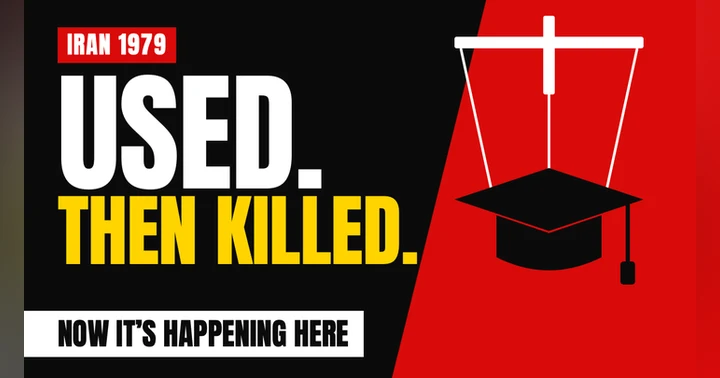
When university students in Tehran climbed the walls of the American Embassy in November 1979, they believed they were striking a blow for freedom and anti-imperialism. Within a few short years, the very regime they helped install turned its machinery against them, shutting down campuses, silencing dissidents, and executing former student allies. This historical pattern reveals a calculated five-move political playbook that continues to trap sincere idealists today.
Key Takeaways
- Students in 1979 Iran formed a broad coalition against the Shah, believing they would share power after the revolution.
- Ayatollah Khomeini published his true doctrine of absolute clerical rule (Velayat-e Faqih) in 1970, yet concealed it during Western media interviews in Paris.
- Once the regime secured state machinery, police forces, and the IRGC, the very students who helped them rise were systematically purged and executed.
- Modern political activists and students often repeat these exact historical patterns without recognizing how radical regimes exploit popular sincerity.
- Understanding this five-move revolutionary playbook offers vital perspective for evaluating modern political movements and global security threats.
The Illusion of a Shared Revolution
History rarely unfolds through straightforward battles between good and evil; instead, it frequently advances through strategic partnerships of convenience. In the years leading up to the 1979 Iranian Revolution, the opposition against Shah Mohammad Reza Pahlavi was remarkably diverse. It included liberal nationalists, Marxist guerrillas, pro-Soviet communists, bazaar merchants, and traditional clerics.
Each faction carried its own distinct vision for the future. The liberals assumed the clergy would offer moral guidance and then step aside. The leftists believed that history was marching inexorably toward socialism and that a conservative religious cleric would remain a harmless, temporary figurehead. Every group in that coalition suffered from a fatal hubris: they convinced themselves that they were using the movement, failing to realize they were the ones being used.
This dynamic is a staple of revolutionary history. Sincere people with legitimate grievances often provide the human fuel for movements whose leaders harbor entirely different, authoritarian aspirations. When ancient Near Eastern empires or modern totalitarian states consolidate power, they rarely do so with an army of true believers alone. They rely on borrowed bodies—enthusiastic, idealistic crowds willing to risk everything for a slogan they do not fully understand.
The Blueprint Hidden in Plain Sight
One of the most tragic elements of the 1979 revolution is that the ultimate outcome was never actually a secret. In 1970, while living in exile in the Iraqi city of Najaf, Ayatollah Ruhollah Khomeini delivered a series of lectures that were subsequently published as a book outlining an Islamic government.
At the core of this text was a specific doctrine: Velayat-e Faqih, or the guardianship of the jurist. This principle dictated that a senior Islamic jurist should hold absolute ruling authority, overriding any parliament, constitution, or democratic mandate. The blueprint was printed, bound, and available to anyone willing to read it.
Yet, when Khomeini established his base in a village outside Paris in late 1978, his media strategy shifted dramatically. He granted over a hundred interviews to international journalists, speaking fluently about human rights, freedom of the press, and a return to peaceful religious life. He used cassette tape recordings—the social media of their day—to project a message of liberation back into Iran. He gave the world and his coalition partners a reassuring, moderate face while keeping his true institutional goals locked away until the old government fell.
The Five-Move Revolutionary Playbook
Strip away the specific dates, geographic coordinates, and historical names, and a repeatable five-move playbook emerges from the events of 1979. This tactical sequence has been studied by security experts and historians alike:
- Move One: Hide the End Goal. Publish the real, uncompromising plan internally while presenting a moderate, friendly face to the outside world and prospective allies.
- Move Two: Borrow the Language. Co-opt the vocabulary of justice, the oppressed, and anti-imperialism that has historically belonged to progressive or student movements.
- Move Three: Borrow the Bodies. Let students, intellectuals, and activists fill the streets, write essays, take physical risks, and absorb the initial blows from the state police.
- Move Four: Keep the Organization. Maintain strict control over the actual machinery of power—the courts, the treasury, the militias, and specialized armed forces like the Islamic Revolutionary Guard Corps (IRGC).
- Move Five: Purge on Schedule. Once the old government has collapsed and the opposition has served its purpose, systematically eliminate or sideline each coalition partner in order of vulnerability.
This sequential purging is precisely what happened in Iran. First, the liberal nationalists were stripped of influence and branded as Western agents. Next came the universities, which were shuttered, purged of dissenting professors, and subjected to strict ideological vetting. Then, the leftist groups, the Mujahideen, and the communist Tudeh Party were rounded up, forced onto state television to offer false confessions, and executed by firing squads. Every group that applauded the destruction of the group before them eventually found themselves at the end of the line.
Connecting History to Modern Realities
Why does an event from 1976 or 1979 matter for postmodern listeners navigating the complexities of the twenty-first century? Because ideological playbooks do not expire; they simply find new venues.
Today, intelligence agencies across North America and Europe track sophisticated influence operations designed to manipulate domestic protests, fund radical fronts, and exploit cultural divisions. When foreign state actors or designated terrorist organizations funnel resources into Western social movements, their goal is rarely to champion human rights. Their objective is to destabilize democratic institutions by utilizing well-meaning citizens as unwitting inventory.
For parents, students, and everyday citizens who care deeply about justice, discernment is no longer optional. Marching for a cause without understanding its institutional backing, organizational roots, or historical precedents is a dangerous gamble. Sincerity of heart does not shield an individual from the consequences of poor tactical alignment.
To break this cycle, individuals must educate themselves on how totalitarian movements operate, demand transparency from educational and cultural institutions, and refuse to let ideological slogans mask the reality of state-sponsored terror. History teaches us that ignoring the warning signs leaves a society vulnerable to those who know how to use people and discard them.
For a deeper exploration of how these global security threats intersect with real-world faithfulness and historical truth, Listen to the full episode. Tune in to uncover the deeper story behind global headlines and learn how to navigate today's cultural landscape with absolute clarity.
Frequently Asked Questions
Why did university students support the 1979 Iranian Revolution?
Students joined the coalition against the Shah because of real grievances including political censorship, secret police abuses, and economic inequality, believing the revolution would bring democratic freedom.
What was Khomeini's Velayat-e Faqih doctrine?
Published in 1970, Velayat-e Faqih or 'the guardianship of the jurist' established that a senior Islamic cleric should hold supreme ruling authority rather than a parliament or the people.
How did the revolutionary regime treat its student allies after taking power?
After securing control of state institutions and the military, the regime closed universities, launched cultural purges, and executed or imprisoned thousands of the idealistic students and leftists who had helped them win.
Can the 1979 Iranian revolution playbook be seen in modern politics?
Yes, radical movements frequently employ the same five-step playbook: hiding the ultimate end-goal, borrowing popular language, utilizing external activists as bodies, retaining the guns and money, and purging partners when no longer useful.