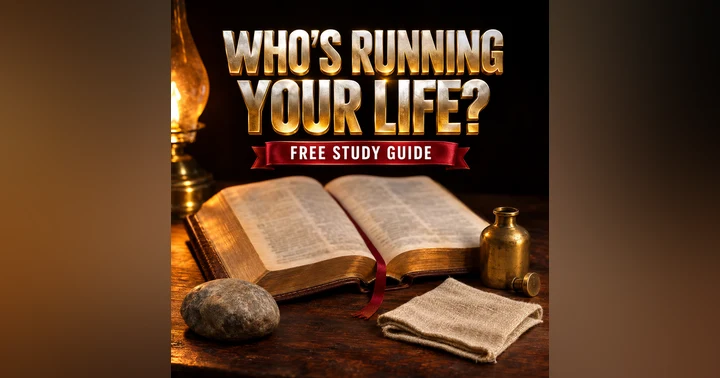
Who's Really Running Your Life?

Who's Really Running Your Life?
What Ruth, Hannah, a captured ark, and Israel's first king reveal about the throne in your heart
By Dr. Shawn M. Greener | Through the Bible in a Year: Walking the Story of God | Sunday Summation and Deepening, Days 155-159
Share this freely. Forward it, print it, read it to your small group. Keep it whole, and keep the notice at the end.
Companion study: Get the Free Study Guide: The King We Asked For
━━━━━━━━━━━━━━━━━━━━
The alarm goes off at 6:12. Before your feet touch the floor, your thumb is already on the phone. One headline. One text from someone you'd rather not hear from. One number in your bank app. And just like that, the day's been decided. Your mood, your tone with your spouse, the way you'll drive to work, all of it settled before the coffee finishes brewing.
You didn't vote for that. But something took the throne of your morning, and it'll try to keep it all day.
So here's the question this week's Scripture asks without blinking: who's really running your life?
Judges ended on its bleakest line: "In those days there was no king in Israel. Everyone did what was right in his own eyes" (Judges 21:25). This week we walked out of that silence into Ruth and 1 Samuel 1-12, and every scene presses the same question. Who sits on the throne?
THE WEEK WE JUST WALKED
━━━━━━━━━━━━━━━━━━━━
• Day 155, Ruth 1-4: Hesed carries you home. A Moabite widow clings to her bitter mother-in-law, and God's covenant love brings them both from empty to full. • Day 156, 1 Samuel 1-3: God hears what you can't say. Hannah prays without sound, gives her son back, and sings of a king before Israel has one. • Day 157, 1 Samuel 4-7: God can't be used, and He can't be beaten. Israel treats the ark like a charm and loses it, and the LORD humbles Dagon in his own house. • Day 158, 1 Samuel 8-10: Asking to be like everyone else is a vote against the King. Israel demands a king "like all the nations," and God calls it what it is. • Day 159, 1 Samuel 11-12: You can't undo it, but you can still follow. Saul wins at Jabesh-gilead, and Samuel tells a regretful nation, "Do not be afraid."
Tonight we go underneath those five days.
THE QUESTION BEHIND EVERY SCENE
━━━━━━━━━━━━━━━━━━━━
Watch how the story is built. Ruth opens with a man named Elimelech. His name means "my God is king." In a famine, he leaves Bethlehem, the "house of bread," and moves his family to Moab. He dies there. Both his sons die there. The man whose name confessed God's kingship dies outside the land God gave him.
Then the book closes with a genealogy, and the last word of Ruth is a name: David (Ruth 4:22). The book that starts with "my God is king" dying in a foreign land ends with the name of Israel's greatest king.
Hannah's song does the same thing. She's a woman with no son, praying in a sanctuary run by corrupt priests, in a nation with no king. And her song ends, "he will give strength to his king and exalt the horn of his anointed" (1 Samuel 2:10). That's the first time in Scripture the Hebrew word mashiach, anointed one, is used of a king. Israel doesn't have one yet. Hannah's already singing about Him.
Then the ark, the throne of the invisible King, is captured. Israel asks for a human king, and God says, "they have rejected me from being king over them" (1 Samuel 8:7). By week's end Samuel puts it plainly: "the LORD your God was your king" (12:12).
TWO WAYS TO ASK
━━━━━━━━━━━━━━━━━━━━
Here's something you can't see in English, and once you see it you'll never read 1 Samuel the same way.
The Hebrew verb sha'al (שָׁאַל) means "to ask." It runs all through Hannah's story. Eli tells her, "the God of Israel grant your petition" (1:17). She names her son Samuel and explains, "I have asked for him from the LORD" (1:20). When she brings the boy to Shiloh, she says, "the LORD has granted me my petition that I made to him" (1:27). Every one of those is sha'al.
Then she says something remarkable. The ESV renders it, "Therefore I have lent him to the LORD" (1:28). The NASB 2020 says "dedicated." Both are reaching for a Hebrew form that doesn't come over easily. It's the causative form of sha'al. Hannah is saying, "I have made him asked." She asked God for this boy. Now she lets God ask for him.
Now fast-forward to the kingship chapters. Samuel speaks "to the people who were asking for a king" (8:10). He presents Saul as "the king whom you have chosen, for whom you have asked" (12:13). And the people confess they sinned by "asking for ourselves a king" (12:19). Same verb.
And the king's name? Sha'ul (שָׁאוּל). Saul. It's the passive form of the same verb. His name means "asked for."
Robert Alter and other scholars have noted how chapter 1's asking language anticipates Saul's name. The same book sets two kinds of asking side by side.
Hannah asks out of need. She receives a gift. She gives it back in worship.
Israel asks out of fear and comparison. It receives what it demanded. And it confesses too late that the asking itself was the sin.
One is petition. The other is demand. One opens your hands. The other closes them.
So when you pray, are you asking like Hannah, or demanding like Israel?
WHEN GLORY GOES INTO EXILE
━━━━━━━━━━━━━━━━━━━━
There's another word game in these chapters, and it's devastating.
The Hebrew root kbd carries the idea of weight. From it comes kavod (כָּבוֹד), glory, the weighty presence of God. Watch where the narrator uses it.
God confronts Eli: "Why then do you... honor your sons above me?" (2:29). That word "honor" is from kbd. Eli gave weight to his sons, who were stealing sacrifices and abusing the women who served at the tabernacle (2:12-17, 22). Then God says, "those who honor me I will honor, and those who despise me shall be lightly esteemed" (2:30).
When the news comes that the ark is captured, Eli falls backward and dies, "for the man was old and heavy" (4:18). Heavy is kaved. Same root.
That same day, his daughter-in-law gives birth and names the boy Ichabod, "no glory," saying, "The glory has departed from Israel, for the ark of God has been captured" (4:22).
Do you see it? A man who gave weight to the wrong things dies heavy, and the weight of God's presence departs. And the verb for "departed" is galah, the word Israel would later use for going into exile. The glory went into exile from Shiloh centuries before the people did.
But the story doesn't stop with Israel's loss. Across the ancient Near East, conquering armies carried off the gods of defeated nations and set them in their own temples as trophies of submission. Assyrian and Babylonian records describe the practice. The Philistines do exactly that. They set the ark beside their god Dagon in Ashdod (1 Samuel 5:2).
The next morning, Dagon is face down before the ark, a vassal before his lord. They set him back up. The next morning, his head and hands lie broken on the threshold (5:3-4). The narrator adds: "This is why the priests of Dagon and all who enter the house of Dagon do not tread on the threshold of Dagon in Ashdod to this day" (5:5). The captured God humiliated the conqueror's god in his own house, and the Philistines built a religious custom around the spot where it happened.
Israel couldn't use God as a weapon. The Philistines couldn't hold Him as a trophy. He can't be used, and He can't be beaten.
WHAT THE KING WOULD TAKE
━━━━━━━━━━━━━━━━━━━━
When Israel's elders demand a king, Samuel warns them what that king will do. Read 1 Samuel 8:11-17 slowly, and count one verb. He will take your sons. He will take your daughters. He will take the best of your fields. He will take a tenth of your grain. He will take your servants. He will take a tenth of your flocks. Six times: take.
Skeptics once called this speech a later invention. Archaeology answered. Akkadian documents from the city of Ugarit on the Syrian coast, dating to roughly the thirteenth century BC, describe exactly this system of royal conscription, land seized and handed to royal servants, and tithes on produce. In 1956 the scholar Isaac Mendelsohn showed that Samuel was describing real Canaanite kingship as it actually operated in his world. Israel wanted a king like the nations. Samuel told them exactly what the nations' kings were like.
Moses saw this coming. Deuteronomy 17:14-20 anticipates the request almost word for word: "I will set a king over me, like all the nations that are around me." Moses didn't forbid a king. He set conditions. A king God chooses. No hoarding horses, wives, or gold. And he must write out his own copy of the Torah and read it all his life, "that his heart may not be lifted up above his brothers."
So the sin in 1 Samuel 8 wasn't wanting a king. It was why they wanted one, and when. They asked right after the LORD had thundered from heaven and routed the Philistines for them (7:10). And they asked so a man could "fight our battles" (8:20). They wanted someone they could see, so they wouldn't have to trust the One they couldn't.
We do the same thing. We ask for a bigger paycheck, a stronger leader, a clearer plan, and underneath the request sits a quiet decision: I'd rather depend on what I can see.
DO NOT BE AFRAID. DO NOT TURN ASIDE. ━━━━━━━━━━━━━━━━━━━━
Here's where this week lands on the most honest page in the book.
In 1 Samuel 12, Samuel calls for thunder and rain at the wheat harvest. In Israel, the rains fall from late autumn through early spring. Wheat harvest comes in the dry season. Rain then is rare and can ruin a ready crop. So when the storm rolls in on command, nobody calls it a coincidence. The people are terrified, and they confess: "we have added to all our sins this evil, to ask for ourselves a king" (12:19).
And they can't take it back. Saul's already crowned. The request can't be unasked.
Maybe you know that feeling. A marriage that ended. Words you can't unsay.
Listen to Samuel's answer: "Do not be afraid; you have done all this evil. Yet do not turn aside from following the LORD, but serve the LORD with all your heart" (12:20).
He doesn't minimize it. "You have done all this evil." He doesn't leave them in it, either. "Do not be afraid." Honesty and hope in the same breath.
Then he warns them not to chase "empty things," and the Hebrew word is tohu (תֹּהוּ), the same word used for the formless earth before creation in Genesis 1:2. Every substitute king, every false throne, leads back toward chaos.
And then he gives them the ground of their hope, and it isn't their performance: "For the LORD will not forsake his people, for his great name's sake, because it has pleased the LORD to make you a people for himself" (12:22). God's faithfulness rests on God's own name. That's why you can still follow Him after the choice you can't undo.
Samuel adds one more promise, and it's one of the tenderest lines in the Old Testament: "far be it from me that I should sin against the LORD by ceasing to pray for you" (12:23). He's just been rejected as their leader. He keeps praying anyway.
ISRAEL'S PLACE: NOT FORSAKEN
━━━━━━━━━━━━━━━━━━━━
God didn't forsake Israel even after Israel rejected Him as King. The covenant rested on His name, not their record.
Paul builds on exactly that ground in Romans 11. "I ask, then, has God rejected his people? By no means!" (Romans 11:1). "God has not rejected his people whom he foreknew" (11:2). "For the gifts and the calling of God are irrevocable" (11:29).
And Ruth shows how the nations come in. She's a Moabite, from a people Israel remembered as an enemy. Yet she says to Naomi, "your people shall be my people, and your God my God" (Ruth 1:16). She doesn't replace Israel. She joins Israel. She takes refuge under the wings of Israel's God (2:12), and she becomes the great-grandmother of David.
That's the posture Paul calls Gentile believers to: grafted in among the natural branches, supported by the root, never boasting against it (Romans 11:17-18). Humility, gratitude, and love for the people God hasn't forsaken.
THE KING WE NEVER KNEW TO ASK FOR
━━━━━━━━━━━━━━━━━━━━
Israel asked for a king so it could be like the nations. God had a different King in mind, one given so the nations could come to Israel's God.
Isaiah announced Him: "For to us a child is born, to us a son is given; and the government shall be upon his shoulder" (Isaiah 9:6). Not demanded. Given.
Ruth's story ends in Bethlehem with a go'el (גֹּאֵל), a kinsman-redeemer, and the name of David. Centuries later, in that same Bethlehem, Yeshua was born, and Matthew writes Ruth's name into His genealogy (Matthew 1:5). In Ruth 4, the nearer redeemer refused to help because it would "impair my own inheritance" (Ruth 4:6). Yeshua became our near kinsman by sharing our flesh and blood (Hebrews 2:14), and He gave His inheritance, His life, to redeem ours.
The glory went into exile from Shiloh. And John writes, "the Word became flesh and dwelt among us, and we have seen his glory" (John 1:14). The verb for "dwelt" means to pitch a tent, the language of the tabernacle. The glory came back, wrapped in human flesh.
Saul was chosen because he stood head and shoulders above everyone. Isaiah said of the Servant, "he had no form or majesty that we should look at him" (Isaiah 53:2). Saul went looking for lost donkeys and found a crown. Yeshua rode into Jerusalem on a donkey, "humble," exactly as Zechariah 9:9 said Zion's King would come.
Samuel warned that the king would take, take, take. Yeshua said, "the Son of Man came not to be served but to serve, and to give his life as a ransom for many" (Mark 10:45).
And Samuel promised never to stop praying for Israel. Yeshua prayed for Peter before Peter denied Him (Luke 22:31-32), restored him afterward (John 21:15-19), and "always lives to make intercession" for all who draw near to God through Him (Hebrews 7:25).
He's the King Israel never knew to ask for. And He's the only One who belongs on the throne of your life.
SEVEN DAYS TO HAND BACK THE THRONE ━━━━━━━━━━━━━━━━━━━━
Put this week into practice, one day at a time.
- Day 1: Name the first ruler. Tomorrow morning, before you touch your phone, notice the first thing that wants your attention. Write it down. Then pray Psalm 5:3 out loud: "O LORD, in the morning you hear my voice."
- Day 2: Hesed on purpose. Read Ruth 2:8-16. Do one thing for someone today that goes beyond what you owe them, and don't mention it to anyone.
- Day 3: Pour it out. Read 1 Samuel 1:10-18. Find a quiet place and tell God the prayer you've stopped praying. Say it all. Then write down whether your face changed before your circumstances did.
- Day 4: Check your charms. Read 1 Samuel 4:3-11. Ask yourself what religious habit you've been treating as a guarantee instead of a relationship. Keep the habit, and give God back the trust.
- Day 5: Count what you're asking for. Read 1 Samuel 8:5-20. List three things you've been asking God for this month. Next to each, write "petition" or "demand." Be ruthless.
- Day 6: The thing you can't undo. Read 1 Samuel 12:19-22. Write down one choice you can't reverse. Under it, write 12:20 in full: "Do not be afraid... Yet do not turn aside from following the LORD." Then take one step of following today.
- Day 7: Don't stop praying. Read 1 Samuel 12:23. Choose one person who's disappointed you, and pray for them by name. Then pray for the peace of Jerusalem and thank God that He hasn't forsaken Israel.
━━━━━━━━━━━━━━━━━━━━
Tomorrow the alarm will go off again. Your thumb will reach for the phone, and something will try to take the throne before you're fully awake.
Here's what this week gave you to do. Before you pick it up, lay your hand on it and leave it there for a moment. Then say what Samuel said Israel had forgotten: "The LORD my God is my King."
Then pick it up. Read the headline. Answer the text. Check the balance. But do it as a servant of the King who was given, not a subject of whatever got to you first.
The phone doesn't get to run your life. The headlines don't either. The King from Bethlehem does.
━━━━━━━━━━━━━━━━━━━━
Go deeper with the free study guide, built for small groups, Sunday school, and Bible college: The King We Asked For
Watch every episode of this study, and subscribe with the bell: https://www.youtube.com/@DrShawnMichaelGreener
Join us LIVE weekdays at 7:00 AM Eastern, and Sunday at 6:30 PM Eastern for the Sunday Summation and Deepening.
Full archive and resources: https://www.truewordfaithforlife.com
Unless otherwise noted, Scripture quotations are from the ESV® Bible (The Holy Bible, English Standard Version®), © 2001 by Crossway, a publishing ministry of Good News Publishers. Used by permission. All rights reserved.
© 2026 Dr. Shawn M. Greener. All Rights Reserved. Free to copy and share in full, unedited, for non-commercial teaching, with this notice intact.
© 2026 Dr. Shawn M. Greener. All Rights Reserved.
Author / Host / Theologian/Ret. SlamDancer
I am just a beggar who found Bread, helping other hungry beggars to find Him too. My life has certainly been complex and I and my halo has many dents. Heschel said; "Something Sacred hangs in the balance of every moment." I live like it. I teach like it.
As a person who survived a fatal 92 mph vs 51 mph head on crash, after dying and re-animating, and surviving several other brushes with death, my perspective is, let's say, unique. I haven't always been a theologian and I'm living REAL life, just like you... I have my hurts, habits and hangups too.
I've learned a few very important things along the way that I'm confident you'll find useful... butter for the Gluten free Bread so to speak.. Oh, you may chuckle or full on snort along the way, but you might also shed a few tears... Faith for LIFE... That's how it happens.