
What If God Is Healing What You Tried to Bury?
Healing Buried Guilt: What If God Is Healing What You Tried to Bury?
Healing Buried Guilt: What If God Is Healing What You Tried to Bury?
Healing buried guilt is not comfortable, but it is mercy. In Genesis 42 through 46, God brings a buried wound into the light through truth, tested repentance, mercy, and His covenant presence.
Passage: Genesis 42 through 46
What if the thing you thought was finished was not finished yet because God was not finished yet?
PART ONE: BLOG POST
What If God Is Healing What You Tried to Bury?
Genesis 42 through 46
Not to shame you. Not to drag you back into pain. Not to reopen old wounds for their own sake.
But because some things cannot be healed while they stay buried.
And because God’s mercy is not fragile enough to leave infected wounds alone.
Genesis 42 through 46 is one of the most emotionally and theologically rich movements in the Joseph story. The brothers who sold Joseph are forced to face what they buried. Jacob must face his fear. Judah must face the test of whether his heart has actually changed. Joseph must face the cost of speaking truth with mercy. And Jacob must obey a God who is leading him somewhere that does not feel like promise.
This is not family drama.
This is covenant formation.
And the central question this passage asks us is not only: What happened in Joseph’s family?
It is this: What is God trying to heal in us that we have learned to survive around?
Buried Guilt Is Not the Same as Healing
The story begins with famine.
But famine is not only the problem. Famine is the pressure God uses to move Jacob’s family toward what they have been avoiding.
Joseph is in Egypt. Jacob is in Canaan. The brothers are carrying guilt beneath years of silence. Benjamin is being overprotected. And the covenant family is about to be forced back into the story they tried to leave behind.
Time has passed. The robe is long buried. Jacob has been grieving a lie for years. The brothers have learned to function with guilt under the surface.
But time does not automatically heal guilt. Old does not mean healed. Quiet does not mean clean. Buried does not mean resolved.
When the brothers stand before Joseph in Egypt, they do not recognize him. But Joseph recognizes them immediately. The dream they hated is standing in front of them in real life.
And then, under the pressure of accusation and confinement, the truth begins to leak out of their own mouths.
“In truth we are guilty concerning our brother.” Genesis 42:21
The Hebrew is striking: אֲבָל אֲשֵׁמִים אֲנַחְנוּ, aval ashamim anachnu. The word אֲשֵׁמִים, ashamim, comes from the root אָשַׁם, asham, a root later used in the Torah’s vocabulary of guilt and guilt offerings. The brothers do not yet have Leviticus in their hands, but the Torah’s final form wants us to hear the moral weight of their confession. This is guilt that must be answered before God.
That sentence, “we are guilty,” is where healing begins.
Not with image management. Not with spiritual language that deflects. Not with “it was complicated” or “everybody made mistakes.”
With truth.
God’s mercy for healing buried guilt often begins by disturbing the false peace we built around what we refused to face.
That does not sound like mercy at first. We tend to think mercy means God leaves the past alone. But if the past is still poisoning the present, leaving it alone is not mercy.
It is neglect.
Notice also: Joseph is not emotionally detached from this process. Genesis 42:24 tells us that he “turned away from them and wept.” He hears their guilt spoken aloud and weeps before anyone else sees. He will weep again at Genesis 43:30, and again at the reunion in Genesis 45:1–2. Joseph is not running a cold test. He is in anguish over what it takes to bring his family back into truth. His tears show that the path toward healing costs him too.
Conviction Is Not Condemnation
Some of us hear the word guilt and immediately feel condemned.
But conviction and condemnation are not the same thing.
Condemnation says: You are your sin. Hide forever.
Conviction says: This is sin. Bring it into the light and come home.
Condemnation drives you away from God. Conviction calls you back to Him.
God healing buried guilt does not look like destruction. It looks like painful mercy, the kind that brings what denial kept infected back into the light.
Yeshua does not save us by pretending sin never happened. He saves us by absorbing sin’s full weight at the cross and then calling us near.
Fear Cannot Protect What Only God Can Hold
Genesis 43 brings the pressure home.
The food is gone. Simeon is still in Egypt. The brothers cannot return without Benjamin. And Jacob will not release him.
We understand why. Jacob believes Joseph is dead. Benjamin is Rachel’s other son, what Jacob has left of the woman he loved and the son he lost.
His fear is wounded. It is not irrational.
But wounded fear can still become a false master.
Here is something the text shows us that we often miss: before they even leave for Egypt in chapter 43, Judah offers himself as surety for Benjamin. He says: “I myself will be a pledge of his safety.” Genesis 43:9
The Hebrew is אֶעֶרְבֶנּוּ, e’ervennu, from the root עָרַב, arav, to serve as guarantor, to be a surety. Judah is pledging himself as collateral. He is making a binding personal pledge before the test fully arrives.
This is not the Judah of Genesis 37 who said, “Let’s sell him.” Something has already been shifting. Chapter 44 will prove it at full cost. But chapter 43 gives us the first glimpse.
Meanwhile, Jacob is still gripping.
When fear gets wrapped around love, love can start sounding like wisdom while acting like control.
You lost trust, so now you manage relationships. You were betrayed, so you call suspicion discernment. You were wounded, so you call control protection. You carry a loss, so you hold everything else tighter.
But fear is a terrible shepherd. It can warn you. Alert you. Show you where it hurts. But fear cannot lead you into biblical shalom.
Only God can do that.
Jacob finally opens his hands: “If I am bereaved of my children, I am bereaved.” Genesis 43:14
That is not polished faith. That is trembling surrender. And sometimes trembling surrender is still surrender.
Biblical trust is not emotional numbness. It is not pretending the loss would not hurt. It is bringing what you love under the authority and covenant faithfulness of God.
Real Repentance Chooses Differently
Genesis 44 brings the test.
Joseph places the silver cup in Benjamin’s sack. The brothers are stopped. The cup is found. Benjamin is in danger.
The old door has opened again.
Years before, Rachel’s son was vulnerable. The brothers protected themselves. Joseph went into the pit alone.
Now Rachel’s other son is vulnerable. Benjamin can be left behind just as easily.
The test is not whether the brothers feel bad. The test is whether they will choose differently when the old opportunity returns.
Notice what happens at the dinner in chapter 43 before the cup test even arrives. Joseph seats the brothers in exact order of birth, from firstborn to youngest. The text says the men “looked at one another in amazement.” Genesis 43:33
In the ancient Near Eastern world, seating by birth order at a formal meal was deliberate and meaningful. How did this Egyptian official know their birth order? The brothers are astonished, and they are being tested before they know they are being tested. Joseph’s hidden knowledge of who they are is quietly on display.
Then Benjamin’s portion is “five times as much as any of theirs.” Genesis 43:34
Five times. The brother who holds Rachel’s other son’s place is being visibly, extravagantly favored right in front of them. Will they resent it? Will the old jealousy flare? The text says they drank and were merry. Something has already changed.
But the real test comes in chapter 44, when Benjamin is caught with the cup.
And then Judah says something remarkable before he offers himself as substitute. He tells Joseph: “God has found out the guilt of your servants.” Genesis 44:16
The Hebrew: הָאֱלֹהִים מָצָא אֶת־עֲוֺן עֲבָדֶיךָ, ha-Elohim matza et avon avadecha.
Judah does not say, “We did not take your cup.” He says God has found out their avon, their iniquity. He is not just talking about Benjamin and the cup. He is talking about Joseph. He is connecting this crisis to the deeper guilt they have been carrying. This is a moment of spiritual sight. Judah sees the hand of God in what is happening.
Then Judah steps forward and offers himself.
“Please let your servant remain instead of the boy.” Genesis 44:33
That is repentance with skin on it.
Regret and repentance are not the same thing.
Regret says: I hate what happened to me.
Repentance says: I hate what my sin did before God.
Regret wants relief from consequences. Repentance wants freedom from the old way. Regret can cry. But repentance chooses differently when the old pattern returns.
Judah does not claim change. He proves it by acting differently when it costs him.
Truth and Mercy Must Stand Together
Genesis 45 is one of the most stunning chapters in Scripture.
Joseph can no longer maintain composure. He clears the Egyptians from the room before he reveals himself. Whatever court expectations surrounded him in Egypt, this moment is too personal, too covenantal, and too painful to keep hidden behind official composure.
He weeps so loudly that the Egyptians outside hear it and Pharaoh’s household hears it.
Then he says the two most devastating words in the passage:
אֲנִי יוֹסֵף, Ani Yosef. “I am Joseph.”
The text says his brothers “could not answer him, for they were dismayed at his presence.”
The Hebrew is נִבְהֲלוּ מִפָּנָיו, nivhalu mipanav. Nivhal is used elsewhere for sudden terror, the kind of shock that goes beyond surprise into trembling. The years of buried guilt, the suppressed knowledge of what they did, and the recognition of who this is all erupt in a single moment.
But Joseph does not weaponize the moment.
He says: “Come near to me, please.” Genesis 45:4
Truth has arrived. But mercy moves toward them in the same breath.
“I am your brother, Joseph, whom you sold into Egypt.”
There is truth.
“And now do not be distressed or angry with yourselves because you sold me here, for God sent me before you to preserve life.”
There is providence.
In Genesis 45:5 through 9, Joseph repeatedly returns to this framing: God sent me. God was preserving life. God was at work. He does not say it once and move on. He insists on it because the brothers need to hear it more than once to have any hope of receiving it.
“You sold me.”
“God sent me.”
Human evil was real. God’s purpose was greater.
Joseph does not need to deny the wound in order to honor God. And he does not need to deny God’s providence in order to name the wound honestly.
That is mature faith.
Truth without mercy becomes a knife. Mercy without truth becomes denial. Biblical reconciliation holds both in the same room, at the same time, without flinching from either.
That is not avoidance. That is shalom beginning to form.
God’s Presence Is Safer Than Familiar Ground
Genesis 46 moves from reunion to relocation.
Jacob hears Joseph is alive. His spirit revives. Then come the wagons: “when he saw the wagons that Joseph had sent to carry him, the spirit of their father Jacob revived.” Genesis 45:27
Interestingly, it is the wagons, the physical evidence of royal provision, that finally convince Jacob. Sometimes the proof of God’s work reaches us through the concrete, tangible signs He provides, not just through words. Jacob needed to see what Joseph sent.
But then comes the harder thing: going down to Egypt.
We must not read that too quickly.
Jacob is not leaving a random location. He is leaving Canaan, the land directly tied to the covenant promise. God promised land to Abraham. He confirmed it to Isaac. He confirmed it again to Jacob himself.
The land is not scenery. The land is a covenant marker.
So Jacob stops at Beersheba before crossing into Egypt. This is not accidental geography. Beersheba is where Abraham made covenant memory, and where Isaac encountered God and received covenant reassurance. It is a place laden with patriarchal memory, the kind of place where you worship before walking into the unknown.
Jacob offers sacrifices there. Before stepping fully into what he cannot see, he worships.
Covenant people do not enter the unknown by pretending they are not afraid. They bring fear into the presence of the One who made the promise.
Then God speaks in a night vision. In the ancient Near Eastern world, dreams and night visions were recognized across cultures as a serious mode of divine communication. Egypt had dream interpreters. Mesopotamia had omen literature. The ancient world took seriously the possibility that the divine could speak in the night. Here, the God of Israel speaks to Jacob in that very mode, meeting him in a form of revelation his world understood.
“Jacob, Jacob.”
“Here I am.”
“I am God, the God of your father. Do not be afraid to go down to Egypt, for there I will make you into a great nation.”
There.
Not only in the familiar. Not only where the covenant was first given. Not only in the land of promise.
There, in foreign ground, in empire, in a land that will eventually become oppression, God will keep building His nation.
Then the line that holds everything together:
“I myself will go down with you to Egypt, and I will also bring you up again.”
That is covenant presence. Not instructions from a distance. Not, “I will meet you when you survive it.” Not, “I will watch from above.”
“I myself will go down with you.”
One more detail worth carrying: the text tells us that the total number of persons belonging to Jacob who came into Egypt was seventy souls. Genesis 46:27
Many readers have noticed the symmetry between the seventy souls of Jacob’s household entering Egypt and the seventy nations listed in Genesis 10. At minimum, it invites us to see Israel’s story in relation to the nations, not apart from them. Seventy from Jacob go down into Egypt. Seventy nations populate the earth in the Table of Nations. Israel’s story is being positioned for the sake of the nations from the beginning.
God may lead you away from what feels safe. He never leads you away from His redemptive purpose.
Yeshua Is the Greater Fulfillment
Joseph gives us shadows. Yeshua is the substance.
Joseph is rejected by his brothers. Yeshua is rejected by His own.
Joseph weeps over his brothers, aching for reunion before they know who he is. Yeshua weeps over Jerusalem: “How often would I have gathered your children together as a hen gathers her brood under her wings, and you were not willing.” Matthew 23:37
The God who weeps over those who do not yet know Him is not a new idea. It runs through Joseph all the way to the Messiah.
Joseph suffers because of human evil, yet God uses it to preserve life. Yeshua suffers because of human sin, yet God uses the cross to bring salvation.
Judah offers himself in Benjamin’s place. Yeshua gives Himself in the place of sinners.
Joseph says, “Come near to me.” Yeshua says, “Come to Me.”
Jacob goes down into Egypt with the promise, “I myself will go down with you.” In Messiah, God comes all the way down. Into flesh. Into weakness. Into rejection. Into sorrow. Into suffering. Into death. Into the grave.
And then God brings Him up.
In the resurrection of Yeshua, the pattern of “down and up” reaches its ultimate redemptive fullness.
At the cross, truth and mercy meet. Sin is judged. Grace is given. The guilty are invited near. The rejected Son becomes the saving King.
So you do not have to hide. You do not have to keep gripping. You do not have to settle for regret. You do not have to call avoidance peace. You do not have to worship the familiar.
Yeshua is enough for the truth. Yeshua is enough for the fear. Yeshua is enough for the test. Yeshua is enough for the wound. Yeshua is enough for the unknown.
A Faithful Step This Week
Ask God these five honest questions. Do not rush them. Let them do their work.
1. What guilt have I buried that You are calling into the light?
2. What am I gripping because I am afraid to trust You with it?
3. Where is the old test returning, and will I choose differently?
4. Where have I mistaken silence for peace?
5. What familiar place am I treating like my savior?
Then take one faithful step.
Tell the truth. Open your hands. Choose differently. Receive mercy. Speak cleanly. Obey courageously.
The safest place in your life is not the place you can control. It is the place where God is with you.
And in Yeshua, God has come near.
A WORD ABOUT MOOSEWORKS BIBLE
Some Bibles carry more than printed pages.
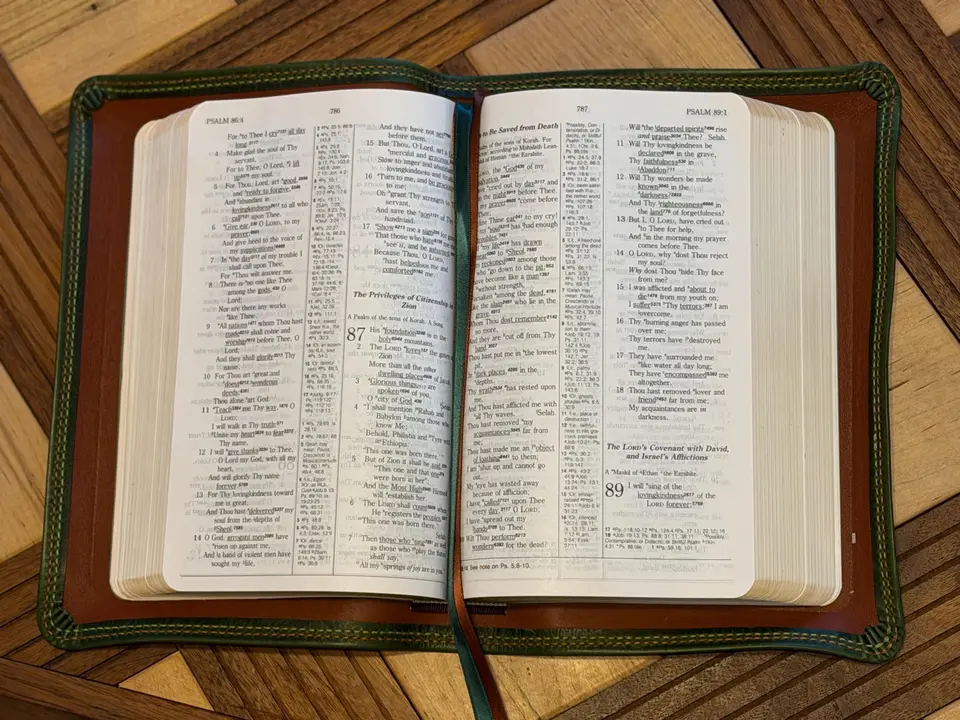
They carry prayers.
Tears.
Sermon notes.
Hospital-room verses.
Names written in margins.
Promises underlined when life was hard.
And sometimes, after years of use, the cover begins to fail, the binding weakens, and the pages need careful hands.

If you have a Bible that has walked with you through seasons of grief, repentance, mercy, and obedience, I recommend Melissa of MooseWorks Bible.
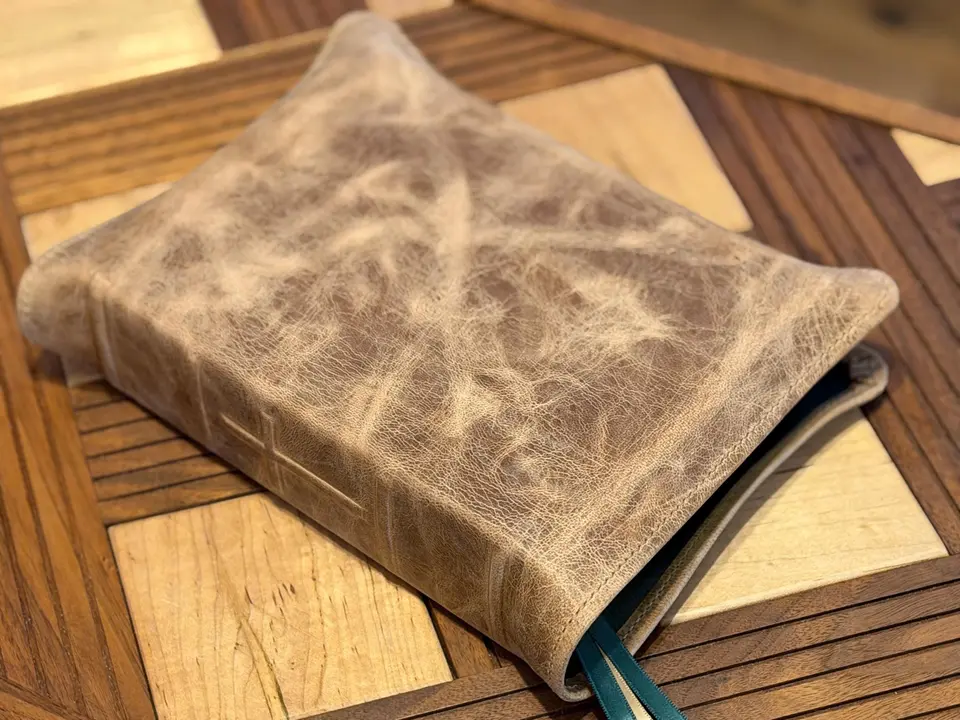
MooseWorks Bible offers careful, beautiful Bible restoration and rebinding for Bibles that still have miles of faithful use ahead.

Your Bible may be worn.
But that does not mean its story is finished.
Visit MooseWorks Bible here:
https://www.etsy.com/shop/MooseworksBibles
PART TWO: STUDY GUIDE
What If God Is Healing What You Tried to Bury?
Genesis 42 through 46
Sunday Summation and Deepening
Days 45 through 49
Main Passage: Genesis 42 through 46
Weekly Theme: God brings buried guilt, fear, half-finished repentance, and unspoken truth into the light, not to crush His people, but to lead them through healing into covenant faithfulness and biblical shalom.
Opening Reflection
This study guide helps you walk through Genesis 42 through 46 by tracing five movements: buried guilt, fear wrapped around love, tested repentance, truth joined to mercy, and obedience into the unknown.
What if the thing you thought was finished was not finished because God was not finished?
Genesis 42 through 46 shows us a family that learned to function around a wound. Joseph was sold. Jacob was deceived. The brothers carried guilt. Benjamin was overprotected. The house kept moving, but the truth had never been healed.
God’s mercy often brings hidden things into the light, not to destroy His people, but to redeem what denial kept infected.
The question is not only what happened in Joseph’s family. The question is what God is trying to heal in us that we have learned to survive around.
Key Passages for Study
Genesis 42:21, “In truth we are guilty concerning our brother.”
Genesis 43:9, Judah offers himself as surety for Benjamin.
Genesis 43:14, Jacob releases Benjamin: “If I am bereaved of my children, I am bereaved.”
Genesis 43:33, The brothers are seated in exact birth order; they are astonished.
Genesis 44:16, Judah says: “God has found out the guilt of your servants.”
Genesis 44:33, Judah offers himself in Benjamin’s place.
Genesis 45:4–9, Joseph reveals himself, names what happened, and names God’s purpose.
Genesis 46:3–4, God tells Jacob not to fear Egypt and promises: “I myself will go down with you.”
Section 1: Buried Guilt Is Not Healing
Genesis 42
Observation
Famine brings Joseph’s brothers to Egypt. They bow before Joseph without recognizing him. Joseph recognizes them immediately, begins testing them, and hears them speak their guilt aloud for the first time. He turns away and weeps, alone, before anyone can see, before returning to continue the process.
Interpretation
The brothers’ guilt had not disappeared because years had passed. They had lived with the lie. They had not been healed. God uses famine, distance, and Joseph’s position to bring buried guilt into the light.
Joseph’s repeated weeping throughout this section, Genesis 42:24; 43:30; 45:1–2, shows this is not cold administration. He is in anguish over what it takes to bring his family back into truth. The path toward healing costs Joseph something too.
Deepening Insight
Time does not automatically sanctify guilt. Distance does not automatically produce repentance.
The Hebrew word the brothers use, אֲשֵׁמִים, ashamim, from the root אָשַׁם, asham, is the same root later used in the Torah’s vocabulary of guilt and guilt offerings. Their confession is not casual. It carries moral and covenant weight.
Conviction is not condemnation. Condemnation drives us away from God. Conviction calls us back to Him.
Application Questions
1. What part of your past still has more power over you than you want to admit?
2. Where have you renamed guilt as “complicated,” “old news,” or “just a hard season”?
3. How can you tell the difference between condemnation, which destroys, and conviction, which calls you home?
4. What would it look like to name one hidden thing honestly before God, without explaining it away or dramatizing it?
5. What does it tell you about Joseph that he wept before the reunion, and that the healing process already cost him something?
Concrete Step
Write one honest sentence before God. Do not explain it. Do not dramatize it. Simply name it.
Father, I lied.
Father, I betrayed.
Father, I hid.
Father, I used someone.
Father, I covered it up.
Section 2: Fear Cannot Protect What Only God Can Hold
Genesis 43
Observation
The famine intensifies. The brothers cannot return to Egypt without Benjamin. Jacob resists releasing him out of fear. Before they even leave, Judah offers himself as surety, a binding pledge, for Benjamin’s safety. Eventually Jacob releases Benjamin with trembling words: “If I am bereaved of my children, I am bereaved.”
Interpretation
Jacob’s fear is understandable, but it has begun making decisions for him. His love for Benjamin is real; the problem is that fear has wrapped itself around that love and begun to look like wisdom.
Judah’s offer of surety in verse 9, אֶעֶרְבֶנּוּ, e’ervennu, from the root עָרַב, arav, to serve as guarantor, is not a casual promise. In the ancient world, serving as surety meant taking on another’s liability as your own. Judah is already pledging himself before the test arrives. Something has begun to shift in him.
Deepening Insight
When fear gets wrapped around love, love can start sounding like wisdom while acting like control.
Fear can warn you. Alert you. Show you where something hurts. But fear cannot shepherd you into shalom.
Jacob’s release of Benjamin, even trembling, even uncertain, is still an act of surrender. Biblical trust is not emotional numbness. It is bringing what you love under God’s authority and care.
Application Questions
1. What are you gripping because you are terrified God might ask for it?
2. Where has fear started sounding like wisdom, discernment, or faithful protection in your life?
3. What is the difference between loving someone faithfully and trying to control them out of fear?
4. What would open-handed trust look like in your specific situation right now?
5. Why might Judah’s quiet offer of surety in Genesis 43 be just as significant as his dramatic offer in Genesis 44?
Concrete Step
Pray with open hands. Name the person, plan, relationship, or future you are afraid to release.
Father, I cannot hold this better than You.
Section 3: Real Repentance Chooses Differently
Genesis 44
Observation
Joseph places his silver cup in Benjamin’s sack. When it is found, Benjamin is accused. The brothers face the exact situation that arose years ago: Rachel’s son is vulnerable, and they can walk away. This time they do not. They all return to the city. Then Judah, the man who once helped sell Joseph, offers himself in Benjamin’s place. Before making that offer, he says: “God has found out the guilt of your servants.” Genesis 44:16
Interpretation
Judah’s statement in verse 16 is spiritually significant. He does not just say they have been caught with the cup. He says God has found out their avon, their iniquity. Judah connects this moment to the deeper guilt they have been carrying. He sees the hand of God in what is happening. This is not just legal strategy. It is spiritual perception.
Before the test, Joseph also seated the brothers in exact birth order at dinner. The brothers were astonished. How does this official know? Their birth order being known signals that Joseph has hidden knowledge of who they are, even while they do not know who he is. And Benjamin’s five-fold portion tests their jealousy. Will they resent Rachel’s son being favored the way they resented Rachel’s other son?
They do not. They drink together and are merry. Something has changed.
And then Judah proves it when it costs him.
Deepening Insight
Regret and repentance are not the same thing.
Regret says: I hate what happened to me.
Repentance says: I hate what my sin did before God.
Regret wants relief from consequences. Repentance wants freedom from the old pattern.
Regret can cry. But repentance chooses differently when the old door opens.
Application Questions
1. Where is the old test returning in your life?
2. Have you been measuring repentance by emotion or by different action?
3. Why was the seating-by-birth-order moment in Genesis 43:33 significant for what came next?
4. Why does Judah’s phrase “God has found out our iniquity” in Genesis 44:16 suggest more than concern about the cup?
5. Where do you need to stop claiming change and start bearing fruit that proves it?
Concrete Step
Identify one old pattern. Choose the opposite act of obedience.
If you used to lie, tell the truth.
If you used to run, stay present.
If you used to blame, take responsibility.
If you used to protect yourself at someone else’s expense, protect them even when it costs you.
Section 4: Mercy Tells the Truth
Genesis 45
Observation
Joseph clears the room of Egyptians. He weeps so loudly that Pharaoh’s household hears it. Then he speaks the two words that expose everything: אֲנִי יוֹסֵף, Ani Yosef, “I am Joseph.” The brothers are struck speechless. Then Joseph says, “Come near to me, please,” and tells the truth and speaks providence in the same breath. He repeatedly returns to the framing that God sent him before them to preserve life.
Interpretation
Joseph holds truth and mercy together without flinching from either.
“You sold me.” Truth.
“God sent me.” Providence.
He does not deny the wound. He does not minimize it. He also refuses to let it become the whole story. Joseph returns to the God-sent-me framing because the brothers need to hear it more than once to have any hope of receiving it.
Joseph’s weeping also shows that covenant identity is stronger than cultural performance. He is not merely an Egyptian official managing a crisis. He is Joseph, son of Jacob, brother to the men who betrayed him, and servant of the God who preserved life through suffering.
Deepening Insight
Truth without mercy becomes a knife. Mercy without truth becomes denial.
Biblical reconciliation holds both in the same room at the same time.
This does not mean every victim must restore unsafe access to someone who has not genuinely repented. Forgiveness and trust are not identical. But followers of Yeshua are not permitted to organize their lives around permanent verdict-holding.
Application Questions
1. Where have you mistaken silence for peace?
2. Where are you tempted to use truth as a weapon?
3. What would clean truth, honest but not cruel, look like in your situation?
4. What would wise mercy, genuine but not naive, look like?
5. Are boundaries still needed in your situation? If so, what would faithful boundaries look like alongside genuine forgiveness?
Concrete Step
Ask God two questions today:
Father, what would clean truth look like here?
Father, what would wise mercy look like here?
Do not separate them. Bring both under the lordship of Yeshua.
Section 5: God Goes With His People Into the Unknown
Genesis 46
Observation
Jacob hears Joseph is alive. His spirit revives. But it is the wagons, the physical, tangible evidence of Joseph’s provision, that finally convinces him. Jacob prepares to go down to Egypt, stopping at Beersheba to offer sacrifices. God speaks in a night vision. He tells Jacob not to fear Egypt, promises to make him a great nation there, and says: “I myself will go down with you to Egypt, and I will also bring you up again.” The total number of Jacob’s household entering Egypt is seventy souls.
Interpretation
Beersheba is not a random stop. It is connected to Abraham and Isaac in covenant memory. Jacob anchors himself in worship before entering the unknown.
The night vision is also significant. Dreams and night visions were taken seriously in the ancient Near Eastern world as a mode of divine communication. God meets Jacob in the night and speaks directly into his fear.
The number seventy is also worth noticing. Genesis 10 lists seventy nations in the Table of Nations. Genesis 46 gives us seventy souls entering Egypt. Many readers have seen this as a meaningful literary-theological connection. At minimum, it reminds us that Israel’s descent into Egypt is part of a story God is telling for the sake of the nations.
Deepening Insight
God may lead you away from what feels safe. He never leads you away from His redemptive promise.
The safest place in your life is not the place you can control. It is the place where God is present with you.
Application Questions
1. What familiar place are you afraid to leave because you are not sure God will meet you in the unknown?
2. What have you started treating like your savior?
3. Are you staying because God told you to stay, or because you are afraid to trust Him if He says, “Go”?
4. Why did Jacob stop at Beersheba specifically? What does that pattern of worship before the unknown teach you?
5. What does the promise “I myself will go down with you” reveal about how God accompanies His people?
6. What might the seventy souls entering Egypt suggest when read alongside the seventy nations in Genesis 10? How does this keep Israel’s story connected to God’s purpose for all nations?
Concrete Step
Before a major move or decision, worship first.
Stop. Name your fear honestly. Ask God for clarity. Then obey the next faithful step, not the whole road. Just the next step.
Yeshua Connection
Joseph gives us shadows. Yeshua is the substance.
Joseph is rejected by his brothers. Yeshua is rejected by His own.
Joseph weeps over those who do not yet know who he is. Yeshua weeps over Jerusalem: “How often would I have gathered your children... and you were not willing.” Matthew 23:37
The God who grieves over those who have not yet come home is not a new idea. It runs from Joseph to the Messiah.
Joseph suffers because of human evil; God uses it to preserve life. Yeshua suffers because of human sin; God uses the cross to bring salvation.
Judah offers himself in Benjamin’s place. Yeshua gives Himself in the place of sinners.
Joseph says, “Come near to me.” Yeshua says, “Come to Me.”
Jacob goes down into Egypt with the promise, “I myself will go down with you.” In Messiah, God comes all the way down, into flesh, weakness, rejection, sorrow, suffering, death, and the grave.
And then God brings Him up.
In the resurrection of Yeshua, the pattern of “down and up” reaches its ultimate redemptive fullness.
At the cross, truth and mercy meet in the same place, at the same moment. Sin is judged. Grace is given. The guilty are invited near. The rejected Son becomes the saving King.
Personal Reflection Exercise
Take time this week to answer these five questions honestly before God. Do not rush. Write your answers. Pray through them.
1. What guilt have I buried that God is calling into the light?
2. What am I gripping because I am afraid to trust God with it?
3. Where is the old test returning, and what would choosing differently look like?
4. Where have I mistaken silence for peace?
5. What familiar place am I treating like my savior?
Ask God for one concrete step of obedience, not the whole road. The next step.
Group Discussion Questions
1. Why do people often confuse time passing with healing? What does the brothers’ guilt in Genesis 42 teach us about this?
2. What is the difference between conviction and condemnation? Which one does God use, and how can you tell?
3. How can fear disguise itself as wisdom, discernment, or faithful protection?
4. Why is Judah’s offer of surety in Genesis 43 significant, even before the dramatic test of chapter 44?
5. What does Judah’s statement “God has found out our iniquity” in Genesis 44:16 reveal about the nature of genuine repentance?
6. Why is Judah’s offer in Genesis 44 such strong evidence of real change, not just remorse?
7. Why does biblical reconciliation require both truth and mercy? What goes wrong when you have one without the other?
8. How does Joseph’s statement “you sold me” alongside “God sent me” help us avoid both denial and bitterness?
9. Why would going down to Egypt have been spiritually and covenantally difficult for Jacob? Why does his stop at Beersheba matter?
10. What does “I myself will go down with you” reveal about God’s covenant faithfulness, and how does it point toward the Incarnation?
11. What might the seventy souls entering Egypt suggest when read alongside the seventy nations in Genesis 10? How does this keep Israel’s story connected to God’s purpose for all nations?
12. What is one step of obedience this passage is calling you to take?
For Families
Read Genesis 45:1–8 together.
Ask: Why were Joseph’s brothers afraid when he said his name? Why did Joseph tell the truth? How did he show kindness even though they had hurt him? What does this tell us about how God can use hard things for good?
Family Practice: Have each person name one thing they are thankful God can heal or make right. Then pray together for courage to tell the truth and receive mercy.
For Personal Prayer
Father, bring me into truth without crushing me under condemnation.
Show me what I have buried. Show me what I am gripping. Show me where I have confused regret with repentance. Show me where I have called silence peace. Show me where I am afraid to obey because I do not know the whole road.
Teach me to tell the truth cleanly. Teach me to open my hands. Teach me to choose differently when the old door opens. Teach me to receive mercy. Teach me to extend mercy wisely. Teach me to trust Your presence in the unknown.
Thank You for Yeshua, who came all the way down for me, died for my sins, rose again, and calls me near.
In Yeshua’s Name, amen.
Weekly Challenge
This week, do one of the following:
Name one buried truth honestly before God.
Open your hands over one thing you have been gripping in fear.
Choose differently when an old pattern returns.
Speak clean truth where you have been hiding behind silence.
Take one faithful step into the unknown, trusting that God goes with you.
Do not perform. Do not fix everything at once. Take the next faithful step.
Closing Thought
The room you sealed is not sealed to God.
The guilt you buried is not beyond mercy.
The fear you have been protecting is not stronger than His care.
The old door is not stronger than His transforming grace.
The wound you have named is not bigger than His redemption.
The unknown ahead is not empty.
God goes with His people.
And in Yeshua, God has come near.
Footnotes
1. The Hebrew root אָשַׁם, asham, carries the sense of guilt, liability, or incurring guilt. Later Torah uses related vocabulary for guilt and the guilt offering, especially in Leviticus 5 through 6. See Francis Brown, S. R. Driver, and Charles A. Briggs, The Brown-Driver-Briggs Hebrew and English Lexicon, s.v. “אָשַׁם”; Ludwig Koehler and Walter Baumgartner, The Hebrew and Aramaic Lexicon of the Old Testament, s.v. “אָשַׁם.”
2. Judah’s pledge in Genesis 43:9 uses the verbal form אֶעֶרְבֶנּוּ, e’ervennu, from the root עָרַב, arav, meaning to pledge, exchange, give security, or act as surety. See BDB, s.v. “עָרַב”; HALOT, s.v. “עָרַב.”
3. The seating by birth order and Benjamin’s five-fold portion in Genesis 43:33–34 function narratively as part of Joseph’s testing of the brothers. For literary observation on the dramatic irony of the Joseph narrative, see Robert Alter, The Hebrew Bible: A Translation with Commentary, vol. 1, The Five Books of Moses.
4. Judah’s statement in Genesis 44:16 uses עָוֺן, avon, often rendered iniquity, guilt, or moral crookedness. His statement connects the present crisis with the deeper guilt already surfacing in Genesis 42:21.
5. The brothers’ reaction in Genesis 45:3 is described with נִבְהֲלוּ, nivhalu, from the root בהל, associated with alarm, terror, dismay, or sudden disturbance. See BDB, s.v. “בָּהַל”; HALOT, s.v. “בהל.”
6. Joseph repeatedly frames the events of Genesis 45:5–9 in terms of God’s sending and preserving purpose. This does not erase human guilt, but it places human evil under God’s larger providential work.
7. Beersheba is a place of patriarchal memory connected with Abraham and Isaac. See Genesis 21:33 and Genesis 26:23–25. Jacob’s stop there before descending into Egypt is a worshipful anchoring in covenant memory before entering the unknown.
8. Dreams and night visions were widely recognized across the ancient Near East as modes of divine communication. See John H. Walton, Ancient Near Eastern Thought and the Old Testament.
9. The connection between the seventy nations of Genesis 10 and the seventy souls entering Egypt in Genesis 46:27 has been noted by interpreters as a literary and theological symmetry. At minimum, it keeps Israel’s story connected to God’s purpose for the nations.
10. The Complete Jewish Study Bible, edited by Rabbi Barry Rubin, offers helpful Jewish-background notes for reading Genesis within the larger covenant story.
11. Michael S. Heiser’s emphasis on God’s redemptive program for the nations, especially in relation to Genesis 10 through 12, helps frame Israel’s story as particular in election and global in purpose.
Bibliography
Alter, Robert. The Hebrew Bible: A Translation with Commentary. Vol. 1, The Five Books of Moses. New York: W. W. Norton, 2019.
Brown, Francis, S. R. Driver, and Charles A. Briggs. The Brown-Driver-Briggs Hebrew and English Lexicon. Peabody, MA: Hendrickson, 1996.
The Complete Jewish Study Bible. Edited by Rabbi Barry Rubin. Peabody, MA: Hendrickson, 2016.
Heiser, Michael S. The Unseen Realm: Recovering the Supernatural Worldview of the Bible. Bellingham, WA: Lexham Press, 2015.
Koehler, Ludwig, and Walter Baumgartner. The Hebrew and Aramaic Lexicon of the Old Testament. Translated and edited by M. E. J. Richardson. Leiden: Brill, 1994.
Sarna, Nahum M. Genesis. JPS Torah Commentary. Philadelphia: Jewish Publication Society, 1989.
Walton, John H. Ancient Near Eastern Thought and the Old Testament. Grand Rapids: Baker Academic, 2006.
Waltke, Bruce K., with Cathi J. Fredricks. Genesis: A Commentary. Grand Rapids: Zondervan, 2001.
Wenham, Gordon J. Genesis 16–50. Word Biblical Commentary 2. Dallas: Word Books, 1994.

Author / Host / Theologian/Ret. SlamDancer
I am just a beggar who found Bread, helping other hungry beggars to find Him too. My life has certainly been complex and I and my halo has many dents. Heschel said; "Something Sacred hangs in the balance of every moment." I live like it. I teach like it.
As a person who survived a fatal 92 mph vs 51 mph head on crash, after dying and re-animating, and surviving several other brushes with death, my perspective is, let's say, unique. I haven't always been a theologian and I'm living REAL life, just like you... I have my hurts, habits and hangups too.
I've learned a few very important things along the way that I'm confident you'll find useful... butter for the Gluten free Bread so to speak.. Oh, you may chuckle or full on snort along the way, but you might also shed a few tears... Faith for LIFE... That's how it happens.