Broken Family? God Forms You!
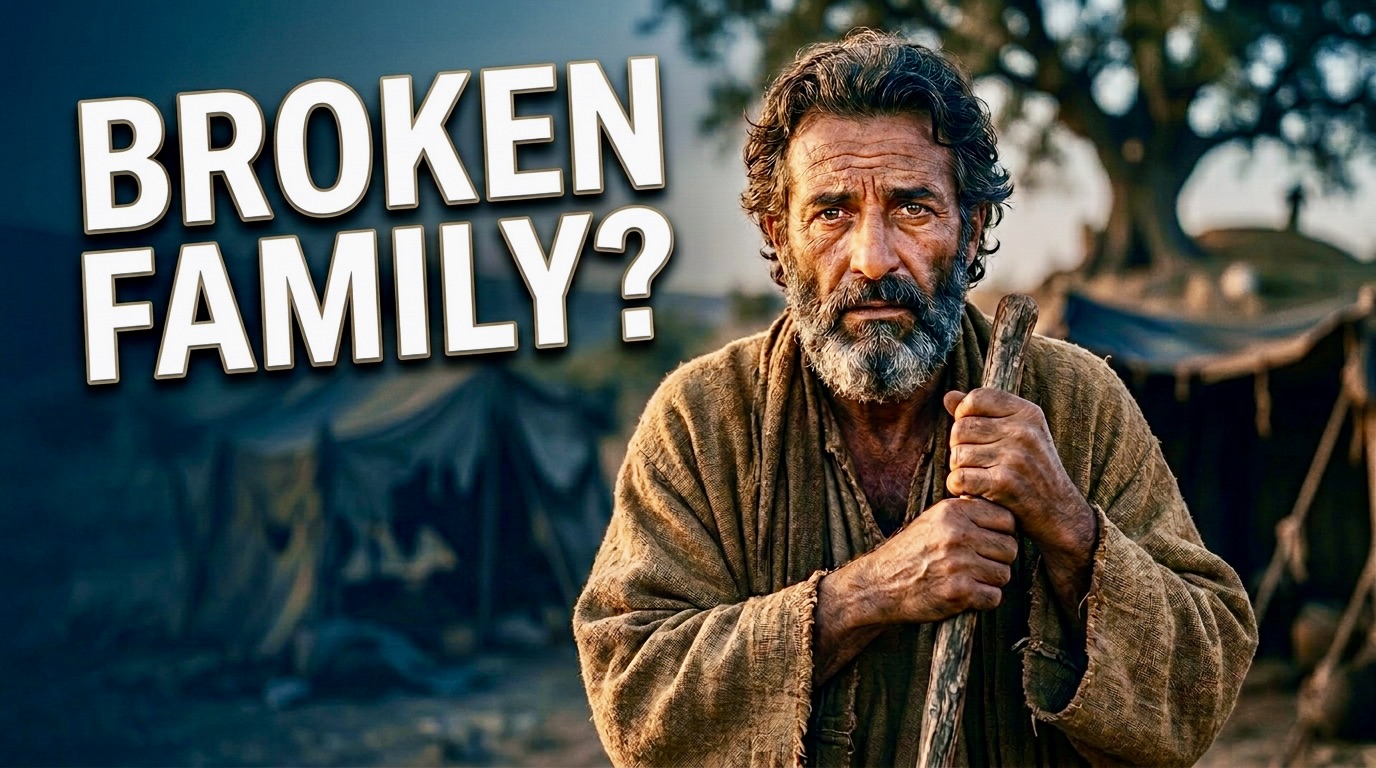
God Forms You.....
Broken Family? God Is Still Working!
God forms you in places you may wish He would simply remove. In Genesis 29 to 31, Leah feels unseen, Rachel strives, Jacob works under unfair conditions, God calls Jacob to leave, and Laban pursues him into conflict. Yet through it all, God sees, hears, remembers, provides, leads, and protects His covenant people.
Pressure is not proof God is absent. Sometimes pressure is where God forms trust, obedience, and shalom.
Question for your heart:
Where is God forming you right now in pressure you wish He would simply remove?
Some weeks in the Bible feel like reading a family journal nobody cleaned up before publication.
Genesis 29 to 31 is one of those places.
There is pain here.
There is jealousy here.
There is comparison here.
There is manipulation here.
There is unfair labor.
There is fear.
There is leaving.
There is conflict.
There is pursuit.
There are old household gods hidden in the baggage.
And yet, right in the middle of all of it, there is God.
Not absent.
Not distant.
Not embarrassed by the mess.
Not endorsing the dysfunction.
But faithfully, patiently, and powerfully working in the middle of it.
That matters because many of us have been trained to assume that if life is hard, God must be far away. If people overlook us, maybe God does too. If we are waiting, maybe God has forgotten us. If the system is unfair, maybe the outcome is already decided. If conflict follows obedience, maybe we misunderstood God.
Genesis refuses those lies.
This week’s reading, Genesis 29:31 to Genesis 31:55, gives us one long testimony to the faithfulness of God inside real human pressure.
Leah is unloved, but God sees her.
Rachel is barren and striving, but God remembers her.
Jacob works under unfair conditions, but God provides.
Laban manipulates, but God limits him.
Jacob leaves, but God goes with him.
Conflict rises, but God restrains what Jacob cannot control.
That is not a shallow inspirational thought.
That is covenant truth.
God forms His people in the very places they often want Him only to remove.
Leah: God Sees the Overlooked
Genesis 29:31 says, “When the LORD saw that Leah was hated, he opened her womb, but Rachel was barren.”
That sentence is one of the most tender sentences in Genesis.
The Lord saw.
Not Jacob.
Not the household.
Not the people impressed with Rachel.
The Lord saw Leah.
In the Ancient Near Eastern world, marriage was not merely a private romantic arrangement. It involved household security, inheritance, labor, lineage, covenant continuity, and survival. A woman’s place in the family system was often tied to children, especially sons. That does not mean the Bible approves every cultural assumption in that world. It means the Bible is showing us the real pressure Leah lived under.
Leah is married, present, fruitful, and still unloved.
That is a deep wound.
Some wounds do not come from being openly hated every day. Some wounds come from being emotionally unwanted. Some wounds come from being useful but not cherished. Some wounds come from being in the room but still feeling invisible.
Leah names her sons through her pain.
Reuben carries the sound of seeing. “The LORD has looked upon my affliction.”
Simeon carries the sound of hearing. “The LORD has heard that I am hated.”
Levi carries the longing for attachment. “Now this time my husband will be attached to me.”
But then Judah changes the room.
“This time I will praise the LORD.”
That is not denial.
That is not Leah pretending rejection does not hurt.
That is a shift of worship.
Leah moves from trying to make Jacob the source of her identity to praising the God who sees her.
And here is the stunning redemptive irony. Judah becomes the line of kings. From Judah comes David. From Judah comes Messiah. Yeshua comes through Leah’s line.
The woman people overlooked was not overlooked by God.
The pain people ignored became part of the royal road to redemption.
That does not erase Leah’s wound.
But it tells us her wound was not the whole story.
Rachel: God Remembers the One Who Is Striving
Genesis 30 opens with Rachel watching Leah bear children while she remains barren. The Bible says Rachel envies her sister.
Envy does not simply notice what someone else has.
Envy interprets someone else’s blessing as your rejection.
Rachel cries out to Jacob, “Give me children, or I shall die.”
That is desperation speaking.
That is identity wrapped around one outcome.
And it sounds ancient until we listen closely.
Without this child, I am not enough.
Without this marriage, I am not enough.
Without this breakthrough, I am not enough.
Without this ministry growth, I am not enough.
Without this answer, I am not enough.
That is striving.
Striving is what happens when desire becomes identity and waiting becomes unbearable.
Rachel gives Bilhah to Jacob. Leah later gives Zilpah. The household becomes filled with rivalry, comparison, bargaining, and pain. Even the strange mandrakes scene reveals how desperate the household has become. In the ancient world, mandrakes were associated with fertility and desire. Rachel wants them. Leah feels robbed of affection. Intimacy becomes a transaction.
That is what striving does.
It turns people into leverage.
It turns relationships into negotiations.
It turns the home into a marketplace of unmet needs.
Yet God is still working.
That does not mean God approves of the dysfunction. It means His covenant faithfulness is greater than human chaos.
Genesis 30:22 says, “Then God remembered Rachel, and God listened to her and opened her womb.”
God remembered.
God listened.
God opened.
Not pressure.
Not rivalry.
Not mandrakes.
Not manipulation.
God.
That is the word Rachel needed.
That is the word many of us need.
What God gives cannot finally be forced. It can only be received.
Jacob: God Provides in Unfair Places
By Genesis 30:25 to 43, Jacob is ready to provide for his own household. He has worked for Laban for years. He has served. He has endured manipulation. He has increased Laban’s wealth. Now he asks, “When shall I provide for my own household also?”
That is not selfish.
That is stewardship.
Jacob is not asking for luxury. He is asking how he will care for the family God has given him.
Laban does not want Jacob to leave because Jacob has made him prosperous. Laban even admits that he has learned by divination that the Lord has blessed him because of Jacob.
That tells us a lot about Laban.
He wants the benefit of God’s blessing without surrendering to the God who gives it.
He recognizes the blessing on Jacob, but he still tries to control Jacob’s future.
Laban agrees to Jacob’s wage proposal, then immediately manipulates the situation by removing the animals that would have helped Jacob prosper.
That is unfairness dressed in agreement.
But Laban is not sovereign.
The system may control the wages, but God controls the increase.
Jacob works. Jacob watches. Jacob acts. Jacob tends the flocks. But Genesis 31 later makes the deeper point clear. God gave Jacob the increase.
This balance matters.
Faithfulness is not passivity.
Jacob does not sit in the field doing nothing.
But Jacob’s effort is not his god.
His environment is not his lord.
His obstacle is not sovereign.
That is a word for anyone working under unfair conditions.
Your boss may control the schedule.
Your circumstances may create pressure.
Your family history may explain the struggle.
Other people may build obstacles.
But God is not limited by the environment you are standing in.
That does not mean injustice is good.
It does not mean manipulation is acceptable.
It does not mean you stay forever where God is telling you to leave.
Jacob will leave.
But it does mean unfairness is not stronger than God.
God Calls Jacob Forward
Genesis 31 begins with a change in tone. Laban’s sons accuse Jacob. Laban’s face no longer looks the same toward him. The atmosphere shifts.
Then God speaks.
“Return to the land of your fathers and to your kindred, and I will be with you.”
That sentence is the center of the movement.
God does not merely say, “Go.”
He says, “I will be with you.”
The place is changing.
The promise is not.
The season is shifting.
The presence remains.
That is how God leads His people.
Jacob calls Rachel and Leah into the field, away from Laban’s house, and tells them what has happened. He names Laban’s manipulation. He names the changed wages. He names the unfairness.
But he also says, “God did not permit him to harm me.”
That is mature sight.
Jacob does not deny what Laban did.
But he also recognizes what God prevented.
Many people struggle to hold those two things together.
If they name the injustice, they think they are being bitter.
If they name God’s protection, they think they have to minimize the pain.
Jacob does neither.
He says, in effect, “That was wrong, and God was with me.”
Rachel and Leah respond, “Whatever God has said to you, do.”
That is a powerful moment of alignment.
But the departure is still messy.
Rachel steals her father’s household gods, the teraphim. Jacob leaves secretly. This is not a polished religious exit. It is a complicated family taking an imperfect step toward promise.
That matters because some people think obedience only counts if it is neat.
Genesis shows something more honest.
People can move toward promise while still needing deeper formation.
They can leave the old land while still carrying old attachments.
They can obey God in one area while still needing deliverance in another.
God’s purpose is not merely to move us somewhere new.
His purpose is to make us new.
God Restrains What Jacob Cannot Control
In Genesis 31:22 to 55, Laban pursues Jacob.
This is not a minor family misunderstanding. Laban gathers his kinsmen and chases Jacob for seven days. In the Ancient Near Eastern world, kinship groups carried strength, authority, and household power. Laban comes with grievance, history, family backing, and control.
Jacob cannot control what Laban will do.
But God can.
Before Laban reaches Jacob, God comes to him in a dream by night and warns him not to speak to Jacob either good or bad.
God does not remove the confrontation.
He restrains what the confrontation can become.
That distinction matters.
Sometimes God does not cancel the meeting.
He sets a boundary on the threat.
Sometimes He does not make the person disappear.
He limits what they can do.
Sometimes He does not spare you from facing conflict.
He guards you inside it.
Laban arrives and rewrites the story. He talks as if Jacob robbed him of a joyful farewell, as if he only wanted music, celebration, and affection.
Genesis is not naïve about narrative manipulation.
People can mistreat you for years, then act surprised when you finally leave.
They can control and pressure, then tell the story as if they only wanted peace.
But Laban says the quiet part out loud.
“It is in my power to do you harm. But the God of your father spoke to me last night.”
Laban had power.
God set the boundary.
Laban had intention.
God intervened.
Laban had pursuit.
God had authority.
Eventually, Jacob and Laban set up a boundary. The heap of stones is not a sentimental greeting card. It is a witness. It says, “You do not cross this line to harm me, and I do not cross it to harm you.”
Sometimes peace requires boundaries.
Not because you hate people.
Because trust has been broken.
Not every relationship is healed by more access.
Sometimes the faithful thing is a clear boundary, a witness, and distance.
What This Week Teaches Us
When we step back, the week’s movement becomes clear.
God sees the overlooked.
God hears the wounded.
God remembers the waiting.
God provides in unfair places.
God calls His people forward.
God restrains what they cannot control.
That is the thread.
But there is another thread too.
God forms His people through pressure.
He forms Leah by shifting her from craving human preference to praising the Lord.
He forms Rachel by showing that what only God can give cannot be forced by striving.
He forms Jacob by teaching him that blessing is not finally secured by grasping, but received from God.
He forms the household by calling them out of Laban’s system.
He forms them further by exposing what they still carry from the old house.
This is not abstract theology.
It is real life.
You may be in Leah’s place, wondering if anyone sees you.
You may be in Rachel’s place, exhausted from comparison.
You may be in Jacob’s place, working under unfair conditions.
You may be hearing God say it is time to leave.
You may be facing conflict you cannot control.
You may be carrying old idols into a new season.
Genesis 29 to 31 says God is not absent from any of it.
The question is not, “Is this season easy?”
The deeper question is, “What is God forming here?”
A Practical Step Toward Shalom
Name your pressure honestly before God.
Do not make it vague.
Do not hide behind religious language.
Say it plainly.
Lord, I feel unseen.
Lord, I am striving.
Lord, I am comparing.
Lord, this is unfair.
Lord, I sense this season is changing.
Lord, I am afraid of the confrontation.
Lord, I need wisdom for a boundary.
Then ask one question.
What is the next faithful step?
Not the next dramatic step.
Not the next anxious step.
Not the next controlling step.
The next faithful step.
For Leah, it was praise.
For Rachel, it was surrendering what she could not force.
For Jacob, it was working faithfully, then leaving when God said go.
For the conflict with Laban, it was walking in integrity and trusting God to restrain what Jacob could not control.
What is your next faithful step?
The Road to Yeshua
We must not rush past the original setting. Leah, Rachel, Jacob, and Laban were real people in a real ancient household world. Their pain, customs, fears, labor, family systems, and covenant context matter.
But Genesis also moves toward Messiah.
From Leah comes Judah.
From Judah comes David.
From David’s line comes Yeshua.
The overlooked woman becomes part of the royal line.
The wounded family becomes part of the covenant story.
The God who sees Leah, remembers Rachel, provides for Jacob, calls His people forward, and restrains Laban is the God revealed most fully in Yeshua.
Yeshua does not invite us into striving.
He says, “Follow Me.”
He does not tell us to win the comparison.
He calls us to lose our life and find it in Him.
He does not ask us to control every outcome.
He teaches us to trust the Father.
He does not leave us in the old house.
He brings us home.
Closing Challenge
Pressure is not proof God is absent.
Comparison is not the voice of truth.
Unfairness is not sovereign.
Familiar pain is not the same as faithfulness.
Conflict is not stronger than God.
So do not let rejection name you.
Do not let striving exhaust you.
Do not let unfairness shrink your faith.
Do not let familiarity become your prison.
Do not let conflict convince you God has left.
The Father sees.
The Father hears.
The Father remembers.
The Father leads.
The Father protects.
And through Yeshua, the Father brings His people home into shalom.
Shalom b’Shem Yeshua.
Shalom Aleikum.
© 2026 Dr. Shawn M. Greener. All Rights Reserved.
True Word, Faith for LIFE!
The Bible Rebinder I Mentioned on the Podcast
This is one of the three Bibles Melissa of MooseWorks Bible restored for me, beautifully rebound with a rugged new cover and exceptional attention to detail.

A Bible is more than a book. It is often a treasury of prayers, notes, promises, memories, and the record of a life spent seeking God.

If you have a treasured Bible that deserves to be preserved with excellence, I am honored to recommend Melissa of MooseWorks Bible.

Her work is marked by beautiful craftsmanship, thoughtful detail, and genuine kindness. She does not simply repair Bibles. She helps preserve the story they carry.
Visit MooseWorks Bible today:
Click HERE to contact MooseWorks Bibles
https://www.etsy.com/shop/MooseworksBibles

© 2026 Dr. Shawn M. Greener. All Rights Reserved.
True Word, Faith for LIFE!
STUDY GUIDE
What If God Is Forming You in the Pressure?
Genesis 29:31 to Genesis 31:55
Broken Family? God Is Still Working!
Genesis 29:31 to Genesis 31:55 presents one of the most emotionally complex movements in the patriarchal narratives. Leah is unloved, Rachel is barren, Jacob is working under Laban’s manipulation, the household is filled with comparison and rivalry, and eventually Jacob must leave Haran and return toward the land of promise. This section is not sanitized family biography. It is covenant history told through wounded people, broken households, unfair systems, hidden idols, necessary boundaries, and the faithful hand of God.
The central theological claim of this passage is not that Jacob’s household is healthy, nor that every action of the patriarchs should be imitated. The passage shows that God’s covenant faithfulness is greater than human dysfunction. God sees Leah in her rejection. God remembers Rachel in her barrenness. God provides for Jacob under unfair conditions. God calls Jacob to return. God restrains Laban when conflict becomes unavoidable. Through all of this, God is forming His covenant people.
This section also prepares the reader for later biblical patterns. The God who sees Leah is the God who will later see Israel’s affliction in Egypt. The God who hears Rachel is the God who will hear Israel’s groaning. The God who calls Jacob out of Laban’s household is the God who will later call Israel out of Egypt. The God who restrains Laban is the God who will protect His people even when they are vulnerable and exposed.
The passage ultimately points forward to Yeshua through Judah, Leah’s son. The royal line comes not through the favored wife Rachel, but through Leah, the overlooked woman. From Judah comes David, and from David’s line comes Messiah. This is not accidental. It reveals the surprising mercy of God, who writes redemption through places people might overlook.
Key Hebrew Terms and Concepts
1. “Saw” and “Heard”
Genesis 29 emphasizes that the Lord saw Leah’s affliction and heard that she was unloved. These are not merely emotional words. They are covenant words. God’s seeing and hearing imply knowledge, concern, and action. This pattern becomes central later in Exodus when God sees Israel’s affliction and hears their groaning.¹
2. “Hated” or “Unloved”
The ESV says Leah was “hated.” In this household context, the term should not necessarily be read as active hatred in the modern emotional sense. It often carries the idea of being unloved, rejected, or less loved by comparison. The Complete Jewish Study Bible helps readers understand this in the broader family and covenant context.²
3. Judah, Praise
Leah’s fourth son is named Judah, associated with praise. Her statement, “This time I will praise the LORD,” marks a critical spiritual turn. Leah moves from seeking identity through Jacob’s affection to directing praise toward God.
4. Mandrakes
The mandrakes in Genesis 30 reflect ancient fertility associations. Their appearance in the story exposes the desperation and bargaining in Jacob’s household. The text does not endorse magical thinking. Rather, it shows the futility of trying to control fertility apart from God’s sovereign action.
5. Teraphim, Household Gods
Rachel’s theft of Laban’s household gods in Genesis 31 reflects the family religious and household identity world of the ancient Near East. These objects may have been associated with protection, inheritance claims, or household authority.³ Their presence reminds readers that leaving the old place does not automatically remove old allegiances.
Context and Exegesis
1. Leah and the God Who Sees
Genesis 29:31 to 35 begins with the Lord seeing Leah. This is the first major theological note in the week’s reading. Leah’s social and emotional condition matters to God. She is not merely a figure in Jacob’s family tree. Her sorrow is seen by the Lord.
In the ANE household world, fertility and sons were tied to inheritance, honor, security, and family continuity. Leah’s fruitfulness gives her standing, but it does not immediately heal her emotional wound. Her first three sons are named in relation to her desire to be seen, heard, and attached to Jacob. Only with Judah does her language shift decisively toward praise.
This does not mean Leah is instantly healed. It means her worship turns. In this sense, Judah’s birth becomes more than a family event. It becomes a theological marker. God sees the overlooked, and from the overlooked place He will eventually bring the royal line.
2. Rachel and the Exhaustion of Striving
Rachel’s cry, “Give me children, or I shall die,” reveals identity under pressure. Her barrenness is not merely medical or emotional. In that world, barrenness carried social, economic, and household significance. Rachel’s envy of Leah shows how comparison distorts perception.
Genesis 30 does not present Rachel and Leah as cartoon rivals. It presents wounded women in a broken household system. Rachel strives from barrenness. Leah strives from insecurity. Both are trying to obtain what the other appears to possess. This is the cruelty of comparison. It convinces everyone they are missing the one thing that would finally make them whole.
The repeated use of servants as surrogate mothers recalls the earlier Sarah and Hagar story. Genesis shows repeated family patterns across generations. Human beings often replay old strategies when waiting becomes unbearable. Yet the turning point comes not through rivalry or mandrakes, but through God. “Then God remembered Rachel, and God listened to her and opened her womb.” God’s action, not human control, brings Joseph.
3. Jacob Under Laban’s Unfair System
Jacob’s labor under Laban reveals another form of pressure. He has worked for years, built Laban’s household, and endured changing terms. Laban recognizes that Jacob’s presence has brought blessing, but he tries to retain control over Jacob for his own advantage.
The negotiation over flocks is easy for modern readers to misunderstand. Flocks represented wealth, future security, and household independence. Jacob’s wage arrangement is not merely about animals. It is about whether he can provide for his own household and move toward God’s promise.
The text includes Jacob’s unusual breeding practices, which may reflect ancient assumptions or strategy. But Genesis 31 clarifies the deeper theological point. God gave Jacob the increase. Jacob worked faithfully, but God was the source of blessing. The passage does not teach passivity. It teaches dependence. Human effort matters, but it is not ultimate.
4. God’s Call to Leave
Genesis 31 begins with relational and social tension. Laban’s sons resent Jacob. Laban’s face has changed toward him. Then God speaks: “Return to the land of your fathers and to your kindred, and I will be with you.”
This command connects back to Bethel, where God had promised Jacob land, offspring, blessing, and presence. The return to Canaan is not merely geographic. It is covenantal. Jacob must move out of Laban’s household order and back toward the land of promise.
Rachel and Leah’s response is significant. They recognize that Laban has treated them as assets rather than daughters. Their statement, “Whatever God has said to you, do,” reflects alignment with God’s command. Still, Rachel’s theft of the teraphim shows that the family’s departure is spiritually complicated. Obedience has begun, but formation is not finished.
5. Laban’s Pursuit and God’s Restraint
Genesis 31:22 to 55 shows Laban pursuing Jacob. In a kinship based society, this pursuit carries real threat. Laban is not merely offended. He has power, allies, and a claim of household authority.
But God intervenes before the confrontation. In a dream, God warns Laban not to speak to Jacob either good or bad. God does not remove the confrontation, but He restrains its potential harm.
Laban’s words reveal narrative manipulation. He portrays himself as the affectionate father robbed of a joyful farewell, despite the long record of manipulation. Yet Laban admits, “It is in my power to do you harm. But the God of your father spoke to me last night.” This admission reveals the true balance of power. Laban may have power, but God has authority.
The covenant boundary between Jacob and Laban is not sentimental. It is a witness and a limit. Sometimes peace requires boundaries. The goal is not always restored access. Sometimes the faithful outcome is clarified distance, accountability, and a refusal to allow further harm.
Theological Themes
1. God Sees the Overlooked
Leah’s story reveals that God sees people who are ignored, compared, and undervalued. Human preference does not define covenant worth.
2. God Hears the Wounded
Rachel’s story reveals that God hears even people whose desires have become tangled with envy and striving. God’s mercy reaches wounded hearts, but He also exposes the futility of control.
3. God Provides in Unfair Places
Jacob’s labor under Laban reveals that unfair conditions do not limit God’s provision. God can bless His people under pressure while also preparing them to leave.
4. God Calls His People Forward
Jacob’s departure shows that familiarity is not the same as faithfulness. Sometimes obedience requires leaving a place, system, identity, or pattern that once felt secure.
5. God Restrains What His People Cannot Control
Laban’s pursuit shows that God can speak into places His people cannot reach. He can set boundaries where they have no power. He can guard them in conflict without removing every confrontation.
6. God Forms His People Through Pressure
The entire section shows formation. Leah is moved toward praise. Rachel is brought to the end of striving. Jacob learns that blessing comes from God, not grasping. The household moves toward promise, even while God continues exposing unresolved attachments.
Discussion Questions
1. Where do you most identify in this week’s reading: Leah feeling unseen, Rachel striving, Jacob working under unfairness, Jacob leaving, or Jacob facing conflict?
2. What does Leah’s movement from longing for Jacob’s affection to praising the Lord teach about identity and worship?
3. How does comparison distort Rachel’s ability to receive God’s goodness?
4. What are some modern ways people try to force what only God can give?
5. Where have you seen God provide even under unfair conditions?
6. How can believers distinguish between ordinary difficulty and a genuine call from God to leave a season or environment?
7. What might Rachel’s teraphim represent in modern discipleship? What old attachments do people carry into new seasons?
8. Why is it important that Jacob names Laban’s injustice without denying God’s protection?
9. What does the boundary between Jacob and Laban teach about peace, reconciliation, and wise limits?
10. What is your next faithful step toward shalom?
Practical Application
1. Name the Pressure Honestly
Do not spiritualize the wound too quickly. Say it plainly before God.
Lord, I feel unseen.
Lord, I am striving.
Lord, this is unfair.
Lord, I am afraid of the confrontation.
Lord, I need wisdom to leave.
Honesty is not unbelief. It is the beginning of faithful prayer.
2. Identify the False Belief
Ask what lie the pressure is tempting you to believe.
If I am overlooked, God must not see me.
If I am waiting, God must not hear me.
If life is unfair, God must not be blessing me.
If conflict follows obedience, God must not be protecting me.
Genesis 29 to 31 confronts each of these lies.
3. Take the Next Faithful Step
Do not ask first for the most dramatic step. Ask for the faithful one.
Praise God before everything changes.
Stop comparing your life to someone else’s blessing.
Work with integrity while trusting God for the increase.
Leave when God says leave.
Set a wise boundary where trust has been broken.
4. Release the Old Household Gods
Ask what you may still be carrying from Laban’s house.
Old fear.
Old control.
Old approval seeking.
Old bitterness.
Old superstition.
Old survival patterns.
Old identity wounds.
God’s promise is not merely to relocate you. He intends to renew you.
5. Move Toward Shalom
Shalom is not shallow calm. It is wholeness, order, peace, restored alignment, and life rightly ordered under God. In this passage, shalom begins when people stop measuring themselves by human preference, stop forcing outcomes, stop letting unfairness define God’s power, stop clinging to old systems, and stop trying to control what belongs to God.
Genesis 29:31 to Genesis 31:55 is not a clean family story.
It is a covenant formation story.
God sees Leah.
God remembers Rachel.
God provides for Jacob.
God calls His people forward.
God restrains Laban.
And God keeps moving the story toward Judah, David, and Yeshua.
The pressure is real.
The pain is real.
The conflict is real.
But God is more real still.
Do not let rejection name you.
Do not let striving exhaust you.
Do not let unfairness shrink your faith.
Do not let familiar pain become your prison.
Do not let conflict convince you God is absent.
The Father sees.
The Father hears.
The Father remembers.
The Father leads.
The Father protects.
And through Yeshua, the Father brings His people home into shalom.
Footnotes
1. Victor P. Hamilton, The Book of Genesis: Chapters 18 to 50, New International Commentary on the Old Testament (Grand Rapids: Eerdmans, 1995), 263 to 266.
2. David H. Stern, ed., Complete Jewish Study Bible (Peabody, MA: Hendrickson Publishers, 2016), notes on Genesis 29 to 31.
3. John H. Walton, Victor H. Matthews, and Mark W. Chavalas, The IVP Bible Background Commentary: Old Testament (Downers Grove, IL: IVP Academic, 2000), 60 to 63.
4. Michael S. Heiser, The Unseen Realm: Recovering the Supernatural Worldview of the Bible (Bellingham, WA: Lexham Press, 2015), 31 to 36.
5. Nahum M. Sarna, Genesis, The JPS Torah Commentary (Philadelphia: Jewish Publication Society, 1989), 207 to 218.
Bibliography
Hamilton, Victor P. The Book of Genesis: Chapters 18 to 50. New International Commentary on the Old Testament. Grand Rapids: Eerdmans, 1995.
Heiser, Michael S. The Unseen Realm: Recovering the Supernatural Worldview of the Bible. Bellingham, WA: Lexham Press, 2015.
Sarna, Nahum M. Genesis. The JPS Torah Commentary. Philadelphia: Jewish Publication Society, 1989.
Stern, David H., ed. Complete Jewish Study Bible. Peabody, MA: Hendrickson Publishers, 2016.
Walton, John H. Ancient Near Eastern Thought and the Old Testament: Introducing the Conceptual World of the Hebrew Bible. 2nd ed. Grand Rapids: Baker Academic, 2018.
Walton, John H., Victor H. Matthews, and Mark W. Chavalas. The IVP Bible Background Commentary: Old Testament. Downers Grove, IL: IVP Academic, 2000.
Shalom b’Shem Yeshua.
Shalom Aleikum.
© 2026 Dr. Shawn M. Greener. All Rights Reserved.
True Word, Faith for LIFE!

Author / Host / Theologian/Ret. SlamDancer
I am just a beggar who found Bread, helping other hungry beggars to find Him too. My life has certainly been complex and I and my halo has many dents. Heschel said; "Something Sacred hangs in the balance of every moment." I live like it. I teach like it.
As a person who survived a fatal 92 mph vs 51 mph head on crash, after dying and re-animating, and surviving several other brushes with death, my perspective is, let's say, unique. I haven't always been a theologian and I'm living REAL life, just like you... I have my hurts, habits and hangups too.
I've learned a few very important things along the way that I'm confident you'll find useful... butter for the Gluten free Bread so to speak.. Oh, you may chuckle or full on snort along the way, but you might also shed a few tears... Faith for LIFE... That's how it happens.

What are YOU Still Replaying?