

 Apple Podcasts
 Spotify
 DAY 26: WHY DOES SIN ALWAYS COST MORE?
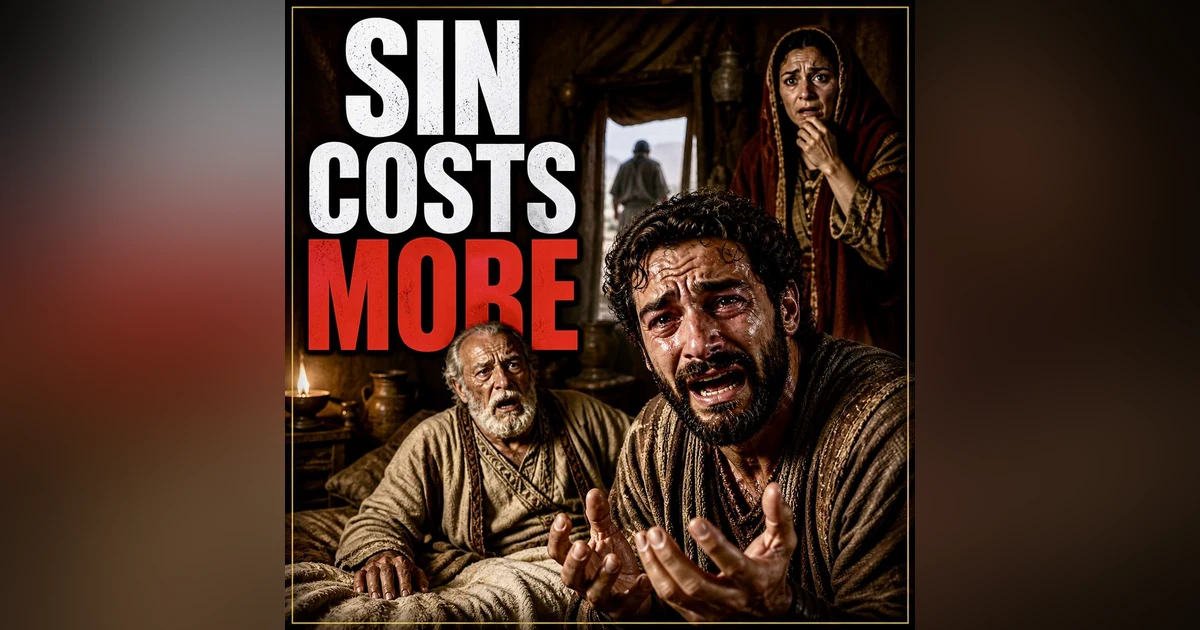
Why Does Sin Always Cost More? What if sin doesn’t just break rules, but quietly drains your peace, your family, your future, and your ability to hear God clearly? In this episode of Through the Bible in a Year: Walking the Story of God, Dr. Shawn M. Greener walks through Genesis 27 and shows how deception, fear, favoritism, and appetite never stay private. They always cost more than they promised. This isn’t ancient family drama locked in the past. This is the mirror of real life today. Jaco...
Key Takeaways
- Sin's hidden costs, including loss of peace and clear communication with God, are always greater than its temporary gains.
- Deception, fear, favoritism, and unchecked appetite have ripple effects that fracture families and futures.
- Ancient biblical narratives like Jacob's deception offer profound, relevant insights into real-life choices and their consequences today.
- Understanding the Hebraic worldview and Ancient Near Eastern context brings clarity to biblical stories, making them applicable to our lives.
- Even when we get what we initially desired through sin, we often lose much more than we anticipated.
Why Does Sin Always Cost More?
What if sin doesn’t just break rules, but quietly drains your peace, your family, your future, and your ability to hear God clearly?
In this episode of Through the Bible in a Year: Walking the Story of God, Dr. Shawn M. Greener walks through Genesis 27 and shows how deception, fear, favoritism, and appetite never stay private. They always cost more than they promised.
This isn’t ancient family drama locked in the past. This is the mirror of real life today. Jacob gets what he wanted, but loses more than he expected. Esau cries bitterly, Isaac trembles, Rebekah’s plan fractures her own home, and the covenant family feels the weight of sin’s hidden bill.
Through a Hebraic worldview and Ancient Near Eastern context, this episode helps us see Genesis not as distant biography, but as covenant truth for real people making real choices under pressure.
Question for your heart:
Where have you seen one small compromise cost more than expected?
Watch on YouTube:
https://www.youtube.com/live/cbavewRUwPQ?si=IdqYefgliNxl07sV&t=22
The Bible Rebinder I Mentioned on the Podcast
This is one of the three Bibles Melissa of MooseWorks Bible restored for me, beautifully rebound with a rugged new cover and exceptional attention to detail.
A Bible is more than a book. It is often a treasury of prayers, notes, promises, memories, and the record of a life spent seeking God.
If you have a treasured Bible that deserves to be preserved with excellence, I am honored to recommend Melissa of MooseWorks Bible.
Her work is marked by beautiful craftsmanship, thoughtful detail, and genuine kindness. She does not simply repair Bibles. She helps preserve the story they carry.
Visit MooseWorks Bible today:
https://www.etsy.com/shop/MooseworksBibles
Music Licenses, audiio
Artist Name: Michael Ellery; Song Name: The Last Time (Instrumental); License #: 9183437241
Artist Name: Proteus; Song Name: Disappearing Grace (Instrumental); License #: 5835150630; Project Type: Shortfilm
Artist Name: Andrew and Jared Depolo; Song Name: Far Away Places Pt. 2 (Instrumental); License #: 9061437866
Artist Name: Distant Moon; Song Name: In the Shadows (Instrumental); License #: 0218631093; Project Type: Shortfilm
Artist Name: Ian Taylour; Song Name: Test Of Time (Orchestral) (Instrumental); License #: 3366363945; Project Type: Shortfilm
Artist Name: Annasara; Song Name: A Lifetime Rolls By (Annasara Rework); License #: 6286683193; Project Type: Shortfilm
Artist Name: Brad Hill; Song Name: Ray of Light (Instrumental); License #: 2755679505; Project Type: Shortfilm
Artist Name: Ryan Moore; Song Name: Light Between The Trees (Instrumental); License #: 2805863068; Project Type: Shortfilm
Artist Name: Philip Yoo; Song Name: Pure (Instrumental); License #: 0935885096
© 2026 Dr. Shawn M. Greener. All Rights Reserved.
True Word, Faith for LIFE!
More resources:
https://www.truewordfaithforlife.com
#BibleTeaching
#BibleInAYear
#TrueWordFaithForLIFE
Send Dr. Shawn a Message. Please leave your contact information if you’d like a reply!
Thank you so much for listening! Please subscribe to the True Word, Faith for LIFE! YouTube channel, please click this link. Thank you again!
Shawn
https://www.youtube.com/channel/UCo1sLYz6J4FTUFwR5yjReMw
Frequently Asked Questions
What is the main lesson from Genesis 27 regarding sin?
Genesis 27 illustrates that acts of sin, like Jacob's deception, don't just break rules but incur significant hidden costs that affect peace, family, and spiritual clarity.
Why does sin always cost more than it promises?
Sin promises short-term satisfaction or gain, but its consequences often include broken relationships, lost trust, fractured futures, and a diminished ability to connect with God.
How does the episode 'DAY 26: WHY DOES SIN ALWAYS COST MORE?' apply to real life today?
The episode shows that the dynamics of deception, fear, and appetite seen in Jacob's story are timeless struggles that impact real people making difficult choices under pressure today.
What is the significance of the Hebraic worldview in understanding sin's cost?
A Hebraic perspective helps us see that biblical events weren't just ancient history but reveal enduring covenant truths about human nature and the true cost of sin.
What happens after the deception works? The deception works out. What happens after the blessing is taken? What happens when you finally get when you were trying to secure in the first place? Because that's where most people stop thinking. They think about getting it. They don't think about living with it. They think about the wind. They don't think about the wound. They think about the shortcut. They don't think about the invoice. Genesis 27 forces us to look at the aftermath, not the plan, not the strategy, not the moment it seemed to work, the aftermath. Well, let me ask you straight up right now. Have you ever gotten what you wanted and then realized the cost was far greater than the grain? Far greater than the meat. Far greater than the woman or the man. Have you ever gotten what you wanted, what you hungered for? Then realized the cost was far greater than the gain. That lemon sure wasn't worth the squeeze. You may win in the moment, but sin always, always sends the invoice. You may win in the moment. But sin always sends the invoice. And it always has to be paid. Welcome back to Through the Bible in a year, walking in the story of God. I'm Dr. Sean, and today we come to Genesis 27, 30 to 46. And I'm telling you right now, this is one of the most emotionally intense moments in Genesis. This isn't just a story about Jacob getting away with something. It's a story about what happens when everyone in a family tries to manage life without ever telling the truth, the whole truth. Nothing but the truth so help you, God. Where have you? You I'm not talking to the air. Where have you seen one choice? One one dad gum choice. Cost more than anyone expected. Oh be sure the cost is high. As always, if this teaching strengthens you, like, subscribe. Get my book True Word Faith for Life at True WordFaithforLife dot com. That'd be nice. Jacob has just left. He just left Isaac's tent. The deception is complete. Then Esau walks in. That timing is brutal. It's brutal. Esau prepares the food. He's the hunter. He's the cook. Esau's a good bit underappreciated. He feeds the family. Esau prepares the food. In one mindset, he thinks, I'm feeding my father, my ailing father, my blind, my old father. He brings it to his father, who he loves. And he asks for the blessing he believes is still waiting for him. But it isn't. The moment he speaks, everything collapses. Isaac trembles violently. Isaac trembles violently. He didn't catch a chill. The old man realizes something. Good land, can you imagine? Isaac trembles violently. That phrase matters more than a quick read might reveal. This isn't mild surprise. This is an elderly confusion. This is shock hitting the body. This is Isaac realizing something irreversible has happened. The blessing has gone out. And in the ancient Near Eastern world, words weren't treated like disposable sound, like we do in the postmodern Western evangelical world. Spoken blessing, like for instance, when people say, Oh, I'll pray for you. Somebody asks, you know, can you pray for me? Well, I'll pray for you, I'll pray for you. Sure, I'll pray for you. And then they don't. Or when they promise something, and they don't do it. Happens every day, all day. A spoken blessing in the ancient Near Eastern world. It carried legal, family, covenantal, and spiritual weight. This wasn't a sentimental father saying something nice over his son. This was inheritance. This was household destiny. This was covenant direction. This was the future being spoken over the next generation. Isaac says, Who was it? This poor man. Good lands. This poor man. He says, Who was it then that hunted game and brought it to me? I ate it all before you came, and I have blessed him, yes, and he shall be blessed. Yes, and he shall be blessed. That last sentence is sobering and so crushing. Isaac intended one one thing. God's declared purpose moved another way. Apples and artvorks, folks. Apples and artvorks. And even in a shock, Isaac didn't try to undo it. Wait a do over. Oh, I'm sorry I said that. Let me go back. Disregard. Never mind. Word spoken. Doesn't mean much to us in this modern world, but it sure meant something to them back then. Back when all of this was being formed. Even in his shaking shock, Isaac doesn't undo it. He recognizes, he recognizes the blessing stands. It doesn't make deception righteous. Doesn't glorify deception. Not even at all. Quite the opposite. It means God's covenant, his covenant purpose is stronger than human failure. But that's it with you just a minute. God's covenant purpose is stronger than human failure. God can accomplish his will, his will through broken people. But broken choices still leave consequences. Broken choices still leave broken consequences. Hear that. Hear that. Man, if you hear nothing else. Good lands. God's sovereignty. It doesn't make sin harmless. God's mercy doesn't erase the seriousness of what we choose. Ask me how I know. God can redeem the story, but the damage, the damage was real. Then Esau hears it. And the Bible says he cries out with an exceedingly great and bitter cry. This poor man. Bless me even also. Bless me also, oh my father. Bless me also, oh my father. We need to sit in that a little bit of moment. We need to sit in that just a in that pocket just a second. Bless me even also. Oh my father. This poor man. This poor man. The pain is real. Even when it follows our own choices. Do our choosing. The pain comes. Some at some point the pain comes. Especially then when it's our own choices. Ask me how I know. A person can be responsible and still be hurting. A person can be foolish and still be wounded. A person can despise what mattered yesterday and weep over it tomorrow. That's not contradiction. That's not apples and hardvarks. That's the human condition. Remember Genesis 25? Remember that? Esau sold his birthright for a meal. Oh, come on. We joke about it, we laugh about it, you know. Wow, that must have been some kind of stew. He must have really been hungry. Let's think about how hungry the man had to be. He wasn't out hunting because, you know, that's just what he does. He was out hunting to feed his family. Everyone. And he was so hungry. He'd sell the most important thing. He'd trade the most important thing in his whole life. For one bowl of stew. Nobody forced him. Nobody trapped him. He treated something sacred as disposable. You heard what I said yesterday and many other times. You've heard it so many times. Avraham Heschel said something sacred hangs in the balance of every moment. But now, in Genesis 27, he feels the weight of what was lost. That's how sin works. In the moment, it feels small, it feels inconsequential. Later it feels massive like an elephant on our chest. In the moment it feels manageable. Feels manageable. But later, it feels irreversible. In the moment it sounds like appetite. But later it sounds like weeping. And I don't know who needs to hear this today. I don't know who's out there. But I know somebody out there needs to hear this very thing today. The decision you call small might not stay small. The compromise you call temporary might not remain temporary. The anger you call justified might not stop at words. The lie you call necessary might not stay inside your plan. Sin rarely asks for the whole house at first. It just asks for one room. And then it changes all the locks. This man, this poor, poor man. Isaac tells Esau the truth. Your brother came deceitfully and has taken away your blessing. Esau responds, Is he not rightly named Jacob? For he has cheated me these two times. That statement is, it's emotionally honest, but it's not the whole truth. Jacob deceived him here. That's true. It's true. We can't argue with that. But it was Esau that sold the birthright. That's also true. Still breaks my heart for the man. As I said, you know, he he wasn't out hunting because, you know, he just likes to hunt. If the hunter didn't harvest protein, the family didn't live. That's high stakes. And back then it was hard. And yet he did what he did. Esau sold his birthright. He did it. But you know, pain has a way of editing a memory. Can you can you identify? Pain has a way of editing the memory, highlights what was done to us, makes us the victim more than we were. It minimizes our choice in the whole matter. It minimizes what we chose. It remembers the wound, but it forgets the warning. It remembers the betrayal and it forgets the appetite. If we're going to heal, look, if we're going to heal, we can't keep, we cannot keep telling only the part of the story that makes us look innocent. Esau again asked for a blessing. The man. He's not hungry for stuff, he's not hungry for control, he's not hungry for power. Before he was so hungry for stew, he gave up his birthright. Here, he's not hungry for any power or any of those things. It was his proper place. Everything in the ancient Near Eastern language, culture, and context pointed, this is his. Keeps pressing us toward wisdom before the decision, not just regret after it. Regretism is honest. Surf Carrington, how do I type in chat? You just did, brother. You just did, or sister. Regret is honest, but wisdom is better. Tears may be real, but obedience would have protected what tears cannot restore. Isaac then speaks a secondary word over Esau, and it's not the covenant blessing, it's a far, far harder path. It's a life marked by struggle. It's a relationship marked by tension. And this doesn't stop with two brothers in one tent. Esau becomes associated with Edom. Jacob becomes Israel. Apples and orange barks. A family fracture becomes national conflict. It becomes. Well, that's one of the major themes in Genesis. That's why if you rush through it. Why rush through it? There's so much more to the to the holy scriptures, the Bible. Than you can possibly imagine. The thing is, you just you gotta understand it. I get why people want to chat GPT everything. They don't want to do the work. Okay. Okay. You'll never understand it. You will never understand it. Because this is one of the major themes of the entire book of Genesis. What happens in the home can echo throughout all of history. Your home is fractured. Your home is fractured. That started with one thing, one relationship. One. It doesn't. Favoritism, deception, appetite, anger, silence, bitterness, it can become inherited patterns. That's ancient. It's just straight up ancient. It's pain and yet it's painfully modern. How many families today? I mean, real question here. How many families today are still living with what nobody ever dealt with, honestly, in their family? They're still living with the results of that. The ramifications, the consequences. How many? How many children carry what parents refuse to confess? How many homes are shaped by secrets? Well-nurtured rivalries. Well-nurtured old wounds. And unfinished anger. Genesis isn't old because it's irrelevant. Genesis is old because it keeps telling the truth. It keeps telling the truth. Then the text turns darker. Any of us out there blame the man? Esau hates Jacob because of the blessing. I mean, wouldn't you? Yeah, okay. Esau, maybe afterward, Jacob, maybe afterward, Jacob could have said, you know, after he ate the bowl of stew and finally he was nursed, you know, his blood glucose was probably super low. He was famished. You know, we say, man, I'm famished. Man, I'm so hungry. No, no, no. This man, this man was on his last leg when he came through the door after hunting, bringing in all the meat for the family. And he says, Whew, I'll give you my birthright for this bowl of stew. First of all, have you ever thought about Jacob? Jacob, why didn't you offer it to your brother? Why didn't you have any sort of gratitude for your brother who has just been out risking his life for days on end? Oh, not for nothing. How do you think all the game got back? How do you think it got back? He carried it. Don't you think when he had all that game on him, that he was maybe a target for some bigger predators? Not for nothing, risked his life? And he gets back and he's so dadgum hungry. He's so dadgum worn out. I'd give my I'd give my blessing. I'd give my birthright. I'd give it for a bowl of soup. What does that tell you? It tells you that Jacob was like, hmm, hmm? I don't know, the text doesn't say that. But in my mind, I'm looking at that going, how you gonna do a brother like that? Literally, how are you gonna do your brother like that? Anyone know how that feels? Literally, maybe you were the doer, and maybe you're the done to. I don't know. I don't know your story. I know mine. I don't know yours. You know, we focus so much on. Oh, that brother just gave up his blessing in a minute. He just gave up his blessing in a minute for a bowl of soup. Come on. That's stupid. You better think about it. You better think about that part. Don't be so eager. Don't be so eager to rip this poor man. Have you ever been that hungry? Don't tell him what I would have done. For food. Esau hates Jacob because of the blessing. Jacob could have, he could have looked at him and said, Look, man, I appreciate how you were out there killing it literally for us. I appreciate the risk that you took to bring it back here. Let me heat this up for you. Let me pop it in the microwave for 23 seconds. No. Didn't do that. Doesn't do it. Doesn't even offer. He sees opportunity. I'm gonna take advantage of my hungry brother here. That's what happened. I'm not so quick. I'm not so quick to throw Jake or throw Esau under the bus. I'm not. I am not. I was a hunter before I got hurt. A hunter of lots of things. I know what it takes. And I had all the modern instruments. All the modern technology. He didn't have any of that.
SPEAKER_00Esau hated Jacob.
SPEAKER_01Because of the blessing, what he did to him. In his moment of greatest weakness, what he did to him. And he says in his heart, the days of mourning for my father are approaching. In other words, dad's gonna die. Then I will kill my brother Jacob. That's how many was. I'm not saying it was hey, don't get it twisted. I'm not saying, hey, that was the right thing to do or say. Nope, that's escalation. Deception has produced grief, and grief has now curdled into hatred, and hatred is now moving toward violence. This is Cain and Abel all over again. A brother is angry. A brother feels displaced. A brother sees another brother as the problem, and murder starts forming in the heart before it ever reaches the hand. That's why Yeshua. That's why he takes anger. Jesus takes anger so seriously. Violence doesn't begin when blood is spilled. It begins when another person becomes disposable inside your heart. Rebecca, she hears what Esau plans to do. She hears it. You know, tents got thin walls, you know what I mean? No insulation. Rebecca hears what Esau plans to do, and now she moves again. She tells Jacob to flee to Laban. Stay there a few days, she says, just until Esau's anger turns away. Can you imagine? Look, go on and get out of his range. Get out of his range. Get out of the kill zone. Just a few days, he'll calm down. But it won't be a few days. It won't be a few days. Jacob is leaving home. And this family, as it was, will never be the same again. This is one of the seminal families of our faith, of our very existence, and they'll never be the same again. Ever. Rebecca tried to secure Jacob's future, but in the process, she loses proximity to the to the look, I said it a few episodes ago. Look, you ought to have multiple kids. You know you have a favorite. You know, I'm not opposed to saying I got a favorite. I love them all equally. Come on, B.S. Bovine feces in the circular wind device. She loses proximity to the sun. She favored. She thought she was protecting him, right? But now he has to run. She thought she was managing the blessing, but now the house is fractured. She thought she could control the outcome. But sin doesn't stay inside the plan. It spills, it spreads, it reaches people you never meant to hurt. You never meant to hurt them. No, you didn't mean to hurt them. Look, I didn't mean to do this to you. I didn't mean to disrespect you. I didn't mean to step out on you. I didn't mean all that. Idaho Yeti. You're welcome, by the way. Welcome to all of y'all. Welcome to everybody in live chat. Appreciate how kind you are to each other. Let me say this. Idaho Yeti, send me that question through uh true wordfaithforlife.com. Contact, slash, contact, backslash, forward slash, whatever you want to call it, send it to me there. I will answer it for you. If indeed that is a genuine question, I sense that it may not be. Look, that's the central warning of this passage. And it's one that if we could do all the read through the Bible in a year business we want to do. And look, I'm not sitting here as somebody throwing rocks at you. Let me reach now. Oh, that's a good one. Nope. I don't deserve anything. Nothing. Trust me on this. And this is the central warning of this passage. Sin always, it always costs more than the moment product. The moment promises so much. Oh yummy. Yummy thing. Yummy person. Yummy promotion. Yummy anything. It always looks yummy. Sin always costs more than the moment pro the moment promised. Oh, oh, if you just have this. The lie promised protection. But didn't give it. It produced exile. Apples and hardvarks. The deception promised blessing. It did. But it didn't give blessing, it produced separation. The favoritism promised control. It produced grief. The anger promised justice. But it moved to it moved right on toward murder. The plan promised a future. It shattered a family. Look, I've interviewed murderers in my past life. People that murdered one person, people that murdered a whole bunch of people. And you'd be surprised. You'd be surprised how quick. How quick sometimes people's mind goes. Disagreement, murder. Disappointment, murder. Disrespected, murder. Happens fast. That's how sin works. It never shows you the full receipt up front. Nope. It just shows you that first part. You may win the moment, but sin always sends the invoice. Then Rebecca speaks to Isaac about Esau's wives. She frames Jacob's departure around marriage. Alright. And that tells us something else about this family. They struggle to speak directly. They struggle to handle stuff directly. Hey, let's all get in this tent. Look, by the way, Esau, keep the weapons outside. Trust me when I tell you, I don't think Esau needed a weapon. He was a weapon. Let's have a conversation. Let's sit down and let's fix this. No yelling, nothing. Just let's talk about this. Let's get it out in the open. You can't, you can't fix what you never acknowledge. But they they struggle to speak directly to each other. They struggle to talk real. Anybody out there grow up in a family that they never did talk real? And all they did was yell. All they did was ridicule. Sarcasm. BS man. Bovine feces in the circular wind device. Come on now. I'm just sarcastic. My sense of humor is sarcastic. Stop with all that. Much truth is said in jest. But these people struggle to speak directly to each other and handle the problem. How many of us? Maybe it's your family now. Maybe it's the family you're responsible for. Maybe it's no longer mom and dad. We blame them. We can blame them only so long. Truth is wrapped in strategy. Everybody's managing somebody. Everybody's maneuvering around somebody. Everybody's using part of the truth to avoid the whole truth.
SPEAKER_00Little, little, little, little, little tiny sliver of truth.
SPEAKER_01But it ain't the whole truth. And when truth leaves a house, confusion grows in its place. When people can't speak honestly, like real, being real. Manipulation fills the silence. Manipulation fills the silence. Look, when you can't speak honestly, for real, for real, to people in your own household, manipulation, it'll come on in there. It'll fill the silence. When families avoid truth, they don't avoid pain. They just postpone it until it gets bigger and unmanageable. Somebody out there, you know exactly what I'm talking about. You're living it right now. The conversation you keep avoiding, it isn't going to disappear. The confession you know you need to make. You know you need to make it. You know you need to humble yourself. Doesn't matter what the other person, the person you aggrieved, the person you tricked, the person you lied to, person you you manipulated into bed, into business. Doesn't matter. Doesn't matter how they take it. It doesn't. It doesn't matter what their response is. The fact of the matter is, you know that you need to confess to them your sorrow and you need to ask for their forgiveness. Delaying that isn't becoming easier. It doesn't make the confession any easier. The bitterness you keep nurturing because you were on the other end of that. The bitterness you keep feeding isn't becoming righteousness. It's growing teeth. So what does Genesis 27, 30 to 46 say to us? It says aftermath matters. It says sin can succeed temporarily while multiplying sorrow. It says pain can distort a memory. Or your whole memory. It says family distortion. Let me give you an example of that. Have you ever, if you have multiple siblings, one of your siblings tells a story about something they say happened, and you were there and you're like, that didn't happen. Oh, it certainly didn't happen that way. There's one of two things going on here. Either your memory's bad, their memory's bad, or they're nurturing hurt, bitterness, or aggrievement. One of two things, three things, four things, five things. Pain can distort a memory now. Mm-hmm. Show can. It says family dysfunction can become generational conflict. It says bitterness grows when it isn't surrendered. If you don't surrender your bitterness, it will grow and it'll become far too heavy for you to carry. It says words carry weight. It says some losses are irreversible. Undoable. No mulligan. It says the real. The cost of sin is almost always higher than the advertised price. Some of you are standing at a decision right now, and you're asking, will this work? That's not enough. Ask, what will this cost? What will it cost? What will the cost be to your integrity? What will it cost your relationships? Your circle, the people around you. What will it cost them? Your choice, what will that choice cost them? What will it cost your peace, your shalom? Come on, somebody. Come on, somebody out there has to be in this place. What will it cost your shalom? And if you're a believer, what will it cost your witness? What will it cost your witness? What will it cost your witness? Listen, if you're not a believer and you're listening to this, you know, and you hear me say something like, What will it cost your witness? You need to know that what that is is like your reputation. But in this case, you know, as believers, our witness is our representation of Christ. How you living? How you living? What will it cost your witness? What? I see people in chat talking about this right now. What will it cost your family? Your family? And your family's family? What will it cost the people who trust you? Because the Bible doesn't only ask. Did you get it? Did you get it? I know you were trying for that. Listen, I want to go back a second. What will it cost your family? What will it cost the people who trust you? I don't know if you were the done one that was done wrong. I don't know if you were the one that did your family wrong. I don't know. I don't know if I know what it's like to be on both sides, and I know what it's like for the consequences to come down on your shoulders. Like a ton of bricks. I know. Both sides. What will it cost your family? What will it cost the people who trust you? Trust matter? Does your family matter? Because the Bible doesn't only ask that thing that you were kind of conniving, that thing you were trying to work out, that thing that looked good. Was it worth it? Did you get that? Nope. It asks you, what did it do to you? What did it do to you? And it points forward to Messiah, to Jesus Christ. Jacob leaves because sin fractured the house. Yeshua enters a fractured world to redeem it. Jacob gains through deception. Yeshua, Jesus, gives through obedience. Jacob runs from consequence. Yeshua walks toward sacrifice. Jacob receives a blessing surrounded by lies. Yeshua becomes the He can. Yeshua becomes the blessing by being the truth. Jacob's story shows us the cost of human manipulation. Yeshua shows us the mercy of divine redemption. That is the contrast. That is the contrast for sure. That's the whole thing in voices. For you today. Here's the question. Where are you telling yourself if it works, it must be right, right? If it works, it must be right. Where are you ignoring the aftermath? You're saying I don't even want to look at the aftermath. I don't want nothing to do. I don't even want to think about the aftermath. I just want this thing right here. Choice? Benefit? Choice? Consequence? Where are you letting pain? Where are you letting your your pain turn into bitterness? I saw somebody in in chat, live chat, mention that. You where are you letting pain turn into bitterness? Where are you using strategy? Because, well, you don't want to practice truth. Truth is hard. I don't know. I told you I had a challenge and a choice. Here's the choice. You can chase the outcome and inherit the damage. Or you can choose truth and protect your future. You can let pain harden into anger. Or you can bring it to God and be healed. You can keep managing situations, or you can walk in integrity. You can keep asking, can I get away with this? I mean, can I make this happen? Or you can start asking, will this make me more faithful before God? That should matter. Somebody listening right now knows exactly what this passage feels like. You've lived the shortcut, you've told the lie, you've made the trade, you've carried the anger, you've watched one decision spill into places you never meant for it to touch. And maybe the hardest part is this you don't just need advice, you need rescue. That's why Jesus came. That's why Yeshua came. He didn't come for polished people who managed the damage well. He came for sinners like you and me. He came for people with hurt, habits, and hangups. He came for the deceiver, he came for the bitter one, he came for the broken one, he came for the ashamed one, he came for the exhausted one, and the one who finally realizes I cannot undo this by myself. Somebody out there is crying right now. You're bawling. In whatever room you're sitting in. Some of you are sitting in your car, you've pulled over to the side of the road because this is hit so hard for you, your face is just dripping with tears. You're not getting an argument here. Go to your own podcast. You don't have one. But go to your own podcast. Maybe build one. Maybe go to the effort to build one. Instead of messing with live chat in a channel, you don't have any belonging. Grow up. Look, the gospel didn't. The gospel isn't God pretending sin didn't matter. The gospel is God taking sin so seriously that Jesus Christ died for it. And loving you, loving you, yeah, you the one who you're glad you didn't put makeup on. Man, loving you, you're glad that you're not, you didn't get, you didn't go into your workplace yet. You're glad maybe the rest of the family isn't awake yet to see you bawling. And those tears need to fall. Brother, sister, they need to fall. They need to fall. Listen, this thing that we have, this addiction that we have, this belief that we have, that there shouldn't be tears, that we shouldn't experience anguish at the cost that was paid for our redemption. So lightly we take these things. That's why I'm teaching this this way. But guess what came before that? Torture lived a perfect life. He brought people back from death, from blindness, from being lame. And we tortured him and we murdered him for it. And he did that willingly. He was no victim. Jesus died after hours of horrific torture and public humiliation. He loved you so deeply. He rose again to bring you home. Not the jacked-up home that you grew up in, not the jacked-up home you're living in now. Maybe not the jacked-up home that you created. Home, home. Capital H. Heaven home. But you can have beauty here. You can. All this business about, whoa, you know, we we're just gonna be miserable till we get to heaven. That's not that's not the mandate God gave us. God's gonna fix me when I get to heaven, so I do whatever. Nope. So right now, don't hide. Don't manage. Don't excuse. Come to him. Bring him the real story. Bring him the real sin. Bring him the real grief. Bring him the real you. He knows you anyway. He knows you. My friend, he knows you. He knows you. Inside now, he knows you. You can't fake him out. Bring him the real you right now. Right now. Stop putting it off for real. Listen, I was on my way home. I was minutes, minutes, single-digit minutes from my house. I wasn't doing anything wrong, just driving home. After living a life, people trying to kill you, and good at good at trying to kill you, experienced, and yet a 19-year-old driver in a borrowed vehicle with state minimum insurance killed me. Destroyed my body. I came back to life. I can't tell you I had a near-death experience because I don't remember it. I made a gazillion horrific decisions before, and I made a gazillion horrific decisions after. People did me wrong before, people did me wrong after. Here we are today. We're here now. We can't stay back there. We have to learn. We have to learn from what was done to us. We have to learn what we did. Prayer is not asking for an easy journey. It's asking for a strong back. I know you won't know all the answers. You don't need to know all the answers. You don't. You also don't need to dress perfect, have the perfect hair, have the perfect bald head. You don't have to have the perfect beard, the perfect smooth face. You don't have to have the perfect teeth. You don't have to have. Listen, you know, I'm tired of hearing people. Oh, so and so. I don't support him no more. I don't support her no more. Because I heard they use foul language. Listen, profanity is not a good thing. Profanity is not a good thing. We need to think about what we say. I'm working on it. I'm working on it. Stop throwing mocks at people. Stop trying to drag people down because of that. They may love God so fiercely, so intensely, you have no earthly idea how much they're on their face praying through tears for other people for hours. Broken halos. I'm not excusing anything I do or they do. I'm just telling you, if you've been reluctant to pray this prayer, if you've been reluctant to pray this prayer, because you say, I can't be perfect, those folks in church, they're not perfect. And as soon as you go to that church, guess what's going to happen? If it was perfect before you got there, which it wasn't, it's not gonna be perfect now because you're there. And that's what it's for. It's a hospital for sinners, people for hurts, habits, and hangups. And I'm gonna tell you something, folks. If you have been reluctant to pray this prayer because maybe you did go to church, this isn't about church, by the way. This isn't about religion. This is about a relationship with Christ, a relationship with God. Nothing to do with the church. Yeah, you should go to church. Absolutely. And if you if you don't know where to go to church around where you live, I'll help you find one. I'll give you a way to reach out to me. I will help you. I've helped so many people find excellent churches, not perfect churches, because it doesn't exist. If you've been reluctant to pray this prayer, because you say, I can't go up in that church because those people hurt me when I was a kid. Listen, I you talk about memories. My brother, they're dead now. Two of the brothers are dead now by their own hand. They're dead now, and they recounted memories. I'm not speaking to the dead, this is a true story. They recount memories of what happened to them in the church. BS. Real life happened in the church. Real people go to the church, jacked up people go to the church. Guess what? I'm a jacked-up dude. Don't reject God. Don't reject the Lord Jesus Christ because of something some church did. Men will fail, the Lord will prevail if you let him. Amen. Amen, Nicole. Stop making the imperfect church your excuse for denying your eternity. Stupid. Sorry. Stupid. Straight up dumb. And it'll cost you your eternity. You don't get a mulligan on this. You've been putting it off for too long. Stop putting it off. You say, but I don't know all the answers. I don't know how to do it. I'll help you. What do you think I'm here for? What do you think I'm killing myself for? The only reason I do this is this. It's not trickery, it's not emotional manipulation. Trust me, the government spent a gazillion dollars, literally, on teaching me how to manipulate people. I don't do any of that. Listen, seminaries, not my seminary, but I know of seminaries, they have whole classes on emotional manipulation. Whipped up emotionalism is Dr. Dennis Fry, the founder of Masters. My seminary, my divinity school. So you know, it's incredible. It's true. This ain't that. I don't get anything for this. YouTube doesn't pay me. Half the time they demonetize every video I do. This isn't about any of that stuff that happened in the past. It isn't about any of your fears of the future. We'll work through that. I want you to pray this prayer, but not because I'm telling you, but because in your heart, you know Jesus is the Messiah. You know God created heaven and earth, and then things got jacked up because he gave us free will. Choose or don't choose, chose wrong. We chose wrong. Here we are. Here we are. Heaven awaits or hell awaits. Don't let nobody tell you that hell isn't real. I got a bunch of doctorates on the wall, and I'm telling you, I haven't placed my faith in Christ and I don't recommit to him all the time. I don't pray through tears. As I go through my hours-long list of people to pray for, I don't I don't do that because of a fear of hell. I don't want anything to do with hell. I live in intractable pain. 24-7. I don't do it because of that. I do it because I want desperately to be in the presence of God forever. I want to be healed. Forever. I want to be made whole forever. Maybe if that's you, pray this prayer. Father, I know I've sinned against you. I've done wrong things, and I need your mercy. I've tried to control what only you can redeem. I've made choices that cost more than I can ever understand, certainly more than I ever understood then. I can't save myself. I believe Jesus died for my sins, was buried, and rose again, just as the Bible says today I turn from my sin and I place my trust in Jesus as my Lord, my Savior, and my King. Forgive me. Wash me clean, make me new, fill me with your Spirit. Teach me to walk in truth instead of deception, repentance instead of regret, and obedience instead of shortcuts. From this day forward, I want to follow you in Jesus' name. If you prayed that prayer, if you prayed that prayer, whether you're listening live or on playback, I want you to hear me clearly now. You aren't alone. You may feel alone. Let yourself feel good, let yourself feel happy. It's the happiest experience of your lifetime. Bar none. It's the happiest experience of your eternity. You'll remember this day for the rest of your life. I want you, you're not alone. Reach out to me personally. Reach out to me. TrueWordfaithforLife.com. TrueWordfaithforLife.com slash contact. I mean it. I'll help you. Listen, send off for shortcuts. Then it sends in voices. But mercy still calls you back before the damage becomes your. Story. So choose truth before the house breaks. Choose humility before the anger hardens. Choose repentance before regret becomes your teacher. Choose Jesus before sin writes the ending. If this message touched you, share it. Like, subscribe, share it. Whatever. Think of one person, good lands. You gotta care at least for one person, just at least one. This person who needs hope and truth. Send it to them. Don't don't wait to send them links, send it today. It isn't about me. I get nothing for this. No dollars. Zero. One money, no dollars. Until tomorrow. At 7 a.m. Eastern Standard Time. Until then. Shalom Bisham Yeshua. Shalom Alekum.