

 Apple Podcasts
 Spotify
 DAY 23: WHY DOES OBEDIENCE BRING OPPOSITION?
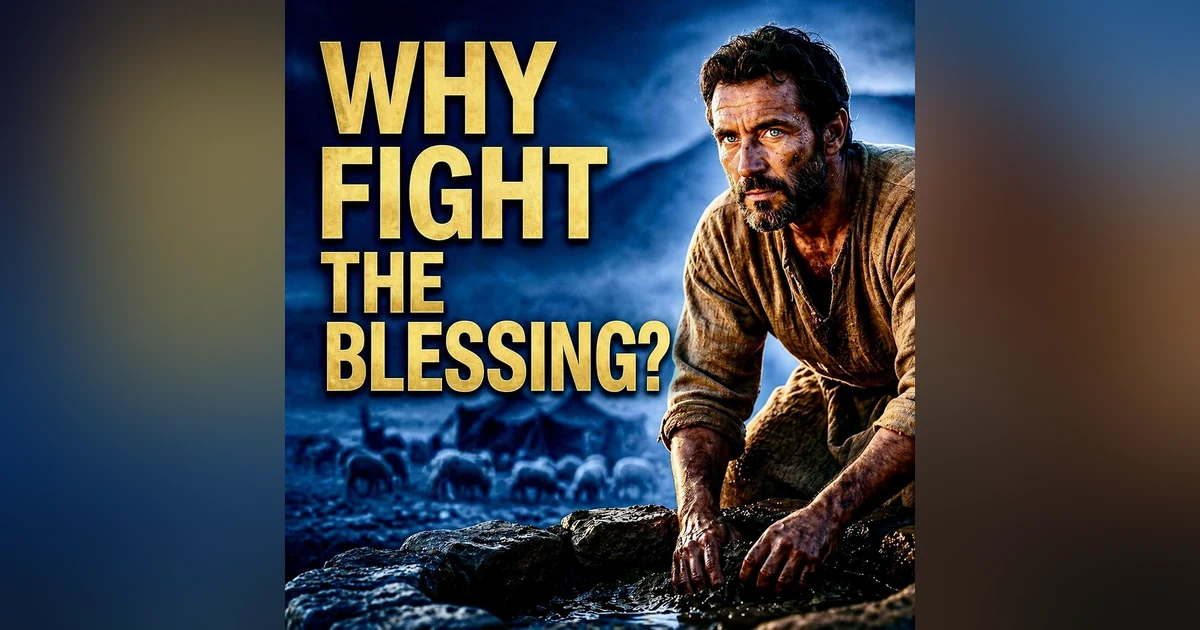
Key Takeaways
- Opposition to your obedience may be a sign of visible blessing, not God's abandonment.
- Isaac's story shows that faithfulness can be both fruitful and contested simultaneously.
- Don't confuse outward challenges with a lack of God's presence or favor.
- Envy can arise from blessings, but it shouldn't lead to bitterness in your own walk.
- Build your altar, pitch your tent, dig your well, and trust God to provide and expand your territory.
What if opposition isn’t proof God left you, but proof the blessing became visible?
In Day 23 of Through the Bible in a Year: Walking the Story of God, Dr. Shawn M. Greener teaches Genesis 26:12 to 25, where Isaac obeys God, sows in famine, receives a hundredfold harvest, and immediately faces envy, hostility, and blocked wells.
This episode connects the Ancient Near Eastern world of wells, water, survival, inheritance, and covenant future to real people today who are trying to stay faithful under pressure. Isaac’s story reminds us that obedience can be fruitful and contested at the same time. A contested well can still be real water.
If you’ve obeyed God and then wondered why life got harder, this message is for you. Don’t confuse opposition with abandonment. Don’t let envy make you bitter. Build the altar. Pitch the tent. Dig the well. Trust the Lord to make room.
More resources:
https://www.truewordfaithforlife.com
The Bible Rebinder I Mentioned on the Podcast
This is one of the three Bibles Melissa of MooseWorks Bible restored for me, beautifully rebound with a rugged new cover and exceptional attention to detail.
A Bible is more than a book. It is often a treasury of prayers, notes, promises, memories, and the record of a life spent seeking God.
If you have a treasured Bible that deserves to be preserved with excellence, I am honored to recommend Melissa of MooseWorks Bible.
Her work is marked by beautiful craftsmanship, thoughtful detail, and genuine kindness. She does not simply repair Bibles. She helps preserve the story they carry.
Visit MooseWorks Bible today:
https://www.etsy.com/shop/MooseworksBibles
#Genesis26
#BibleInAYear
#GodMakesRoom
https://rumble.com/v7960f2-day-23-why-fight-the-blessing.html
https://www.youtube.com/live/7UyD3fJ1XVg?si=fRoKFjBeUMXw99Ha
Send Dr. Shawn a Message. Please leave your contact information if you’d like a reply!
Thank you so much for listening! Please subscribe to the True Word, Faith for LIFE! YouTube channel, please click this link. Thank you again!
Shawn
https://www.youtube.com/channel/UCo1sLYz6J4FTUFwR5yjReMw
Frequently Asked Questions
Why does obedience sometimes lead to problems?
Obedience can attract opposition because it makes blessings visible, potentially stirring envy or challenging the status quo, as seen in Isaac's story.
What does it mean for opposition to be proof of blessing?
It means that the difficulties you face after obeying God might not be a sign of abandonment, but rather that the blessing itself has become noticeable and impactful.
How should I react when my obedience brings hostility?
Instead of getting bitter, trust the Lord, continue to build, and dig your wells. God can make room for you and your blessings despite opposition.
What is the significance of wells in the Bible story?
In the Ancient Near Eastern context, wells represented survival, inheritance, and covenant, making them vital points of contention and blessing.
Good morning. What if the pressure around you isn't proof that God left you? That God left you. What what if all that pressure doesn't mean that? What if it's proof that the blessing became visible? It's hard for us. It's hard for us because we expect obedience to make life easier. Obedience easier. That's the connection we make. And I get it. A hundred percent I get it. I get that tendency to believe that. But Genesis 26 says obedience can make life more contested. Isaac stays where God told him to stay. He sows in famine. God blesses him, and then the trouble starts. Have you ever obeyed God, did the right thing, stayed faithful, and then wondered, why did life get so much harder? I did what you said. I did it how you said. I did it when you said. I didn't wait. And it still got difficult. And this is why. I pray the prayer that I do. Prayer isn't asking for an easy journey. It's asking for a strong back. That's why I pray that. It's worth you chiming in, I think. In the comments below. This is a this is a real question. May not like it. Where have you felt opposition rise right after obedience? Right? Because the postmodern Western Evangelical Church, it says, well, if you want an easier life, obedience is the ticket. And obedience is the ticket. It's going to be easier. Oh, we want to be in God's will. Don't get it twisted. We do. Where have you felt opposition rise right after obedience? Man, you were doing good. You're doing good. You were in a you're on a streak, man. And then it all falls apart. You're like, wait, I was in obedience here. We're gonna deal with real questions today and tomorrow. But I have an announcement to make a little bit later. Something big. Welcome back to the through the Bible in a year. Walking the story of God. I'm Dr. Sean. You can call me Sean. Today we're in Genesis 26, 12 through 25. Before we get into the text, this is brought to you by my book. True word, faith for life. You say, why do you show this every week? Well, because I wrote it. It costs a lot of money to produce, and my goal was to use the profit from it to help pay for the show. Anyway, it's not just a book. It was written to help you stop reading the Bible as some sort of distant, I don't know, religious information. Oh, you're you're very welcome. Tammy says, Dr. Greener, this has really helped me so much. I really thank God for your teaching on praise God. That's really lovely of you. Thank you. I'm glad. To God be the glory. Well, anyway, my book is is written for a reason. It was written in a certain way. And uh I hope it continues to bless you. Can't be blessed by it, unless you buy it. Good morning, family. So, here we go. There is nothing easy about this. Nothing easy. By the way, somebody said to me one time, well, they they've said it a few times, different people said it a few times. They said, you kind of make the Bible into a movie. Like when I'm reading it now, I I re- I see a movie. And that's my goal. That's that's how I read in my mind. It plays like a movie. And my goal is to teach it in such a way that it's accurate, truly accurate, and that it plays like a movie in your head. And that's why I wrote my book. Anyway. Genesis 26 says, Isaac sowed in that land and reaped in the same year a hundredfold. We don't want to rush past that. There's a famine in the land. The soil is stressed. The future is uncertain. Everybody's trying to survive. Just survive. And Isaac receives a hundredfold harvest. That's not normal agriculture. By the way, I'll Tammy, thank you for ordering the two books. I will I will sign them, and they'll be immediately worth half. So a hundredfold. I mean, this is crazy. First of all, it would be crazy if there weren't a famine, and there is a famine, and a hundredfold. That's supernatural. That's not just good farming, that's supernatural. That's divine favor. The point isn't that Isaac found a better farming method. The point is that Isaac obeyed God in the place God assigned him and God made his obedience fruitful. But then comes the turn. Isaac becomes wealthy. Flocks. Herds, servants, influence, visibility. And the Philistines, those darned Philistines, they begin to envy. And the conflict doesn't begin because Isaac attacks them. He didn't. It begins because God blesses him. And that's painfully real because some people are fine with you until your obedience starts producing fruit. Um I know a family personally who uh is extremely wealthy. Um they the mother and father worked very, very hard for many years. They came both from not poor, but certainly not privileged. I hate that term, because you know. And the thing is, is you know, they were they were they were devout Christians, they are devout Christians, and people, Christians, see their wealth and they throw rocks at them, metaphorically. There's just a a mix-up in paradigm and perception that you know if you have wealth and you're a person of faith, you're bad. And it mostly comes from Christians, sadly. Hey, some people, including sometimes your family. By the way, these people donate money like you can't believe quietly and privately. They're amazing people. And they're beautiful people, beautiful human beings. But they tell the story that as soon as as soon as God started blessing them with with wealth, things turned. People were fine with them when they were just struggling. But then when things turned around and obedience started producing fruit, oh not so much. Maybe you can identify. Now here's where the Near Eastern context matters. It always matters, but boy, it really matters right here. In Isaac's world, wells weren't decorative. Right? They weren't decorative. We didn't put up a well in. This is well of tone to the well of Isaac, the manoplay. Well, it doesn't draw water, but it's just decorative. No. Well-meant water, a well-meant survival. Water meant animals could live, families could stay, crops could grow, servants could remain, and a household could have a future. So to control water was to control life. So when the Philistines, when they stop up the wells, Abraham's servants, they had they dug these wells. Abraham's servants dug these wells. Not Isaac's servants, Abraham's. Look, when they when they stopped up the wells. They're not just being petty. They are attacking. They're attacking Isaac's ability to remain in the land. Without water, you die, and you have to go to where there's water. They're trying to bury his future. I want you to think about this picture. God opens the water and envy throws dirt in it. God opens water and envy throws dirt in it. That's what envy does. It doesn't just want what you have. It wants to bury what God opened. And some of you know exactly what that feels like. Man, you found some momentum in your faith and your living. And somebody threw dirt on it. I hate to say it, sometimes, a lot of times, it's your family or it's your crew that's around you, and devastating leaks from inside organizations. Or inside families usually come from family members or close friends. Someone threw dirt on your momentum. You started healing. You started getting better from your addiction. And somebody mocked it. You stepped into obedience. Somebody opposed it. You began to grow. And people who they were comfortable with you before. They were comfortable with you when you were stuck. They became quite uncomfortable with you. With your fruitfulness. He tells Isaac, go away from us. For you are much mightier than we are. Literally, that's what he says. It's an incredible line. Isaac isn't acting like a conqueror. He's not raiding towns. He's not gathering an army. He's just living under God's blessing. Listen, the Jews, Israel, they'd leave everybody alone. People stop trying to kill them. They'd just live in their little New Jersey-sized country, doing amazing things, creating and inventing amazing things. They would leave everybody alone.
unknownI don't know why.
SPEAKER_01Why don't we just leave them alone? Living under God's blessing, but visible blessing can feel threatening to insecure people. Come on, somebody. Visible blessing can certainly feel threatening to insecure people. I want you to hear this clearly. I don't want to get this muddled. Not every rejection means you were wrong. Sometimes people push you away because your growth makes them uncomfortable. It doesn't give you permission to become arrogant. It gives you permission to stay obedient without letting their envy become your identity. You don't have to shrink because someone else can't handle what God's doing in your life with your life. You ever been there? I've been on both sides. Right? I've been on both sides. I have friends that are world-famous speakers, world-famous, best-selling authors many times over. And they tell me all the time, they say, Man, you do it way better than I do. Which clearly is incorrect. And they have millions of viewers and millions of audience and people buying their books and booking them to come speak and all that. That's not me. It's not where I am. Jealousy can happen to everyone. Envy. Why is he getting all the blessings? Why is she getting all the blessings? And we don't see what they came through to get there. We don't see it. It's just like in a band. Like a school band, right? You have first, we'll use trumpet. You have first trumpet, second trumpet, third trumpet, whatever, depending how many trumpets you have. It's just like a parent of somebody in the band who plays trumpet. And they don't get first trumpet, you know, the band leader assigns first seat, second seat. Well, they didn't get first trumpet because, you know, um, my my child didn't get first trumpet because the the band leader, you know, this one over here is, you know, up the band leader rear, always kissing his butt and kissing her butt. And that's why what they don't see is the hours and hours and hours and hours and hours, and the the sore mouth and the sore lips and the fuzzy eyes from reading music and practicing for hours and hours and hours when they're not there, when nobody's around. And that's why they got first trumpet. I mean, I'm using an analogy. Can you identify? So Isaac leaves and camps in the valley of Jarar. Now, don't miss it. He leaves. Then he reopens the wells of his father Abraham. He leaves and camps in the valley of Jarar, then he reopens the wells of his father Abraham. That detail is powerful. Isaac isn't inventing a new faith. He's recovering what he had, well, in a sense, what he himself buried. Oh yeah, yeah. The others buried the wells. They put, you know, they stopped them up. But that wasn't it. It's faithfulness, his obedience. He's recovering what had been buried. He calls the wells by the names his father gave them. Everything means something. That's covenant memory. That's generational continuity. That's a son saying, I won't let hostility erase what faithfulness established. It's tough, you know. You read, you read comments. I remember when I had a had a radio show called God and Country, The Collision of Faith and Politics. And it was popular, it was um, it was very um, it was stormy. And um it was a good show, don't get me wrong. Uh it brought value for sure, and and it was popular, but the more popular you get, the and you'll see it in live chat. Sometimes crazy people pop in there, people trying to steal and destroy, and you know, they just they come out of the woodwork. And so that happens. You know, it just as you grow that that happens. There are big stars that I that I know them personally, and they don't read comments. They don't read any comments, they don't read reviews of their movies, they don't, they don't, you know, they don't read any comments about them. Nothing. Just don't read it. They say, that's for them. It doesn't affect me, good or bad, doesn't affect me. Sometimes the good isn't true, and and sometimes the the bad isn't true, and sometimes it is true. But here, this is Isaac saying, I won't let hostility erase what faithfulness established. There are wells in our own world, your world, that need to be reopened. Somewhere along the way, truth got buried. Prayer got prayer got neglected. Bible literacy that got abandoned. Say, man, this is too hard. Right? Holiness that got mocked. You were doing the right thing, you're trying really, really hard. You say, Man, I'm trying to give up whatever the vice was. I'm just trying to give up. Somebody say, hey, come on, let's we're going out to the bar. You know what? I appreciate your invitation, but I'm actually trying to give that up. I'm actually trying to stop with all that. You know, trying to be obedient. You're stupid. What do you think? You're better than us. Maybe it's, you know, you weigh more than is healthy, and you you you try you push away the the cake and the candy and all that. Your family, your friends that are pushing that on you, you say to them, hey, I'm I'm trying to get healthy. Oh, who do you think you are? Sometimes family and friends are the very ones that tear you down. And that works that way with faith, I hate to say it. Even if your family are Christians, even if they're Christians, sometimes a lot of times, they don't want to see you getting closer to God. Hey, maybe look, maybe the well in your world that needs to be reopened, maybe it's family worship that got forgotten. You did it a little bit. It was awesome. You know, you're worshiping together. You just have a little worship time in your house with your family. And it felt good. You're like, I like this. Then life got busy. Gotta go do this, gotta go do that. Instead. Well, maybe your courage. Maybe it was courage that got traded for comfort. You didn't want to rub this person or that person the wrong way by speaking with courage. So it was more comfortable for you to just be quiet. Sometimes faithfulness isn't flashing. Sometimes faithfulness is just digging dirt out of what compromise buried. It's sweaty, it's slow, it's frustrating work. But it's holy work. It's holy work. Isaac's servants dug. They they in the heat they dig and they find fresh water. Then the herdsmen of Gerar quarrel with Isaac's herdsmen and say, This water is ours. So Isaac names the well Isek, which means contention. Then they dig another well. They fight over that one too. He names it Sidna, which means hostility. Look, do you see this rhythm? Do you see it? There's so much more to scripture than just the basic thing that's there that you read and you go, okay. That's weird. We enacr we um we make it uh anachronous. We take what that is, we take our modern life and the way things are, and we and we put it the way we reason and and and all of what we live with. We reason and we apply it to biblical times, ancient Near Eastern language, culture, and context. We can't do that, but there is a deeper, deeper lesson here. I'm not making it up, it's real. I want you to see the rhythm, right? They dig a well, find water, they complain. Contingent. Okay, we'll move on to this other place. We'll dig a well. Produces water, they get mad about that. He names it Sidna, which means hostility. There's a rhythm there. I'm here to help you find the rhythms. Dig, find water. Face conflict, move. Dig again. Face conflict again. Dig, find water, face conflict. Move, dig again, find water again, face conflict again. That's real life. That's real life that we're living. We think if God opened it, nobody will fight it. That's what we think. We think if God opened it, nobody would ever fight it. Sometimes God opens it and people still fight it. I'm sorry to tell you. Conflict doesn't cancel blessing. Opposition doesn't erase obedience. A contested well can still be real water. That's a word for somebody who is tired. For somebody who is tired. You know who you are. You found something life-giving, but it came with a fight. It came with a price. It came with conflict. You found something life-giving, but it it came with a fight. You took a step of faith, but it didn't come with applause like you thought it would. You obeyed God, and instead of peace, you got pressure. Genesis 26 is telling you don't confuse opposition with abandonment. What I love is that Isaac names the conflict honestly, but he doesn't live there. You know, the passage in Scripture, yea, though I walk through the valley of the shadow of death. There's something big there. I did a I wrote an e-book and wrote a whole uh workshop, three-day, four-day workshop for uh Gold Star families. Living through grief on purpose. That's what the title of it is. That's where I got it. Because live you you yea, though I walk through the valley of the shadow of death. I don't go, I don't stay, I don't pitch a tent, I don't build a concrete building, I don't build monuments. I go through it, and it is tough. Contention, hostility. Isaac names the conflict honestly, but he doesn't live there. He names them contention, hostility. He doesn't pretend it didn't hurt. He doesn't look, he doesn't spiritualize pain into something cute. He tells the truth. This was contention, this was hostility, but he doesn't make either one his permanent address, nor should you. That is wisdom. Maturity isn't pretending opposition doesn't exist. Oh, it does. Maturity is refusing to let opposition become your master. There's a time to stand, and then there's a time to move, and then there's a time to stop arguing over a well. God has already shown you how to leave. Isaac doesn't surrender the promise. He just refuses to turn every contested place into some final battlefield. Some fights are assignments. I hate to tell you. Some fights are assignments. They say, Hey Lynn. Love you. Some fights are assignments. They are. Sometimes, God says, hey, don't get in this fight. Get in there. I need you to stand. Decide. Resolve and stand. And yet some fights are distractions. Some fights are distractions, God says, hey, don't get involved with all that. Why are you getting why are you getting up in all that? That's not your business. You mind your business. You got enough to deal with. You mind your own business. Don't worry about their don't get in that fight. Some fights are assignments, and some fights are distractions, and wisdom learns the difference. Wisdom is hard sometimes. Then Isaac digs another well, and this time they don't quarrel over it. Come on, Lynette. He names it Rehoboth and says, Now the Lord has made room for us, and we shall be fruitful in the land. Rehoboth Beach, Delaware, is where I'm from. But he didn't dig that well in Rehoboth Beach, Delaware, but he names it Rehoboth. Oddly, Rehobath Beach, even though it's far from a godly religious place now, but it was named from Scripture, Rehobah. So he names it Rehoboth and says, Now the Lord has made room for us, and we shall be fruitful in the land. That's the heart of the passage. The Lord has made room. Not Isaac's revenge, not Isaac's rage, not Isaac's manipulation, the Lord. God made room. And notice how the room came. It came after obedience, came after envy, came after blocked wells, after contention, hostility, after Isaac kept moving and kept digging. And a lot of us want rehoboth without istick and sit not. We want open space without contested ground. We want fruitfulness without friction. But Genesis. Genesis won't let us pretend life works that way. Ouch! Sometimes God makes room after you've you've had to walk through places that tried to close you in. Things that happened in your life that you said, Man, I I cannot get out of this. This is just who I am. I guess this is who I am intended to be. Sometimes God does make room. After you've been through all that. After people have tried to close you in. So keep digging. Keep obeying. Keep your heart clean. Don't become bitter. Don't become arrogant. Don't become the thing that opposed you. The Lord knows how to make room. I like this part. Then Isaac goes up to Bersheba. That night the Lord appears to him and says, I am the God of Abraham, your father. Fear not, for I am with you and will bless you and multiply your offspring for my servant Abraham's sake. Oh, fear not. Fear not. That tells us Isaac needed courage. Don't look at some other folk that are going through and it seems like things are going well. You don't know what happens in their prayer closets. You don't see the tears that stream down their face as they pray. You don't know what they've been through. You don't know what they need. Fear not. Isaac needed courage, and so do you. Even blessed people can be afraid. Even prospering people can feel pressure. Even covenant people need God to speak into the night. Notice what God emphasizes. He doesn't say, Isaac, look at your harvest. He doesn't say count your servants. He doesn't say measure your success. He says, I am with you. Somebody. Somebody. Somebody. He says, I am with you. The Lord says, I am with you. He doesn't look at the balance sheets. He doesn't look at the closet. The clothes in the closet and go, oh that they're trendy. He doesn't look at the car out in the driveway. Or the garage and go, oh, that's fancy. It doesn't look at your popularity and go, I'm popular. God doesn't say to do any of that. He says, I am with you. That's the deepest blessing of all. It's not the well, it's not the livestock, it's not the room, it's not the harvest. It's the presence of God. That's the prize. Look, if you have room without his presence, you're still empty. If you have success without his presence, you're still thirsty. But if God is with you, even contested ground can be holy ground. Come on, somebody stand up and shout and say, This is holy ground. It may not be fancy. Folks around may not envy. But this is holy ground. Welcome, Laura. Welcome. So good to have you. Look, if God's with you, no matter how contested that ground is, that's holy ground. That's holy ground. Where you're standing is holy ground. When you stand in obedience, that's holy ground. Come on, somebody. Declare that space around you holy ground. Look, then Isaac builds an altar and calls upon the name of the Lord. Then he pitches his tent. Then his servants dig a well. Don't miss the order. Calls upon the name of the Lord. Then he pitches his tent. Then his servants dig a well. Don't miss that. Don't miss it. Come on, I tell you, there's order to everything. Altar, tent, well, worship, dwelling, work. That's a rightly ordered life. Under God first. Settle under his presence and work from that place. We usually reverse it. Come on, somebody. Somebody's been there. Somebody's there right now. We usually reverse it. We work first. We panic second. We worship last. Isaac shows us something better. Build the altar before you chase the well. Let worship govern your work. Let God's presence order your priorities. Provision matters, but presence matters more. But the altar is first. The water tastes cool and refreshing. Yeah, the well is good to have. But the altar of worship is first. And all of this, all of this points us to Messiah. Yeshua. Yeshua comes into a world full of stopped wells, buried truths, false worship, thirsty souls, religious noise, human envy, spiritual hostility. And he doesn't merely reopen Abraham's wells, he fulfills the promise given to Abraham. Through him, blessing goes to the nations. Through him, the thirsty are invited to come and drink. Through him, living water runs deeper than land, deeper than livestock and survival. Isaac's wells kept families alive. Yeshua gives the water that makes dead souls live. So when you feel opposed, don't just ask, how do I get my well back? Ask, am I staying close to the one who is the source for the living water? So what does Genesis 26 say to real people living real life right now? Obedience can be tiring. It can wear us out. Obedience can be fruitful and contested at the same time. Look, some people won't attack your sin. They won't. They'll attack your growth. Some people won't attack your sin. They'll have no problem with that. They'll attack your growth. They're fine when it's all about come on, let's party. Some wells, they need to be reopened because faithfulness from past, from the past, from that past got buried under compromise. You said it's too hard to go against it, so I'm compromising. Well, you didn't say it, but you did it. I didn't say it, but I did it. Not every fight deserves your whole life. God can make room without you becoming bitter. And the deepest assurance isn't success, it's God's presence. God's presence. Look, that's the word for today. Keep digging. Don't quit because the first well was contested. Don't build your identity around people who misunderstood you. Don't let your hostility, don't it's not even your hostility, it's hostility from them to you. Don't let it make you hostile. Build the altar. Pitch the tent. Dig the well, and trust the Lord to make room. Trust the Lord to make room. I have a big announcement in a minute. I'll get to it in a minute. Where have you mistaken opposition for abandonment?
unknownWhere?
SPEAKER_01Laura says, I am walking this out right now. Such a timely message. I've been so discouraged. I thank God I found this message this morning. God help me not to compromise. Listen, I'm with you, we're with you, we're pulling for you, we're praying for you. I pray for everyone who listens. Everyone. Click on the subscribe and click that little bell so you get all these messages. You'll get a reminder of all these messages also. Not just for Laura, but also for everybody. There's a resource out there that's I hate to say it, it's amazing. I work very hard on it. Um, it's trueordfaithforlife.com. True wordfaithforlife.com. You're gonna find so many resources there. They're all free. The only thing that isn't free there is my book. And you don't you're not forced to buy it. So anyway. God be with you. I pray that you find shalom. So and and welcome. We're we're glad to have you. So where have you mistaken opposition for abandonment? You say, man, I'm being opposed. God, where are you? People are coming up against me. Where are you? No, no, no. Sometimes when you're facing opposition, that means you're right over your target. Where have you stopped digging because someone fought you? Where have you let envy, contention, or hostility convince you that your obedience failed? That's what the world says. They look at you and they go, hey, you you aren't richer than me. You don't have more than me. Your God isn't so great. Your life isn't so smooth. Your God must not be great. Well, here's your choice. You have a challenge and you have a choice. You can quit because people resisted you. Sure you could. Sure you could. We all could. Or you could keep obeying because God called you. You can spend your life arguing over every blocked well, or you can let God lead you to the room that He's making for you. You can chase provision before worship. You can? Sure you could. God, you give me the shoes, I'm gonna worship you. You give me the shoes, I'm gonna I'm gonna worship you. If you show me, I will worship. This is what I'll do. If you give me this, I will do it. Yeah, you could do that. Or you could build the altar first and dig from there. Faith doesn't mean every well opens easily, by the way. It doesn't. Faith means you don't stop obeying when the ground gets hard. As I said, prayer isn't asking for an easy journey, it's asking for a strong back. Some of you need to place your faith in Jesus right now. I want you to pray this prayer with me. Father, I know I've done wrong things, and I need your mercy. I believe Jesus died for me, was buried, and rose again today. I turn from my sin and I place my trust in him as my Lord and my King. Forgive me. Make me new, fill me with your spirit. From this day forward, I want to follow you in Jesus' name. Amen. Oh, come on, somebody. Oh. What a blessing. What an awesome thing. If you prayed that prayer today, first of all, congratulations. Your eternity starts now. But I want you to hear me clearly, you're going to have some questions. And you're going to feel alone. And when you tell your friends or your family that that aren't people of faith, or maybe they are, but they but they aren't they aren't true people of faith. Listen, they're going to pose you. And you're going to have struggles. I want you to, I want you to know I'm here for you. Reach out to me, true wordfaithforlife.com slash contact. Or however, there's a little record thing. I'm telling you, I mean it. I'll personally help you take your next steps and walk with you along the way. Now, before I close, here's a big announcement. It's been on my heart to do something very, very special. And this Saturday, I'm going to do a very special episode. It's going to be intense. See if I can bring this up here. Logic in the Miraculous, why biblical extraordinary claims or extraordinary claims aren't just ancient fairy tales. Apparently, this has been asked for. Let reason serve truth instead of cultural arguance. Say, bring your questions, bring your doubts, bring your intellect and your hunger as we walk through the Bible in a year. This is going to be a special blessing, I believe. If you tune in, I would love for you to do that. Saturday, this Saturday at 10 a.m. Eastern Standard Time. It's going to be wild. What do I want you to do? What do I want you to do? I want you to keep digging. I want you to keep trusting. I want you to keep worshiping. I want you to know that God still knows how to make room. He still knows how to make room. Look, if this message blessed you, share it. If it touched your heart, share it. Share the link. You don't have to you don't have to do a whole big speech. You don't have to speech if I just think of put it on your social media. And then boom. By the way, Ryan Beans, I'm not sure why you're asking, but uh my doctorate and I have doctorates. Um two of them are in theology, both with a focus on uh ancient Near Eastern language, culture, and context, and um the practical doctorate of practical theology is how to live in it. So that's what that's about. Anyway. Thanks for coming. You're coming from YouTube, I'm assuming. And uh love to have you listen. We're here Monday through Friday, 7 a.m. Eastern Standard Time. I would love to have you come and listen. See what it's about before you make a decision. That's kind of how we do it. Appreciate you coming. Saturday, I'm telling you. It's wild. It's gonna be wild. It's gonna be intense.