

 Apple Podcasts
 Spotify
 DAY 20: WHY DOES ABRAHAM’S STORY END THIS WAY?
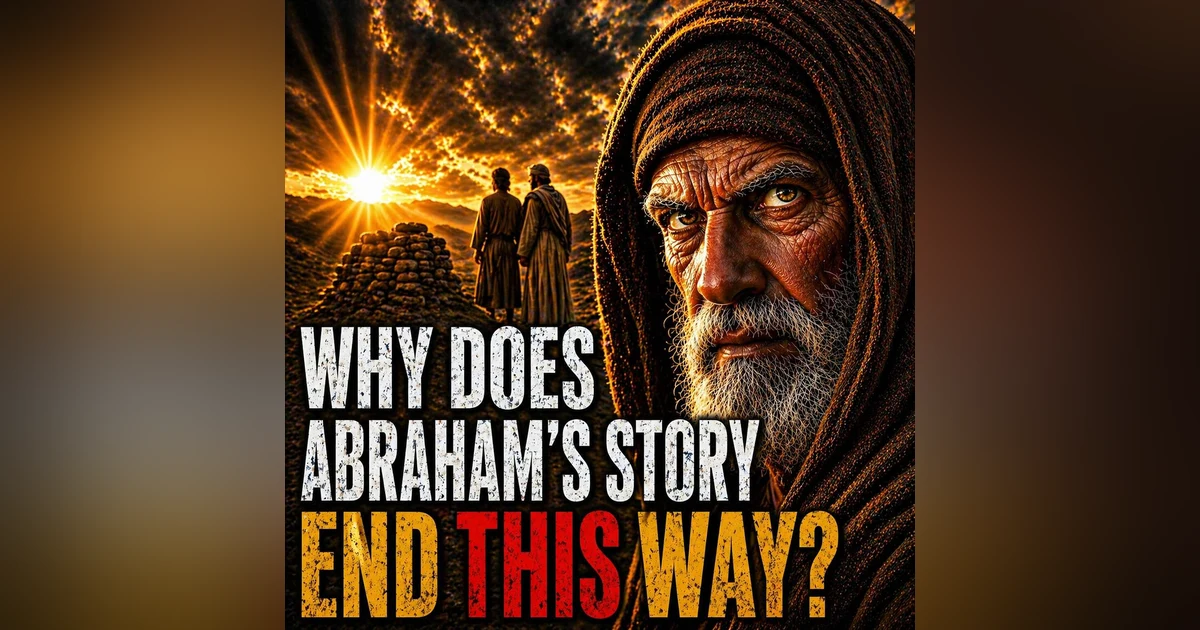

Why doesn’t the Bible rush past Abraham’s ending? Genesis 25:1 to 18 slows down to show something most people miss. God chooses Isaac for the covenant line, yet still blesses Ishmael. That tension reveals the true character of God. In this episode, Dr. Shawn M. Greener unpacks the closing of Abraham’s life through Ancient Near Eastern context, covenant inheritance, and generational identity. This is about more than history. It is about how God works in your life right now. You will learn: • ...
Key Takeaways
- God can be precise in His covenant promises while extending mercy broadly to all.
- True biblical inheritance is about identity and God's calling, not just material possessions.
- A full life is not a flawless life, but one carried by God's faithfulness through our imperfections.
- Endings in life are not the end of God's work; they often signify continuation and transition.
- God's faithfulness across generations anchors His promises, offering assurance even in changing seasons.
Why doesn’t the Bible rush past Abraham’s ending?
Genesis 25:1 to 18 slows down to show something most people miss. God chooses Isaac for the covenant line, yet still blesses Ishmael. That tension reveals the true character of God.
In this episode, Dr. Shawn M. Greener unpacks the closing of Abraham’s life through Ancient Near Eastern context, covenant inheritance, and generational identity. This is about more than history. It is about how God works in your life right now.
You will learn:
• Why covenant inheritance is precise, not random
• Why God’s mercy extends beyond the chosen line
• Why endings matter in God’s story
• How to trust God when life transitions feel uncertain
If you are wrestling with purpose, calling, fairness, or change, this episode will challenge and ground you.
Tell me: Where do you need to trust God’s precision instead of resisting it?
https://rumble.com/v791snq-day-20-why-does-it-end-this-way.html
https://www.youtube.com/live/vsNEEKRwgPE?si=yUQI1qsgAkxTleW-
More resources:
https://www.truewordfaithforlife.com
Genesis 25, Abraham death, Isaac inheritance, Ishmael descendants, covenant theology, Bible teaching podcast, Christian teaching, ANE context Bible, God’s faithfulness, biblical inheritance
Send Dr. Shawn a Message. Please leave your contact information if you’d like a reply!
Thank you so much for listening! Please subscribe to the True Word, Faith for LIFE! YouTube channel, please click this link. Thank you again!
Shawn
https://www.youtube.com/channel/UCo1sLYz6J4FTUFwR5yjReMw
Frequently Asked Questions
Why does the Bible spend time on Abraham's death and descendants beyond Isaac?
The Bible slows down to show that God's covenant line is precise, yet His mercy extends beyond it, revealing His character and how He works in all lives.
What is the significance of Abraham giving all he had to Isaac?
This highlights that covenant inheritance follows God's word and specific calling, not human sentiment, demonstrating clarity in God's plan.
How does Abraham's ending teach us about trust?
Abraham's life, though marked by failures, ended 'full of years,' showing that a full life is carried by God's faithfulness, not a flawless existence.
What can we learn from Ishmael's descendants being mentioned after Abraham's death?
It shows God's faithfulness to His promises to Ishmael, demonstrating that while covenant roles are distinct, God's mercy and concern are real for all.
Unknown Speaker (0:00): Here we are, day 20. Why does it end this way? Day 20. Some of y'all been here for every single day, bright and early. Some of you are tapping in from a whole another time zone.
Unknown Speaker (0:17): You have to get up way early. That's awesome. I appreciate it. God bless you. Well, here we go.
Unknown Speaker (0:23): But if you didn't hear the summary of last night, I think you'll enjoy it. You'll have to have a little time. But you don't have to listen to it all in one bite. You can listen and then especially on the audio. If you if you do the audio, you can and that's anywhere.
Speaker 0 (0:40): It's anywhere there's Apple Podcasts, Spotify, Amazon Music, IR Radio, Pocket, Cast, Overcast, Castbox, GoodPods, and probably 15 more. And you can listen directly from my website, trueword, faithforlife.com. It's free. So there's that. So you wherever you stop listening, it'll remember.
Unknown Speaker (1:05): Alright. Here we go. Why does Abraham's story end like this? Oof. One of the most pivotal I mean, honestly, ever.
Unknown Speaker (1:25): One of the most pivotal characters ever in all of what we do. But it ends like this. Like this. Why does you know, we've been reading through Genesis, and we think we got it figured out. But then the story ends like this.
Unknown Speaker (1:58): It twists. Why does Genesis slow down for Keturah? That's his new wife. Sarah died. Baby, I'm never gonna get married again.
Unknown Speaker (2:12): I'm never ever gonna marry again. You go, that's it. I'm done. I'm not married again. Ain't nobody can equal you.
Speaker 0 (2:19): Well, it's not that. It's not one of those deals. So why does Genesis slow down for Keturah? It's it's wild. The story is wild.
Unknown Speaker (2:37): People say, I'm gonna read the Bible. The Bible's boring. Well, I'm sorry to tell you. It's not boring at all. Good Lord.
Speaker 0 (2:49): So Genesis slows down for a ketorah, katurah, inheritance, burial, and Ishmael's descendants. Why not just move straight to Isaac? Because the Bible isn't rushing, it's teaching. It's showing us something most modern people struggle to hold together. God can choose a covenant line without despising everyone outside that line.
Unknown Speaker (3:16): Now come on. Somebody needs to hear that today because there's a whole lot of folk out there that all they wanna do is fight with other people. It's a circular firing squad. Christians want to fight other Christians because they don't do something exactly like what they think they should do, so they're gonna yell at them. They're gonna pick them apart.
Unknown Speaker (3:43): Religious Rottweilers, and they're like Rottweilers. God can choose a covenant line without despising everybody outside that money. God can be pretty precise without being petty. God can narrow the promise and still widen the mercy. Come on.
Unknown Speaker (4:07): Narrow the promise and widen the mercy. That matters right now. It matters right now because we we live in a culture that hates, hates distinctions. Love labels hate distinctions. If God chooses, people accuse him of being unfair.
Speaker 0 (4:40): If God shows mercy broadly, people assume distinctions no longer matter. Genesis 25 says both ideas are wrong. God is precise, no doubt. God is merciful, and no doubt, thank God, you're looking at he shows his mercy to me. I don't deserve it, but he does.
Speaker 0 (5:08): And those two truths, they don't fight each other. So let me ask you right now. Have you ever struggled with the tension between God's specific calling and his wider mercy? Oh. Oh.
Speaker 0 (5:25): Somebody, this is not an ad, but I gotta drink some. These are the first words or even sounds that I'm making this morning. So I gotta drink a little bit. So maybe a question you can answer in the comments, have you ever struggled with the tension between God's specific calling and his wider mercy? By the way, welcome.
Unknown Speaker (5:58): Welcome back to many of you. Welcome to those who are new, those who will tap into this. You can start at any point. Through the Bible in a Year, Walking the Story of God. And you can go back, click on the live tab.
Unknown Speaker (6:16): Under the video tab, ironically, there's audio only, usually a couple hours after. Or you can go to my website, truewordfaithforlife.com, and boom. If you're not a subscriber on True Word Faith For Life with Doctor. Sean, spelled s h I w n, just on YouTube, on the main channel, it's 4,000 some odd subscribers. Thank you to all of you.
Unknown Speaker (6:41): Click on subscribe and hit the little bell on Rumble. I think it's follow, and then you hit the bell. This book this this is my book. This is my latest book, ironically called True Word, Faith for Life. How about that?
Unknown Speaker (6:58): It is textbook quality in every sense. And, yeah, easy to read too. I didn't do one of these deals where it's so small you can't even read it. See there? Man, it's it's in focus unless you don't have your glasses on.
Unknown Speaker (7:15): But anyway yeah. And I took that photograph on the cover. One cold day. Back when I used to be a photographer. So welcome back.
Unknown Speaker (7:29): It's good to have you. I'm by the way, in addition to being clutchy, I am doctor Sean or just Sean. I want to be doctor Sean. So today, we come to Genesis twenty five one to 18. This is the passage that sadly closes Abraham's story and prepares the way for Isaac.
Speaker 0 (8:03): What a story if you think about it. By the way, my book will help you go deeper into what it means to live as a follower of the way. So Genesis 25 comes right after Genesis 24. Isn't that something? It's not anachronistic yet.
Unknown Speaker (8:24): It'll get there. It'll get achronological soon, and you'll see. We'll follow the chronology of it. Hello. Hello.
Unknown Speaker (8:35): Hello. Welcome from Wisconsin. I don't know doctor Savage, but I'm familiar with him. Yeah. Welcome.
Unknown Speaker (8:46): Good to have you. We treat each other nice in live chat. That's just how we do. So Isaac has a wife, Rebecca. I think we like Rebecca.
Unknown Speaker (9:01): She's has she's entered the covenant household through covenant. The next generation, it's ready. So now the Bible closes Abraham's life, But it doesn't do it casually. You know, it names, it separates, it blesses, it buries, or buries, And where are you from? Or bury.
Unknown Speaker (9:40): We went to the burial wherever you're from. Where I live now, there's people from everywhere. It hands the story forward. That is in filler. Oh, we we need some more we need some more words on Genesis.
Unknown Speaker (9:59): We need more words. More words. Go back to the go back to the drawing board. It hands the story forward, and it's not filler. It's real.
Speaker 0 (10:10): It's covenant order. In the ancient Near East in in the ancient Near Eastern world, inheritance wasn't just about money. It was identity. Inheritance wasn't just about money. Who you are, who your people are, the passing down authority within the household, household continuity, legal standing, the future.
Speaker 0 (10:43): So when Genesis tells us what Abraham gave, where his sons went, where he was buried, and what happened to Ishmael, showing us that God's promise didn't dissolve into some sort of confusion. Abraham's house is being ordered under the word of god. Are you ready? Here we go. Moses gives this story to Israel so they'll know who they are and how their god works in his story.
Speaker 0 (11:21): Israel needs to understand that y'all aren't random, and they aren't. They aren't self made. They came from promise. They come from calling. They come from the God who speaks and then keeps speaking across generations, Abraham's family.
Speaker 0 (11:43): No. Genesis 25, it it isn't just Abraham's family wrap up. It's covenant formation. It's God saying, I haven't lost the thread. Hang in there.
Unknown Speaker (12:00): Don't quit me yet. The chapter opens by telling us that Abraham took another wife, Keturah, and had more sons. And why include that? Because Abraham really did become fruitful and multiplied. Come on, somebody.
Unknown Speaker (12:25): We know how that happens. Well, maybe we do, maybe we don't. God promised multiplication, and Abraham became the father of many. But here's the key. Fruitfulness expands.
Speaker 0 (12:45): All the while covenant inheritance narrows. Both are true, and that's where most modern people stumble. We think generosity means God must erase distinctions. By the way, this kinda came up in last night's episode. There was someone some atheists that listened, and they were very respectful.
Speaker 0 (13:12): And one in particular, he he listened. He listened, and he he was extremely respectful. And I spoke about he he may he drew some conclusions that indicated maybe he hadn't read the whole Bible and hadn't understood it. And here's the crazy thing. We could throw rocks at him.
Unknown Speaker (13:33): I don't suggest it for not understanding, for speaking of something he doesn't understand. But here's the thing. Here's the thing. Here's the thing. Here is the thing.
Unknown Speaker (13:47): And this is important. So important. You ready? A lot of Christians. A lot of Christians don't understand scripture.
Unknown Speaker (14:00): A lot of mature Christians. We think we do, but we don't. We we make distinctions and connections and tethers where there aren't any, and then we don't see the ones where there are. And that is where modern people stumble. We think generosity means God must erase distinctions.
Speaker 0 (14:24): We think distinction means God must not be generous. The Bible refuses that false choice. God blesses broadly, and he appoints specifically. God's mercy is wide, but his covenant line is clear. That's why the text says Abraham gave all he had to Isaac.
Speaker 0 (14:53): All. A picture of reading of the will. Although they understood how it went back then, doesn't mean there wasn't jealousy. I could read them will. Maybe somebody super wealthy has three or four children and then just gives one everything.
Unknown Speaker (15:13): Now you you get a little bit of this here and you get a little bit of this here. I'll tell you what I do. Split it split it all up in three. I split it in three. That's not what happened.
Speaker 0 (15:26): That's not what happened. All all he had to Isaac. Abraham gave it all. He knew he was getting close. The other sons received gifts.
Speaker 0 (15:39): They did. But Isaac received the inheritance. That's not because the others had no value. It's not because God had no concern for them. It's because covenant inheritance follows God's word, not human sentiment.
Speaker 0 (15:55): God had already said the promise would move through Isaac, so it moves through Isaac. That isn't cruelty. That's clarity. And some of us need that word today. You're wearing yourself out.
Speaker 0 (16:10): You're trying to make equal what God hasn't made equal. You're treating every voice like it has the same level of authority. Every relationship like it has the same place in your life, and they don't. How many have been there? Oh, gotta choose who you listen to.
Speaker 0 (16:33): Gotta choose who you believe. You can't you can't you cannot treat every voice like it has equal authority because they don't. And the cost of treating every relationship like it has the same place, the same value, the same importance, dangerous. Every assignment. You can't treat every assignment like it has the same weight it doesn't.
Speaker 0 (17:09): Clarity isn't meanness. Sometimes clarity is the only way to stay faithful. And that's one of the reasons why I'm doing this. You know, God called me to do it. I I I you know, I didn't hear an audible voice, but I was praying and praying and praying.
Unknown Speaker (17:29): What do you want me to do? He said, Go through the Bible in a year and walk my story. Teach it fully. Help them understand. So here we are.
Unknown Speaker (17:50): So if you don't, if you don't do that, you won't understand the links. I say it all the time. I had a got a note the other day through truewordfaithforlife.com/contact. Thank you, by the way. Why don't you hurry up and get to the New Testament?
Unknown Speaker (18:05): You know, this is the age of law. You've been a legalist. By the way, I was reading it. That's the voice I heard. I don't know if that's their actual voice.
Unknown Speaker (18:17): But anyway, I get that a lot. So the thing is is if you don't understand this, I mean, truly, fully understand this, the Old Testament, you won't understand the new. You'll have a weak, thin faith. We'll get there. Hang in.
Speaker 0 (18:38): Put in the work. So Abraham gives gifts to the other sons, and he sends them eastward away from Isaac. By the way, radio audience, I'm making faces away from Isaac. What? To modern ears, that sounds harsh.
Unknown Speaker (19:06): Seriously. Sounds harsh. They're like, oh, yeah. What are you doing here? But in covenant terms, it's order.
Speaker 0 (19:16): Abraham doesn't leave the next generation in confusion. He doesn't create ambiguity. God has already spoken. There's a serious word for a lot of people today. A lot of people today out of thin faith.
Speaker 0 (19:37): A lot of people leave I think a lot of people leave being people of faith or followers of the way because things feel well, and, you know, a lot of people leave things blurry because clarity feels uncomfortable. And I think sometimes people leave the faith because they don't like some of the clarity. But here's what happens. Chaos grows where wisdom should have stood guard. Genesis 25 says mature faith doesn't blur what God has defined.
Speaker 0 (20:17): Then we're told then we're told Abraham died in a good old age, an old man and full of years. We can read over that. We can say, he was old. Okay. Alright.
Speaker 0 (20:33): Whatever. He's old. But here's the thing. The sentence carries weight not because Abraham had a painless life. He didn't.
Unknown Speaker (20:48): We went through just some of his life. He feared. He lied, and then he lied again. Then he lied again. He stumbled, and then he stumbled again, and then he stumbled again.
Speaker 0 (20:58): He waited. He grieved. He obeyed when he knew it would cost him something. He was tested, and yet the Bible said he died full. That should encourage some of you right now.
Unknown Speaker (21:16): That should encourage you real people listening. A full life isn't a flawless life. A full life is a life carried by the fullness of God. Some of you think your failures in the middle where the dash is disqualify your your whole story. Abraham says no.
Unknown Speaker (21:38): If that were the case, I wouldn't be here. I would I would not be here. I'm telling you. Folks that know me know it's the case, and I don't have it all figured out now, and neither do you. Stop quitting because in your dash, you're living your dash right now, sometimes we do jacked up things.
Unknown Speaker (22:00): No. We don't wanna go back to them. My friends, failure in the middle isn't the final line when covenant mercy is holding the pen. Then comes one of the most powerful details in the passage. Isaac and Ishmael bury Abraham together.
Speaker 0 (22:28): The Bible doesn't pretend every wound disappeared. The Bible doesn't pretend that family history was simple. Oh, it's complicated, but it gives us this solemn, this solemn moment. Both sons stand at their father's grave. I've been there.
Speaker 0 (23:02): I've been there. It's a solemn moment, and that matters. Genesis shows covenant distinction without denying human dignity. And where do they bury him? In Machpelah.
Speaker 0 (23:24): Remember that? A while back? It's that place that a that Abraham bought when Sarah died? Machpelah? The ground purchased in grief now receives Abraham too.
Speaker 0 (23:35): The promise remains tied to the land. The covenant claim remains anchored in place. Even in death, God hasn't lost the thread. You think you're dead and gone because you jacked up your life a little bit or a lot. Not the end.
Unknown Speaker (23:55): Not the end. Not unless you give up. It's not the end. Not unless you quit. It's not the end.
Unknown Speaker (24:01): And let me tell you something. It doesn't have to be some big thing on the other side. Doesn't have to be. Doesn't have to be some big thing. Trust and obey for there's no other way to be happy in Jesus but to trust and obey, my friends.
Speaker 0 (24:14): You don't have to be Billy Graham in order to be a blessing in the kingdom. So back to the text. The text says, after Abraham's death, God blessed Isaac. It's simple. It's clear.
Speaker 0 (24:29): It's massive. The torch has passed. Abraham's chapter closes, and Isaac now stands in the foreground. That is how biblical history works. One generation is called.
Unknown Speaker (24:40): That generation walks, stumbles, obeys, learns, and hands the future forward. No human servant stays central forever. You won't either. You're not gonna live forever. Why do you think you will?
Unknown Speaker (24:50): Why are you living like you're gonna live forever? You won't. Tick tock. And one day it won't. Not Noah, not Abraham, not Isaac, not David.
Unknown Speaker (25:05): The story belongs to God. Your story belongs to God. And every servant, no matter how important look. We can look back at that name I just read. Those were some jacked up folk.
Unknown Speaker (25:17): Them fellows was jacked up. God still used them. Stop thinking somehow or another if you're not perfect. And look, if you're a person if you're a person who thinks you're perfect because you got up out of the mud, first of all, you didn't get up out the mud. God reached down and lifted you.
Unknown Speaker (25:38): The Lord reached down and lifted you, and you trusted him to lift you. And so you were out of the mud, and some of the mud dripped off, and you got you a shower and got you a little haircut, got you some clean clothes on. Now all of a sudden, you think, you all that. Mm-mm. Better look back.
Unknown Speaker (25:56): God used Noah. God used Abraham. God used Isaac. God used David and can use you. Stop thinking you're disqualified.
Unknown Speaker (26:04): Look. I thought I was disqualified. From the age of 16, God called me to preach and teach his word, and I did everything I could to make myself disqualified, everything I could think of. Your story belongs to God. And here, every servant back there, no matter how important, serves a larger redemptive story moving toward Messiah.
Speaker 0 (26:27): We don't live forever. We can have eternity if we place our faith and trust in God. Oh, absolutely, we can, but we serve the story. We serve a larger redemptive story moving toward HaMashiach, Messiah. That's humbling, and it's freeing because it means the promise was never resting on your shoulders anyway.
Speaker 0 (26:59): Stop living and thinking as though it all rests on you. It doesn't. Trust. This is why I say, give the community a chance. That's why I say what we're doing here, this matters because this becomes a community.
Speaker 0 (27:17): Doesn't mean it can be your only community. It just means it's a community. I always recommend have you a church nearby. I hope you find one, a good one. They're not perfect.
Unknown Speaker (27:28): Stop going thinking the preacher. Somebody was dear lady, I've known her my whole life. My whole life, I've known her. God bless her. She's turned on JD Vance now because, you know, he he uses swear words, and she doesn't like Trump because he's, you know, rough roughneck.
Unknown Speaker (27:44): We didn't hire a pastor. He's not our pastor. He's our president, and he's our vice president. He's not perfect. He's not perfect.
Unknown Speaker (27:52): Yeshua hasn't run yet for president, but he will, and he'll win. Promise was never resting on your shoulders. Stop walking with a hunch in your back because it's all on your shoulders. It's not. Then Genesis gives us Ishmael's generations.
Speaker 0 (28:24): Ishmael's. Why? Why? Why does he do it? Because God keeps his word there too.
Speaker 0 (28:38): He promised Ishmael would become a nation. Now we see 12 princes, descendants, territory, and history. God's mercy toward Ishmael wasn't empty talk. It was real. Not identical to Isaac's covenant role, not the same inheritance, but real mercy, real fulfillment, real faithfulness.
Speaker 0 (29:04): Genesis won't let us say that if someone isn't central in the covenant line, God has no concern for them. Stop thinking that if you're not the star, you're not of value. Well, that's not wrong. That's that's that's not just wrong. That's that's so wrong.
Speaker 0 (29:22): And there are a lot of people. There are a lot of people that will do the whole acting out in tongues, and they'll do that, and they'll look around and see, is somebody listening? Is somebody watching me? I'm gonna show them I'm slain in the spirit over here, and and I've gotten the gift. I'm legit.
Speaker 0 (29:44): Show. There are other people that that are in an acquire or in a worship team, and they're jealous because there's somebody else is a really good singer. Maybe it's not even that they're a really good singer. Maybe they just something about them. He or or she, they they sing in a a way that just brings brings God into the room.
Speaker 0 (30:20): There's a lot of preacher jealousy out there. Lot of it. Just because you're not the star doesn't mean God has no concern for you. The God of Abraham is not small. He is covenantally focused, and he's merciful beyond our categories.
Speaker 0 (30:41): You know, we we set all kinds of categories. Andre, good to see you, brother. Super Andre 2099. Good to see you. By the way, Wisdom, b fifty two fourteen.
Speaker 0 (30:52): God bless you. God is the best. Amen. Amen. Amen.
Unknown Speaker (30:55): God bless you all. Thank you for all of you joining. Miss Sharon, I'm so happy to see you. I tell you what, if you don't like miss Sharon, something wrong with you. You got a hitch in your get up if you don't like miss Sharon.
Speaker 0 (31:12): She's a sweet lady. God bless her. She's a prayer. She prays, and she studies. Amen.
Speaker 0 (31:21): I like her note taking. Miss Sharon, hang on to those notes. Preserve them because your your family's gonna want them one day. So that speaks straight into modern life. Many people don't want a God who distinguishes unless it's them being at the top.
Unknown Speaker (31:44): You know what I'm saying? Come on. I I don't I don't like I don't like categories, you know. He or she's up here. There's on one here, another wing and another wing.
Unknown Speaker (31:55): I don't like it. Mm-mm. Then then they get promoted to something. Well, you have to have categories. It's important for, well, order.
Speaker 0 (32:08): God is not a god of chaos, you know, and they'll quote a bunch of stuff. Most people don't want a god who distinguishes. They want a god who never chooses, who never orders, who never defines, who never appoints. In other words, they want a god who never gets to be God, but the Bible gives us something so better. A God, the God, who chooses with wisdom.
Speaker 0 (32:35): A God, the God, who blesses with precision. A God, the God who doesn't owe us an explanation at all that fits our preferences, but he proves himself faithful in everything he says. Our job isn't to edit God. Our job is to trust him. Comparison is the thief of joy.
Speaker 0 (33:09): Amen. There's a there's also a word here about endings. There's a word here about endings, and one day your life is gonna end. What have you left as your legacy? I'm not talking about stuff.
Speaker 0 (33:33): I'm not talking about buildings with your name on them. Although, hey, you know what? I tell you now. I'm just gonna tell you now. Doesn't mean there's anything wrong with that.
Unknown Speaker (33:43): God uses wealth. He does. He does. You may think he doesn't. You may make all these things.
Speaker 0 (33:50): I know some. I know I've protected many a billionaire that was also a great believer. Loves the Lord fully and completely, serves him, is grateful. There's a word in this about endings. Abraham's life ends with closure and continuation.
Speaker 0 (34:12): That's real life because listen, I used to make a speech. I used to travel around the country and give speeches, and and I I used to make this speech about the 10 people you'll never know that you've impacted. You've changed their lives. You have changed their lives. Oh, have you changed it for the better?
Speaker 0 (34:30): Have you changed it for the worse? That's up to you. You'll never know their names. You'll never know how they were influenced, but you'll know when you get to heaven or you don't. Real life folks, closure and continuance.
Speaker 0 (34:48): You don't get every loose end tied up. This isn't a thirty minute rom com. You don't get every relationship made simple. Some are complex. You don't get every tension resolved before the next season begins, but you can finish under the faithfulness of God In a world obsessed with novelty, noise, youth, and instant gratification, long obedience is glorious.
Speaker 0 (35:14): Quiet faithfulness is glorious. Finishing under God's hand is glorious. Some of you are in a season of deep transition right now, and it doesn't feel good. Something is ending. Something is changing.
Unknown Speaker (35:34): Something is being handed off. Oh, you're going. You're going. Banned. Torah only black Hebrews of America.
Unknown Speaker (35:50): Foul mouth. Out you go. Ignant. Don't have no common sense. No home learning.
Speaker 0 (35:59): Something is ending. Something is changing. Something is being handed off. Genesis 25 reminds you that endings don't mean God has stopped working. Sometimes they mean he's moving the promise forward into the next chapter.
Speaker 0 (36:16): So what does Genesis twenty five one through 18 say to us? It says God is precise and and and merciful. It says his covenant line isn't blurry. It says his mercy is wider than our narrow instincts. It says full life isn't a painless life, but a life carried by God's faithfulness.
Speaker 0 (36:37): Says endings matter. Says inheritance matters. Generational handoff matters. And it says the God who speaks never, he never he doesn't forget what he said. Some of you need that right now.
Speaker 0 (36:52): You're anxious because your story is changing. You're anxious because your season is changing. It's closing. You're anxious because the future is moving into hands that aren't yours. Genesis 25 says the covenant was never resting on your control.
Speaker 0 (37:07): It was always resting on the faithfulness of God. In the comments below, where do you need where do you most need to trust God's precision instead of demanding that he do everything your preferred way? Oh, come on. Today, I have a tough challenge and a choice. This isn't an easy one.
Speaker 0 (37:31): I have a challenge, and I have a choice. Where have you been resting distinctions God himself has made? Where have you been resisting them? Not resting in them, resisting them. God made a distinction.
Speaker 0 (37:47): You're not resting in it. You're resisting it. Well, I don't like that, Lord. Where have you been calling clarity unloving? Amen, brother.
Unknown Speaker (37:59): Super Andre 2099. God bless you. Praise God. It isn't me. It's him.
Unknown Speaker (38:03): It's the Lord. I'm glad. Keep listening. We're here with you, brother. We're here with you.
Unknown Speaker (38:12): Where have you been calling charity unloving when it's really holy? Do you are you a charitable person? Are you charitable with your time? Are you charitable with your prayer? I talked about legacy a minute ago.
Speaker 0 (38:32): What are you leaving behind, your inheritance? Do your children, your friends, your family, your neighbors, do they ever see you praying? I mean really praying, not like fancy prayer. I'm talking about real prayer. Your children never catch you reading the Bible and praying.
Unknown Speaker (38:48): Here's the thing, if you don't ever try to live it, if you pray and you read and you have a lot of emotion, but you don't put that emotion into place. You keep pushing, keep trying. Where have you been calling clarity unloving when it's really holy? Where have you been afraid of endings because you think the future depends too much on you? And where do you need to trust that God's mercy is broader and his covenant purpose is more precise than you've allowed?
Speaker 0 (39:31): That's not easy. So here's the choice. You can keep fighting the order God has established, or you can trust in his wisdom. You can keep demanding that God fit your categories, or you can bow to his. You can keep gripping your place in the story like everything depends on you.
Speaker 0 (39:56): Or you can say, Lord, you you you have kept your word across generations. Help me. Pray to the Lord. Ask him. Help me trust your precision.
Unknown Speaker (40:06): Help me to honor your mercy and finish well under your hand. Prayer is not asking for an easy journey. It is asking for a strong back. Now if you've never placed your faith in Christ, I want you to pray this prayer with me. If you believe, you don't have to understand everything.
Speaker 0 (40:32): You don't. You don't. That's the thing. People think they have to understand everything all upfront. I've been studying scripture all my life and for the last twenty years at the doctoral level, and I'm telling you, it's complex.
Speaker 0 (40:48): And that's why I'm here, to help you, to make it simpler, and to help you along the way. We help each other here. Pray this prayer. Father, I know that I've done wrong things. I need your mercy.
Speaker 0 (41:07): I believe that you are. Your son Jesus, Yeshua, died for me and was buried and rose again. Today, today, right now, I turn from my sin, and I place my trust in him as my Lord and my king. Forgive me. Make me new and fill me with your spirit from this day forward.
Speaker 0 (41:35): I want to follow you. In Jesus' name, amen. Wow. You prayed that prayer today. I want you to hear me clearly.
Speaker 0 (41:46): You are not alone. You think you're alone. The enemy's gonna make you wanna feel like you're alone. Your friends, your family, whoever you tell, they're gonna make you they're gonna they're gonna want you look. Because they don't want you to change your life.
Speaker 0 (41:58): They don't want you to climb out of any muddy pits. They don't want that. Yeah. They're your friends. They're your family.
Unknown Speaker (42:06): But they want you to stay stuck. Not all of them. Some of them have been praying for this their whole lives, your whole life. You are not alone. Reach out to me through true word faith for life dot com slash contact.
Speaker 0 (42:23): I'm telling you right now, I promise you, I will help you. I've helped countless people. I will help you. It'd be my privilege. God chooses.
Speaker 0 (42:35): God blesses. God remembers. And from first breath to final burial, his faithfulness never loses the thread. And and and look, if this message touched your heart, share it. Share it with one person.
Unknown Speaker (42:49): You don't have to share it with a thousand. Share it with one person who needs hope or truth and send it to them today. Post the link. You never know what God will do. He can do it with the simplest of things until tomorrow at seven a.
Unknown Speaker (43:06): M. Eastern Standard Time.