

 Apple Podcasts

 Spotify
You Can't Outrun it!
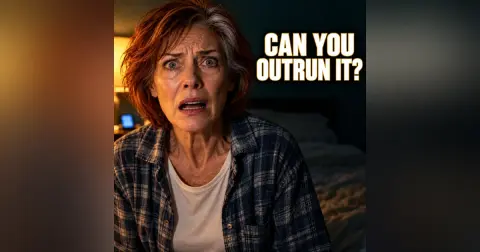
Can YOU Outrun What You Did? One second on a wet road. You never meant it, and it still wakes you at 3 am. God built six cities for people like you. Someone had to die before the guilty could go home. Weekdays LIVE 7 am ET; Sun 6:30 PM https://www.youtube.com/live/sPVMrWsSNr0?si=Sf2P1xoRxOzv7k51 #Faith #Bible #Forgiveness Send Dr. Shawn a Message. Please leave your contact information if you’d like a reply! Support the show Thank you so much for listening! Please subscribe to the True...
Key Takeaways
- God established six cities of refuge in the Bible so that people who committed accidental manslaughter could escape the avenger of blood and find safety.
- The Hebrew words 'bishgaga' and 'biflitiat' designate these provisions specifically for those who caused harm without intent, malice, or premeditation.
- To receive asylum in a city of refuge, the manslayer had to run to the gate, stand before the elders, and tell the unvarnished truth about what happened.
- Ancient Talmudic tradition states that roads leading to the cities of refuge were kept clear with clear signs marking 'miklat, miklat' meaning refuge, refuge.
- Even when carrying heavy burdens, past mistakes, or the pain of unintentional harm, believers are invited to bring their guilt to Yeshua and find true freedom.
Can YOU Outrun What You Did?
One second on a wet road. You never meant it, and it still wakes you at 3 am.
God built six cities for people like you. Someone had to die before the guilty could go home.
Weekdays LIVE 7 am ET; Sun 6:30 PM
https://www.youtube.com/live/sPVMrWsSNr0?si=Sf2P1xoRxOzv7k51
#Faith #Bible #Forgiveness
Send Dr. Shawn a Message. Please leave your contact information if you’d like a reply!
Thank you so much for listening! Please subscribe to the True Word, Faith for LIFE! YouTube channel, please click this link. Thank you again!
Shawn
https://www.youtube.com/channel/UCo1sLYz6J4FTUFwR5yjReMw
Frequently Asked Questions
What were the cities of refuge in the Bible?
The cities of refuge were six designated locations set up across Israel where people who accidentally killed someone could flee to escape the revenge of blood relatives.
Who was eligible to enter a city of refuge?
Only individuals who committed manslaughter without intent, malice, or premeditation—such as a tragic accident—were permitted to seek asylum in these cities.
What does the Hebrew word 'miklat' mean?
'Miklat' is the Hebrew word for refuge, which was prominently posted on signs along the well-kept roads leading to the designated safe cities.
How did the process of entering a city of refuge work?
A manslayer had to run to the city gate, stand before the local elders, truthfully explain their case, and be received into the community for protection.
You never meant for it to happen. It wa it was one second on a dark, wet road. You just you just glanced down at the radio. Just for a second. It was totally innocent. What song is that? I've never heard that before. I've never heard that. Who is that? And now there's a family that goes to the grave, to the cemetery, every spring. Because of you. Maybe it was on the job. You were running the crew. You were responsible. And you were a good boss. Normally very attentive, and you paid attention to everything. Safety stuff. They hated you for it. They were like, oh my god, let this guy let us go, dude. Let us work. Nothing's happened in a long time since before any of us were here. Got a million work hours. Safe. Without injury. Come on. That's how they used to be all the time. And you were running this job, you were running this crew, they were a good crew. And you signed off on the scaffold. I mean, did you look at it? Really? No. You had all this other stuff on your mind. All this other stuff. And a man got hurt. And he hasn't worked since. Maybe it was a decision about your mother's care. You did your best. You normally made all the best decisions as it relates to her, but but this time, I don't know. The stress of it all just started to get to you. And you made a decision you didn't realize wasn't the best. And it went wrong. And your siblings haven't spoken to you in three years. Maybe, maybe it was words. Maybe you said some words in anger. Just one time. Maybe it was to a child. Your child. A niece or a nephew. Maybe it was. And that child still hears them. You didn't plan any of it. It's not what you intended. It's not what you meant. Maybe you were on a medication, you were prescribed. But man oh man, did it make you do weird things and think weird things and that you didn't even know you were doing. And you you don't remember, but you know you weren't yourself. And you heard some people. And you didn't plan that. But you cannot put it down. You can't put it away, you can't put it out of your mind. Sometimes two or three days will go by. You won't think about it. But then you wake out of the blue, three in the morning. And every time someone says, God forgives, oh the Lord forgives, you think, mm-mm, not this, not me. So you can outrun what you did or can't you? Can you? Can you outrun what you did? No. But today in Joshua 20 through 22, God gives you somewhere to run. Six cities built for people who did harm that they never meant to do. This is true word, faith for life with Dr. Sean. I'm Sean. Welcome. We're walking through the entire Bible, the story of God in a year. One day at a time. Six days a week, Monday through Friday, 7 a.m. Eastern Standard Time, Sunday, 6 30 p.m. Thank you, by the way, everybody in live chat. I see it's quite full already. There's room for you, though. Hello to everybody. To be continued, thank you so much. Lynette, good to see you, sweetheart. I hope you're feeling better. Robbie, same with you. Miss Linda, same. Good morning, good morning. Miss Nicole, good early morning. Four in the morning. Miss Susan, good morning. And good morning to all of you who are listening. We had just over a thousand people listening yesterday morning. And that is lovely. It's good to have. So sometimes life gets jacked up. Sometimes we get jacked up. And we go through the Bible. We don't think of it as the resource that it is, and sadly, we miss out on beautiful things. And today, well, if we skipped over today, we'd miss out on some things that we desperately need. One day at a time. We teach in the ancient Near Eastern language, culture, and context. We understand what the speaker was saying, the writer, and what the hearer or the reader, where they were, what was going on in their life, the language, culture, and context. It's critical. And once I learned that, it made scripture like a movie. So today we're in Joshua 20 through 22 as Israel named six cities for the guilty. And if you're new, you you belong here. Don't feel like you don't. Whatever you're carrying, hey, I save all the lives. So if you just go to the live tab on True Word, Faith for Life with Dr. Sean, S-H-A-W-N. We have about 4,000 subscribers. And uh if you just click on that, click on subscribe, click on the little bell for all notifications, and then click on the thumbs up on your way by. Helps the channel massively. I wouldn't ask if it didn't. I hate that it does, but it does. They're all all the episodes are there, so you never miss out on anything. We're on every audio platform there is. You name it. Spotify, iHeartRadio, iTunes. You name it, we're on it. Usually about two hours after we populate there. So not for nothing. Can't stand this face. I don't blame you. I hardly can look at it anyway. Um, you know, you can listen to audio only to catch up. Also, Sunday blog and study guide on TruewordfaithforLife.com. TrueWordfaithforlife.com, I'm telling you. It's a repository. I work on it every day. Um, as I'm physically able and mentally able, I work on all this stuff. And it's an intense resource, and it's free. The only thing, the only thing on it, the only thing on TruewordfaithforLife.com.com that is um that costs is my book. And you don't have to buy that, nobody's gonna make you buy it. It's textbook quality, it's intense. Ink that won't make you sick, paper that won't fold up. Yeah. Miss Tammy, it's good to have you, sister. And uh Billy Graham. I have in the other room, I have uh several of his books and his autobiography. Powerful. I don't want to go behind him. If it's alphabetical in heaven, I'm I'm in trouble because I don't want to go after Billy Graham. Can you imagine? There are gonna be a whole lot of thank yous for telling me about Jesus in heaven for Billy Graham. Wow. Anyway, all that stuff is there. The book is there, you can buy it. You can buy the book anywhere, but we do better when you buy it from the website. You don't get any faster buying it through the website or buying it through you know Amazon or Barnesandoble.com, any of those. You don't get it, it doesn't get to you any faster. So question for the chat, and thank you, by the way, for the sound check uh to be continue 25. Do you carry something? Something you did that you never meant to do, and you you're carrying it on your heart. Is it something that you did? And and and yeah, you were responsible. You didn't intend. But and look, uh the guy who hit me at 92 miles per hour head on, I was 92 versus 51 head on. I went from 51 to zero in seven feet. That guy doesn't have any remorse. The only thing he didn't like about prison, about killing his his buddy, Andre, great kid. Great kid, had a great future. He was a believer. He was a neighbor of ours, friend of our son. The only thing he didn't like was because he had to eat prison food for five years. So he got 19 years, he served five, he's out. Life is good. The only thing about prison he didn't like is the food. It's like eating school cafeteria food every day. And I quote. Driving like a maniac all day long in a borrowed car, state minimum insurance. What could go wrong? He had just gotten several tickets, not even a minute before. Sped off from there and ran several cars off the road and wasn't drunk. He just was a jerk. I don't know what he's doing now. I don't, I don't know if he ever, ever, remorse ever came to him. I I don't know. But maybe it's you. And it's something you never meant to do. And you look back, look, I I have things like that. I have things like that in my life that I'm like, and I and I have to type if I'm I'm gonna tell you this is what I want you to do if you and don't don't make it up and don't type stuff in that's like sounds churchy or elevates your image or any of that stuff, just the truth. The truth sets you free truly. And I will tell you this you know, I'm gonna ask it, it's one of two words carrying, carrying, or free. And if you're free, good morning, Miss Collie. If if if if look, if you say, hey, the Lord freed me of that guilt, I don't I don't suffer it, I don't feel it. I don't think about it, never crosses my mind. I say, well, then type free. But if it ruminates around in you, type carrying. I have to type carrying. I'm just telling you. Let me do it now. See if it types, I don't know. It's reality for me. Some of it I don't even know about. I don't. I don't even remember it. I just know, thank you, Miss Nicole. I just know there was a period of time um I've been I've sustained several uh brain injuries over the years and and neuropathy and you know neuroissues, and I was prescribed a drug. I'm not gonna say the name of the drug. I don't need them to sue me, but they've been sued a bazillion times for this very same thing. And um cause did a for in some people, so there's probably gazillions of people that take it that don't have this effect, but it had a big effect on me. I mean, and no filter. If my mind thought it even a little bit, I said it or I did it. And that that left a trail of tears. And disappointment and lots of other stuff. And the bottom line is I still, hey, listen, there was something that happened when I was in high school. I won't say about it because it's tricky, but I didn't do anything wrong, wrong, but I I I just knew I didn't. Someone wanted me to do something, but I didn't want to do it, but I did it, and I gotta own it. Caring but complicated. Robbie, he adds two words. Come on, Robbie. One word, one word. Don't carry more than you have to. Caring but complicated, it's always complicated. My brother, my sisters, it's always complicated. And sometimes it's just painfully simple. Carrying if you still carry it, free if God has lifted it from you, and you just don't think about it. It's okay. And it's okay if you type free, if you say, hey, you know what? I honestly don't think about it anymore. In the ancient world, if someone in your family was killed, your family had a duty. The nearest male relative became what the Hebrew calls Goalhadam. Goaladam, the avenger of blood. His job was to restore the balance. A life for a life. And listen, some people, you know, yesterday there was a video that came out. Um, some of some of the terrorists from October 7th and before, um, you know, October 7th in in Israel wasn't the first time. I mean, they've been lobbing rockets and blowing up buses and blowing up hospitals and doing all these things for years. And, you know, this isn't the first time. But um in Israel, they have a practice that if they catch a terrorist and they eliminate the terrorists. They give plenty of warnings to the family. Which come on, don't buy the rhetoric of, oh, well, their family didn't know. 80% of the hostages held uh from the October 7th Holocaust attempted, um, they were they were regular people. 83%. Some were doctors, some were lawyers, some were just regular people. Well, that was Hamas that did it. Come on, shut up with that. I was born at night, but it wasn't last night. I know how to watch videos and and read read reports and get to the truth. So they blow up. They give them plenty of warning. They tell the families, hey, you're gonna have to find somewhere else to live. Because on this date at this time, this joint is blowing up. And I mean blowing up. And they blow them up, they destroy the home. So biblical practice goes back a long time. I would submit to you if Israel did that early on, we wouldn't be dealing with this mess. I don't put it on them, it's not their fault. They were succumbing to political pressure. Look, maybe your situation is there weren't any police involved, there was no courts the way we know them. In your situation, I can tell you this, going back to the ancient near what we're talking about in scripture today, there was none of that. And then in the heat of grief, there was no difference between murder and an accident. Right? If you had an axe head, I've talked about this before. If you had an axe head, you're you're you're cutting wood, you're cutting thick vines from whatever, and and you didn't have that axe head secured. The axe head flew off the handle and killed your neighbor, which it happened. They don't have this in here for nothing. It happened. So they dealt with it. Deuteronomy 19, verse 5 gives that exact example. His brother was coming for you. It says. We cannot possibly say that we're civilized. We murder millions of innocent babies every, every year, just in this country alone. Because it's inconvenient. They are in some way inconvenient to us. We can't, we can't, we can't put on this air somehow or another, you know. Well, that's not us. We're so civilized. No. No, we're not. So God built a way to break that cycle into Israel's law. And make no mistake, by the way, I don't look at abortion as, well, that's it was a slip-up. No, it was it's intentional, and you're killing a human being. Well, but it's a zygote. Oh, don't get me started. Good land. But even for that, God brings freedom. He does. Bring it to him, place it at the foot of the cross. I'll talk more about that a little bit. So God, God did build a way to break in, break that cycle. Right in, he built it right into Israel's law. Back in Numbers 35 and Deuteronomy 19, he told Moshe or Moses to set aside cities of refuge. Now, in Joshua 20, Israel actually names them. Three on each side of the Jordan, from Kadesh in Galilee down to Hebron in the south. They're spread out on purpose. Deuteronomy 19, verse 3 in the New American Standard Bible, we call it the NESB 2020's version, says, prepare the roads. Talmud says, now remember, Talmud, I do a whole teaching on what Talmud is. Talmud is just conversations, right? That are written down between rabbis. It's just conversations. It's not scripture. Talmud is not scripture. And half the stuff they say is in the Talmud is not in Talmud. And they don't read the whole Talmud. Come on. It's massive. But the Talmud says those roads were kept clear with a sign. At every crossroads, miklat, miklat, refuge, refuge. Wherever you stood in Israel, a person running from what they'd done, intentional or otherwise, was always one road from refuge. Joshua 20, verses 2 and 3 appoint the cities of refuge, of which I spoke to you through Moshe, Moses, that the manslayer who strikes any person without intent or unknowingly may flee there. Right? These places were only for the people that there was no malice aforethought. There was no, I'm going to kill ye. You know, there's none of that. It was an accident. Your cow got out, your bull, your steer, whatever got out in and it trampled somebody and killed them. It was a mean cow. But before you could handle it, it harmed someone. You did a thatched roof for somebody because that's what they had. You put the poles just a little bit too short, and the the mud let go on the sidewalls, and the whole thing fell in on somebody and caused irreparable harm. That's where you go. Miklat, miklat. Refuge, refuge. You didn't intend it. It happened. The ESV has something to say. ESV stands for English Standard Version. It says without intent or unknowingly. It uses those words. The NASB says unintentionally without premeditation. The Hebrew here is bishgaga. Bishgaga by mistake. And biflidiat. Biflitiat without knowing. Together they say it. This is for the person who never meant it. They never meant it and they never saw it coming. So how did how did a guilty man get inside? How'd they get into miklat, miklat, refuge, refuge? How'd they get there? Verse 4, he shall flee to one of these cities and shall stand at the entrance of the gate of the city and explain his case to the elders of that city. Then they shall take him into the city and give him a place, and he shall remain with them. Watch the order. The order makes a difference here. So watch the order how they put it. He runs. Doesn't amble on whenever he gets around to it. No, no, no. He runs. He stands at the gate. He tells the truth. And they take him in and they give him a place. The manslayer didn't have to clean himself up first. He had to show up and tell it straight. Man, so many of us. We want to doctor it. We want to doctor it all up. Some of us carry stuff and we don't doctor it. We just beat ourselves over the back. As if that's going to help it. Verse 5 If the avenger of blood pursues him, they shall not give up the manslayer into his hand, because he struck his neighbor unknowingly. I was involved in a case where some people were watching a football game in a bar. I was a police officer at the time. And they were in a bar, and uh there became an argument, and it brewed and brooded and brooded until finally the one guy, they were both drunk, the one guy who was actually bigger than the smaller guy, uh, you know, he puts his fist up and starts throwing hands. Good morning, Kiki. Um, starts throwing hands, and then the littler guy, who actually knew how to fight, was a good dude. By every account, super good dude. One punch. One punch, I still remember. It was a right cross. Hit the guy in the off button in the temple, and he went night night. I mean, instantly. But when he went night night, when you get knocked out, it's total. And he went over backwards, and there was a little lip at the bar. His his body went in between the two bar stools and hit that little lip where you put your foot. Hit him just at the base of his skull. The first person to render aid was the person who punched him. He didn't stand over him going, I'll get you. No, the guy was just defending himself. By all accounts, he was defending himself. They call 911, the guy is frantic, he's trying to help him. He didn't know the guy. He didn't know him. He had no animus toward him. The guy was drunk and he was. You know how it is. And the guy died. He had a brain bleed and he died. Of course, the the guy who punched him, and I'm telling you, one punch. It's on film. I watched it. The jury watched it. They gave him manslaughter one. Manslaughter. I think it was just manslaughter. Grievous harm or death. God pled down to negligent homicide. There's no intent. The guy's part. He just wanted to defend himself. Get the guy back the guy up off of him. He was just there to watch football. He went to jail. There was no place for him to go but jail. And I'm telling you, that family dogged. They dogged this man. This is a lot of years ago. They dogged this man. They would not let up off of him. They realized there was somebody in the jail, in the prison where he he was sent for his sentence that they knew, that had nothing to lose. They paid the guy. And they said, take him out. Well, he wasn't successful in that. The guy could fight. I mean, he was an excellent fighter, but he was reluctant to throw hands. You gotta throw hands. You gotta protect yourself. And so he sustained a lot of damage before finally he started fighting back. Also one film. You could see he was covering up, covering up, you know, trying to protect himself. And then eventually he started thinking, man, this guy's gonna shive me. Somebody's gonna hand him a shiv. And he's gonna, he's gonna do me in. He's gonna end me. I gotta end this. Again. One punch. Off button. This time the guy doesn't die. But the prison guards come in, they break it up, they see him standing over the guy. You know, he's going, Yeah, you know, come on, why are you doing this? He had no idea about the plot. And the guy got a bunch of years added to his sentence. What had been just a sentence that if he just did his time and kept his nose clean, you know, he'd he'd be out. He'd get out probably seven years. But now he's got 10, 12, 15 years added to his sentence. It wasn't right. 100%. Guys in prison, where's he gonna go? You know? What are they gonna do? Stamp his meal card, no dessert? Come on now.