Truth Without Contempt
Truth Without Contempt
LIVE Tonight! 6:30 PM ET. Truth Without Contempt. That “righteous fire” might be accusation, not the Holy Spirit. Learn a Bible test for tone, fruit, outcome. Peace or poison next? Comment. WATCH the LIVE Episode or on Playback!
BLOG POST
Are You Hearing the Accuser or the Advocate?
The enemy accuses to destroy, but the Spirit convicts to restore, and your future depends on knowing the difference.
You know the feeling. A clip hits your feed and your chest tightens. Your thumb gets ready. Your mind locks onto a verdict before you even finish watching. Someone is guilty. Someone is evil. Someone must be exposed. It feels like courage. It feels like clarity. It feels righteous.
That is the moment this episode is all about.
Because spiritual warfare usually does not show up with red lights and horror music. It shows up as a voice. A tone. A rush. A posture. It shows up as accusation wearing church clothes. And if we confuse condemnation with conviction, we will call pride holiness and call darkness discernment.
When you get fired up by a post or a video, what fruit comes out of you next, peace or poison?

Two words that change everything
Conviction is specific. Conviction is honest. Conviction leads to repentance, humility, and restoration. Conviction says, “This is wrong. Turn around. Come home.”
Condemnation is sweeping. Condemnation is vague. Condemnation leads to despair, hiding, blame shifting, pride, and violence. Condemnation says, “You are wrong. You are rotten. You are beyond repair.”
That difference is not academic. It is life or death for your soul and for your public witness.
Primary Text 1: Revelation 12:10
LEB: I heard a loud voice in heaven saying, “Now the salvation and the power and the kingdom of our God and the authority of his Christ have come, because the accuser of our brothers has been thrown down, the one who accuses them before our God day and night.”
CJSB: I heard a loud voice in heaven saying, “Now have come the salvation and the power and the Kingdom of our God and the authority of his Messiah, because the one who accused our brothers before our God day and night has been thrown out!”
John is writing Revelation to real assemblies in Asia Minor under Roman pressure, economic coercion, and social hostility. Revelation is not a Halloween book. It is a covenant call to endurance and loyalty when the empire squeezes you.1 John pulls the curtain back and shows the unseen war behind the seen pressure. And one of the enemy’s core titles is right there. The Accuser.2

Satan’s strategy is not only temptation. It is accusation. Accusation crushes identity and fractures community. Accusation builds mobs. Accusation trains believers to feel righteous while becoming cruel.
The Ancient Near Eastern courtroom that explains your soul
Primary Text 2: Zechariah 3:1–5
LEB: Then he showed me Joshua the high priest standing before the angel of Yahweh, with Satan standing at his right side to accuse him. And Yahweh said to Satan, “Yahweh rebuke you, Satan! Yahweh who chooses Jerusalem rebuke you! Is not this man a brand plucked from the fire?” Now Joshua was wearing filthy garments and standing before the angel. Then he answered and spoke to those standing before him saying, “Remove the filthy garments from him.” And he said to him, “See, I have taken your guilt away from you, and I will clothe you with fine garments.” Then I said, “Let them place a clean turban on his head.” So they placed a clean turban on his head and clothed him with garments while the angel of Yahweh was standing by.
CJSB: He showed me Y’hoshua the cohen hagadol standing before the angel of ADONAI, and the Accuser standing at his right to accuse him. ADONAI said to the Accuser, “May ADONAI rebuke you, Accuser! May ADONAI, who has chosen Yerushalayim, rebuke you! Isn’t this a stick snatched from the fire?” Now Y’hoshua was clothed in garments filthy with dung as he stood before the angel. The angel answered those standing before him, “Remove the filthy garments from him.” To him he said, “See, I have caused your iniquity to pass from you, and I will clothe you in fine robes.” Then I said, “They should put a clean turban on his head.” So they put a clean turban on his head and clothed him with garments, while the angel of ADONAI stood by.
Zechariah is a post exile prophet. The people are back from Babylon, but the community is fragile and the Temple is not what it was. Fear is real. Identity is threatened. God gives visions to stabilize covenant life.3 And the vision is a courtroom.

Joshua the high priest stands before the angel of Yahweh, representing the people. The Accuser stands at his right, prosecuting. Joshua is not spotless. He is filthy. That matters. The Accuser does not always need to invent lies. He can weaponize real uncleanness for destruction.
Then Yahweh speaks. Not neutral. Not impressed. Not swayed by prosecution.
“Yahweh rebuke you.” “Yahweh who chooses Jerusalem rebuke you.” “Isn’t this man a brand plucked from the fire?”
God begins with choice and rescue. That is covenant grace. And then God removes the filthy garments. God restores identity. God places the clean headpiece back on the priest. He is not only forgiven. He is recommissioned.4
Here is the difference between condemnation and conviction in one picture.
Condemnation keeps you filthy forever.
Conviction cleans you so you can live.
The Spirit convicts for life
Primary Text 3: John 16:8
LEB: And when that one comes, he will convict the world concerning sin and concerning righteousness and concerning judgment.
CJSB: When he comes, he will prove to the world the truth about sin, about righteousness and about judgment.
John 13 through 17 is the Farewell Discourse. Yeshua is preparing His inner circle for life after His departure. The promise is the Helper, the Spirit of truth. The Spirit convicts, not to crush, but to expose truth so people can come into reality, repentance, and life.5
A simple grid you can use today
The Accuser exposes sin to destroy identity. The Spirit exposes sin to restore identity.
The Accuser pushes you toward hiding. The Spirit pulls you toward confession.
The Accuser builds mobs. The Spirit builds communities.
The Accuser is sweeping and vague. The Spirit is specific and truthful.
The Accuser leads to despair or pride. The Spirit leads to humility and courage.
The five question filter
Before you share, before you comment, before you accuse, and sometimes before you even believe what you just heard, ask:
1. Does this message make me feel superior instantly.
2. Does it require me to hate an entire group to accept it.
3. Does it rely on insinuation more than evidence.
4. What fruit does it produce in me in the next ten minutes.
5. If I share this and I am wrong, who gets harmed.
James gives the same test in a different way
Primary Text 4: James 3:13–18
LEB: Who is wise and understanding among you. Let him show his works by his good conduct in the humility that comes from wisdom. But if you have bitter jealousy and selfish ambition in your heart, do not boast and lie against the truth. But this is not the wisdom that comes down from above, but is earthly, natural, demonic. For where there is jealousy and selfish ambition, there is disorder and every evil practice. But the wisdom from above is first pure, then peaceable, gentle, open to reason, full of mercy and good fruits, impartial, and sincere. And the fruit of righteousness is sown in peace among those who make peace.
CJSB: Who among you is wise and understanding. Let him prove it by his good life, by deeds done in the humility that comes from wisdom. But if you harbor in your heart bitter jealousy and selfish ambition, don’t boast and don’t lie against the truth. This “wisdom” is not the kind that comes down from above. On the contrary, it is earthly, unspiritual, demonic. For where there are jealousy and selfish ambition, there will be disharmony and every foul practice. But the wisdom from above is first of all pure, then peace loving, kind, willing to yield, full of mercy and good fruit, without partiality and without hypocrisy. And peacemakers who sow in peace raise a harvest of righteousness.
James writes to scattered Jewish believers under pressure. He does not define wisdom by volume or aggression. He defines it by humility, peace, reasonableness, mercy, and good fruit. And he says some “wisdom” is demonic.6 That should sober every believer who equates heat with holiness.
A real time example of accusation energy
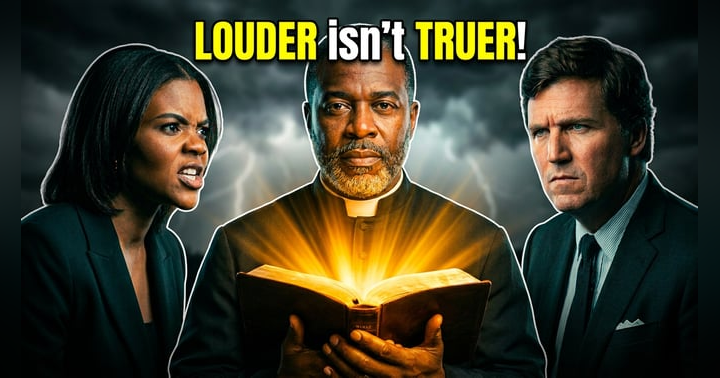
This episode also applies the filter to modern rhetoric. Tucker Carlson condemned the U.S. Israel strike on Iran as “absolutely disgusting and evil.”7 Candace Owens posted, “In honor of Charlie, I STAND AGAINST ISRAEL.”8 Those are their words. That kind of language does not simply debate policy. It aims moral fire. It recruits outrage. It trains people to distrust defenders first and lose the ability to name evil with clarity. When rhetoric mostly accuses, inflames, and confuses, it is not wisdom from above.
The Advocate is your King
Primary Text 5: 1 John 2:1–2
LEB: My little children, I am writing these things to you in order that you may not sin. And if anyone sins, we have an advocate with the Father, Jesus Christ the righteous one, and he himself is the propitiation concerning our sins, and not concerning ours only, but also concerning the whole world.
CJSB: My children, I am writing you these things so that you won’t sin. But if anyone does sin, we have Yeshua the Messiah, the righteous one, who pleads our cause with the Father. Also he is the kapparah for our sins, and not only for our sins but for those of the whole world.
Your Lord is not the Accuser. Your Lord is the Advocate.9 That means a harsh accusing spirit is not a badge of discernment. It is a warning light.
A seven day reset
Day one: Fast accusation. No sharing content framed to provoke contempt.
Day two: Replace accusation with intercession. Pray one concrete prayer for the people you are tempted to mock.
Day three: Confession inventory. Ask God, “Where have I enjoyed accusation?”
Day four: Restoration practice. Send one message of honor where you have been harsh.
Day five: Source humility. If you cannot verify it, do not share it.
Day six: Fruit audit. Ask what your media diet produced, peace or poison.
Day seven: Read Zechariah 3 slowly and receive the clean garments again.
A clean word for your week
You do not have to become a prosecutor to be faithful. You were called to be a witness. Your courage does not need contempt.
If you want deeper study tools, plus a full study guide for this episode, you can also find my book, True Word, Faith for LIFE! in the store at TrueWordFaithforLife.com.
Shalom b’Shem Yeshua

This has been True Word, Faith for LIFE! with Dr. Shawn M. Greener.
For more teachings, visit TrueWordFaithforLife.com.
© 2026 Dr. Shawn M. Greener. All Rights Reserved.
True Word, Faith for LIFE!
STUDY GUIDE
Episode 8: Are You Hearing the Accuser or the Advocate?
How to Discern Conviction From Condemnation
Summary
This episode teaches a crucial distinction for every Follower of the Way: the difference between satanic accusation and Spirit led conviction. Accusation is prosecutorial. It is sweeping, shaming, and destructive. Conviction is specific, truthful, and restorative. The episode grounds this distinction in Revelation 12:10, Zechariah 3:1–5, John 16:8, James 3:13–18, and 1 John 2:1–2, then applies a practical diagnostic filter to modern rhetoric and to the spiritual tone of online outrage. The aim is not soft speech. The aim is clean courage, wisdom from above, and a public witness that looks like the King.
Primary Bible Texts Side by Side
Revelation 12:10
LEB: I heard a loud voice in heaven saying, “Now the salvation and the power and the kingdom of our God and the authority of his Christ have come, because the accuser of our brothers has been thrown down, the one who accuses them before our God day and night.”
CJSB: I heard a loud voice in heaven saying, “Now have come the salvation and the power and the Kingdom of our God and the authority of his Messiah, because the one who accused our brothers before our God day and night has been thrown out!”
Zechariah 3:1–5
LEB: Then he showed me Joshua the high priest standing before the angel of Yahweh, with Satan standing at his right side to accuse him. And Yahweh said to Satan, “Yahweh rebuke you, Satan! Yahweh who chooses Jerusalem rebuke you! Is not this man a brand plucked from the fire?” Now Joshua was wearing filthy garments and standing before the angel. Then he answered and spoke to those standing before him saying, “Remove the filthy garments from him.” And he said to him, “See, I have taken your guilt away from you, and I will clothe you with fine garments.” Then I said, “Let them place a clean turban on his head.” So they placed a clean turban on his head and clothed him with garments while the angel of Yahweh was standing by.
CJSB: He showed me Y’hoshua the cohen hagadol standing before the angel of ADONAI, and the Accuser standing at his right to accuse him. ADONAI said to the Accuser, “May ADONAI rebuke you, Accuser! May ADONAI, who has chosen Yerushalayim, rebuke you! Isn’t this a stick snatched from the fire?” Now Y’hoshua was clothed in garments filthy with dung as he stood before the angel. The angel answered those standing before him, “Remove the filthy garments from him.” To him he said, “See, I have caused your iniquity to pass from you, and I will clothe you in fine robes.” Then I said, “They should put a clean turban on his head.” So they put a clean turban on his head and clothed him with garments, while the angel of ADONAI stood by.
John 16:8
LEB: And when that one comes, he will convict the world concerning sin and concerning righteousness and concerning judgment.
CJSB: When he comes, he will prove to the world the truth about sin, about righteousness and about judgment.
James 3:13–18
LEB: Who is wise and understanding among you. Let him show his works by his good conduct in the humility that comes from wisdom. But if you have bitter jealousy and selfish ambition in your heart, do not boast and lie against the truth. But this is not the wisdom that comes down from above, but is earthly, natural, demonic. For where there is jealousy and selfish ambition, there is disorder and every evil practice. But the wisdom from above is first pure, then peaceable, gentle, open to reason, full of mercy and good fruits, impartial, and sincere. And the fruit of righteousness is sown in peace among those who make peace.
CJSB: Who among you is wise and understanding. Let him prove it by his good life, by deeds done in the humility that comes from wisdom. But if you harbor in your heart bitter jealousy and selfish ambition, don’t boast and don’t lie against the truth. This “wisdom” is not the kind that comes down from above. On the contrary, it is earthly, unspiritual, demonic. For where there are jealousy and selfish ambition, there will be disharmony and every foul practice. But the wisdom from above is first of all pure, then peace loving, kind, willing to yield, full of mercy and good fruit, without partiality and without hypocrisy. And peacemakers who sow in peace raise a harvest of righteousness.
1 John 2:1–2
LEB: My little children, I am writing these things to you in order that you may not sin. And if anyone sins, we have an advocate with the Father, Jesus Christ the righteous one, and he himself is the propitiation concerning our sins, and not concerning ours only, but also concerning the whole world.
CJSB: My children, I am writing you these things so that you won’t sin. But if anyone does sin, we have Yeshua the Messiah, the righteous one, who pleads our cause with the Father. Also he is the kapparah for our sins, and not only for our sins but for those of the whole world.
Key Terms
1. Accuser
In Revelation 12:10 the enemy is described as “the accuser” who accuses God’s people “day and night.” The term reflects courtroom imagery, a prosecutorial posture, and a relentless practice of indictment.10
2. Satan
In Zechariah 3 the satan stands to accuse. In Hebrew usage, the term can function as “adversary” or “accuser,” highlighting legal opposition and hostile prosecution.11
3. Convict
John 16:8 uses language of exposing and proving the truth about sin, righteousness, and judgment. The Spirit’s work is not to crush, but to bring reality into the open so repentance and life can occur.12
4. Advocate
1 John 2:1 uses courtroom language for Yeshua as the righteous Advocate who pleads our cause with the Father. This is the central contrast of the episode: the enemy prosecutes to destroy, Messiah advocates to restore.13
5. Wisdom from above
James 3:13–18 contrasts wisdom that is earthly, unspiritual, demonic with wisdom from above that is pure, peaceable, gentle, open to reason, full of mercy, and sincere. James gives a fruit test for spiritual tone.14
Context and Exegesis
1. Revelation 12:10 and the war behind the pressure
Revelation is addressed to assemblies living under imperial pressure. John’s visions interpret Rome’s coercion as part of a broader cosmic conflict where allegiance to the Lamb is tested.15 Within that conflict, accusation is a core weapon. The enemy does not only entice. He indicts. He uses shame, sweeping generalizations, and fear to fracture communities.
Practical implication: If your spiritual life is dominated by the sense that you are beyond repair, you are likely hearing condemnation rather than conviction. Conviction will name sin, but it will also name a path forward.
2. Zechariah 3 as a covenant courtroom and priestly restoration
Zechariah prophesies in a post exile rebuilding era. The vision of Joshua the high priest locates the community’s crisis as both moral and spiritual.16 Joshua’s garments are filthy, meaning the problem is real, not imagined. Yet the decisive action is Yahweh’s rebuke of the Accuser and Yahweh’s removal of filth. Yahweh also restores priestly identity, signaled by the clean headpiece.17
Practical implication: The presence of real sin does not justify accusation culture. The difference is what happens next. Condemnation leaves people filthy. God’s conviction cleans and recommissions.
3. John 16 and the Spirit’s restorative confrontation
In the Farewell Discourse, Yeshua prepares disciples for disorientation, fear, and persecution. The Spirit’s convicting work is a gift, not a cudgel.18 The Spirit exposes truth for the purpose of repentance, alignment, and life. This is why conviction can feel painful but still produce hope.
Practical implication: If your “discernment” never produces repentance in you, it is suspect. If it only produces rage toward others, it is suspect.
4. James 3 and the fruit test for tone
James gives a measurement that cuts through online personalities. Wisdom is proven by life and humility, not by the harshness of rhetoric. “Demonic” wisdom can masquerade as moral clarity while producing disorder, jealousy, selfish ambition, and harsh speech.19 Wisdom from above has observable markers: purity, peace, gentleness, reasonableness, mercy, impartiality, sincerity.
Practical implication: When a message trains you to be suspicious of everyone, contemptuous toward groups, and addicted to outrage, it is not wisdom from above, even if it quotes Bible verses.
5. 1 John 2 and the gospel posture of advocacy
John’s pastoral logic is simple. Holiness matters, so do not sin. But when believers fail, Messiah stands as Advocate. This establishes the core posture for Followers of the Way: we confront truth, but we do so under the advocacy of Yeshua, not under the prosecution of the Accuser.20
Practical implication: If your speech makes you sound like the prosecutor, you are drifting from the King you follow.
Discussion Questions
1. What is one recent moment where you felt the surge to accuse, label, or share outrage. What fruit did it produce in you within ten minutes.
2. In Zechariah 3, Joshua is truly filthy. Why does Yahweh still rebuke the Accuser first. What does that teach you about how God handles real sin.
3. Which line best describes your current media diet: conviction that leads to repentance, or condemnation that leads to despair or rage.
4. Using James 3:13–18, which markers of wisdom from above are strongest in your life right now, and which are weakest.
5. What would it look like to be a truth teller who still behaves like an advocate for restoration rather than a prosecutor for humiliation.
Practical Application
The Five Question Filter
1. Does this message make me feel superior instantly.
2. Does it require me to hate an entire group to accept it.
3. Does it rely on insinuation more than evidence.
4. What fruit does it produce in me in the next ten minutes.
5. If I share this and I am wrong, who gets harmed.
The Seven Day Advocate Discipline
Day one: Fast accusation. No sharing content framed to provoke contempt.
Day two: Replace accusation with intercession. Pray one concrete prayer for those you are tempted to mock.
Day three: Confession inventory. Ask, “Where have I enjoyed accusation.”
Day four: Restoration practice. Send one message of honor where you have been harsh.
Day five: Source humility. Verify, or do not share.
Day six: Fruit audit. Peace or poison. Humility or swagger.
Day seven: Read Zechariah 3 slowly. Picture the Accuser rebuked. Receive the clean garments again.
Recommended Resource
If you want a deeper foundation for living as a Follower of the Way with clean courage and covenant faithfulness, you can find my book, True Word, Faith for LIFE! in the store at TrueWordFaithforLife.com.

Shalom b’Shem Yeshua
This has been True Word, Faith for LIFE! with Dr. Shawn M. Greener.
For more teachings, visit TrueWordFaithforLife.com.
© 2026 Dr. Shawn M. Greener. All Rights Reserved.
True Word, Faith for LIFE!
FOOTNOTES
1. Richard Bauckham, The Theology of the Book of Revelation (Cambridge: Cambridge University Press, 1993), 7–24.
2. G. K. Beale, The Book of Revelation, New International Greek Testament Commentary (Grand Rapids: Eerdmans, 1999), 628–632.
3. Mark J. Boda, The Book of Zechariah, New International Commentary on the Old Testament (Grand Rapids: Eerdmans, 2016), 175–184.
4. Carol L. Meyers and Eric M. Meyers, Zechariah 1–8, Anchor Yale Bible (New Haven: Yale University Press, 2008), 179–196.
5. Craig S. Keener, The Gospel of John: A Commentary, vol. 2 (Peabody, MA: Hendrickson, 2003), 1034–1044.
6. Douglas J. Moo, The Letter of James, Pillar New Testament Commentary (Grand Rapids: Eerdmans, 2000), 152–180.
7. Bill Hutchinson, “Trump’s Iran decision sparks backlash from Tucker Carlson and some MAGA supporters,” ABC News, February 28, 2026.
8. Candace Owens, post on X, “In honor of Charlie, I STAND AGAINST ISRAEL,” February 2026.
9. I. Howard Marshall, The Epistles of John, New International Commentary on the New Testament (Grand Rapids: Eerdmans, 1978), 105–113.
10. Beale, Revelation, 628–632.
11. Meyers and Meyers, Zechariah 1–8, 179–196.
12. Keener, John, 1034–1044.
13. Marshall, Epistles of John, 105–113.
14. Moo, James, 152–180.
15. Bauckham, Theology of Revelation, 7–24.
16. Boda, Zechariah, 175–184.
17. Meyers and Meyers, Zechariah 1–8, 179–196.
18. Keener, John, 1034–1044.
19. Moo, James, 152–180.
20. Marshall, Epistles of John, 105–113.
BIBLIOGRAPHY
Bauckham, Richard. The Theology of the Book of Revelation. Cambridge: Cambridge University Press, 1993.
Beale, G. K. The Book of Revelation. New International Greek Testament Commentary. Grand Rapids: Eerdmans, 1999.
Boda, Mark J. The Book of Zechariah. New International Commentary on the Old Testament. Grand Rapids: Eerdmans, 2016.
Hutchinson, Bill. “Trump’s Iran decision sparks backlash from Tucker Carlson and some MAGA supporters.” ABC News. February 28, 2026.
Keener, Craig S. The Gospel of John: A Commentary. Vol. 2. Peabody, MA: Hendrickson, 2003.
Marshall, I. Howard. The Epistles of John. New International Commentary on the New Testament. Grand Rapids: Eerdmans, 1978.
Meyers, Carol L., and Eric M. Meyers. Zechariah 1–8. Anchor Yale Bible. New Haven: Yale University Press, 2008.
Moo, Douglas J. The Letter of James. Pillar New TesTruth Without Contempttament Commentary. Grand Rapids: Eerdmans, 2000.
Owens, Candace. Post on X. February 2026.
“Candace Owens drives backlash against US, Israel strikes.” The Jerusalem Post. February 2026.

Author / Host / Theologian
I am just a beggar who found Bread, helping other hungry beggars to find Him too. My life has certainly been complex and I and my halo has many dents. Heschel said; "Something Sacred hangs in the balance of every moment." I live like it. I teach like it.
As a person who survived a fatal 92 mph vs 51 mph head on crash, after dying and re-animating, and surviving several other brushes with death, my perspective is, let's say, unique. I haven't always been a theologian and I'm living REAL life, just like you... I have my hurts, habits and hangups too.
I've learned a few very important things along the way that I'm confident you'll find useful... butter for the Gluten free Bread so to speak.. Oh, you may chuckle or full on snort along the way, but you might also shed a few tears... Faith for LIFE... That's how it happens.

A Friend Who Sticks Closer Than a Brother