The Stone Was Moved, But Not for Him
The Stone Was Moved, But Not for Him
The empty tomb is not only proof that Yeshua lives. It is proof that the grave does not get the final word over those who belong to Him.
What if the greatest proof of God’s power was not that He kept His Son from death, but that He brought Him through it?
That question cuts deeper than holiday sentiment. It confronts the way we think about pain, fear, loss, and hope. Many people want a God who prevents every wound. The resurrection reveals something even greater. The God of Israel is so sovereign, so covenantally faithful, that He can take the worst evil men can do and turn it into the place where His glory is most clearly seen.1
That is why Resurrection Sunday matters so much!
The tomb is empty!
The King is alive!
And because of that, your fear, your shame, your grief, and your past do not get the final word.
The first followers of Yeshua were not moving toward the tomb with optimism. They were carrying spices. They expected death to remain where death had been placed. Their world had collapsed. Their hopes looked buried. Their rabbi had been crucified by Rome, publicly shamed, violently executed, and sealed behind stone.2 In that world, tombs signified finality. A sealed grave meant the matter was over. Nothing more could be done.
That is exactly why the empty tomb struck with such force.
Matthew tells us that the angel said to the women, “Do not be afraid,” and then declared that Yeshua had been raised, just as He said.3 Those four words, just as He said, matter more than most people realize. The resurrection was not Heaven improvising after tragedy. It was not Plan B. It was not a divine recovery strategy after human rebellion ran too far. It was the covenant plan of God unfolding exactly as promised.4
From a Hebraic worldview, resurrection is not decorative theology. It is covenant vindication. It is the public declaration that the God of Abraham, Isaac, and Jacob keeps His word. He does not abandon His promises. He does not fail to complete what He has spoken.5 The resurrection is Heaven’s declaration that neither Rome, nor betrayal, nor violence, nor death itself can overturn the purposes of God.
This is where the resurrection stops being merely historical data and starts pressing on the human heart.
Because most of us know what it feels like to stand before something that seems final.
A marriage breaks.
A dream dies.
A child wanders.
A body weakens.
A grief settles in and refuses to move.
A shameful memory keeps preaching the same sermon: It is over. You are finished. Nothing can change now.
That is the language of the grave.
And Resurrection Sunday answers it.
The stone was moved, but not for Him.
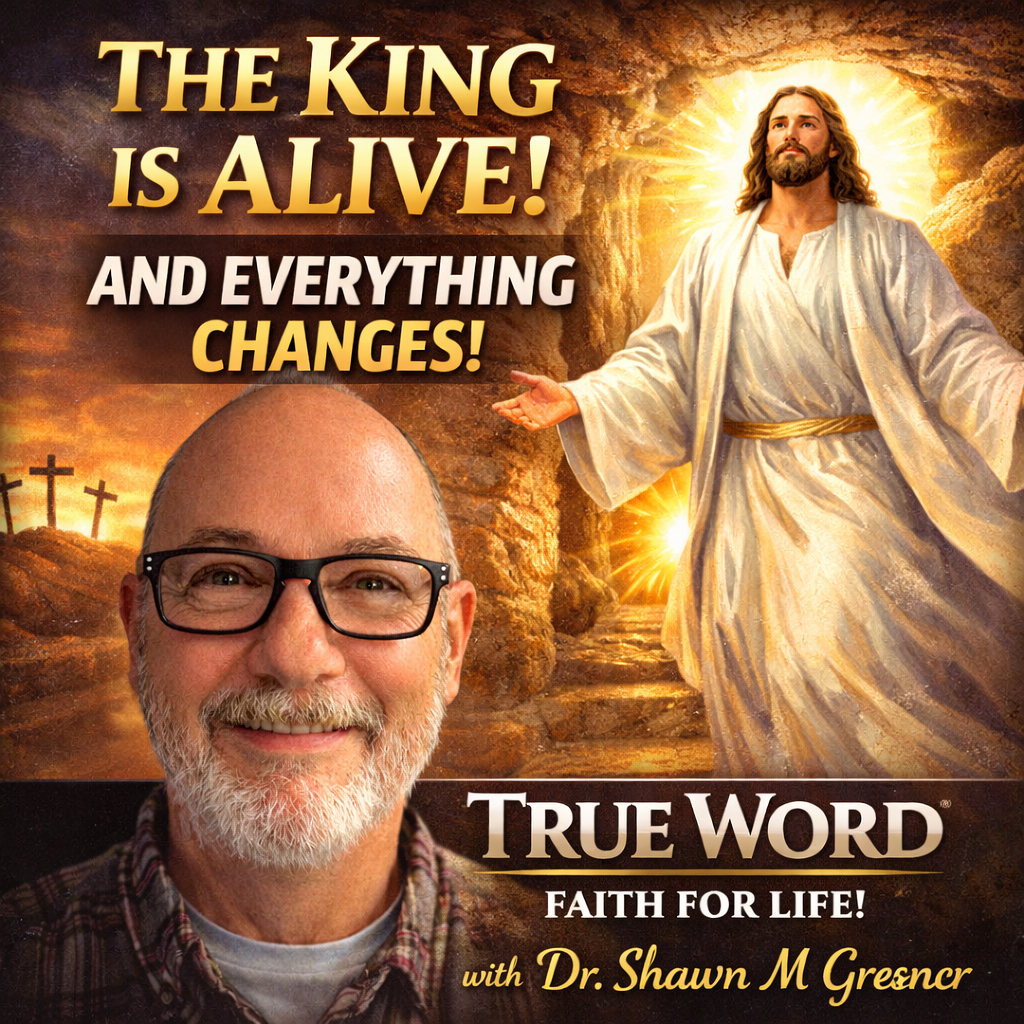
Yeshua did not need the stone rolled away in order to escape the tomb. The stone was moved so witnesses could see in. The open grave was not a convenience for Messiah. It was evidence for everyone else.6 Heaven was saying, Look. See the place where death thought it had won.
That changes everything.
It changes how you see suffering, because suffering is no longer the highest authority in the room.
It changes how you see shame, because your worst failure no longer has the right to name you.
It changes how you see tomorrow, because despair is not sovereign.
It changes how you see your body, your future, and creation itself, because the Bible does not teach escape from embodiment. It teaches the redemption of embodied life under the reign of God.7
That is why bodily resurrection matters.
The worldview of the Bible is not that physical existence is the problem. The problem is rebellion. Sin fractures what God made good. Death enters and distorts. But God’s answer is not to throw creation away. His answer is redemption. The bodily resurrection of Yeshua is the first great eruption of new creation into the middle of the old.8 It is not a vague statement about spiritual survival. It is a historical, embodied, covenantal victory.
Paul calls Messiah the firstfruits of those who have fallen asleep.9 That language is loaded with meaning. Firstfruits is harvest language. It points to the first portion of the crop that guarantees more is coming. In other words, the resurrection of Yeshua is not an isolated miracle meant only to impress. It is a pledge. It is the beginning of a harvest. It is the guarantee that all who belong to Him will share in His life.
That means believers are not simply called to celebrate resurrection. We are called to live from it.
Too many people say they believe in the empty tomb while emotionally living like prisoners of the sealed one. They still bow to fear. They still treat shame as lord. They still assume that despair is more durable than grace. But Romans 6 says that those who belong to Messiah are united with Him in His death and in His life.10 That means resurrection power is not a decorative doctrine for the church calendar. It is the power that breaks the rule of the old self.
You do not have to remain what fear trained you to become.
You do not have to remain what lust discipled you into.
You do not have to remain what bitterness carved into your personality.
You do not have to remain what trauma whispered over your identity.
That does not mean the battle is simple. It means the dominion has changed.
Yeshua’s resurrection is not merely comfort. It is conquest.
And that conquest is beautifully personal.
Think of Mary Magdalene. She came to the tomb weeping. She thought all she had left was grief. Then the risen Messiah spoke her name.11 That is one of the tender glories of the resurrection accounts. The risen King is not distant from the broken. He meets them in their tears. Often the first resurrection moment is not an explanation. It is an encounter. It is the moment His voice reaches a wounded heart and everything begins to reassemble around the reality that He is alive.
Think of Peter. Peter knew what it meant to fail under pressure. He denied the Lord publicly. He collapsed in the moment that mattered most. Yet the resurrection meant Peter’s worst act was not his final identity.12 That is good news for anyone who hates what they have done. The risen Messiah restores failed people. He is not stingy with mercy. He is not put off by repentance. He is a Redeemer, and redeemers do not waste broken things.
Your sin is not stronger than His mercy.
Your shame is not stronger than His blood.
Your past is not stronger than His call.
That is why Resurrection Sunday is both comfort and confrontation.
It comforts those who ache, because it declares that tears are real but not sovereign.
It confronts those who want inspiration without surrender, because the gospel is not that Jesus rose so you can remain the center of your story. The gospel is that Jesus rose, and now your life belongs to Him.13
If He is alive, your fear is not lord.
If He is alive, your shame is not lord.
If He is alive, your appetites are not lord.
If He is alive, your trauma is not lord.
If He is alive, your past is not lord.
If He is alive, then you cannot keep calling darkness home.
That is where the resurrection lands with force. It is not merely asking to be admired. It is demanding a response. You cannot safely reduce Yeshua to a wise teacher if the tomb is empty. You cannot keep Him at a comfortable distance if death has been overruled. If He is risen, then He is Lord.
So the question is not simply whether the resurrection happened.
The question is what you will do with the risen Christ.
Will you keep negotiating with your old life?
Will you keep decorating spiritual death and calling it living?
Will you keep delaying repentance for a later time that may never come?
Or will you come to Him now?
Because the invitation of the gospel is not, Repair yourself, then come.
The invitation is, Come to the risen Messiah, and He will do what you cannot do.
He forgives.
He cleanses.
He restores.
He makes all things new.14
What area of your life most needs resurrection hope right now?
Do you see the resurrection mostly as comfort, as proof, or as a call to surrender?
Do not rush past those questions.
Sit with them.
Pray through them.
Let them search you.
Because the stone was moved, but not for Him.
It was moved so the world could see that death had lost.
And the King who walked out of that tomb still calls dead things to life.
Shalom b’Shem Yeshua.
Shalom Aleikum.
© 2026 Dr. Shawn M. Greener. All Rights Reserved.
True Word, Faith for LIFE!
Footnotes
Acts 2:23; Isaiah 53:10; Genesis 50:20.
Craig S. Keener, The IVP Bible Background Commentary: New Testament, 2nd ed. (Downers Grove, IL: IVP Academic, 2014), 109.
Matt. 28:5–6, ESV.
Luke 24:6–8; Acts 2:24–32.
N. T. Wright, The Resurrection of the Son of God (Minneapolis: Fortress Press, 2003), 718–20.
Matt. 28:6; John 20:1–8.
Rom. 8:18–25.
1 Cor. 15:20–28; Rev. 21:1–5.
1 Cor. 15:20, CJSB.
Rom. 6:3–11.
John 20:11–16.
Luke 22:54–62; John 21:15–19.
Rom. 14:9; 2 Cor. 5:14–15.
Rev. 21:5; Col. 2:13–14.
The Bible Rebinder I Mentioned on the Podcast
This is one of the three Bibles Melissa of MooseWorks Bible restored for me, beautifully rebound with a rugged new cover and exceptional attention to detail.
A Bible is more than a book. It is often a treasury of prayers, notes, promises, memories, and the record of a life spent seeking God.
If you have a treasured Bible that deserves to be preserved with excellence, I am honored to recommend Melissa of MooseWorks Bible.
Her work is marked by beautiful craftsmanship, thoughtful detail, and genuine kindness. She does not simply repair Bibles. She helps preserve the story they carry.
Visit MooseWorks Bible today:
Click HERE to contact MooseWorks Bibles
https://www.etsy.com/shop/MooseworksBibles
© 2026 Dr. Shawn M. Greener. All Rights Reserved.
True Word, Faith for LIFE!
STUDY GUIDE
The Stone Was Moved, But Not for Him
Summary
This study guide explores the resurrection of Yeshua as a bodily, historical, covenantal, and deeply personal act of God. The resurrection is not presented in the Bible as a sentimental symbol, but as the vindication of the covenant promises of God, the defeat of death, and the beginning of new creation. The empty tomb does not simply tell us that Jesus lives. It tells us that fear, shame, grief, and the power of sin do not have the final word for those who belong to Him. This study also presses the practical implication of the resurrection: believers are not only to celebrate it, but to live from it. The resurrection is comfort for the broken, proof for the searching, and a summons to surrender for every human being.1
Key Terms
Resurrection
In the Bible, resurrection is not mere spiritual continuation after death. It refers to embodied life restored by the power of God. In Yeshua’s case, this is not resuscitation back into ordinary mortality, but transformed bodily life in victory over death.2
Firstfruits
A harvest term used by Paul in 1 Corinthians 15:20. It means the first portion that guarantees the greater harvest to come. Applied to Messiah, it means His resurrection is the beginning and guarantee of the resurrection life of His people.3
Covenant Vindication
This phrase captures the idea that the resurrection publicly demonstrates God’s faithfulness to His promises. What God spoke, He fulfilled. The resurrection is not an isolated miracle, but proof that the God of Israel keeps covenant.4
New Creation
The resurrection of Yeshua signals the breaking in of the age to come. God has begun renewing creation, not discarding it. The risen Messiah is the first great sign that redemption is entering the world in power.5
Author, Audience, and Context
The resurrection narratives are written within the framework of first century Judaism under Roman occupation. The Gospel writers are not inventing a myth of inner inspiration. They are testifying that the crucified Yeshua of Nazareth was bodily raised from the dead in fulfillment of the purposes of the God of Israel.6 Matthew writes to show Yeshua as the promised King and fulfillment of Israel’s story. John emphasizes signs, testimony, and belief, showing that the resurrection is both historical and revelatory. Paul, especially in 1 Corinthians 15 and Romans 6, explains the theological meaning of the resurrection for the people of God.
In the Ancient Near Eastern and Second Temple Jewish setting, a tomb symbolized closure and finality. Burial marked the end of human possibility. Once the stone was sealed, the matter was finished from a human standpoint. That is why the empty tomb is so explosive. It is God’s invasion of human finality.7 The women did not go to the tomb expecting triumph. They went carrying spices. The disciples were not looking for a breakthrough. They were reeling from devastation. The resurrection came into heartbreak, not optimism. That matters pastorally, because it means resurrection hope is not reserved for strong people. It is for broken people.
Primary Texts
Matthew 28:5–6
“But the angel answered and said to the women, ‘Do not be afraid, because I know that you are looking for Jesus, who was crucified. He is not here, because He has been raised, just as He said. Come, see the place where He was lying.’”8
1 Corinthians 15:20
“But the fact is that the Messiah has been raised from the dead, the firstfruits of those who have died.”9
Romans 6:4
“Therefore we were buried together with him through immersion into death, in order that just as the Messiah was raised from the dead through the glory of the Father, likewise we also may live a new life.”10
John 20:16
“Yeshua said to her, ‘Miryam!’ She turned and said to him in Hebrew, ‘Rabboni!’ which means, ‘Teacher!’”11
Context and Exegesis
“Just as He said”
Matthew 28:6 anchors the resurrection in the prior word of Yeshua. The resurrection is not random power. It is promised power. It demonstrates that the death and resurrection of Messiah were not interruptions to God’s mission, but the fulfillment of it.12 This is crucial because it means the resurrection reveals the integrity of God’s word. The God who promised redemption has acted in history to accomplish it.
From a Hebraic worldview, truth is not merely conceptual. Truth is demonstrated in covenant faithfulness. The resurrection is therefore not just proof of divine ability, but proof of divine reliability. God does what He says.
The stone was moved for the witnesses
One of the strongest teaching lines from the episode is that the stone was moved, but not for Him. This insight reflects the logic of the text. The risen Messiah did not need help escaping the grave. The opened tomb functions as evidence for the women and the disciples.13 The angel’s invitation, “Come, see the place where He was lying,” makes that explicit. The empty tomb is part of God’s public testimony.
This helps guard against a sentimental reading of the resurrection. The event is not inward encouragement alone. It is historical revelation. Christianity stands on the claim that something happened in space, time, and body.14
Bodily resurrection and the redemption of creation
The Bible does not present matter as evil or bodies as prisons. That idea comes more from pagan and later philosophical streams than from the Hebraic worldview of the Bible. Genesis affirms creation as good. The problem is not embodiment, but rebellion.15 That is why resurrection must be bodily. God’s answer is not to abandon creation, but to redeem it.
The risen body of Yeshua matters because it shows continuity and transformation. He is truly the crucified one, yet now glorified. This means redemption reaches the physical world. The resurrection is the beginning of the renewal of all things.16
Firstfruits and the future of believers
In 1 Corinthians 15:20, Paul uses the term firstfruits to describe Messiah’s resurrection. This is covenant and harvest language. The firstfruits offering pointed ahead to the full harvest. In the same way, Messiah’s resurrection guarantees that those who belong to Him will share in resurrection life.17 This means Christian hope is not vague survival after death. It is embodied future life in the redeemed creation of God.
Resurrection as present power
Romans 6 does not treat resurrection merely as future hope. It is also present power. Believers united with Messiah in His death and resurrection are called to walk in newness of life.18 The resurrection breaks the authority of the old dominion. Sin still tempts, but it no longer reigns. Fear still presses, but it is no longer lord. Shame still accuses, but it no longer has the right to define identity in Messiah.
This is why the resurrection confronts as well as comforts. Many want Easter encouragement without cruciform surrender. But the risen Yeshua is not merely an inspirational figure. He is Lord. The empty tomb is not simply permission to feel better. It is a summons to repent, obey, and live under His reign.19
Personal restoration in the resurrection accounts
Mary Magdalene and Peter embody two dimensions of resurrection grace. Mary shows that the risen Messiah meets people in grief and speaks personally into their sorrow.20 Peter shows that the risen Messiah restores those who have failed publicly and painfully.21 Together they testify that the resurrection is not abstract theology. It addresses tears, shame, regret, and shattered identity.
Practical Application
The resurrection answers fear.
If Yeshua is alive, fear is not the final authority over your future. That does not mean all anxiety disappears instantly, but it does mean fear must no longer be obeyed as lord.
The resurrection answers shame.
Peter’s restoration shows that failure does not have the final word for the repentant. In Messiah, your most shameful moment is not your permanent identity.
The resurrection answers despair.
The women came toward the tomb in heartbreak. The resurrection happened in that setting. Therefore, hope in the risen Messiah is not naive optimism. It is confidence in the God who acts in places that look finished.
The resurrection demands surrender.
If Yeshua has been raised, then He is Lord. The right response is not distant admiration, but repentance, allegiance, and obedience.
Discussion Questions
Why is “just as He said” such an important phrase in Matthew 28:6?
What does the empty tomb reveal about the faithfulness of God?
Why does bodily resurrection matter in a Hebraic worldview?
What does Paul mean by calling Messiah the firstfruits of those who have fallen asleep?
In what ways do believers sometimes celebrate the resurrection while still living as though the grave has the final word?
How do Mary Magdalene and Peter demonstrate the personal nature of resurrection hope?
What area of your life most needs resurrection hope right now?
Do you see the resurrection mostly as comfort, as proof, or as a call to surrender?
Practical Response
Read Matthew 28:1–10 slowly and prayerfully.
Ask the Lord where you have been agreeing with the grave.
Confess any place where fear, shame, secret sin, bitterness, or spiritual numbness has functioned like a false lord.
Meditate on Romans 6:1–11 and write down what “newness of life” must look like in your current season.
Thank Yeshua by name for specific ways His resurrection changes your present, not only your future.
The resurrection is not a decorative doctrine for one Sunday a year.
It is the announcement that death has been dethroned.
It is the declaration that God keeps covenant.
It is the beginning of new creation.
It is the restoration of the broken.
It is the summons to rise and walk in allegiance to the living King.
The stone was moved, but not for Him.
It was moved so you could see.
And once you see, you must answer.
Bibliography
The Complete Jewish Study Bible. Peabody, MA: Hendrickson Bibles, 2016.
The Holy Bible, English Standard Version. Wheaton, IL: Crossway, 2016.
Keener, Craig S. The IVP Bible Background Commentary: New Testament. 2nd ed. Downers Grove, IL: IVP Academic, 2014.
Wright, N. T. The Resurrection of the Son of God. Minneapolis: Fortress Press, 2003.
Footnotes
Matt. 28:1–10; 1 Cor. 15:20–28; Rom. 6:1–11.
N. T. Wright, The Resurrection of the Son of God (Minneapolis: Fortress Press, 2003), 31–32.
1 Cor. 15:20–23.
Luke 24:44–47; Acts 13:32–37.
Rom. 8:18–25; Rev. 21:1–5.
John 20:30–31.
Craig S. Keener, The IVP Bible Background Commentary: New Testament, 2nd ed. (Downers Grove, IL: IVP Academic, 2014), 109.
Matt. 28:5–6, ESV.
1 Cor. 15:20, CJSB.
Rom. 6:4, CJSB.
John 20:16, CJSB.
Matt. 16:21; 17:22–23; 20:18–19.
Matt. 28:6; John 20:6–8.
John 20:24–29; 1 Cor. 15:3–8.
Gen. 1:26–31.
Rom. 8:21–23.
Lev. 23:9–14; 1 Cor. 15:20–23.
Rom. 6:4–11.
Rom. 14:9; 2 Cor. 5:15.
John 20:11–18.
John 21:15–19.
Shalom b’Shem Yeshua.
Shalom Aleikum.
© 2026 Dr. Shawn M. Greener. All Rights Reserved.
True Word, Faith for LIFE!

Author / Host / Theologian
I am just a beggar who found Bread, helping other hungry beggars to find Him too. My life has certainly been complex and I and my halo has many dents. Heschel said; "Something Sacred hangs in the balance of every moment." I live like it. I teach like it.
As a person who survived a fatal 92 mph vs 51 mph head on crash, after dying and re-animating, and surviving several other brushes with death, my perspective is, let's say, unique. I haven't always been a theologian and I'm living REAL life, just like you... I have my hurts, habits and hangups too.
I've learned a few very important things along the way that I'm confident you'll find useful... butter for the Gluten free Bread so to speak.. Oh, you may chuckle or full on snort along the way, but you might also shed a few tears... Faith for LIFE... That's how it happens.
Judas Ate Too: The Table, the Cross, and the Empty Tomb