THE PSYCHOLOGY OF MANIPULATION
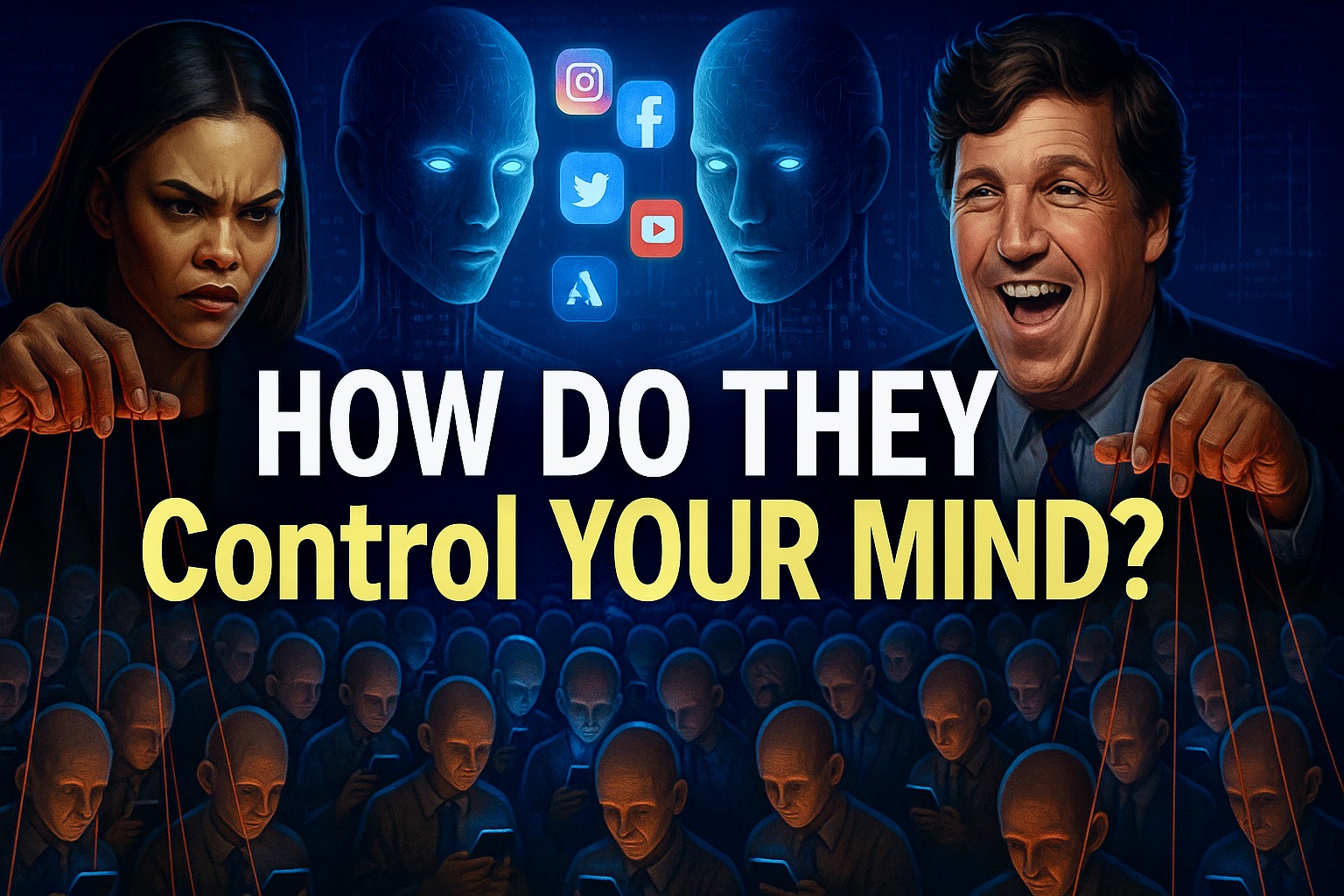
THE PSYCHOLOGY OF MANIPULATION: WHY BELIEVERS MUST RECLAIM DISCERNMENT RIGHT NOW
By Dr. Shawn M. Greener, Follower of the Way
True Word, Faith for LIFE!

Taco Tony Knows About Manipulation
The Psychology of Manipulation and the Battle for the Christian Mind
The Psychology of Manipulation
The psychology of manipulation is no longer an abstract concept or a distant cultural concern. It has become a daily spiritual battle that shapes the minds and hearts of believers who spend more time consuming commentary than consuming the Word of God. And if we do not confront this deception directly, it will disciple us in ways that reshape our loyalties, our worldview, and our understanding of truth itself.
When Lies Stop Whispering and Start Preaching
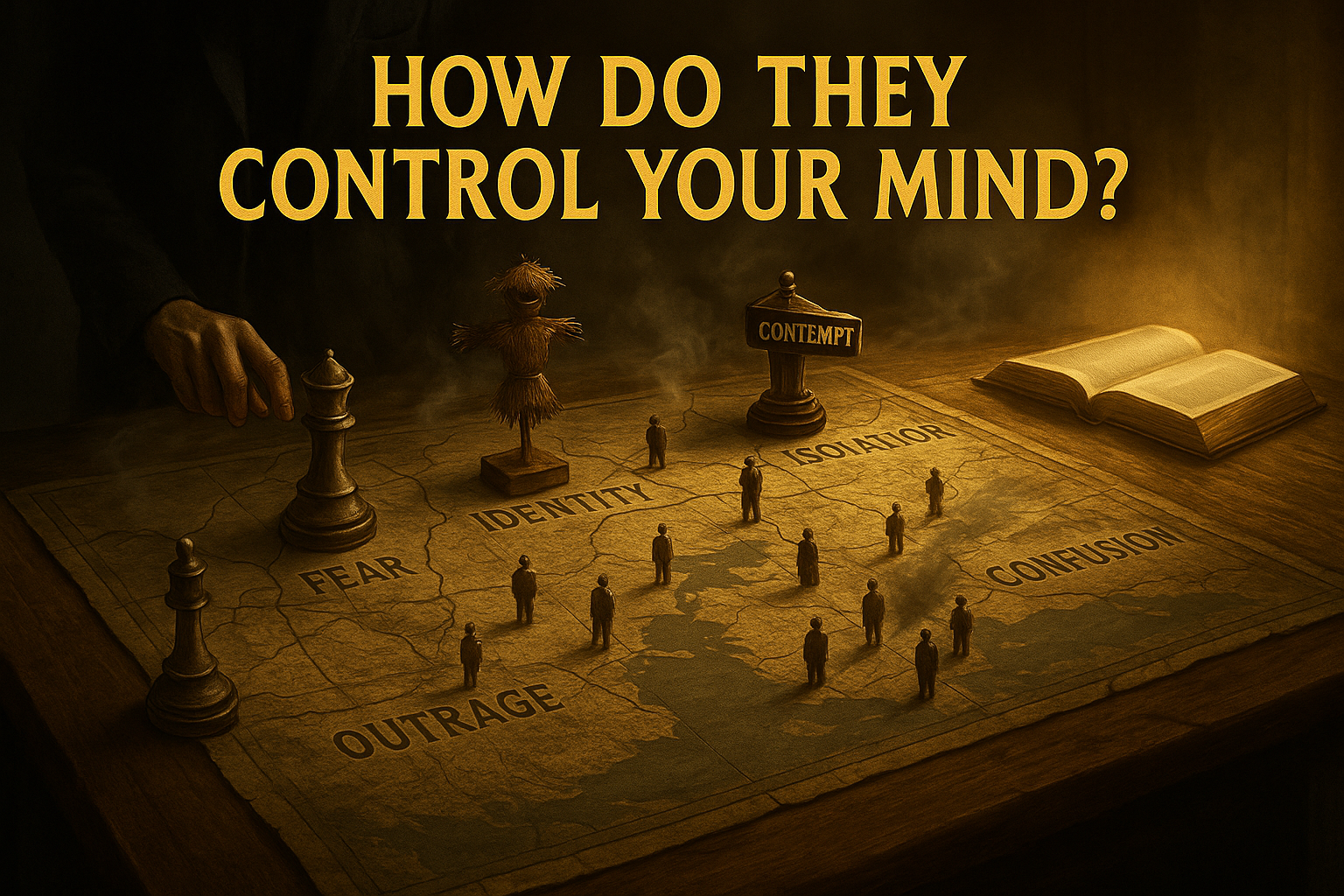
How Do They Control Your Mind?
There are moments in history when lies do not whisper. They preach. They trend. They go viral. The psychology of manipulation thrives in environments where outrage spreads faster than nuance and where suspicion feels more satisfying than truth. And for many believers, the constant stream of emotionally charged content has replaced quiet time with the Bible, reshaping the inner life without them ever noticing.
In the Ancient Near Eastern world, deception was not merely intellectual confusion. It was a spiritual environment. Rejecting truth was not a mistake but a moral decision, a shift in allegiance. When Paul warns that some “did not receive the love of the truth” in 2 Thessalonians 2:10–11, he is not talking about ignorance. He is talking about rebellion — choosing voices that flatter instead of voices that form us.
The Influencers Who Shape Us — Even When We Deny It
We live in a world where the loudest voices are not the wisest voices. Media personalities, influencers, and political commentators have learned to speak with boldness, clarity, and confidence — even when their message is shallow, distorted, or manipulative. They leverage outrage, sarcasm, fear, and insinuation to create emotional dependency.
This dependency is formed through identity fusion:
“We know the truth.”
“They hate us.”
“Our movement.”
Once the listener internalizes this identity, disagreement feels like betrayal. Biblical discernment is replaced by tribal loyalty. The voice of the Shepherd is drowned out by the noise of the Stranger.
The Ancient Tactics Behind Modern Manipulation
Every deception you see today has an ancient root:
Lashon hara (lah-SHON hah-RAH): destructive speech.
Rakil (rah-KEEL): whispering accusation.
Navi sheker (nah-VEE SHEK-er): false revelation masquerading as insight.
Binah (BEE-nah): discernment that separates feeling from fact.
Emet (eh-MET): covenant truth that is faithful, relational, and unchanging.
These terms are not academic. They are the spiritual foundations God gave His people to protect them from the seductive strength of manipulated perception.
And manipulation is exactly that — perception engineering.
What Happens When Christians Confuse Suspicion with Discernment

The Tools They Use
Many believers today mistake suspicion for discernment. Doubting everything feels like wisdom because it feels like independence. But in Hebraic thought, discernment is not rebellion — it is relationship. It begins with the fear of the Lord, not the fear of hidden enemies.
When believers trade Scripture for speculation, intimacy with God is replaced by intimacy with fear. They become disciples of influencers rather than disciples of Yeshua. They become shaped by algorithms rather than by truth.
The Cost of Letting the Wrong Voices Shape Your Mind

This is not political.
This is spiritual.
This is about who gets to interpret reality for you.
Someone is discipling you every day.
An influencer.
A commentator.
A news cycle.
A social media feed.
A personality online.
Or the Word of God.
One leads to shalom.
The other leads to suspicion.
THE Source of TRUTH










The Voice of the Shepherd or the Voice of the Stranger?
Yeshua said in John 10 that His sheep know His voice — and the voice of a stranger they will not follow. The tragedy today is that many believers are following the Stranger because the Stranger sounds bold, sounds passionate, sounds courageous, sounds confident.
But confidence is not discernment.
Passion is not truth.
And boldness is not holiness.
The voice you follow is the voice that forms you.
The Call to Discernment in an Age of Deception
The psychology of manipulation is not just a cultural trend. It is a spiritual war tactic. And believers must reclaim biblical discernment if they want to remain faithful in a world that rewards outrage and punishes truth.
This is your moment to choose.
Think about it...
Ask yourself:
• Who shapes my worldview?
• Who interprets reality for me?
• Am I being discipled by Scripture or by personalities?
• Am I mistaking suspicion for discernment?
Your mind is the battlefield.
Your discernment is the weapon.
Your allegiance is the prize.
You Might Think About These Resources for Perspective
Yad Vashem — The World Holocaust Remembrance Center
Yad Vashem World Remembrance Center
Why I no longer support Tucker Carlson or Candace Owens
“What You Heard About Israel Is False”
Shalom b’Shem Yeshua.
© 2025 Dr. Shawn M. Greener. All Rights Reserved.
True Word, Faith for LIFE!
STUDY GUIDE
THE PSYCHOLOGY OF MANIPULATION: A THEOLOGICAL AND LOGICAL STUDY GUIDE
Summary
This study guide explores the psychology of manipulation within modern media voices who claim to pursue truth while spreading speculation, insinuation, and suspicion. Using 2 Thessalonians 2:10–11 as the primary text, this guide examines how logical fallacies, emotional manipulation, and spiritual deception mirror ancient tactics condemned in Scripture. It calls believers to reclaim biblical binah (discernment) and reject the counterfeit “awakening” that masquerades as critical thinking.
Key Hebrew and Greek Terms
Emet (אֱמֶת, eh-MET): Covenant truth, steadfast, relational fidelity.
Binah (בִּינָה, BEE-nah): Discernment, the ability to distinguish what feels true from what is true.
Lashon hara (לשון הרע, lah-SHON hah-RAH): Destructive, reputation-damaging speech.
Rakil (רָכִיל, rah-KEEL): Whispering slander, secret accusation.
Navi sheker (נביא שקר, nah-VEE SHEK-er): False prophet, one who speaks speculation as revelation.
Ha satan (הַשָּׂטָן, ha-sah-TAHN): The accuser, the adversary.
Peti (פֶּתִי, PEH-tee): Naive, unguarded, easily manipulated.
Arum (עָרוּם, ah-ROOM): Shrewd, discerning, spiritually alert.
Primary Text
2 Thessalonians 2:10–11 — NASB 2020
10 “…and with all the deception of wickedness for those who perish, because they did not accept the love of the truth so as to be saved.
11 For this reason God will send upon them a deluding influence so that they will believe what is false.”
2 Thessalonians 2:10–11 — CJSB
10 “He will enable him to use every kind of wicked deception, those who are headed for destruction, because they would not receive the love of the truth that could have saved them.
11 This is why God is causing them to be led astray, so that they will believe the Lie.”
ANE Context Section
In the Ancient Near East, deception was not an isolated event. It was considered a spiritual condition, a fog that descends on individuals or nations who reject truth. Rejecting emet was understood as rejecting covenant loyalty. Ancient cultures recognized that charismatic speech, false prophets, and high-emotion rhetoric could sway entire populations.
Similarly, modern influencers replicate these tactics:
• Charisma replaces content.
• Outrage replaces evidence.
• Suspicion replaces discernment.
• Identity replaces argument.
This guide demonstrates how ancient warnings about false prophets parallel modern manipulative personalities who claim to defend truth while spreading confusion.
Discussion Questions
1.What makes the psychology of manipulation so effective on emotionally exhausted or politically fearful audiences?
2.How can believers distinguish between righteous boldness and emotionally manipulative content?
3.Why is suspicion often mistaken for discernment in modern Christian culture?
4.How does the Hebraic understanding of emet differ from modern Western concepts of truth?
5.In what ways has social media become a form of digital discipleship in your life?
6.Identify one manipulative rhetorical tactic you have fallen for in the past. How did you overcome it?
Practical Application
• Replace reaction-driven content consumption with Scripture-driven reflection.
• Practice daily discernment: ask “What is true?” before asking “What is sensational?”
• Consider fasting from influencer commentary for one week to reset your discernment reflexes.
• Invite accountability from spiritually mature believers to challenge your conclusions.
• Re-evaluate the voices that shape your worldview.
Reflection Prayer
Heavenly Father, teach me to love truth more than comfort, more than fear, and more than the voices that flatter my assumptions. Sharpen my discernment, cleanse my heart of suspicion, and anchor my mind in Your emet. Guard me from deception and lead me in Your light. In Yeshua’s Name, Amen.
Bibliography
Brown, Francis, S. R. Driver, and Charles A. Briggs. The Brown-Driver-Briggs Hebrew and English Lexicon. Peabody, MA: Hendrickson, 1996.
Keener, Craig S. The IVP Bible Background Commentary: New Testament. Downers Grove, IL: InterVarsity Press, 1993.
Koehler, Ludwig, and Walter Baumgartner. The Hebrew and Aramaic Lexicon of the Old Testament. Leiden: Brill, 1994.
Mounce, William D. Complete Expository Dictionary of Old and New Testament Words. Grand Rapids, MI: Zondervan, 2006.
Walton, John H. Ancient Near Eastern Thought and the Old Testament. Grand Rapids, MI: Baker Academic, 2006.

Author / Host / Theologian
I am just a beggar who found Bread, helping other hungry beggars to find Him too. My life has certainly been complex and I and my halo has many dents. Heschel said; "Something Sacred hangs in the balance of every moment." I live like it. I teach like it.
As a person who survived a fatal 92 mph vs 51 mph head on crash, after dying and re-animating, and surviving several other brushes with death, my perspective is, let's say, unique. I haven't always been a theologian and I'm living REAL life, just like you... I have my hurts, habits and hangups too.
I've learned a few very important things along the way that I'm confident you'll find useful... butter for the Gluten free Bread so to speak.. Oh, you may chuckle or full on snort along the way, but you might also shed a few tears... Faith for LIFE... That's how it happens.

A Friend Who Sticks Closer Than a Brother