Is This Compromise, or Obedience?
Is This Compromise, or Obedience?
Live Sunday 6:30 PM EST: Is it compromise or obedience? Learn biblical discernment in context, spot pressure tactics, and choose covenant faithfulness.
If you have ever been told you are "going soft" because you refuse to slander Catholics or Jews, this one is for you.
We will anchor it in Ephesians 4, James 3, and Romans 11, and I will give you a simple framework for clean, courageous Christianity.
Join me LIVE and tell me in the chat: anger, relief, curiosity, or conviction?
Link to Show on Rumble Channel
A Biblical Response to Pushback, Accusations, and Heat
Obedience is not getting louder. Obedience is getting cleaner.
When this series challenges you, what do you feel first: anger, relief, curiosity, or conviction?
I want to speak to you like a pastor who has watched this happen up close, because I have.
There is a particular kind of pushback that shows up the moment the Bible exposes a sin we have learned to excuse.
It is not the pushback of honest questions.
It is the pushback of threatened identity.

“You’re compromising.”
“You’re going soft.”
“You’re defending Catholics.”
“You’re siding with Jews.”
“This is woke.”
“This is ecumenical.”
“This is a distraction.”
If you have said that, or if you have thought that, I am not writing this to mock you.
I am writing this because I love you enough to tell you the truth.
Pushback is not automatic proof of faithfulness.
Sometimes pushback is proof your pride got touched.
Sometimes pushback is proof you have been discipled by outrage more than you have been discipled by the King.
And I know that sounds sharp.
But if it is true, it is also mercy.
Because what God exposes, God intends to heal.
This is the why behind this entire series.
I am not trying to build a crowd that knows religious vocabulary.
I am trying to help real people become real disciples of Yeshua, with clean hands and a clean mouth, because your family lives under your words.
Your spouse lives under your words!
Your children live under your words!
Your coworkers live under your words!
Your neighbors live under your words!
And the witness of the Gospel lives or dies under your words!
The Gospel never gave you permission to sin with your mouth!
The Bible never gave you permission to dehumanize your neighbor.
So let us define the word people keep abusing: compromise.
Compromise is when you deny what God has said.
Compromise is when you dilute the person of Messiah.
Compromise is when you trade truth for social comfort.
Compromise is when you treat sin as normal.
That is compromise.
But here is what a lot of people mean when they use that word online.
They mean you did not swing hard enough.
They mean you did not repeat the rumor they already believed.
They mean you refused to join their contempt.
They mean you refused to treat whole communities of people like targets.
That is not compromise.
That is obedience.
Obedience is when you submit your mouth, your tone, your claims, your posture, and your conduct to the Bible.
Obedience is when you refuse to sin even while you contend.
Obedience is when you tell the truth with clean hands.
And there is one verse that should settle this for any follower of the Way who wants to be serious about holiness.
PRIMARY TEXT 1, SIDE BY SIDE
Ephesians 4:25
LEB
“Therefore, putting away falsehood, speak truth each one with his neighbor, because we are members of one another.”
CJSB
“Therefore, strip off falsehood and speak truth each one to his neighbor, because we are intimately related to each other as parts of a body.”
Paul is not forming a community of keyboard warriors.
He is forming a community of holy people.
In Paul’s world, words were not harmless.
Words could ruin a person’s name, fracture a household, isolate a family, and tear a community apart.
So when he says, “strip off falsehood,” he is talking about decisive repentance.
Not managing falsehood.
Not excusing falsehood.
Not weaponizing falsehood.
Stripping it off like a filthy garment.
And he grounds it in something we have forgotten.
“We are members of one another.”
In other words, when you lie about your neighbor, you are not merely scoring a point.
You are poisoning your own body.
You are harming what you claim to be part of.
So let me ask you the question that changed the direction of my own thinking.
If Paul commands you to strip off falsehood, why would you call it compromise when somebody does?
Refusing false witness is not compromise.
Refusing false witness is obedience.
This is not about defending Catholic doctrine.
This is not about pretending Judaism is complete without Messiah.
This is not about saying every tradition is equal.
This is about refusing to sin in God’s name.
This is about refusing to bear false witness, especially when false witness feels like belonging.
This is about refusing to treat people like memes.
Because that is what Christians have been trained to do.
We screenshot.
We clip.
We post.
We accuse.
We mock.
We share.
We feel certain.
Then we call it discernment.
But suspicion is not a spiritual gift.
Outrage is not holiness.
Contempt is not courage.
And the Bible will not let us keep calling sin by a holy name.
So here are the five non negotiables I want to press into your life, not as theory, but as a way you actually live this week.
One, define what they believe from their best sources, not their worst examples.
Two, quote primary sources, not screenshots, not rumor threads, not clipped audio.
Three, distinguish doctrine critique from moral accusation.
Four, never universalize guilt across a people.
Five, if you were wrong publicly, correct it publicly.
If you apply those five rules, your speech will get cleaner.
Your conscience will get cleaner.
Your witness will become credible again.
And your children will see that Christianity is not about winning arguments.
It is about becoming a different kind of human being.
That is what discipleship is.
And to anchor this morally, not politically, not tribally, morally, we have to hear James.
PRIMARY TEXT 2, SIDE BY SIDE
James 3:9–10
LEB
“With it we bless the Lord and Father, and with it we curse people who are made according to the likeness of God.
From the same mouth come blessing and cursing. My brothers, these things ought not to be so!”
CJSB
“We use it to praise ADONAI, our Father; and we use it to curse human beings, who have been made in the image of God.
Out of the same mouth come praise and cursing. My brothers, it shouldn’t be like this!”
James is confronting religious speech that sounds holy while hearts remain undisciplined.
And he ties the issue to the image of God.
You cannot bless God and curse image bearers.
It should not be like this.
So if your “discernment” leads to cursing people, mocking people, slandering people, and you call it courage, James calls it sin.
This is the reason I do these teachings.
Because you might have never heard anyone say it like this.
You might have never connected your tone to your discipleship.
You might have never connected your online behavior to the ninth commandment.
You might have never considered that your certainty could still be sin if it is carried in contempt.
And I want to help you come out of that prison.
Now let us be specific.
Some of you have been told, “You’re siding with Jews!”
No.
I am siding with Paul.
And Paul warns Gentile believers not to boast over Jewish branches.
PRIMARY TEXT 3, SIDE BY SIDE
Romans 11:18–20
LEB
“do not boast over the branches. But if you boast, you do not support the root, but the root supports you.
Then you will say, ‘Branches were broken off in order that I could be grafted in.’
Correct. They were broken off because of unbelief, but you stand by faith. Do not be arrogant, but fear.”
CJSB
“then don’t boast as if you were better than the branches! However, if you do boast, remember that you are not supporting the root, the root is supporting you.
So you will say, ‘Branches were broken off so that I might be grafted in.’
True. But so what? They were broken off because of their lack of trust. However, you keep your place only because of your trust. So don’t be arrogant; on the contrary, be terrified!”
Paul does not merely correct arrogance.
He warns it is spiritually dangerous.
So no, telling Christians to stop boasting over Jews is not compromise.
It is obedience.
It is fear of God.
It is Bible.
Now Catholics.
If you want to critique Catholic doctrine, do it.
But do it with receipts.
Do it without caricature.
Do it without false witness.
Because if you accuse millions of people of worshiping a false god and you cannot define their official claims, that is not zeal.
That is arrogance and laziness.
And it is sin.
And this matters for real people.
If your goal is to see a Catholic family member come to Messiah, you will not accomplish that by sending memes that misrepresent them.
You will harden them against you.
Truth matters.
But the way truth is carried matters too.
If you carry truth like a club, do not be surprised when people flinch.
Now I want to slow down on something tender, because it is real.
If the name “Mary” triggers rage in you, that is not discernment.
That is a wound looking for a target.
It might be fear of deception.
It might be pain from your past.
It might be anxiety disguised as righteousness.
But the King does not heal you by giving you permission to be cruel.
He heals you by calling you into clean speech, clean motives, and a settled heart.
Discernment asks, “Is this true?”
Defensiveness asks, “Why are you doing this to me?”
Discernment listens, tests, verifies, and repents when needed.
Defensiveness reacts, labels, and attacks.
So if your first reaction to this series is rage, pause.
That reaction might be revealing a place where your identity is wrapped around being right instead of being faithful.
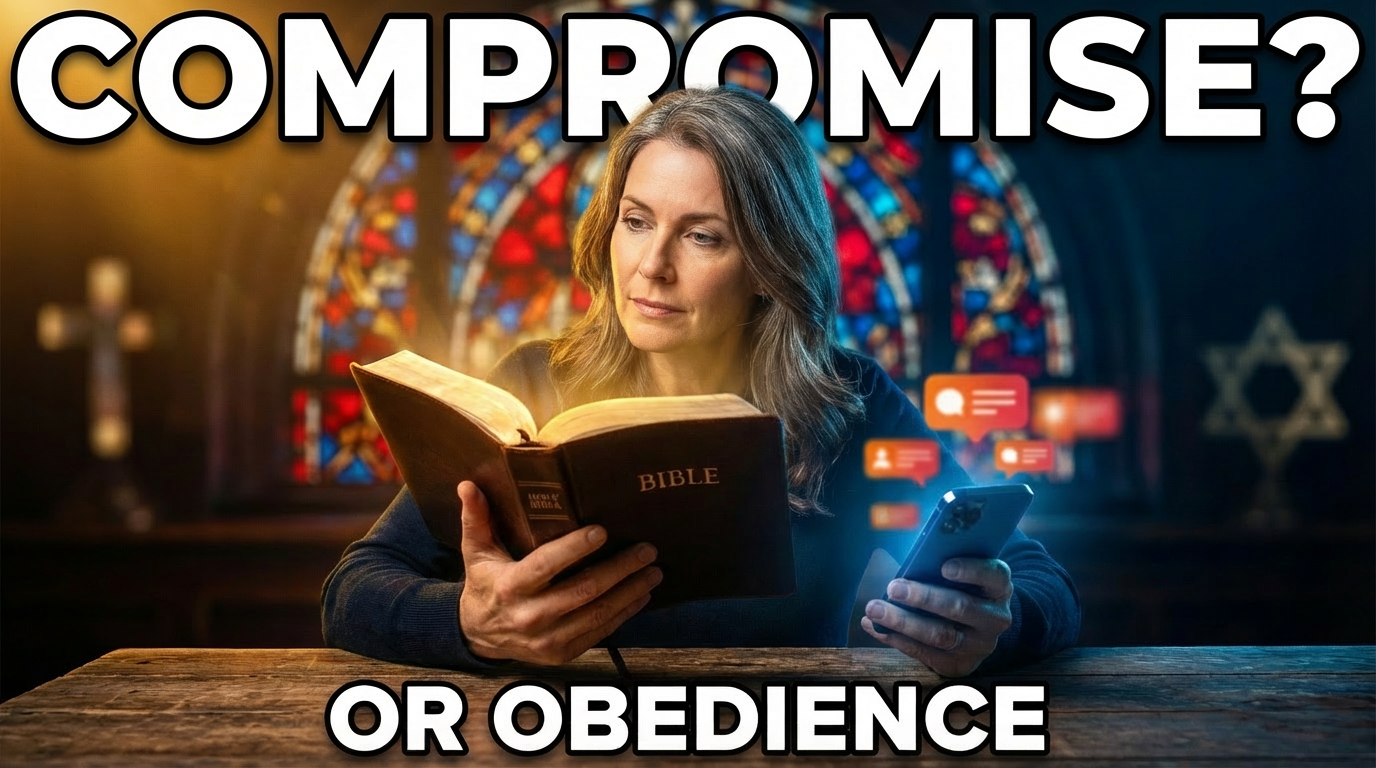
And that is not an insult.
That is an invitation.
Because God does not expose to shame.
God exposes to heal.
Here is today’s challenge.
This week, refuse reaction discipleship.
Slow down.
Verify.
Represent fairly.
Speak clean.
Correct your errors.
If you realize you have been spreading things you cannot prove, stop today.
Not next week.
Today.
For seven days, treat your mouth like it belongs to the King.
Before you speak, ask, “Is it true?”
Before you share, ask, “Do I have the source?”
Before you accuse, ask, “Am I being fair?”
Before you post, ask, “What fruit will this produce?”
Because theology always produces something.
It produces humility or arrogance.
It produces repentance or performance.
It produces truth telling or propaganda.
Now here is the choice.
You can defend your identity.
Or you can surrender your posture.
You can protect your tribe.
Or you can honor your King.
Choose.
And if you are realizing something deeper right now, I want you to hear me clearly.
You might be around Christian content, but not under Christ’s authority.
You might know arguments, but not know the King.
And the King is inviting you home.
Not to a comment section.
To Himself.
Not to superiority.
To surrender.
Prayer isn't asking for an easy journey. It's asking for a strong back.

Father, I know I’ve sinned and I need Your mercy. I believe Jesus died for me, was buried, and rose again. Today I turn from my sin and I place my trust in Him as my Lord and my King. Forgive me, make me new, and fill me with Your Spirit. From this day forward, I want to follow You. In Jesus’ Name, amen.
If you prayed that prayer today, I want to welcome you into the family of God! This is the most important decision you will ever make. And you do not have to walk this road alone. I have helped many take their first steps as followers of Jesus, and I would be honored to walk with you as well.
If you prayed that prayer, or if you still have questions and want to know more, please reach out to me directly through www.TrueWordFaithforLife.com/contact. I promise I will personally connect with you and help guide you in your next steps, whether that is understanding the Bible more deeply, finding a community of believers, or growing in your faith day by day.
You are not alone. Let me walk with you in the Way.
Closing Reflection Question: What is one claim you have repeated that you now realize you need to verify, correct, or stop sharing?
Shalom b’Shem Yeshua
© 2026 Dr. Shawn M. Greener. All Rights Reserved.
True Word, Faith for LIFE!
Dr. Shawn M. Greener, MTh., D.I.S., DPTh., is a Follower of the Way, theologian, and author of True Word, Faith for LIFE! He teaches the Bible through a Hebraic worldview with Ancient Near Eastern language, culture, and context, calling believers to covenant faithfulness and clean, courageous discipleship. For more teachings and resources, visit www.TrueWordFaithforLife.com.
STUDY GUIDE
Episode 3: Is This Compromise, or Obedience?
Subtitle: A Biblical Response to Pushback, Accusations, and Heat
Series: You Cannot Love Jesus and Slander Catholics and Jews!
Author and Host: Dr. Shawn M. Greener, MTh., D.I.S., DPTh.
Identity: Follower of the Way
Website: www.TrueWordFaithforLife.com
SUMMARY
This episode confronts a modern confusion: many believers treat aggressive speech, rumor sharing, and contempt as signs of faithfulness. Episode 3 argues the opposite. In the Bible, obedience is not merely doctrinal accuracy. Obedience includes covenant ethics, especially the refusal to bear false witness and the discipline of the tongue. The episode defines compromise as denying God’s truth or diluting Messiah, then defines obedience as submitting speech, posture, and claims to the Bible. It grounds this in Ephesians 4:25, James 3:9–10, and Romans 11:18–20, showing that truthful speech is a covenant requirement, not a personality preference. The episode also provides five non negotiables for credible doctrine critique: represent positions from best sources, use primary sources, distinguish doctrine critique from moral accusation, reject collective guilt, and correct publicly when wrong. The goal is not to prevent disagreement, but to purify disagreement so the witness of the Gospel remains clean, credible, and faithful.
PRIMARY BIBLE TEXTS, SIDE BY SIDE
Text 1: Ephesians 4:25
LEB
“Therefore, putting away falsehood, speak truth each one with his neighbor, because we are members of one another.”
CJSB
“Therefore, strip off falsehood and speak truth each one to his neighbor, because we are intimately related to each other as parts of a body.”
Text 2: James 3:9–10
LEB
“With it we bless the Lord and Father, and with it we curse people who are made according to the likeness of God. From the same mouth come blessing and cursing. My brothers, these things ought not to be so!”
CJSB
“We use it to praise ADONAI, our Father; and we use it to curse human beings, who have been made in the image of God. Out of the same mouth come praise and cursing. My brothers, it shouldn’t be like this!”
Text 3: Romans 11:18–20
LEB
“do not boast over the branches. But if you boast, you do not support the root, but the root supports you. Then you will say, ‘Branches were broken off in order that I could be grafted in.’ Correct. They were broken off because of unbelief, but you stand by faith. Do not be arrogant, but fear.”
CJSB
“then don’t boast as if you were better than the branches! However, if you do boast, remember that you are not supporting the root, the root is supporting you. So you will say, ‘Branches were broken off so that I might be grafted in.’ True. But so what? They were broken off because of their lack of trust. However, you keep your place only because of your trust. So don’t be arrogant; on the contrary, be terrified!”
KEY TERMS
Greek
1. pseudos, pseudomai, pseudologia, falsehood, lying, deceit. In Ephesians 4:25 Paul commands believers to put away falsehood as a defining mark of new humanity in Messiah.1
2. alatheia, truth. In Pauline ethics, truth is not only accurate statements. Truth is covenant integrity, speech aligned with reality, and speech that protects the body of Messiah.2
3. melos, members, limbs. Paul’s body language in Ephesians 4 frames speech as communal, not private. When one lies, the whole body suffers.3
4. eikon, image. James uses image of God language to argue that cursing humans attacks the Creator’s imprint.4
5. kauchaomai, boast. Romans 11 warns Gentile believers against boasting over Jewish branches, which functions as prideful superiority and contempt.5
Hebrew and Jewish conceptual background
1. Lashon hara, evil speech. While James is written in Greek, his moral logic parallels Jewish wisdom and ethical traditions that treat destructive speech as a grave communal sin.6
2. Edut sheker, false testimony. The ninth commandment’s courtroom frame expands into covenant life, forbidding reputation murder and manipulative speech.7
CONTEXT AND EXEGESIS
1. Ephesians 4:25 in context
Author and audience. Paul writes to believers shaped by a new identity in Messiah. Ephesians 4 shifts from doctrine to embodied ethics. The community is called to live as “one body,” which makes speech a covenant responsibility, not a private matter.8
ANE and social world. In the ancient Mediterranean world, honor and reputation were social capital. False claims, slander, and misrepresentation could destroy a household’s standing, fracture patron client relationships, and lead to exclusion. Paul’s “put away falsehood” functions as a communal survival ethic and a holiness ethic.9
Key phrase. “Because we are members of one another.” Paul grounds truth telling in the ontology of the church. The church is not a club of like minded debaters. It is one body. Falsehood against neighbor is self harm.10
Application for Episode 3. The episode’s “receipts test” is a practical extension of Paul’s command. If you cannot name the primary source, context, and fairness of a claim, you are not practicing alatheia. You are trafficking in pseudos.
2. James 3:9–10 in context
Author and audience. James addresses Jewish believers in Messiah scattered among the nations, facing social pressure, economic stress, and communal tension. Such pressure often manifests in speech sins: conflict, cursing, partiality, and reactive words.11
Wisdom tradition. James echoes the moral vision of Proverbs and Jewish wisdom: speech reveals the heart and can either build life or destroy it.12
Theological logic. James ties speech to the image of God. Humans are not merely opponents in arguments. Humans are image bearers. Cursing humans while blessing God is a contradiction. The phrase “it shouldn’t be like this” is moral absoluteness, not a suggestion.13
Application for Episode 3. This text demolishes the idea that contempt can be baptized as “discernment.” If your content produces cursing, mockery, and dehumanization, James says you are in sin, even if you can quote a verse.
3. Romans 11:18–20 in context
Author and audience. Paul addresses a mixed Jewish and Gentile community dealing with identity and status in Messiah. He warns Gentile believers against boasting over Jewish branches.14
Olive tree imagery. The olive tree is agricultural and covenantal. It communicates continuity, dependence, and humility. Gentiles do not support the root. The root supports them. Any boasting is theological ignorance and spiritual danger.15
Fear and “be terrified.” The CJSB intensifies the warning. Paul is not teaching panic. He is teaching reverent sobriety. Grace is not entitlement. Mercy does not authorize contempt.16
Application for Episode 3. If a believer’s posture toward Jews becomes superiority, mockery, or arrogance, Paul says that posture is spiritually dangerous. The episode reframes this as obedience, not compromise.
THEOLOGICAL SYNTHESIS
1. Compromise versus obedience
Compromise is theological denial or dilution of Messiah.
Obedience is covenant submission of speech and posture to the Bible.
The episode’s central claim is that refusing false witness is not capitulation. It is holiness.17
2. Covenant ethics and witness
The Bible treats truthful speech as part of covenant loyalty. The ninth commandment, Pauline ethics, and James’s wisdom converge on this: God’s people must be trustworthy because they represent the King.18
3. Discernment versus defensiveness
Discernment tests, verifies, listens, and repents.
Defensiveness reacts, labels, attacks, and protects identity.
The episode argues many Christians confuse their emotional heat with spiritual fidelity. The Bible calls believers to clean courage, not loud certainty.19
FIVE NON NEGOTIABLES, WITH DISCUSSION AND APPLICATION
1. Best sources principle
Represent beliefs using official claims and strongest arguments, not fringe examples. This aligns with neighbor love and truthful speech.20
2. Primary sources principle
Screenshots and rumor threads are not evidence. The Christian ethic demands verifiable claims.21
3. Doctrine critique versus moral accusation
You may critique doctrine without accusing persons of demon worship or malign intent. Moral accusations require precision, evidence, and fairness.22
4. No collective guilt principle
Universalizing guilt across a people is propaganda logic, not Bible logic. It violates truth and neighbor love.23
5. Public correction principle
Public error requires public correction. This is a practice of humility and integrity, strengthening witness rather than weakening it.24
DISCUSSION QUESTIONS
1. When you hear the word “compromise,” what do you instinctively think it means?
2. Why do you think aggressive speech is often praised as “courage” in online Christian spaces?
3. How does Ephesians 4:25 redefine truth telling as a body ethic rather than a personal preference?
4. James says blessing God while cursing image bearers “shouldn’t be like this.” Where do you see this contradiction in modern Christian discourse?
5. In Romans 11, why does Paul treat boasting over Jews as spiritually dangerous rather than merely rude?
6. Which of the five non negotiables challenges you most, and why?
7. What is one claim you have repeated that you now realize you should verify, correct, or stop sharing?
PRACTICAL APPLICATION
1. The seven day clean speech covenant
For seven days, practice the receipts test before you speak or share.
Question one: Who said it?
Question two: What is the primary source?
Question three: What is the full context?
Question four: What fruit will this produce in me and in others?
If you cannot answer these, do not share.
2. The public correction practice
Identify one public statement you shared that lacked evidence or fairness. Correct it publicly. Keep it short. Keep it clean. Do it to honor the King.
3. The family table test
If you would not say it at a family table with that person present, do not type it about them online.
4. The King’s ownership test
Before you speak, say quietly: My mouth belongs to the King. Then speak accordingly.
5. A prayer for clean courage
Ask God to give you courage without cruelty, conviction without contempt, and clarity without arrogance.
SALVATION INVITATION

Prayer isn't asking for an easy journey. It's asking for a strong back.
Father, I know I’ve sinned and I need Your mercy. I believe Jesus died for me, was buried, and rose again. Today I turn from my sin and I place my trust in Him as my Lord and my King. Forgive me, make me new, and fill me with Your Spirit. From this day forward, I want to follow You. In Jesus’ Name, amen.
If you prayed that prayer today, I want to welcome you into the family of God! This is the most important decision you will ever make. And you do not have to walk this road alone. I have helped many take their first steps as followers of Jesus, and I would be honored to walk with you as well.
If you prayed that prayer, or if you still have questions and want to know more, please reach out to me directly through CLICK HERE To Contact Dr. Shawn! I promise I will personally connect with you and help guide you in your next steps, whether that is understanding the Bible more deeply, finding a community of believers, or growing in your faith day by day.
You are not alone. Let me walk with you in the Way.
FOOTNOTES
1. Walter Bauer, Frederick William Danker, William F. Arndt, and F. Wilbur Gingrich, A Greek English Lexicon of the New Testament and Other Early Christian Literature, 3rd ed. (Chicago: University of Chicago Press, 2000), s.v. “pseudos.”
2. BDAG, s.v. “aletheia”; see also N. T. Wright, Paul and the Faithfulness of God (Minneapolis: Fortress Press, 2013), on Paul’s moral vision flowing from Messiah shaped identity.
3. BDAG, s.v. “melos”; Markus Barth, Ephesians 4–6, Anchor Bible (Garden City, NY: Doubleday, 1974), on the body ethic and communal formation.
4. BDAG, s.v. “eikon”; Richard Bauckham, James: Wisdom of James, Disciple of Jesus the Sage (London: Routledge, 1999), on James and wisdom ethics.
5. BDAG, s.v. “kauchaomai”; Douglas J. Moo, The Epistle to the Romans, New International Commentary on the New Testament (Grand Rapids: Eerdmans, 1996), on Romans 11 and Gentile boasting.
6. See discussions in Jewish ethical tradition regarding harmful speech, for example, classical treatments of lashon hara summarized in modern Jewish ethics resources; for a Christian parallel, see Scot McKnight, The Letter of James, NICNT (Grand Rapids: Eerdmans, 2011), on speech as communal righteousness.
7. Exodus 20:16; Deuteronomy 5:20; see also Christopher J. H. Wright, Old Testament Ethics for the People of God (Downers Grove, IL: InterVarsity Press, 2004), on truth telling as covenant ethics.
8. Andrew T. Lincoln, Ephesians, Word Biblical Commentary (Dallas: Word Books, 1990), on the shift from doctrine to ethics in Ephesians 4.
9. David A. deSilva, Honor, Patronage, Kinship and Purity (Downers Grove, IL: InterVarsity Press, 2000), on honor culture and the social impact of speech and accusation.
10. Barth, Ephesians 4–6, on unity, truth, and the corporate body.
11. McKnight, The Letter of James, on diaspora pressures and ethical speech.
12. Craig L. Blomberg and Mariam J. Kamell, James, Zondervan Exegetical Commentary on the New Testament (Grand Rapids: Zondervan, 2008), on James and wisdom tradition.
13. Bauckham, James, on moral absolutes and the image of God logic.
14. Moo, Romans, on the mixed community and Gentile pride.
15. N. T. Wright, Paul and the Faithfulness of God, on covenant continuity and Gentile inclusion without superiority.
16. Moo, Romans, on fear as reverent humility rather than panic.
17. John M. G. Barclay, Paul and the Gift (Grand Rapids: Eerdmans, 2015), on grace generating humility, not entitlement.
18. Wright, Old Testament Ethics, on covenant loyalty and truthful witness; see also Richard B. Hays, The Moral Vision of the New Testament (San Francisco: HarperSanFrancisco, 1996), on community formation and ethics.
19. Jonathan Haidt, The Righteous Mind (New York: Pantheon, 2012), on moral outrage dynamics, used here descriptively, not as authority over the Bible.
20. Hays, Moral Vision, on neighbor love and truthful representation as Christian moral practice.
21. deSilva, Honor, Patronage, Kinship and Purity, on reputation harm and communal breakdown.
22. BDAG entries on key terms; see also Craig S. Keener, The IVP Bible Background Commentary: New Testament (Downers Grove, IL: InterVarsity Press, 1993), for social context of speech ethics.
23. Wright, Old Testament Ethics, on justice, testimony, and collective blame patterns.
24. Barclay, Paul and the Gift, on grace and humility; McKnight, James, on repentance expressed in concrete actions.
BIBLIOGRAPHY
Barclay, John M. G. Paul and the Gift. Grand Rapids: Eerdmans, 2015.
Barth, Markus. Ephesians 4–6. Anchor Bible. Garden City, NY: Doubleday, 1974.
Bauer, Walter, Frederick William Danker, William F. Arndt, and F. Wilbur Gingrich. A Greek English Lexicon of the New Testament and Other Early Christian Literature. 3rd ed. Chicago: University of Chicago Press, 2000.
Bauckham, Richard. James: Wisdom of James, Disciple of Jesus the Sage. London: Routledge, 1999.
Blomberg, Craig L., and Mariam J. Kamell. James. Zondervan Exegetical Commentary on the New Testament. Grand Rapids: Zondervan, 2008.
deSilva, David A. Honor, Patronage, Kinship and Purity: Unlocking New Testament Culture. Downers Grove, IL: InterVarsity Press, 2000.
Haidt, Jonathan. The Righteous Mind: Why Good People Are Divided by Politics and Religion. New York: Pantheon, 2012.
Hays, Richard B. The Moral Vision of the New Testament. San Francisco: HarperSanFrancisco, 1996.
Keener, Craig S. The IVP Bible Background Commentary: New Testament. Downers Grove, IL: InterVarsity Press, 1993.
Lincoln, Andrew T. Ephesians. Word Biblical Commentary. Dallas: Word Books, 1990.
McKnight, Scot. The Letter of James. New International Commentary on the New Testament. Grand Rapids: Eerdmans, 2011.
Moo, Douglas J. The Epistle to the Romans. New International Commentary on the New Testament. Grand Rapids: Eerdmans, 1996.
Wright, Christopher J. H. Old Testament Ethics for the People of God. Downers Grove, IL: InterVarsity Press, 2004.
Wright, N. T. Paul and the Faithfulness of God. Minneapolis: Fortress Press, 2013.
Shalom b’Shem Yeshua
© 2026 Dr. Shawn M. Greener. All Rights Reserved.
True Word, Faith for LIFE!
Is This Compromise or Obedience, compromise vs obedience, biblical obedience, biblical compromise, speak truth in love, truth and love, Christian discernment, discernment vs defensiveness, covenant ethics, covenant faithfulness, covenant loyalty, false witness, stop slander, Christian speech ethics, tongue discipline, guard your tongue, clean speech, Christian humility, repentance, holiness, sanctification, spiritual maturity, Ephesians 4 25, Ephesians 4 29, James 3 9 10, Romans 11 18 20, ninth commandment, Exodus 20 16, love your neighbor, Christian unity, body of Christ, Gentile arrogance, grafted in, Jewish roots, honor Israel, antisemitism, anti Catholicism, Catholic apologetics, Protestant discernment, Mary Miriam, Marian devotion, church tradition vs Scripture, primary sources, fact checking, receipts test, stop rumors, online outrage, Christian witness, discipleship, covenant Christianity, Bible teaching, expository teaching, Hebraic worldview, ancient near eastern context, Dr Shawn M Greener, True Word Faith for LIFE, Christian podcast, Bible podcast, YouTube Bible teaching, Rumble Bible teaching

Author / Host / Theologian
I am just a beggar who found Bread, helping other hungry beggars to find Him too. My life has certainly been complex and I and my halo has many dents. Heschel said; "Something Sacred hangs in the balance of every moment." I live like it. I teach like it.
As a person who survived a fatal 92 mph vs 51 mph head on crash, after dying and re-animating, and surviving several other brushes with death, my perspective is, let's say, unique. I haven't always been a theologian and I'm living REAL life, just like you... I have my hurts, habits and hangups too.
I've learned a few very important things along the way that I'm confident you'll find useful... butter for the Gluten free Bread so to speak.. Oh, you may chuckle or full on snort along the way, but you might also shed a few tears... Faith for LIFE... That's how it happens.

Unpacking "A New NEW You": What Does It Mean?