How to Pray So You Feel Close to God in Luke 11

How Do I Pray So I Actually Feel Close To God?
Learning Prayer From Jesus In Luke 11
Many believers love God but quietly struggle with prayer.
They sit down to pray and it feels empty.
In Luke 11 the disciples asked Jesus the same question many of us carry:
“Lord, teach us to pray.”
Watch now and tell me: What part of prayer is hardest for you?
Click HERE for True Word Faith for Life with Dr. Shawn YouTube Podcast
Click HERE to Watch on our RUMBLE Channel.
How to Pray...
Prayer is one of the most discussed parts of the Christian life, yet for many believers it remains one of the most difficult. In Luke 11, Jesus answers the cry many hearts still carry today: Lord, teach us to pray. This teaching helps you understand prayer not as performance, but as living relationship with your Father.
Many sincere followers of Jesus sit down to pray and discover something unsettling. The words feel mechanical. The silence feels heavy. The moment feels distant.
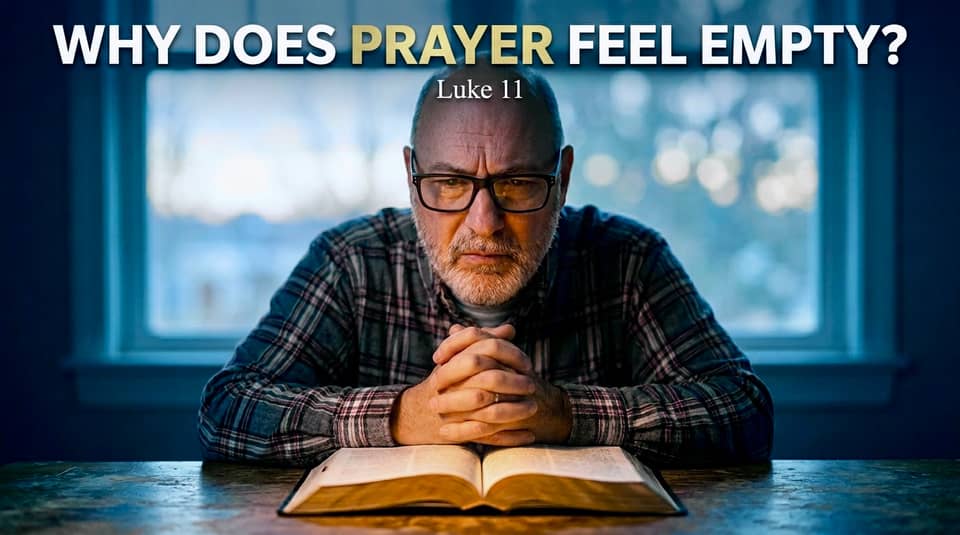
You begin speaking but your mind wanders. You wonder what words should come next. Sometimes prayer lasts less than a minute before attention drifts away.
Eventually a quiet question forms in the heart.
Am I doing this wrong?
In Luke chapter eleven the disciples asked Jesus essentially the same question.
They had watched His life closely. They had heard His teaching. They had seen His miracles. But one habit in His life stood above the rest.
Jesus prayed constantly.
There was intimacy in His prayers.
There was confidence in His prayers.
There was peace in His prayers.
So the disciples asked Him directly.
Lord, teach us to pray.

That request begins one of the most important teachings about prayer in the entire Bible.
To understand Jesus’ answer, we must step into the historical world of first century Israel.
Prayer was already woven deeply into Jewish life. Morning prayers were spoken in synagogues. Blessings were offered over meals in family homes. Psalms were sung during worship in the Temple in Jerusalem.
Children learned prayer early in life.
Yet something about the prayer life of Jesus felt different.
His prayers sounded less like ritual and more like relationship.
Jesus wasn't merely reciting sacred words. He was speaking with His Father.
Luke records the moment this way.
Luke 11:1 ESV
Now Jesus was praying in a certain place, and when he finished, one of his disciples said to him, Lord, teach us to pray, as John taught his disciples.Luke 11:1 CJSB
One time Yeshua was praying in a certain place. When he finished, one of the talmidim said to him, Sir, teach us to pray, just as Yochanan taught his disciples.
The request reveals something profound.
The disciples did not ask Jesus to teach miracles.
They did not ask Him to teach leadership.
They asked Him to teach prayer.
Because they recognized something essential.
Everything in Jesus’ life flowed from His relationship with the Father.
His courage came from prayer.
His wisdom came from prayer.
His peace came from prayer.
If we want to live like Jesus, we must learn to pray like Jesus.
Jesus answered their request with what many people call the Lord’s Prayer. But it is better understood as a pattern for relational prayer.
Luke 11:2–4 ESV
And he said to them, When you pray, say:
Father, hallowed be your name.
Your kingdom come.
Give us each day our daily bread.
And forgive us our sins, for we ourselves forgive everyone who is indebted to us.
And lead us not into temptation.Luke 11:2–4 CJSB
He said to them, When you pray, say:
Father, may your name be kept holy.
May your Kingdom come.
Give us each day the bread we need.
Forgive us our sins, for we too forgive everyone who has wronged us.
And do not lead us into hard testing.
The prayer begins with one word that transforms everything.
Father.
In the Ancient Near Eastern world, fatherhood carried covenant responsibility. The father provided for the household, defended the family, and represented the family before the community.
Children approached their father with belonging.
So when Jesus teaches His disciples to pray Father, He is revealing something revolutionary.
Prayer is not approaching a distant emperor.
Prayer is approaching your Father.
Prayer begins with relationship.
From there the prayer unfolds in a pattern that shapes the heart.
First comes reverence.
Hallowed be Your name.
Prayer begins by remembering who God truly is. When we honor His holiness our perspective changes. Fear begins shrinking and faith begins rising.
Next comes alignment.
Your kingdom come.
Prayer is not persuading God to follow our plans. Prayer aligns our lives beneath His purposes.
Then comes dependence.
Give us each day our daily bread.
Bread represented survival in the ancient world. Families baked bread daily. It sustained life.
Jesus teaches daily trust in God's provision.
Next comes repentance.
Forgive us our sins.
Prayer cleans the heart. It removes pride and restores humility before God.
But forgiveness also flows outward.
For we forgive those who have wronged us.
The kingdom of God reshapes both directions of life. Upward toward God and outward toward others.
Finally comes protection.
Lead us not into temptation.
Prayer prepares the soul for real life.
But Jesus didn't stop with a pattern. He also taught persistence.
In Luke 11 Jesus tells a story about a man knocking on his neighbor’s door at midnight. Hospitality in ancient villages was sacred duty. A host who could not feed a guest brought shame on the entire community.
So the man keeps knocking.
Eventually the door opens.
Jesus explains the meaning of the story.
If persistence can move a reluctant neighbor, how much more will persistence reach a loving Father.
That leads to one of the most famous invitations in the Bible.
Luke 11:9–10 ESV
Ask, and it will be given to you.
Seek, and you will find.
Knock, and it will be opened to you.Luke 11:9–10 CJSB
Keep asking and it will be given to you.
Keep seeking and you will find.
Keep knocking and the door will be opened to you.
The verbs describe continuing action.
Keep asking.
Keep seeking.
Keep knocking.
Prayer isn't a single request. Prayer is ongoing relationship.
Jesus ends the teaching with a powerful comparison.
Luke 11:13 ESV
If you then, who are evil, know how to give good gifts to your children, how much more will the heavenly Father give the Holy Spirit to those who ask him.Luke 11:13 CJSB
If you even though you are bad know how to give good gifts to your children, how much more will the Father in heaven keep giving the Ruach HaKodesh to those who ask him.
The greatest gift God gives isn't simply answers.
The greatest gift God gives is His presence.
So how can believers practice prayer daily?
Jesus’ pattern provides a simple guide.
Begin with relationship.
Father.
Move toward reverence.
Honor His name.
Align with His purposes.
Your kingdom come.
Bring your needs honestly.
Daily bread.
Confess your failures.
Forgiveness.
Release bitterness.
Forgive others.
Ask for guidance.
Protection from temptation.
Prayer doesn't require impressive language.
Prayer requires honesty.
Five honest minutes with God can begin restoring a living relationship with your Father.
Engagement Question
What part of prayer feels hardest for you right now?
Is it knowing what to say?
Staying focused?
Believing God truly hears you?
Tell me in the comments. I read them personally.
Practical Action Steps
Choose a consistent time for prayer each day.
Start with five minutes.
Follow the pattern Jesus gave in Luke 11.
Speak honestly with your Father.
Prayer isn't religious performance.
Prayer is living relationship with the living God.
Shalom b’Shem Yeshua
© 2026 Dr. Shawn M. Greener. All Rights Reserved.
True Word, Faith for LIFE!
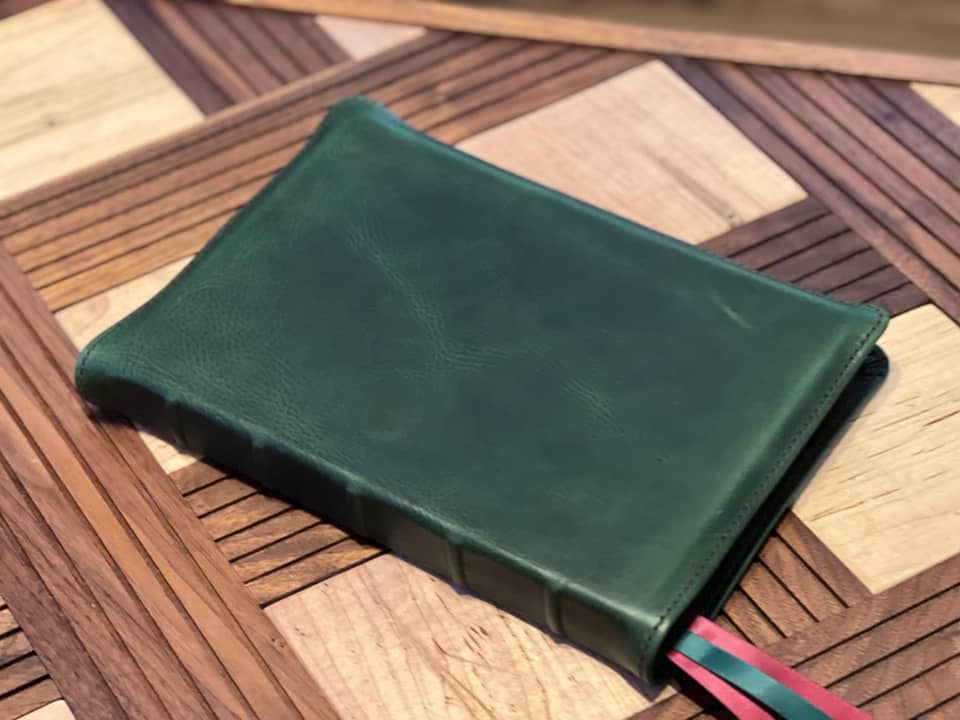
THE BIBLE RE-BINDER I MENTIONED ON THE PODCAST
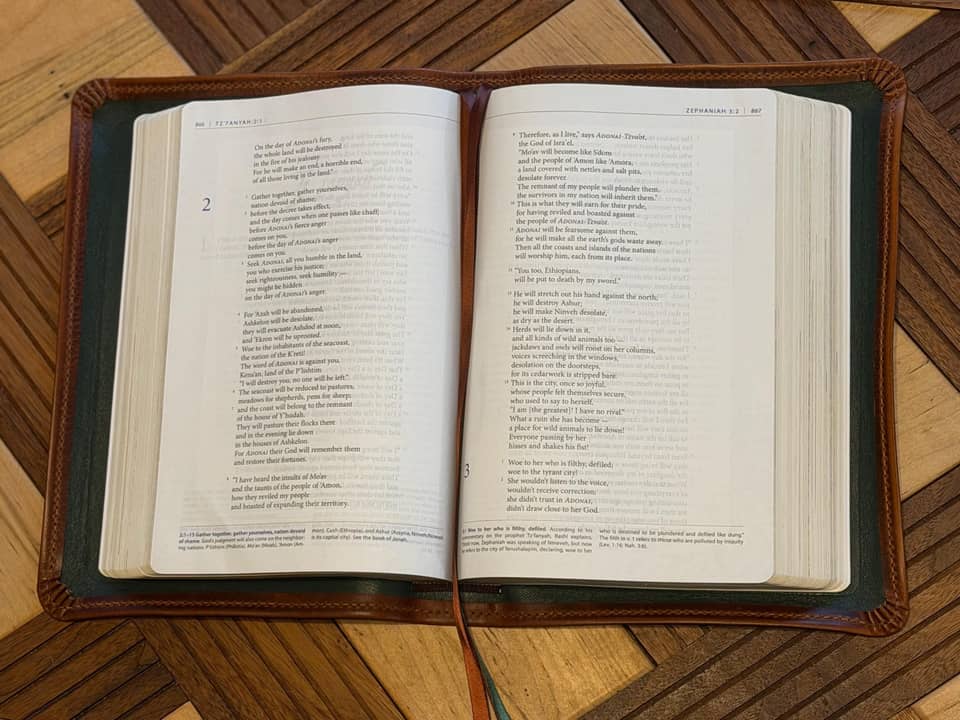
This is one of the three Bibles Melissa of MooseWorks Bible restored for me, beautifully rebound with a rugged new cover and exceptional attention to detail.

A Bible is more than a book. It is often a treasury of prayers, notes, promises, memories, and the record of a life spent seeking God.

If you have a treasured Bible that deserves to be preserved with excellence, I am honored to recommend Melissa of MooseWorks Bible.
Her work is marked by beautiful craftsmanship, thoughtful detail, and genuine kindness. She does not simply repair Bibles. She helps preserve the story they carry.
Visit MooseWorks Bible today:
Click HERE to contact MooseWorks Bibles
https://www.etsy.com/shop/MooseworksBibles
© 2026 Dr. Shawn M. Greener. All Rights Reserved.
True Word, Faith for LIFE!
STUDY GUIDE
How Do I Pray So I Actually Feel Close To God?
Luke 11 Study Guide
Summary
This Luke 11 study guide will help you explore how Jesus taught His disciples to pray. You will see the historical context, the meaning of His prayer pattern, the importance of persistence, and how prayer forms deeper closeness with God.
Luke chapter eleven records a pivotal moment in the ministry of Jesus. The disciples, observing the depth and intimacy of His prayer life, ask a simple yet profound request.
Lord, teach us to pray.
Jesus responds by providing both a pattern for prayer and a deeper explanation of the character of God.
Prayer is revealed not as ritual performance but as relational conversation with the heavenly Father.
Jesus teaches a pattern that moves the believer through relationship, reverence, alignment, dependence, repentance, forgiveness, and protection.
He then illustrates persistence in prayer through a parable rooted in Ancient Near Eastern hospitality customs.
Finally, Jesus assures His disciples that God responds generously to those who seek Him.
The teaching culminates with the invitation to ask, seek, and knock, emphasizing ongoing relational trust rather than one-time requests.
Key Hebrew and Greek Terms
Pater (Greek)
Meaning father. Used by Jesus to emphasize relational closeness between God and His children.
Av (Hebrew)
Father. In Ancient Near Eastern culture this term carried covenant authority, provision responsibility, and familial protection.
Abba (Aramaic)
An intimate form of father used in family settings. Expresses closeness and trust.
Hagiazo (Greek)
To make holy or treat as sacred. Used in the phrase hallowed be Your name.
Peirasmos (Greek)
Temptation or testing. Refers to trials that test faith and character.
Ruach HaKodesh (Hebrew)
The Holy Spirit. The presence of God given to believers.
Context and Exegesis
Author and Audience
The Gospel of Luke was written by Luke, a physician and careful historian, for a primarily Gentile audience. His purpose was to provide an orderly account of the life and teachings of Jesus so that believers could know the certainty of the faith.
Historical Setting
The events of Luke 11 occur during Jesus’ ministry in Galilee and Judea under Roman occupation. Jewish society in the first century lived under political tension, heavy taxation, and longing for the coming kingdom of God.
Prayer already played a central role in Jewish religious life. However, Jesus’ approach to prayer introduced an unprecedented level of intimacy with God as Father.
Primary Passage
Luke 11:2–4 ESV
Father, hallowed be your name. Your kingdom come. Give us each day our daily bread, and forgive us our sins, for we ourselves forgive everyone who is indebted to us. And lead us not into temptation.Luke 11:2–4 CJSB
Father, may your name be kept holy. May your Kingdom come. Give us each day the bread we need. Forgive us our sins, for we too forgive everyone who has wronged us. And do not lead us into hard testing.
ANE Cultural Insight
Hospitality in Ancient Near Eastern societies carried profound moral weight. A household that failed to provide for a guest brought shame upon itself and the surrounding village.
Jesus’ midnight story in Luke 11:5–8 reflects this honor culture. The neighbor ultimately provides bread not because of friendship alone but because the honor of the entire community is at stake.
Jesus uses this cultural expectation to highlight the generosity of God. If human communities act to protect honor, how much more will God respond to the prayers of His children.
Discussion Questions
Why do you think the disciples asked Jesus to teach them prayer rather than miracles or preaching?
What does addressing God as Father reveal about the nature of prayer?
How does the Lord’s Prayer serve as a pattern rather than merely a repeated formula?
What role does forgiveness play in maintaining healthy prayer life?
Why does Jesus emphasize persistence in prayer through the parable of the midnight visitor?
How does understanding Ancient Near Eastern hospitality deepen the meaning of Luke 11:5–8?
Practical Application
Begin daily prayer with relationship rather than requests.
Follow the pattern Jesus provides: relationship, reverence, alignment, dependence, repentance, forgiveness, protection.
Establish a consistent daily time for prayer, even if brief.
Practice honest conversation with God rather than rehearsed religious language.
Extend forgiveness toward others so that prayer flows from a clean heart.
Footnotes
- Michael S. Heiser, The Unseen Realm (Bellingham, WA: Lexham Press, 2015).
- Skip Moen, Guardian Angel (Phoenix: Moonbow Publishing, 2018).
- David H. Stern, Complete Jewish Study Bible (Peabody: Hendrickson Publishers, 2016).
Bibliography
Heiser, Michael S. The Unseen Realm. Bellingham, WA: Lexham Press, 2015.
Moen, Skip. Guardian Angel. Phoenix: Moonbow Publishing, 2018.
Stern, David H. Complete Jewish Study Bible. Peabody: Hendrickson Publishers, 2016.

Shalom b’Shem Yeshua
© 2026 Dr. Shawn M. Greener. All Rights Reserved.
True Word, Faith for LIFE!

Author / Host / Theologian
I am just a beggar who found Bread, helping other hungry beggars to find Him too. My life has certainly been complex and I and my halo has many dents. Heschel said; "Something Sacred hangs in the balance of every moment." I live like it. I teach like it.
As a person who survived a fatal 92 mph vs 51 mph head on crash, after dying and re-animating, and surviving several other brushes with death, my perspective is, let's say, unique. I haven't always been a theologian and I'm living REAL life, just like you... I have my hurts, habits and hangups too.
I've learned a few very important things along the way that I'm confident you'll find useful... butter for the Gluten free Bread so to speak.. Oh, you may chuckle or full on snort along the way, but you might also shed a few tears... Faith for LIFE... That's how it happens.

Digital Demons