How Do I Repair Harm Done With My Words Today?
How Do I Repair Harm Done With My Words Today?
How do I repair harm done with my words?
Some pain is holy. Not because God enjoys hurting you, but because He refuses to let you stay crooked when He intends to make you whole. If you have realized your words did damage, this is not the end of your faith. This is the beginning of repair.
Repentance isn't just feeling sorry. In covenant life, repentance makes things right.
A QUICK WORD FROM DR. SHAWN
This post pairs with Episode 4 of the series You Cannot Love Jesus and Slander Catholics and Jews. If you want the full deep teaching, watch the episode, and share it with one person who needs clean clarity right now.
My book, True Word, Faith for LIFE!, is available in the Store at TrueWordFaithforLife.com. If you want discipleship that trains your mind, your mouth, and your walk, grab your copy today.
WHY THIS MATTERS NOW
We live in a world where speech is treated like content.
Post it.
Share it.
Delete it.
Move on.
But the Bible treats speech like covenant conduct. Words are never only words. Words establish reality inside communities. Words can heal. Words can poison. Words can protect a neighbor. Words can endanger a neighbor.
This is why so many of us feel the sting when God confronts our speech. It is not God rejecting us. It is God reclaiming us.
If you are a follower of the Way, your mouth is not neutral territory. Your mouth is covenant territory.
Can defending truth ever become spiritually destructive?
Episode 5 explores Mary, Israel, Catholic debates, and the biblical test Jesus gave: fruit. Not certainty. Fruit.
If your faith is meant to heal, not harm, this one matters.
See Episode 4: https://www.youtube.com/watch?v=-sS7WtWTBFM&t=827s
Watch and follow us on Faithia! https://share.faithia.com/share?parameters=infaith_copyshare/11/199499
THE ANCIENT PICTURE THAT EXPLAINS EVERYTHING, THE GATE
In the Ancient Near Eastern world, the gate of the city was not just an entrance. It was the courtroom. Elders sat there. Disputes were heard there. Claims were tested there. Testimony was weighed there. Justice lived or died there.
In an honor culture, reputation was not cosmetic. It was survival. Who would trade with you. who would protect you. who would believe you when you were wronged.
So when the Torah warns against false witness, it is not giving etiquette tips. It is protecting the vulnerable. It is guarding justice. It is keeping a redeemed community from devouring itself.
PRIMARY BIBLE TEXT 1, COURTROOM VERIFICATION
Deuteronomy 19:15 to 21
LEB: A single witness shall not rise against a man on account of any iniquity or any sin that he commits; on the evidence of two witnesses or on the evidence of three witnesses a matter shall stand. If a malicious witness rises against a man to accuse him of wrongdoing, then the two men who have the dispute shall stand before Yahweh, before the priests and before the judges who will be in those days. The judges shall inquire carefully, and behold, if the witness is a false witness and he has accused his brother falsely, then you shall do to him as he had planned to do to his brother. Thus you shall purge the evil from your midst.
CJSB: One witness alone will not be sufficient to convict a person of any offense or sin of any kind; the matter will be established only if there are two or three witnesses testifying against him. If a malicious witness comes forward to accuse someone of a crime, then both men involved in the controversy are to stand before ADONAI, before the priests and judges in office at the time. The judges are to investigate carefully. If they find that the witness is lying and has given false testimony against his brother, you are to do to him what he intended to do to his brother. In this way you will put an end to such wickedness among you.
WHAT THIS MEANS FOR YOUR LIFE TODAY
Torah says one witness is not enough. Torah says inquire carefully.
So here is a standard that will save you from spiritual embarrassment and moral harm.
If I cannot verify it, I cannot repeat it.
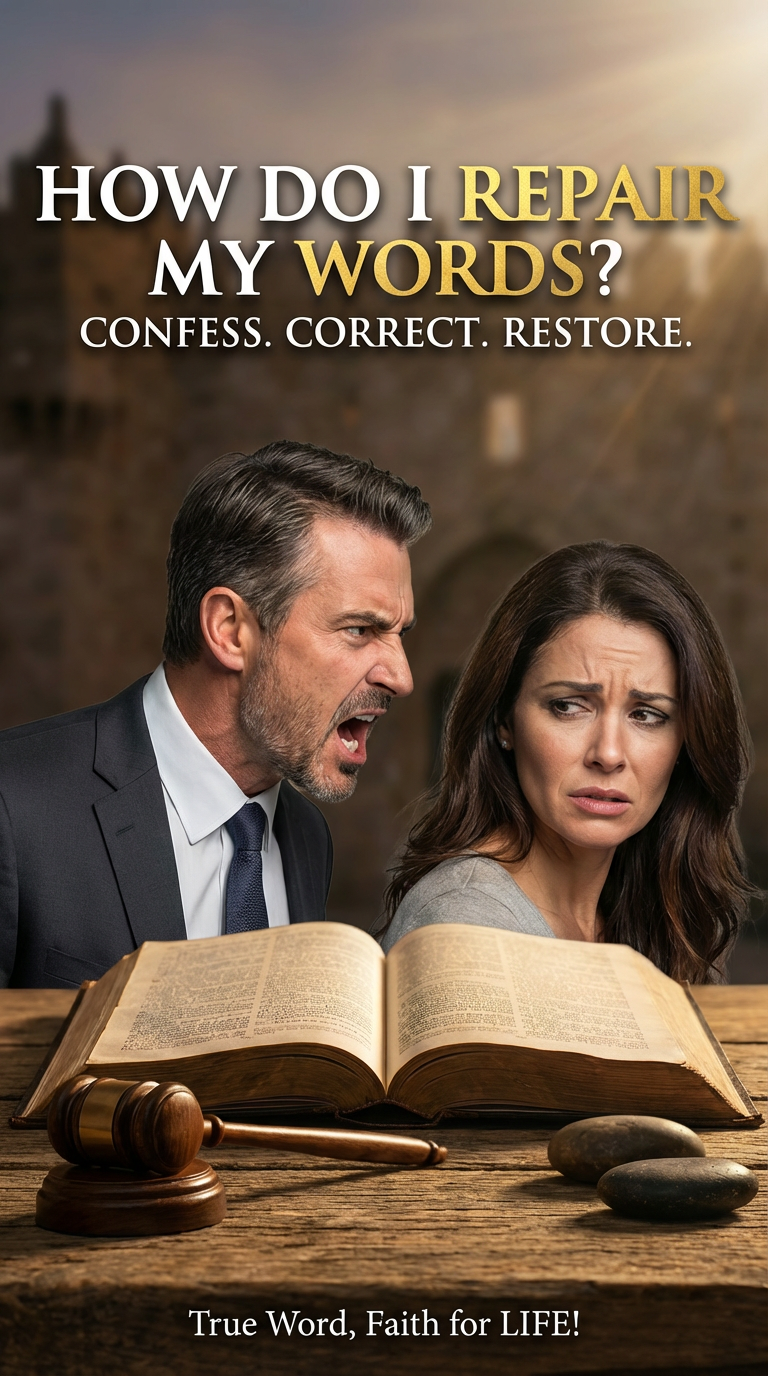
THE GATE TEST, A SIMPLE DISCERNMENT TOOL
Before you share anything serious, ask four questions.
- Who said this?
- What is the evidence?
- What is the full context?
- What is my motive for sharing it?
If you cannot answer those questions, do not pass it through the gate.
PRIMARY BIBLE TEXT 2, WISDOM CONFIRMS IT
Proverbs 18:17
LEB: The first in his dispute seems right, until his neighbor comes and examines him.
CJSB: The first to state his case seems right, till the other one comes and cross examines him.
Wisdom says the first story often sounds right because it arrives first, not because it is true. A follower of the Way does not crown the first story as truth. We cross examine. We verify. We stay clean.
NOW THE BIG QUESTION, WHAT DO I DO IF I WAS WRONG?
This is where biblical faith differs from internet culture.
The internet says, delete and move on.
The Bible says, confess and repair.
PRIMARY BIBLE TEXT 3, RESTITUTION IS COVENANT
Numbers 5:5 to 7
LEB: Then Yahweh spoke to Moses, saying, “Speak to the Israelites, ‘When a man or a woman commits any of the sins of humankind, breaking faith with Yahweh, and that person is guilty, then he shall confess his sin that he has committed, and he shall make restitution for his guilt in full, and he shall add a fifth to it, and he shall give it to whom he is guilty with regard to him.’”
CJSB: ADONAI said to Moshe, “Tell the people of Isra’el: ‘When a man or woman commits any kind of sin against another person, thus breaking faith with ADONAI, that person is guilty. He must confess the sin he has committed and make full restitution for his wrongdoing, add to it one fifth, and give it to the person wronged.’”
Notice the covenant logic. Sin against another person is described as breaking faith with God. That is a Hebraic worldview. Love for God is not merely vertical. It shows up in how we treat people.
THE NEW COVENANT PICTURE OF REPAIR, ZACCHAEUS
Luke 19:1 to 10
LEB: Zacchaeus stood and said to the Lord, “Behold, Lord, half of my possessions I give to the poor, and if I extorted anything from anyone, I will give back four times as much!” And Jesus said to him, “Today salvation has come to this house, because he too is a son of Abraham.”
CJSB: Zakkai stood there and said to the Lord, “Here, Lord, I am giving half of my possessions to the poor; and if I have cheated anyone, I will pay him back four times as much.” Yeshua said to him, “Today salvation has come to this house, inasmuch as he too is a son of Avraham.”
Zacchaeus does not only feel bad. He repairs. He restores. That is what grace looks like when it becomes real.
FOUR MOVES OF COVENANT REPAIR
- Confession. Name what happened without minimizing.
- Correction. Put truth where falsehood was. Public error requires public correction.
- Restitution. Ask who was harmed and what restoration looks like now.
- Re formation. Change the habits that produced the damage so you do not repeat it tomorrow.
A WORD FOR THE WOUNDED
If you were wounded by religious contempt, you were not crazy. You deserved better. King Jesus does not confuse cruelty with faithfulness.
Matthew 11:28 to 30
LEB: Come to me, all who labor and are loaded down, and I will give you rest. Take my yoke upon you and learn from me, because I am gentle and humble in heart, and you will find rest for your souls. For my yoke is beneficial and my burden is light.
CJSB: Come to Me, all of you who are struggling and burdened, and I will give you rest. Take My yoke upon you and learn from Me, because I am gentle and humble in heart, and you will find rest for your souls. For My yoke is easy, and My burden is light.
If what you experienced in religion felt crushing, look again at the King. He is gentle. He is humble. He gives rest.
PRACTICAL ACTION STEPS FOR THIS WEEK
- Remove the falsehood you shared.
- Replace it with a correction that tells the truth clearly.
- Apologize without excuses where harm occurred.
- Adopt the Gate Test before you share anything serious again.
- Change your inputs. Clean speech requires clean formation.
ENGAGEMENT QUESTIONS
- What is one act of repair you will do this week?
- What is one verification standard you will adopt before you share again?
If you want deeper training in covenant faithfulness and clean witness, get my book, True Word, Faith for LIFE!, in the Store at TrueWordFaithforLife.com.
Dr. Shawn M. Greener, MTh., D.I.S., DPTh., is a Follower of the Way, theologian, and author of True Word, Faith for LIFE! He teaches the Bible in its Hebraic worldview with Ancient Near Eastern language, culture, and context, calling believers to covenant faithfulness, clean witness, and courageous discipleship.
Shalom b’Shem Yeshua
© 2026 Dr. Shawn M. Greener. All Rights Reserved.
True Word, Faith for LIFE!
STUDY GUIDE
Repair, Restitution, and Clean Witness
SERIES: You Cannot Love Jesus and Slander Catholics and Jews
EPISODE 4 STUDY AIM
To form followers of the Way into covenant responsible truth tellers who verify claims, refuse false witness, and practice repentance that includes correction, restitution, and re formation.
SUMMARY
Episode 4 shifts from diagnosis to discipleship. In covenant life, sin is not only private failure. It is relational fracture. Because words shape communal reality, false witness and contempt function as covenant violations that corrode justice and damage image bearers. The Torah therefore establishes courtroom standards for truth, including corroboration and careful inquiry, and it embeds a repair mechanism for harm through confession and restitution. The prophets reaffirm this by commanding truth and peace producing judgments “in the gates,” and the New Covenant writings present Zacchaeus as a living picture of grace that produces measurable repair. The goal is not moral performance. The goal is clean witness, covenant integrity, and restored neighbor love that matches worship of the King.
KEY HEBREW AND GREEK TERMS
- Teshuvah, Hebrew concept of return. Repentance as turning back toward covenant fidelity, not merely regret.1
- Ed, Hebrew concept of witness or testimony. Covenant life depends on trustworthy witness, especially in judicial settings.2
- Shaar, Hebrew for gate. In the ANE social world, the gate functioned as the public court and communal decision space.3
- Lashon hara, rabbinic category of harmful speech. While not a Bible term, it aligns with Torah prohibitions against slander and false testimony as community destroying acts.4
- Metanoia, Greek term often translated repentance. A change of mind that results in changed direction and concrete fruit.5
HISTORICAL AND SOCIO CULTURAL CONTEXT
The Bible’s speech ethics make fullest sense in the Ancient Near Eastern honor culture and covenant framework. In modern individualistic society, words are treated as personal expression. In covenant society, words are communal actions with social consequences. Testimony could determine property outcomes, punishments, and status. Reputation functioned as social capital. Therefore, false witness was not “bad manners.” It was injustice. Torah addresses this by requiring corroboration and careful investigation, and by imposing severe consequences on malicious testimony.6
Equally important, Torah does not treat confession as sufficient when harm has been done. It requires restitution, often with an additional fifth added, to restore what was taken and to rebuild trust. This repair mechanism protects the vulnerable and prevents a community from normalizing harm through spiritual language.7
PRIMARY TEXTS, SIDE BY SIDE, WITH EXEGESIS
PRIMARY TEXT 1, DEUTERONOMY 19:15 TO 21
LEB: A single witness shall not rise against a man on account of any iniquity or any sin that he commits; on the evidence of two witnesses or on the evidence of three witnesses a matter shall stand. If a malicious witness rises against a man to accuse him of wrongdoing, then the two men who have the dispute shall stand before Yahweh, before the priests and before the judges who will be in those days. The judges shall inquire carefully, and behold, if the witness is a false witness and he has accused his brother falsely, then you shall do to him as he had planned to do to his brother. Thus you shall purge the evil from your midst.
CJSB: One witness alone will not be sufficient to convict a person of any offense or sin of any kind; the matter will be established only if there are two or three witnesses testifying against him. If a malicious witness comes forward to accuse someone of a crime, then both men involved in the controversy are to stand before ADONAI, before the priests and judges in office at the time. The judges are to investigate carefully. If they find that the witness is lying and has given false testimony against his brother, you are to do to him what he intended to do to his brother. In this way you will put an end to such wickedness among you.
Exegetical Notes
“Two or three witnesses” is not mere procedural formality. It is a covenant safeguard against manipulation, power abuse, and mob justice.8
“Inquire carefully” implies disciplined investigation. Covenant truth telling is methodical, not impulsive. In modern application, this becomes a moral standard for verifying claims before repeating them.9
The false witness is described as “malicious,” highlighting that false testimony is not neutral. It produces harm and is therefore treated as wickedness that must be removed for the community to remain just.10
PRIMARY TEXT 2, PROVERBS 18:17
LEB: The first in his dispute seems right, until his neighbor comes and examines him.
CJSB: The first to state his case seems right, till the other one comes and cross examines him.
Exegetical Notes
Wisdom literature assumes the human tendency to accept the first compelling narrative. This proverb calls for cross examination, which aligns with the gate court setting where testimony is weighed.11
For discipleship, this functions as epistemic humility. The follower of the Way practices verification rather than quick certainty.12
PRIMARY TEXT 3, NUMBERS 5:5 TO 7
LEB: Then Yahweh spoke to Moses, saying, “Speak to the Israelites, ‘When a man or a woman commits any of the sins of humankind, breaking faith with Yahweh, and that person is guilty, then he shall confess his sin that he has committed, and he shall make restitution for his guilt in full, and he shall add a fifth to it, and he shall give it to whom he is guilty with regard to him.’”
CJSB: ADONAI said to Moshe, “Tell the people of Isra’el: ‘When a man or woman commits any kind of sin against another person, thus breaking faith with ADONAI, that person is guilty. He must confess the sin he has committed and make full restitution for his wrongdoing, add to it one fifth, and give it to the person wronged.’”
Exegetical Notes
The text frames sin against another person as “breaking faith” with God. This is covenant integration. Vertical faithfulness is inseparable from horizontal justice.13
Confession is required, but not sufficient. Restitution is demanded. The additional fifth functions as tangible recognition that trust repair is costly and must be meaningful.14
PRIMARY TEXT 4, LEVITICUS 5:14 TO 6:7
LEB: He shall make restitution for what he has sinned with regard to the holy thing, and he shall add to it a fifth. If a person sins and commits a breach of faith against Yahweh by deceiving his fellow citizen… then he shall restore what he has taken… and he shall add a fifth to it and give it to him to whom it belongs.
CJSB: He is to make restitution for whatever harm he has done… add one fifth to it. If someone sins and acts perversely against ADONAI by dealing falsely with his fellow… he is to restore what he took… add one fifth to it and return it to the person to whom it belongs.
Exegetical Notes
Leviticus connects “breach of faith” to both sacred trust and neighbor trust. Holiness is not merely liturgical. Holiness is ethical and restorative.15
The repeated addition of the fifth reinforces that repentance is not merely internal sorrow. It is relational restoration that re establishes trust.16
PRIMARY TEXT 5, ZECHARIAH 8:16 TO 17
LEB: Speak truth to one another; judge with truth and with judgments of peace in your gates; and do not love a false oath.
CJSB: Speak the truth to one another, in your courts administer true and peace producing judgment; do not love perjury.
Exegetical Notes
The post exilic community is rebuilding after displacement and failure. God prioritizes truth and peace producing judgment as the pathway of restoration.17
“In your gates” is a direct social governance reference. God’s will is not only private morality, but public truth telling and justice that aims at peace rather than domination.18
PRIMARY TEXT 6, LUKE 19:1 TO 10
LEB: If I extorted anything from anyone, I will give back four times as much. Today salvation has come to this house.
CJSB: If I have cheated anyone, I will pay him back four times as much. Today salvation has come to this house.
Exegetical Notes
Zacchaeus embodies repentance as repair. His restitution is measurable and costly. This demonstrates that grace produces fruit that addresses actual harm.19
Yeshua names this as salvation arriving in the house, indicating that repair is not peripheral. It is a sign of transformed covenant identity.20
PRIMARY TEXT 7, ACTS 17:11
LEB: Examining the scriptures daily to see if these things were so.
CJSB: Kept checking Tanakh every day to see if these things were true.
Exegetical Notes
The Bereans model eager reception combined with disciplined verification. This aligns with Torah’s “inquire carefully” principle applied to teaching and claims.21
This provides a practical discipleship standard for testing information sources in any age, including the digital age.22
PRIMARY TEXT 8, MATTHEW 11:28 TO 30
LEB: I am gentle and humble in heart, and you will find rest for your souls.
CJSB: I am gentle and humble in heart, and you will find rest for your souls.
Exegetical Notes
In the Jewish teaching world, a yoke is the way of a teacher. Yeshua’s yoke contrasts with oppressive burdens. His posture is gentle and humble, restoring rather than crushing.23
This matters for those wounded by religious contempt. The King’s character corrects distorted portrayals of righteousness as cruelty.24
PRIMARY TEXT 9, JAMES 3:7 TO 10
LEB: With it we bless the Lord and Father, and with it we curse people who are made according to the likeness of God.
CJSB: With it we bless ADONAI, Father, and with it we curse people who have been made in the image of God.
Exegetical Notes
James exposes the contradiction of worship paired with contempt. Speech ethics are theological. To curse image bearers is to violate the logic of worship.25
This reinforces that clean witness is not optional for followers of the Way. It is covenant coherence.26
DISCUSSION QUESTIONS
Why does Torah require two or three witnesses, and how does that challenge modern social media habits?
In Numbers 5, why is sin against a person described as breaking faith with God?
What is the difference between deleting false content quietly and practicing restitution through public correction?
What would Zacchaeus style repair look like for a believer who spread unverified claims about Jews or Catholics?
How does Zechariah’s command for “peace producing judgment” reshape how believers engage conflict online?
What does Matthew 11 teach about the character of the King toward the burdened and wounded?
Which part of the repair pathway is hardest for you, confession, correction, restitution, or re formation, and why?
PRACTICAL APPLICATION, A WEEK OF COVENANT REPAIR
Adopt the Gate Test before sharing anything serious. Who said it. what is the evidence. what is the context. what is my motive.
Do one act of correction. Replace one false or misleading statement you shared with a truthful correction and a verifiable source.
Do one act of restitution. Apologize directly where possible, and seek to restore dignity, reputation, and trust.
Do one act of re formation. Change one input source that feeds outrage and replace it with Bible study and careful primary source reading.
Pray daily for clean speech and courage to repair. Ask the King to refine your witness into covenant faithfulness.
FOOTNOTES
The Hebrew concept of repentance as return is commonly summarized as teshuvah, emphasizing turning back toward covenant faithfulness.
For the centrality of witness and testimony in Torah jurisprudence, see Deuteronomy 19:15 to 21.
For the gate as court setting in the ANE social world, compare the repeated “in the gates” language in Deuteronomy 19 and Zechariah 8.
Lashon hara is a category in later Jewish ethical teaching describing harmful speech. It aligns with Torah prohibitions against slander and false witness, including Leviticus 19:16 and Deuteronomy 19.
For New Covenant repentance language, metanoia is commonly understood as a change of mind that results in changed direction and fruit, aligning with Zacchaeus style restitution in Luke 19.
For the judicial setting and severity of false witness, see Deuteronomy 19:15 to 21.
For confession plus restitution with an added fifth, see Numbers 5:5 to 7 and Leviticus 5:14 to 6:7.
Deuteronomy 19:15.
Deuteronomy 19:18.
Deuteronomy 19:16 to 21.
Proverbs 18:17.
Proverbs 18:17.
Numbers 5:6 to 7.
Numbers 5:7.
Leviticus 5:14 to 6:7.
Leviticus 6:5.
Zechariah 8:16 to 17.
Zechariah 8:16.
Luke 19:8.
Luke 19:9.
Acts 17:11.
Acts 17:11.
Matthew 11:28 to 30.
Matthew 11:29.
James 3:9.
• 62. James 3:10.
BIBLIOGRAPHY
Barry, John D., et al., eds. Lexham English Bible. Bellingham, WA: Lexham Press, 2012.
Stern, David H. Complete Jewish Study Bible. Peabody, MA: Hendrickson Publishers, 2016.
The Holy Bible. Acts 17:11. James 3:7 to 10. Deuteronomy 19:15 to 21. Numbers 5:5 to 7. Leviticus 5:14 to 6:7. Zechariah 8:16 to 17. Luke 19:1 to 10. Matthew 11:28 to 30. Proverbs 18:17.
Heiser, Michael S. The Unseen Realm: Recovering the Supernatural Worldview of the Bible. Bellingham, WA: Lexham Press, 2015.
Moen, Skip. Relevant teachings on Hebraic thought, covenant faithfulness, and the ethical weight of speech in community life.

Shalom b’Shem Yeshua
© 2026 Dr. Shawn M. Greener. All Rights Reserved.
True Word, Faith for LIFE!

Author / Host / Theologian
I am just a beggar who found Bread, helping other hungry beggars to find Him too. My life has certainly been complex and I and my halo has many dents. Heschel said; "Something Sacred hangs in the balance of every moment." I live like it. I teach like it.
As a person who survived a fatal 92 mph vs 51 mph head on crash, after dying and re-animating, and surviving several other brushes with death, my perspective is, let's say, unique. I haven't always been a theologian and I'm living REAL life, just like you... I have my hurts, habits and hangups too.
I've learned a few very important things along the way that I'm confident you'll find useful... butter for the Gluten free Bread so to speak.. Oh, you may chuckle or full on snort along the way, but you might also shed a few tears... Faith for LIFE... That's how it happens.
The Stone Was Moved, But Not for Him