Do I Have To Stay Close To Toxic Family?
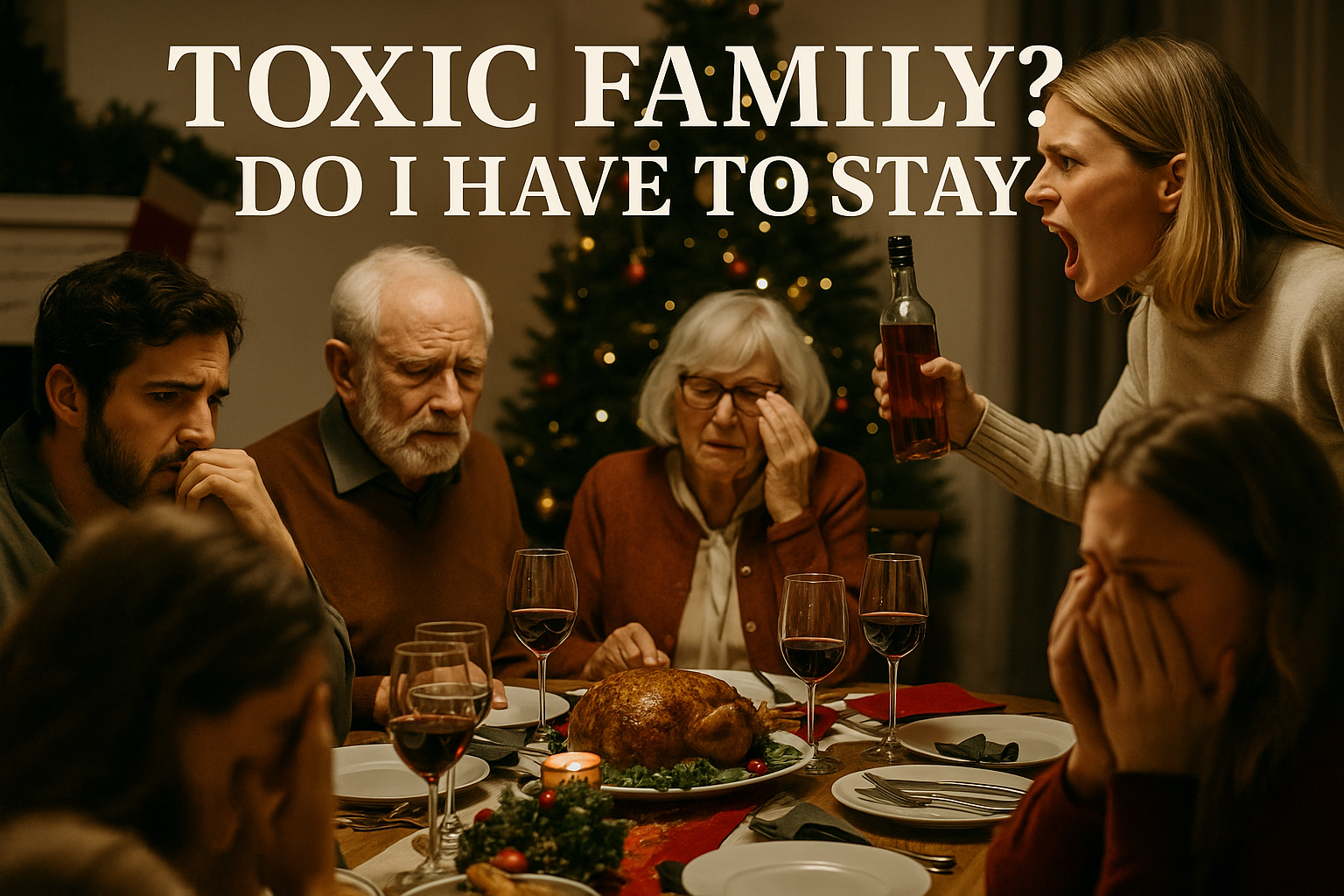
Do I Have To Stay Close To Toxic Family?

WHEN “FAMILY” FEELS LIKE A WEIGHT YOU CANNOT CARRY
Toxic family. Those two words alone may stir a storm inside you. Maybe you feel instant guilt, because you were raised to believe that good Christians never talk that way about their family. Maybe you feel fear, because every time you try to set a boundary, someone in your family punishes you with silence or rage. Maybe you feel relief, because someone finally put words to what you have been living for years.
If the phrase “toxic family” hits close to home, you are not alone and you are not broken beyond hope. The Bible does not pretend that all families are healthy. It tells the truth about jealous brothers, controlling leaders, abusive behaviors, and homes where following God draws a sword instead of a welcome hug.
In our series Families, Broken and Beloved, Episode 4 asks a question many believers carry quietly: Do I have to stay close to toxic family in order to be faithful to Yeshua?
YESHUA KNEW FAMILY WOULD BE A BATTLEFIELD
Our main text is Matthew chapter ten, verses thirty four to thirty nine. These are some of the most misunderstood words Yeshua ever spoke.
“Do not suppose that I have come to bring peace to the Land. It is not peace I have come to bring, but a sword. For I have come to set a man against his father, a daughter against her mother, and a daughter in law against her mother in law; so that a man’s enemies will be the members of his own household.
Whoever loves his father or mother more than he loves Me is not worthy of Me; and anyone who loves his son or daughter more than he loves Me is not worthy of Me. And anyone who does not take up his execution stake and follow Me is not worthy of Me. Whoever finds his own life will lose it, but the person who loses his life for My sake will find it.”
In the first century Jewish world, family was everything. Your bayit, pronounced BAH yeet, your household, was your safety net, your economic survival, your identity, your honor. Fathers, mothers, married sons, daughters in law, unmarried children, and grandparents often lived in close clusters of stone houses, sharing life and reputation.
If a son stood up and said, “I believe Yeshua of Nazareth is the Messiah and I will follow Him,” and his father said, “Absolutely not,” that son had a costly choice. Obey his earthly father or obey his Messiah.
Yeshua is not telling people to go home and be cruel, disrespectful, or harsh. He is telling them the truth. His coming will not simply smooth things over at home. It will expose loyalties, idols, and patterns of sin that have been tolerated for generations. Sometimes, the first place the sword of truth cuts is around the family table.
SHALOM, SWORD, AND FALSE PEACE
The word for peace here is shalom, pronounced shah LOHM. Shalom is not just “no yelling.” It is wholeness, everything in right order under God. When Yeshua says, “Do not suppose that I have come to bring peace to the Land, but a sword,” He is warning us not to confuse superficial comfort with true shalom.
There is a kind of “peace” that simply means, “We never talk about hard things. We never confront sin. We never challenge the person who controls the room.” That is not biblical shalom. That is fear with a smile.
The word for sword is machaira, pronounced mah KHAI rah. It refers to a short sword or large knife used in close combat. Yeshua is using a vivid image. His presence cuts close to home. His words divide even the most intimate relationships between those who will follow Him and those who will not.
If you have ever chosen obedience to God and felt your own family turn cold, you are walking in the reality Yeshua described in Matthew ten.
WHAT WE MEAN BY “TOXIC FAMILY”
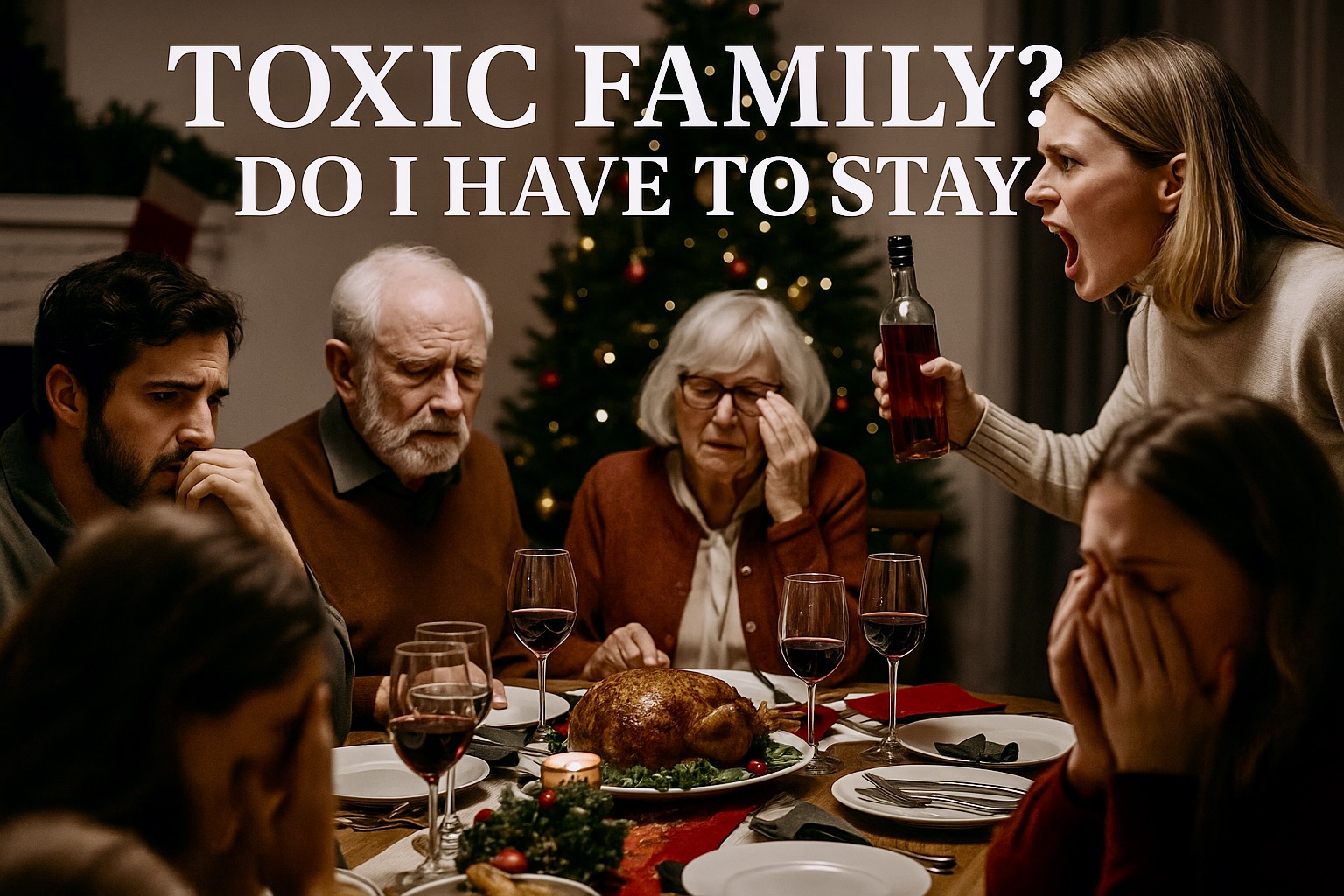
Before we go further, let us be clear. When we say “toxic family,” we are not talking about normal human imperfection. Every parent sins. Every child disobeys. Every sibling has a day when they wish the others lived on another planet. That is called being human.
By toxic, we mean patterns that are consistently harmful, manipulative, abusive, or controlling, with no repentance and no movement toward change. People who use guilt, fear, Scripture, or family loyalty as weapons to keep you under their control. People who continually violate boundaries and refuse to take responsibility for their behavior.
The Bible describes people like this. Leaders who “devour widows’ houses.” Religious people who pile heavy burdens on others but will not lift a finger to help. King Saul throwing spears at David while still calling him “my son.” Toxicity is not a pop psychology fad. It is a way of describing persistent, unrepentant sin that damages others.
God loves family. God created family. God commands us to honor father and mother, love our spouses, and raise our children in His ways. But God never commands you to worship your family. He never asks you to sacrifice your sanity, your safety, or your obedience to Yeshua on the altar of “keeping the peace.”
THREE BIBLICAL PRINCIPLES FOR BOUNDARIES WITH FAMILY
1. Your first loyalty belongs to Yeshua, not to family expectations.
Yeshua says, “Whoever loves father or mother more than Me is not worthy of Me.” Those are not soft words. In Hebraic thought, love is not just a feeling. It is loyalty, allegiance, and covenant commitment.
If your family demands that you disobey God, compromise your integrity, enable their sin, or silence your faith to keep them comfortable, your answer is already given. Your first allegiance is to the King.
Sometimes that allegiance will bring you into deeper unity with family who also submit to Him. Sometimes it will create distance with those who feel threatened by your obedience.
2. God calls you to pursue peace, not to guarantee it.
Romans 12:18 says, “If possible, so far as it depends on you, live peaceably with all.” Notice both phrases. “If possible.” “So far as it depends on you.”
You are called to act in ways that are peaceable, truthful, and loving. You are responsible for your words, your choices, your tone. You are not responsible for controlling the reactions of others.
If a family member refuses respect, refuses truth, and refuses peace, you are not commanded to keep exposing yourself and your children to their chaos indefinitely. Sometimes the most peaceable thing you can do is step back and stop providing them with an ongoing opportunity to sin against you.
3. Guarding your heart is not selfish. It is obedience.
Proverbs 4:23 says, “Guard your heart with all diligence, for from it flow the springs of life.” Your heart is the well their words, actions, and demands flow into. If that well keeps being poisoned, the water you give to your spouse, your children, your friends, and your calling will be affected.
Guarding your heart does not mean building a wall of bitterness. It means acknowledging that your heart is entrusted to you by God, and you will answer to Him for how you steward it. There are people you can forgive without giving them the same level of access to your life that they once had.
TACO TONY AND UNCLE LARRY AT TACO NIGHT
This is where Taco Tony steps into the kitchen of this conversation. Imagine him flipping tortillas, shaking his head.
“Doc,” he says, “I am tracking with you, but let me ask it this way. Are you telling me I do not have to invite Uncle Larry to every taco night while he insults everyone, scares the kids, drinks too much, and then tells me I am not a real Christian if I ask him to stop?”
And I say, “Tony, that is exactly what I am saying. Loving Uncle Larry does not mean you offer him unlimited tacos and unlimited access to wreck your home. Real love sometimes says, ‘Uncle Larry, we want relationship with you, but we will not host your sin. If you want to be here, you must respect the boundaries God has put over this house.’”
Tony grins. “So the Kingdom of God does not require unlimited tacos for people who throw them at your face.”
Exactly, Tony. Exactly.
PRACTICAL STEPS FOR HEALTHY BOUNDARIES
Step 1: Ask God to show you the truth.
Pray, “Father, show me my family through Your eyes. Show me where I have excused sin as ‘just how they are.’ Show me where I have joined in unhealthy patterns. Show me where I need repentance and where I need courage.”
Step 2: Clarify your non-negotiables.
These might include:
No verbal abuse in your presence.
No screaming or threats around your children.
No manipulation using the Bible to force you into compliance.
No enabling addictions or helping cover up destructive behavior.
Step 3: Communicate boundaries clearly and calmly.
When the time is right, you might say, “I love you, and because I love you, I need to be honest. I cannot keep doing conversations where you yell at me or insult my spouse. If that happens, I will end the conversation and step away. If you want relationship, there has to be respect on both sides.”
Step 4: Accept that some will not like your boundaries.Some family members will accuse you of being unforgiving, unloving, or rebellious when you stop being available as a target. Remember Matthew ten. Yeshua warned you that following Him might bring a sword, even inside your household. Your job is to obey Him, not to persuade everyone that they should approve.
FOR FURTHER REFLECTION
If this message resonates with you, you may also want to read the earlier article in this series, “Does God Still Care About My Messy Family?” on www.TrueWordFaithforLife.com. These teachings build on each other as part of Families, Broken and Beloved.
For a broader perspective on how human evil and suffering play out at a national and historical level, I often encourage people to engage with trustworthy resources like Yad Vashem, the World Holocaust Remembrance Center, which reminds us of the cost of unchecked hatred and the importance of truth, memory, and life.
PRAYER OF SALVATION

If you realize today that what you need most is not just better boundaries, but a new heart, I want to lead you in this prayer.
Heavenly Father, I come to You today with an open and humble heart. I know that I have sinned and fallen short of Your glory, and I am asking for Your forgiveness. Right now, I turn away from my sins and I turn fully toward You. I believe that Jesus, Your Son, is the promised Messiah, that He died for my sins, was buried, and rose again on the third day just as the Bible says. Today I call on Your holy Name. Please forgive me, cleanse me, and make me new. Fill me with Your Holy Spirit and write Your truth on my heart. From this day forward I choose to follow Jesus as my Lord, my Redeemer, and my King. Thank You for loving me, for saving me, and for making me part of Your family forever. In the name of Jesus Christ, the King of Kings, I pray. Amen.
If you prayed that prayer today, I want to welcome you into the family of God. This is the most important decision of your existence. And you do not have to walk this road alone. I have helped many take their first steps as followers of Jesus, and I would be honored to walk with you as well.
If you prayed that prayer, or if you still have questions and want to know more, please reach out to me directly through TrueWordFaithforLife.com. I promise I will personally connect with you and help guide you in your next steps, whether that is understanding the Bible more deeply, finding a community of believers, or growing in your faith day by day. You are not alone. Let me walk with you in the Way.
If this message spoke to your heart, do not keep it to yourself. Think of one person who wrestles with family guilt, who feels torn between honoring parents and protecting their own heart, who wonders if God is angry with them for wanting boundaries.
Send them this article and the episode that goes with it. Post the link. Share it in a text, a message, or a social post.
If you found this info useful, hit that subscribe button and share this video with others. Your share might be the very thing God uses to reach someone who feels trapped between loyalty to family and loyalty to Yeshua.
Shalom b’Shem Yeshua.
© 2025 Dr. Shawn M. Greener. All Rights Reserved.
True Word, Faith for LIFE!
STUDY GUIDE
Do I Have To Stay Close To Toxic Family?
Families, Broken and Beloved – Episode 4
SUMMARY
Many believers live torn between two powerful forces. On one side, deep love and loyalty for family. On the other, a growing awareness that some family patterns are harmful, manipulative, or openly opposed to their obedience to Yeshua. This study explores Matthew 10:34–39, where Yeshua tells His disciples that His coming will bring division even inside households, and that loyalty to Him must surpass all other loyalties.
We explore the Hebraic worldview, the Ancient Near Eastern context of family, and key terms such as bayit (household), shalom (peace), machaira (sword), and the language of love and loyalty. We wrestle honestly with the question, “Do I have to stay close to toxic family to be faithful to God?” The study concludes that while God loves family and calls us to honor, love, and forgive, He never commands us to submit to ongoing abuse, manipulation, or unrepentant sin. Our first loyalty is to Yeshua, we are called to pursue peace as far as it depends on us, and we are commanded to guard our hearts. Healthy boundaries can be an act of obedience, not a lack of love.
KEY HEBREW AND GREEK TERMS
- Bayit (BAH yeet)
Meaning: House, household, family, clan, or dynastic line.
Significance: In the first century, family was not just emotional connection. It was economic survival, shared honor and shame, and covenant identity. When Yeshua warns that “a man’s enemies will be members of his own household,” He is describing real conflict inside this covenant family unit, not minor disagreements. - Shalom (shah LOHM)
Meaning: Peace, wholeness, completeness, everything in right order under God.
Significance: Yeshua says He has not come to bring shalom but a sword. He is not saying He opposes true peace. He is saying His mission will disrupt false peace built on denial, compromise, and idolatry. - Machaira (mah KHAI rah)
Meaning: A short sword or large knife used in close combat.
Significance: The image of a machaira emphasizes that the division Yeshua brings can cut very close to home, separating even the closest relationships over the issue of loyalty to Him. - Phileo and Agapao (fee LAY oh and ah gah PAH oh)
Meaning: Phileo refers to brotherly affection and friendship love. Agapao refers to committed, covenant love.
Significance: In Matthew ten, when Yeshua says whoever loves father or mother more than Him is not worthy of Him, He is using the language of deep loyalty and commitment. He is calling His disciples to place their highest covenant love on Him, not on human relationships. - Yeshua (Yeh SHOO ah)
Meaning: Salvation, deliverance. The Hebrew form of the name Jesus.
Significance: Yeshua is not merely asking for a change in emotional preference. He is asserting His rightful place as King and Messiah, the One whose claim on our lives comes before every other claim.
PRIMARY TEXTS
Matthew 10:34–39 (Paraphrased LEB Style)
“Do not assume that I came to bring peace on the earth. I did not come to bring peace but a sword. For I came to set a man against his father, and a daughter against her mother, and a daughter in law against her mother in law. A person’s enemies will be the members of his household.
The one who loves father or mother more than Me is not worthy of Me. The one who loves son or daughter more than Me is not worthy of Me. Whoever does not take up his cross and follow after Me is not worthy of Me. The one who finds his life will lose it, and the one who loses his life for My sake will find it.”
Matthew 10:34–39 (Paraphrased CJSB Style)
“Do not suppose that I have come to bring peace to the Land. It is not peace I have come to bring, but a sword. For I have come to set a man against his father, a daughter against her mother, and a daughter in law against her mother in law; so that a man’s enemies will be the members of his own household.
Whoever loves his father or mother more than he loves Me is not worthy of Me; and anyone who loves his son or daughter more than he loves Me is not worthy of Me. And anyone who does not take up his execution stake and follow Me is not worthy of Me. Whoever finds his own life will lose it, but the person who loses his life for My sake will find it.”
Romans 12:18
“If possible, so far as it depends on you, live peaceably with all.”Proverbs 4:23
“Guard your heart with all diligence, for from it flow the springs of life.”
ANE CONTEXT AND BACKGROUND
In the first century and the broader Ancient Near Eastern world, family was the central unit of life. Your bayit was your identity, protection, and social standing. Religious allegiance was usually a family affair. To depart from the family’s faith commitments was seen as betrayal, not just personal decision.
Loyalty to the head of the household was expected. Fathers carried tremendous authority. Sons and daughters were expected to align with the family’s choices. In that context, Yeshua’s call to follow Him, even if it led to division inside the home, was radical.
When Yeshua says He came to bring a sword rather than peace, He is not promoting violence. He is telling the truth about what happens when His kingdom confronts old patterns of idolatry, religious pride, and sin. Some will bow to Him. Others will resist. The result is division, even within families.
For some, following Yeshua will mean being misunderstood, excluded, or pressured by their own kin. For others, it will mean setting boundaries with family members who demand obedience to their will over obedience to God. In both cases, the principle remains: the Messiah’s claim outranks every other claim.
DISCUSSION QUESTIONS
- When you read Yeshua’s words about bringing a sword and setting family members against each other, how does that make you feel about your own family story? Where do you feel challenged, relieved, or confused?
- How have cultural expectations about “good Christians” and “good children” shaped your view of boundaries with family? In what ways do those expectations align with Scripture, and in what ways do they add guilt God did not place on you?
- Can you identify a time when your loyalty to Yeshua came into conflict with the expectations of a family member? How did you respond? Looking back, what do you wish you had done differently?
- What is the difference between normal family conflict and truly toxic patterns? How would you describe toxicity using biblical language, such as persistent unrepentant sin, abuse, or manipulation?
- How does Proverbs 4:23, “Guard your heart with all diligence,” speak into your current family dynamics? Where might guarding your heart require new boundaries, new conversations, or new levels of courage?
PRACTICAL APPLICATION
- Ask God for clarity, not just comfort.
Set aside time to pray, “Lord, show me my family through Your eyes. Show me where I have been enabling sin by calling it love. Show me where I have responded to hurt with my own sin. Show me where You want to transform me first.” - Write down your non negotiable boundaries.
On paper or in a journal, write a short list of behaviors you cannot continue to allow in your presence or your home. Examples:
No verbal abuse.
No screaming or intimidation around children.
No manipulation using Scripture to control.
No lying, threats, or coercion. - Prepare simple, clear boundary statements.
Pray and then write phrases you can use when boundaries are crossed. For example, “I love you, but I will not stay in conversations where I am insulted. If that continues, I will leave or end the call.” Practice saying them aloud so they feel more natural, not panicked. - Seek wise counsel.
Talk with a mature believer, pastor, or counselor who understands both biblical teaching and emotional health. Lay out your situation honestly. Ask for help in discerning which steps are wise and which might be reactive. - Remember that forgiveness and access are not the same.
Forgiving someone before God does not automatically mean restoring the same level of closeness or access, especially when there is no repentance or change. Ask the Holy Spirit what forgiveness looks like, and what level of access is safe and wise right now.
REFLECTION PRAYER
Father, You see every part of my family story. You know where there has been love, sacrifice, and goodness, and You know where there has been sin, control, fear, and harm. You see the moments I remember clearly and the ones I have tried to forget.
Today I bring my bayit, my household and my history, before You. I confess that sometimes I have confused guilt with godliness and fear with obedience. Sometimes I have stayed silent or stayed close in ways You were not asking me to, because I was afraid of disappointing people more than I was afraid of disobeying You.
Lord Yeshua, I affirm that You are my King. You alone have the right to command my loyalty. Teach me what it means to love my family as You do, without worshiping them. Give me courage to set boundaries where You ask me to. Give me humility to repent where I have sinned in response to their sin.
Holy Spirit, be my Counselor. Guard my heart. Show me where to step closer and where to step back. Let my decisions be rooted in love and truth, not in bitterness or fear. Use my story to bring healing, not just to me, but to my children, my friends, and to those who feel stuck in their own family pain.
In the name of Yeshua, my Savior and King, I pray. Amen.
FOOTNOTES
- Matthew 10:34–39, paraphrased from the Lexham English Bible.
- Matthew 10:34–39, paraphrased from the Complete Jewish Study Bible.
- Michael S. Heiser, The Unseen Realm: Recovering the Supernatural Worldview of the Bible (Bellingham, WA: Lexham Press, 2015).
- Kenneth E. Bailey, Jesus Through Middle Eastern Eyes (Downers Grove, IL: InterVarsity Press, 2008).
- Craig S. Keener, The IVP Bible Background Commentary: New Testament (Downers Grove, IL: InterVarsity Press, 1993).
BIBLIOGRAPHY
Bailey, Kenneth E. Jesus Through Middle Eastern Eyes. Downers Grove, IL: InterVarsity Press, 2008.
Heiser, Michael S. The Unseen Realm: Recovering the Supernatural Worldview of the Bible. Bellingham, WA: Lexham Press, 2015.
Keener, Craig S. The IVP Bible Background Commentary: New Testament. Downers Grove, IL: InterVarsity Press, 1993.
The Holy Bible, Lexham English Bible. Bellingham, WA: Lexham Press.
The Complete Jewish Study Bible. Peabody, MA: Hendrickson Publishers.
toxic family, toxic family boundaries, Christian family, family boundaries, Christian boundaries, Matthew 10, Yeshua teaching, family conflict, family healing, Christian discipleship, Hebraic worldview, Ancient Near East, True Word Faith for LIFE, Dr Shawn Greener, follower of the Way, spiritual abuse, emotional abuse, guarding your heart, Romans 12 18, Proverbs 4 23
#ToxicFamily #FamilyBoundaries #ChristianFamily #BiblicalBoundaries #GuardYourHeart #FollowYeshua #MessyFamily #TrueWordFaithForLife #FollowerOfTheWay #Yeshua

Author / Host / Theologian
I am just a beggar who found Bread, helping other hungry beggars to find Him too. My life has certainly been complex and I and my halo has many dents. Heschel said; "Something Sacred hangs in the balance of every moment." I live like it. I teach like it.
As a person who survived a fatal 92 mph vs 51 mph head on crash, after dying and re-animating, and surviving several other brushes with death, my perspective is, let's say, unique. I haven't always been a theologian and I'm living REAL life, just like you... I have my hurts, habits and hangups too.
I've learned a few very important things along the way that I'm confident you'll find useful... butter for the Gluten free Bread so to speak.. Oh, you may chuckle or full on snort along the way, but you might also shed a few tears... Faith for LIFE... That's how it happens.

The Stone Was Moved, But Not for Him

