Barking Louder Doesn’t Make It Truer: Ninth Commandment
Barking Louder Doesn’t Make It Truer

Volume cannot replace virtue, and outrage cannot replace obedience.
I have watched it happen in real time. Someone discovers a “truth” channel. The voice is confident. The claims are absolute. The enemies are clearly labeled. The captions are sharp. The tone is certain. The comments applaud. And the viewer feels something that looks like courage but often is not. It is adrenaline. It is tribal loyalty. It is the relief of having someone else do the thinking. And it disciples the heart more than we want to admit.
Here is the danger to the church right now. It is not mainly that we will abandon truth. It is that we will defend truth in a way that denies it. Truth does not need cruelty to be strong. Truth does not need mockery to be clear. Truth does not need slander to be courageous.
There is an image that has stayed with me. A lighthouse that does not dim its light during storms. It does not panic. It does not perform. It does not scream at the waves. It stands. It warns. It guides. It protects. But when truth is welded to pride, it stops being a lighthouse and becomes a wildfire. Wildfires do not guide people home. They burn what they were meant to protect.
That is why I started this finale where most sermons do not. The Ninth Commandment. The command we keep breaking while claiming we are defending God.
Exodus 20:16
LEB. “You shall not testify against your neighbor as a witness of deception.”
CJSB. “Do not give false evidence against your neighbor.”
In the Ancient Near Eastern world, testimony could be life and death. A false witness could destroy a household, steal land, ruin lineage, and weaponize a community against an innocent neighbor. God did not give that command because He needed a polite society. He gave it because covenant life cannot survive if our mouths become weapons.
False witness is not a minor etiquette problem. It is covenant betrayal. And when we do it in the name of Jesus, we attach His name to our sin. That is not boldness. That is profanity.
So here is a reality check for our moment. Christians can quote verses all day and still poison souls.

We can call it discernment. We can call it research. We can call it exposing. But if it is not true, it is not discernment. It is deception.
Then Paul speaks into a pressure cooker of rhetoric and influence, and his words land like a plumb line.
2 Timothy 2:15.
LEB “Make every effort to present yourself approved to God, a worker who does not experience shame, who accurately handles the word of truth.”
CJSB. “Do all you can to present yourself to God as someone worthy of his approval, as a worker with no need to be ashamed, because he deals straightforwardly with the Word of the Truth.”
The image is cutting straight, not crooked. The call is not only teach true doctrine. The call is do not bend the Bible to serve your tribe. Do not twist it to feed your audience. Do not proof text to justify contempt. Handle it honestly, even if honesty costs you applause. Mishandling the Word is not only theological error. It is ethical corruption.
Crooked Bible handling produces crooked speech. And crooked speech produces crooked witness.

That is why this series has been so disruptive for some people. Because it does not only confront what we believe. It confronts how we speak. It confronts the fruit of our formation.
If your platform requires exaggeration, it is not a ministry, it is a business. If your influence depends on slander, it is not discernment, it is a grift. If your content is always outrage, always accusation, always enemy making, always hinting at hidden conspiracies, that is not the fruit of the Spirit. That is the flesh monetized.
Now let us talk about where this gets personal.
Catholics. Jews. Israel.

This series has not asked you to surrender conviction. It has asked you to surrender false witness. You can disagree with Catholic doctrine without lying about Catholic people. You can critique Rome without caricature. You can warn against errors without accusing millions of worshiping Mary as if they are bowing to a pagan deity. If you cannot state what a Catholic actually believes in a way a Catholic would recognize, you are not correcting. You are slandering.
And then the church’s historic sin rises again in modern clothes. Jews. The phrase “the Jews killed Jesus” has fueled hatred for centuries. It has been used to justify violence and contempt. But it is not faithful to the whole counsel of God. Rome executed Jesus. Leaders collaborated. Crowds were involved. Betrayal happened. But the deepest truth is this. Sin killed Jesus. And Jesus laid down His life. No one took it from Him. When we turn the crucifixion into ethnic blame, we are not preaching the Gospel. We are resurrecting an old lie.
Then Israel enters the conversation, and many Christians fall into one of two errors. Demonization or idolatry. Demonization repeats slogans and tropes designed to inflame hatred. Idolatry baptizes every policy decision as if it is Bible.
Neither is covenant faithfulness.
Covenant faithfulness refuses lies and refuses idols. It tells the truth. It mourns the loss of life. It condemns terrorism without apology. It insists civilians are not targets. It refuses to be morally intoxicated by cropped clips and selective headlines.
And then there is the grift. Outrage economics.
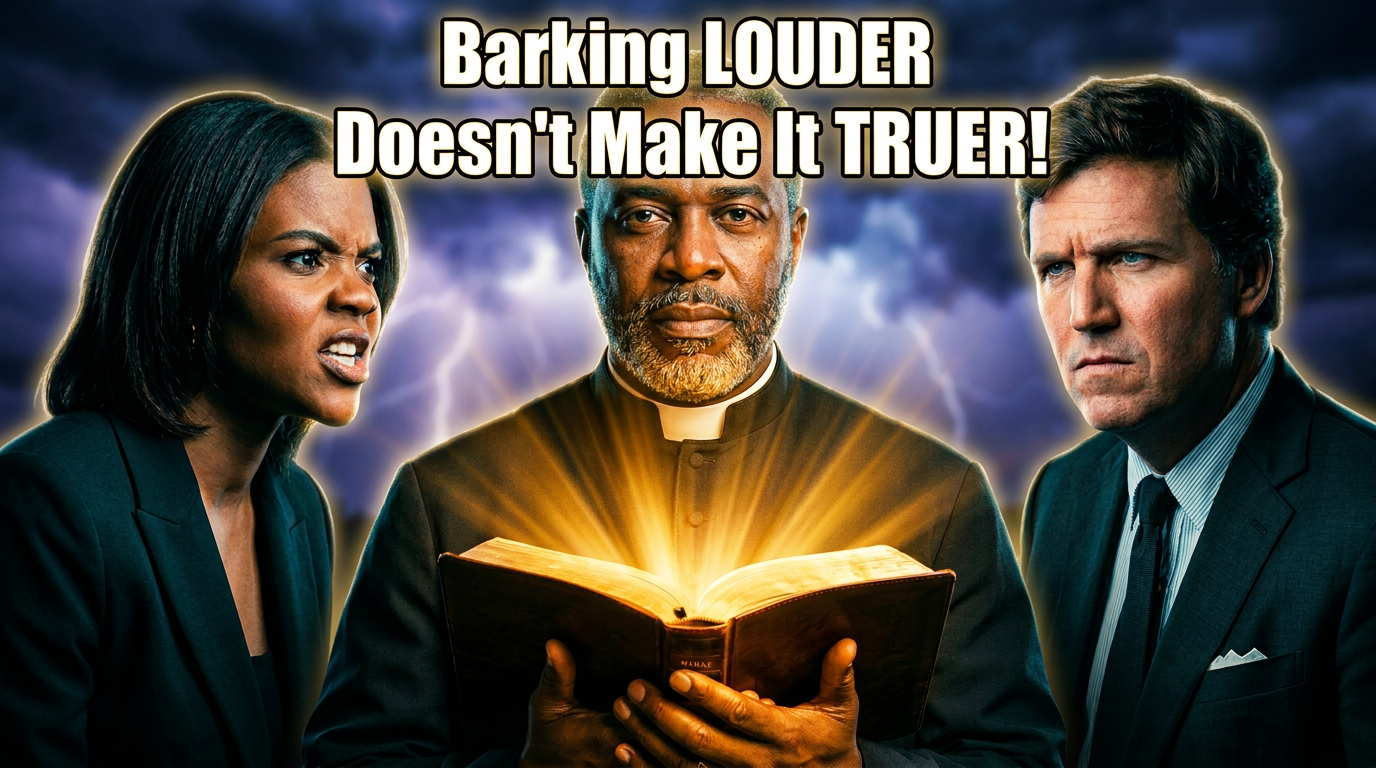 For profit slander operations that call themselves truth telling ministries. The test is simple. Do they demand evidence, or do they demand loyalty? Do they correct errors, or do they double down and sell more certainty? Do they build people toward holiness, or do they keep people angry so they keep clicking?
This is why I ended Episode 7 with a discipline, not a vibe. Thirty days. No sharing claims about Catholics, Jews, Israel, or any group without primary source verification and full context. If you cannot trace it, do not repeat it. Thirty days. Delay twenty four hours before posting anything emotionally charged. If it is true today, it will still be true tomorrow.
Thirty days. Replace one reactive argument each week with one intentional prayer. Pray for your enemies. Pray for the people you are tempted to mock. Pray for those you disagree with. And if you discover you repeated something false, correct it publicly. That is not humiliation. That is integrity.
Here is the question I want you to sit with. When your thumb hovers over share, what is forming you? Is it the Word of God, cut straight, handled honestly, lived humbly? Or is it the dopamine of outrage, the applause of the tribe, and the intoxication of being certain?
Because formation determines fruit. Fruit determines legacy. And legacy determines what your children believe about Jesus when you are gone.
So let me commission you again in writing. Stand firm without swagger. Speak truth without spite. Hold conviction without cruelty. Practice holiness in public and humility in private. Be a lighthouse that does not dim in storms and does not burn villages in fear. Let your life make the Bible believable again.

Shalom b’Shem Yeshua
© 2026 Dr. Shawn M. Greener. All Rights Reserved. True Word, Faith for LIFE!
STUDY GUIDE
Barking Louder Doesn’t Make It Truer
Series: You Cannot Love Jesus and Slander Catholics and Jews

Summary
This study guide equips followers of the Way to recognize a modern spiritual danger: defending “truth” with methods that deny the truth of the King’s character. The Bible does not only command correct doctrine. It commands covenant ethics in speech. False witness is covenant betrayal. Crooked handling of the Word produces crooked witness in the world. This guide focuses on the Ninth Commandment, the apostolic call to handle the Word straight, and a thirty day discipline that retrains public speech into covenant faithfulness.
Primary Bible Texts, LEB and CJSB Side by Side
Exodus 20:16
LEB: You shall not testify against your neighbor as a witness of deception.
CJSB: Do not give false evidence against your neighbor.
2 Timothy 2:15
LEB: Make every effort to present yourself approved to God, a worker who does not experience shame, who accurately handles the word of truth.
CJSB: Do all you can to present yourself to God as someone worthy of his approval, as a worker with no need to be ashamed, because he deals straightforwardly with the Word of the Truth.
Key Hebrew and Greek Terms
False witness. Hebrew: ed sheqer, a deceptive witness, a testimony that distorts reality and damages neighbor. The Ninth Commandment is not merely about perjury in court. In covenant logic, it is about refusing to weaponize speech in any setting.1
Word of truth. Greek: ton logon tes aletheias, the message that must be handled straight. Paul’s verb imagery communicates precision, integrity, and faithfulness, not manipulation.2
Honor and shame. In the Ancient Near Eastern world, public reputation functioned as social capital and survival. Speech that destroys reputation is not only unkind. It can endanger livelihoods and communal belonging.3
Context and Exegesis
- Exodus 20:16, Covenant Ethics and the Moral Weight of Testimony Author and audience. The Torah presents Moses delivering God’s covenant stipulations to Israel. The audience is a redeemed people being formed into a holy community under the direct kingship of Yahweh.
Concrete situation. Israel is leaving a slave identity and becoming a covenant society. In that world, testimony was a central instrument of justice. Ancient courts did not have modern forensic systems. Witness testimony carried enormous weight.4
ANE backdrop and why it matters. In the city gate setting, elders and judges heard disputes. Land, inheritance, livelihood, and reputation could be destroyed by deceptive testimony. The command therefore protects the vulnerable and restrains the strong.5
Meaning. Exodus 20:16 prohibits becoming a witness of deception. It condemns distortions, exaggerations, rumor-carrying, and any speech that presents falsehood as evidence against another. The moral logic is broader than courtrooms. If covenant life is built on truth, then covenant speech must be truthful.
Modern application. This command directly confronts online Christian culture that rewards certainty without verification. Calling rumor “discernment” does not sanctify it. The Ninth Commandment demands evidence, restraint, and truth-telling even toward those we disagree with, including Catholics, Jews, and Israel. - 2 Timothy 2:15, Cutting Straight and Handling the Word Honestly
Author and audience. Paul writes to Timothy, a trusted coworker, ministering in Ephesus. Timothy leads in a contested public environment where influence, rhetoric, and competing teachers pull communities toward error.6
Concrete situation. Ephesus functioned as a marketplace of gods, ideas, and status. Patronage and honor shaped public life. Teachers competed for disciples. Eloquence could become a tool of manipulation. Paul therefore emphasizes approval before God, not applause from crowds.7
Meaning. Paul commands Timothy to present himself approved, unashamed, and to handle the Word of truth straightforwardly. The image is cutting a straight path, not twisting. The command includes doctrine, but it also includes ethics. A person can quote Bible verses while handling the Word crookedly to justify contempt, feed tribal rage, or monetize outrage.
Modern application. The test is not only what a teacher says about the Bible. The test is whether the Bible is being used as a tool for holiness or a tool for domination. If a platform requires exaggeration, villain-making, and constant outrage, it may be a business built on the flesh, not a ministry built on the Spirit. - Catholic and Jewish Speech Ethics, The Difference Between Critique and Caricature
This series does not ask the audience to abandon doctrinal convictions. It asks them to abandon false witness. The Bible allows, and sometimes requires, correction and critique. The Bible forbids distortion and slander.
Catholics. It is legitimate to debate authority, sacramental theology, justification frameworks, and church governance. It is not legitimate to flatten a complex communion into a cartoon. “Catholics worship Mary” is often used as a blanket accusation without any effort to understand Catholic distinctions between worship and veneration. That may not solve the doctrinal debate, but it does expose the moral issue: accusing without accuracy is false witness.8
Jews. The phrase “the Jews killed Jesus” has functioned historically as a theological weapon used to justify hatred. The New Testament does not permit ethnic blame as a moral posture. Rome executed Jesus. Some leaders collaborated. Crowds were involved. But the Gospel’s deepest explanation is covenantal: the Messiah lays down His life for sinners. Converting the crucifixion into ethnic blame denies the mission of the cross and resurrects a dangerous lie.9
Israel. Christians often fall into demonization or idolatry. Demonization uses tropes and slogans to inflame hatred. Idolatry baptizes every policy decision as if it is Bible. Covenant faithfulness refuses lies and refuses idols. It mourns real suffering, condemns real terror, resists propaganda, verifies sources, and speaks carefully because souls are at stake.
Thirty Day Discipline, A Practical Covenant Rule of Life for Public Speech For thirty days, do these four practices.
Practice 1. Verification rule. Do not share claims about Catholics, Jews, Israel, or any group without primary source verification and full context. If you cannot trace it, do not repeat it.
Practice 2. Delay rule. Delay twenty four hours before posting anything emotionally charged. If it is true today, it will still be true tomorrow.
Practice 3. Prayer replacement rule. Replace one reactive argument each week with one intentional prayer. Pray for those you disagree with. Pray for those you are tempted to mock.
Practice 4. Public correction rule. If you discover you repeated something false, correct it publicly. That is not humiliation. That is integrity.
So the point is this. Truth deserves effort. Rumors thrive on laziness.
Discussion Questions - Where have you seen “barking louder” replace careful truth-telling in Christian spaces?
- Why does false witness feel like courage to many people online, and what is it actually feeding?
- What is the difference between doctrinal critique and sinful caricature? Give one example.
- How does the Ancient Near Eastern honor and shame context increase the moral weight of speech?
- Which part of the thirty day discipline triggers resistance in you, and why?
- How can a church model verification, correction, and repentance publicly without losing courage?
Practical Application - Choose your rule. For the next thirty days, adopt one non-negotiable rule: “If I cannot verify it, I cannot repeat it.”
- Clean up one thread. Find one post, comment, or claim you shared without verification. Either verify it or remove it. If it was false, correct it.
- Replace one habit. Replace one outrage input source with direct Bible reading and one trusted, sober historical source.
- Choose lighthouse speech. Before you speak, ask: will this guide people home or burn them down?
Footnotes - See the ethical weight of false testimony in covenant law, including the Decalogue’s function as covenant stipulation, in John H. Walton, Ancient Near Eastern Thought and the Old Testament (Grand Rapids: Baker Academic, 2006), 305–310.
- On Paul’s exhortation and the “straight handling” imagery, see Gordon D. Fee, 1 and 2 Timothy, Titus (Peabody, MA: Hendrickson, 1988), 252–255.
- On honor and shame as social reality shaping reputation and community survival, see Bruce J. Malina, The New Testament World: Insights from Cultural Anthropology, 3rd ed. (Louisville: Westminster John Knox, 2001), 27–50.
- For the centrality of testimony in ancient judicial settings, see Raymond Westbrook, ed., A History of Ancient Near Eastern Law (Leiden: Brill, 2003), 1:259–276.
- On city gates as legal and communal centers, see Victor H. Matthews and Don C. Benjamin, Social World of Ancient Israel: 1250–587 BCE (Peabody, MA: Hendrickson, 1993), 97–105.
- On the pastoral letters’ setting and Timothy’s leadership under pressure, see Philip H. Towner, The Letters to Timothy and Titus, NICNT (Grand Rapids: Eerdmans, 2006), 556–565.
- On patronage, public rhetoric, and leadership pressures in Greco-Roman cities, see John M. G. Barclay, Pauline Churches and Diaspora Jews (Grand Rapids: Eerdmans, 2016), 69–90.
- On the moral obligation to represent opponents accurately and avoid false witness in polemical contexts, see Miroslav Volf, Exclusion and Embrace (Nashville: Abingdon, 1996), 69–87.
• 22. On the crucifixion within Roman execution practices and the theological meaning of Jesus’ self-giving, see N. T. Wright, The Day the Revolution Began (San Francisco: HarperOne, 2016), 271–300.
Bibliography
Barclay, John M. G. Pauline Churches and Diaspora Jews. Grand Rapids: Eerdmans, 2016.
Fee, Gordon D. 1 and 2 Timothy, Titus. Peabody, MA: Hendrickson, 1988.
Malina, Bruce J. The New Testament World: Insights from Cultural Anthropology. 3rd ed. Louisville: Westminster John Knox, 2001.
Matthews, Victor H., and Don C. Benjamin. Social World of Ancient Israel: 1250–587 BCE. Peabody, MA: Hendrickson, 1993.
Towner, Philip H. The Letters to Timothy and Titus. NICNT. Grand Rapids: Eerdmans, 2006.
Volf, Miroslav. Exclusion and Embrace. Nashville: Abingdon, 1996.
Walton, John H. Ancient Near Eastern Thought and the Old Testament. Grand Rapids: Baker Academic, 2006.
Westbrook, Raymond, ed. A History of Ancient Near Eastern Law. 2 vols. Leiden: Brill, 2003.
Shalom b’Shem Yeshua
© 2026 Dr. Shawn M. Greener. All Rights Reserved. True Word, Faith for LIFE!

Author / Host / Theologian
I am just a beggar who found Bread, helping other hungry beggars to find Him too. My life has certainly been complex and I and my halo has many dents. Heschel said; "Something Sacred hangs in the balance of every moment." I live like it. I teach like it.
As a person who survived a fatal 92 mph vs 51 mph head on crash, after dying and re-animating, and surviving several other brushes with death, my perspective is, let's say, unique. I haven't always been a theologian and I'm living REAL life, just like you... I have my hurts, habits and hangups too.
I've learned a few very important things along the way that I'm confident you'll find useful... butter for the Gluten free Bread so to speak.. Oh, you may chuckle or full on snort along the way, but you might also shed a few tears... Faith for LIFE... That's how it happens.
When Faithful People Push Back!