Why God’s Answer to Human Chaos Wasn’t a System, but a Promise
From Babel to Abraham Covenant: Why God’s Answer to Human Chaos Wasn’t a System, but a Promise
Focus Passage Range: Genesis 11:1 to 15:21
What does the Abraham Covenant mean?There’s a reason the world feels fractured.
Not just politically. Not just culturally. Not just economically.
Humanity keeps trying to save itself by building higher, talking louder, controlling more, and securing the future through its own strength. That impulse is ancient. It didn’t start with modern governments, social media, or global institutions. It was already there in Babel. And the Bible’s answer to that chaos is stunningly personal.
God doesn’t answer Babel with a better tower.
He answers it with a man He calls.
That’s the heartbeat of Days 6 through 10 in Through the Bible in a Year: Walking the Story of God. These passages move from the scattering of the nations to the calling of Abram, from fear in Egypt to blessing through Melchizedek, and finally to the covenant-cutting of Genesis 15. Read together, they do not feel like disconnected Bible stories. They feel like one coherent answer to a broken world.
And that matters, because most people still live like Babel is the solution.
Build more.
Control more.
Secure more.
Protect more.
Brand more.
Prove more.
But Babel never heals the human heart. It only magnifies what is already wrong inside it.1
The Tower That Exposed the Human Heart
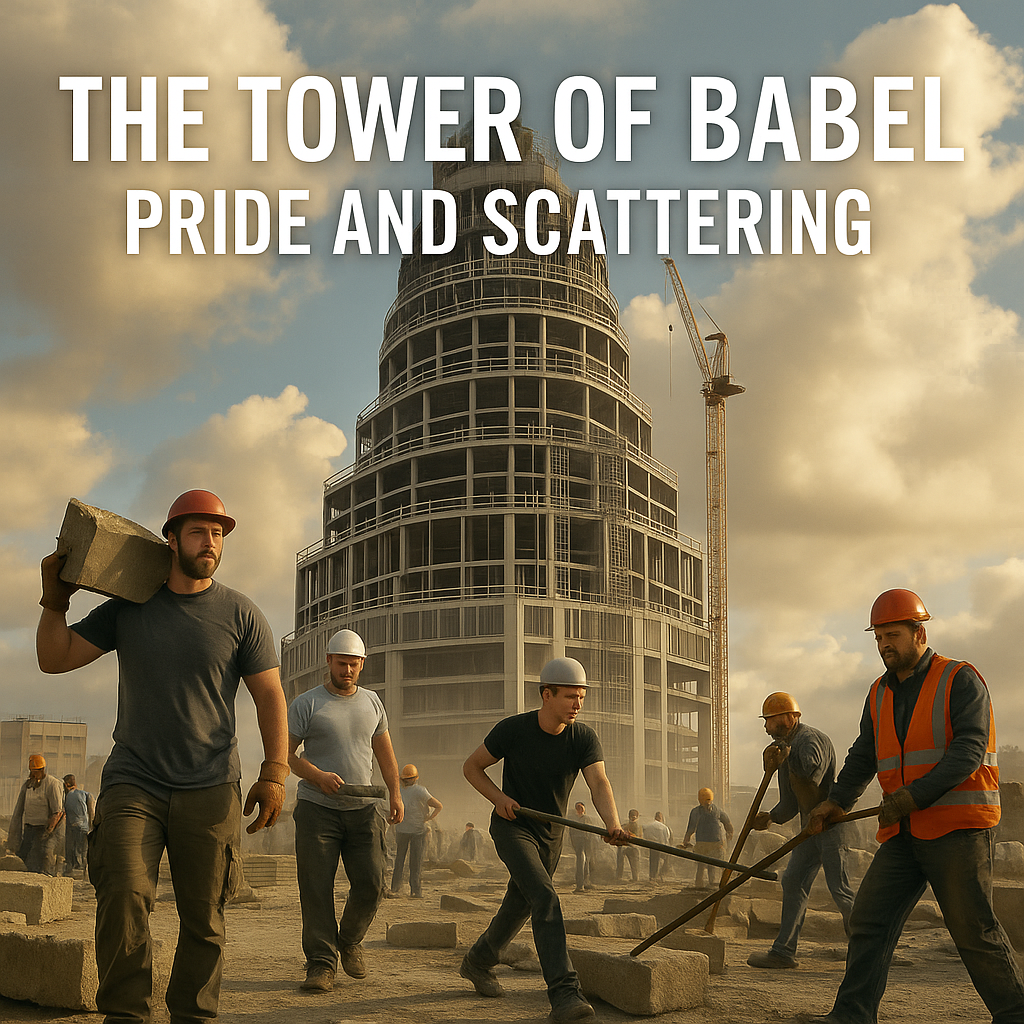
Genesis 11 is not merely a story about architecture, technology, or urban development. It is a story about unified rebellion. Humanity gathers in one language and one purpose, not to glorify God, but to establish a rival center of meaning and fame. “Let us make a name for ourselves,” they say. That line tells you nearly everything you need to know.2
In the Ancient Near Eastern world, cities and towers were not neutral. Ziggurats in Mesopotamia were often connected to religious ideology, imperial power, and the attempt to establish sacred space on human terms. Babel is not humanity reaching toward innocent progress. Babel is humanity trying to define reality without submission to the Creator.3
That is why God’s response is not petty or insecure. His judgment is protective as well as punitive. He scatters what mankind sinfully centralized. He disrupts what pridefully unified. He confuses language because a united rebellion is not a blessing. It is a danger.
That’s still true now.
Not every form of unity is righteous.
Not every loud consensus is healthy.
Not every collective movement is holy.
Sometimes what looks like strength is just organized rebellion with better branding.
When Pride Collapses, God Starts with a Promise
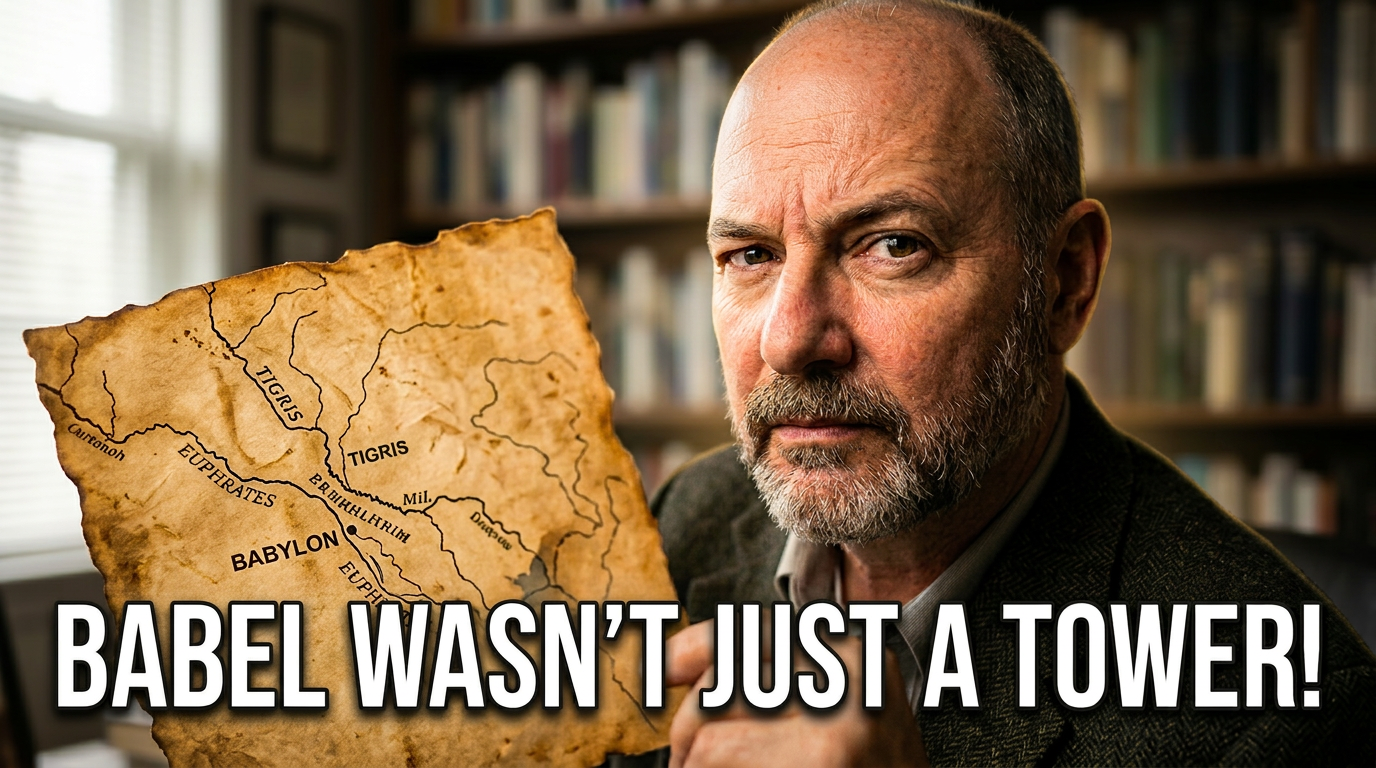
Right after Babel, the Bible narrows its focus. The nations are scattered. Humanity is fractured. The world is disordered. And then Genesis 12 opens with one of the most important divine calls in the whole Bible. God calls Abram out.
That sequence matters.
Babel says, “Let us make a name.”
God says to Abram, in effect, “I will make your name great.”
Humanity grasps.
God gives.
Humanity builds upward.
God calls outward.
Humanity secures itself through visible structure.
God begins redemption through trust, promise, and covenant.4
This is one of the great reversals in the Bible. God’s answer to proud, collective self-exaltation is not a bigger human program. It is covenant. He chooses one man, then one family, then one covenant line, through which blessing will reach “all the families of the earth.” That means election in Genesis is not favoritism without purpose. It is mission. Abram is chosen for the sake of the nations.5
So when people read the call of Abram as though it were only about private spirituality or personal success, they miss the scale of what is happening. God is beginning the long work of reclaiming the nations He scattered. The call of Abram is missional, covenantal, and global.
Which means this story still speaks directly into our lives.
God still calls people out of Babel patterns.
Out of self-salvation.
Out of frantic image management.
Out of identity built on human applause.
Out of the illusion that visible control equals actual security.
He still calls people to walk by trust before they can see the whole road.
Egypt and the Terrible Speed of Fear
Then the story turns fast.
Abram receives promise, leaves his land, moves in obedience, and almost immediately faces famine. That alone should steady a lot of hearts. Obedience does not remove testing. Sometimes obedience is precisely what leads you into the place where your heart gets revealed.
Abram goes down to Egypt because the pressure is real. Food scarcity is real. Threat is real. But once there, fear takes over. He starts managing outcomes. He starts protecting himself. He starts speaking half-truths that expose Sarai and compromise integrity.
That is one of the most painfully human moments in the Bible.
A real calling, and then a fear decision.
A real promise, and then human panic.
A real step of faith, and then a desperate turn toward visible security.
Egypt, in this passage, is more than geography. It becomes a spiritual mirror. It represents the temptation to seek safety apart from surrendered trust.6 And if we’re honest, most of us know exactly what that feels like.
We may not flee to literal Egypt, but we run to modern versions of it all the time.
We run to image.
We run to money.
We run to control.
We run to manipulation.
We run to the backup plan that feels safer than obedience.
And in doing so, we often create the very pain we were trying to avoid.
Yet even here, grace keeps showing up. God does not abandon Abram. He intervenes. He protects Sarai. He preserves the covenant line, not because Abram performs flawlessly, but because God is faithful to His own promise.7
That should humble us and comfort us at the same time.
Humility, because fear still lives closer to the surface than we’d like to admit.
Comfort, because God’s faithfulness is deeper than our instability.
Why Melchizedek Matters So Much
Then Genesis 14 gives us one of the most mysterious and theologically rich figures in the Torah: Melchizedek, king of Salem and priest of God Most High.
He appears suddenly.
He has no genealogy in the text.
He blesses Abram.
Abram honors him with a tithe.
And just like that, he becomes one of the most important signposts in the whole Bible.8
This is not random.
In ANE context, priest-kings were not unheard of, but Melchizedek is unique in the biblical narrative. He is associated with Salem, likely Jerusalem’s earlier identity, and with El Elyon, God Most High. His presence signals that the God of Abram is not a tribal deity confined to one family line. He is the Most High over heaven and earth.9
That matters because Abram has just come out of conflict, victory, and political tension. The king of Sodom offers wealth. Melchizedek offers bread, wine, blessing, and priestly mediation. Abram’s response reveals discernment. He refuses to let the king of Sodom define his future. He will not let pagan power claim credit for what God has done.10
That tension remains alive now.
Every serious believer eventually faces two offers.
The offer of visible gain from compromised alliances.
And the offer of blessing from the God who sees, rules, and provides.
One is immediate and impressive.
The other requires faith and clarity.
Melchizedek stands in the text like a holy interruption, reminding us that God’s priestly and royal purposes were already at work long before Sinai and long before Levi. That is why later Bible writers treat him as a signpost pointing beyond himself.11
Genesis 15 and the God Who Walks Through Blood
If Genesis 11 shows the pride of man, and Genesis 12 through 14 show the calling and testing of Abram, then Genesis 15 is where the whole section reaches theological altitude.
Abram is afraid.
He is childless.
He is asking the right question.
How can promise become future when his body, his age, and his circumstances all scream limitation?
God does not shame him for asking.
He brings him outside.
He tells him to look at the stars.
Then He speaks promise again.
And Abram believes the Lord, and it is counted to him as righteousness.12
That verse is massive, but the chapter does not stop there. God then moves into covenant-cutting language that Abram would have understood in his world. Animals are divided. The pieces are laid out. In the ANE setting, covenant rituals often carried an implied oath: may this happen to me if I break this covenant.13
And then comes the breathtaking moment.
Abram does not walk through the pieces.
God does.
Represented by the smoking fire pot and flaming torch, God alone passes through the severed animals. In other words, the covenant’s ultimate burden rests on Him. He binds Himself to the promise in a way that reveals both grace and terrifying commitment.14
Don't sentimentalize this.
Genesis 15 is beautiful, but it is also severe.
God is not making a casual promise.
He is staking Himself to covenant faithfulness.
He is saying, in effect, that the future of this promise rests on His own character.
That’s why Genesis 15 stands like a pillar in the Bible. It tells us that redemption will not rest on human reliability. It will rest on divine covenant faithfulness.
And that is still the hope of every follower of the Way.
Not that we are strong enough.
Not that our record is clean enough.
Not that our obedience has never trembled.
But that God binds Himself in covenant mercy and keeps what He promises.
Why This Matters in Real Life
Most people are still living somewhere inside these five days.
Some are in Babel, trying to make a name.
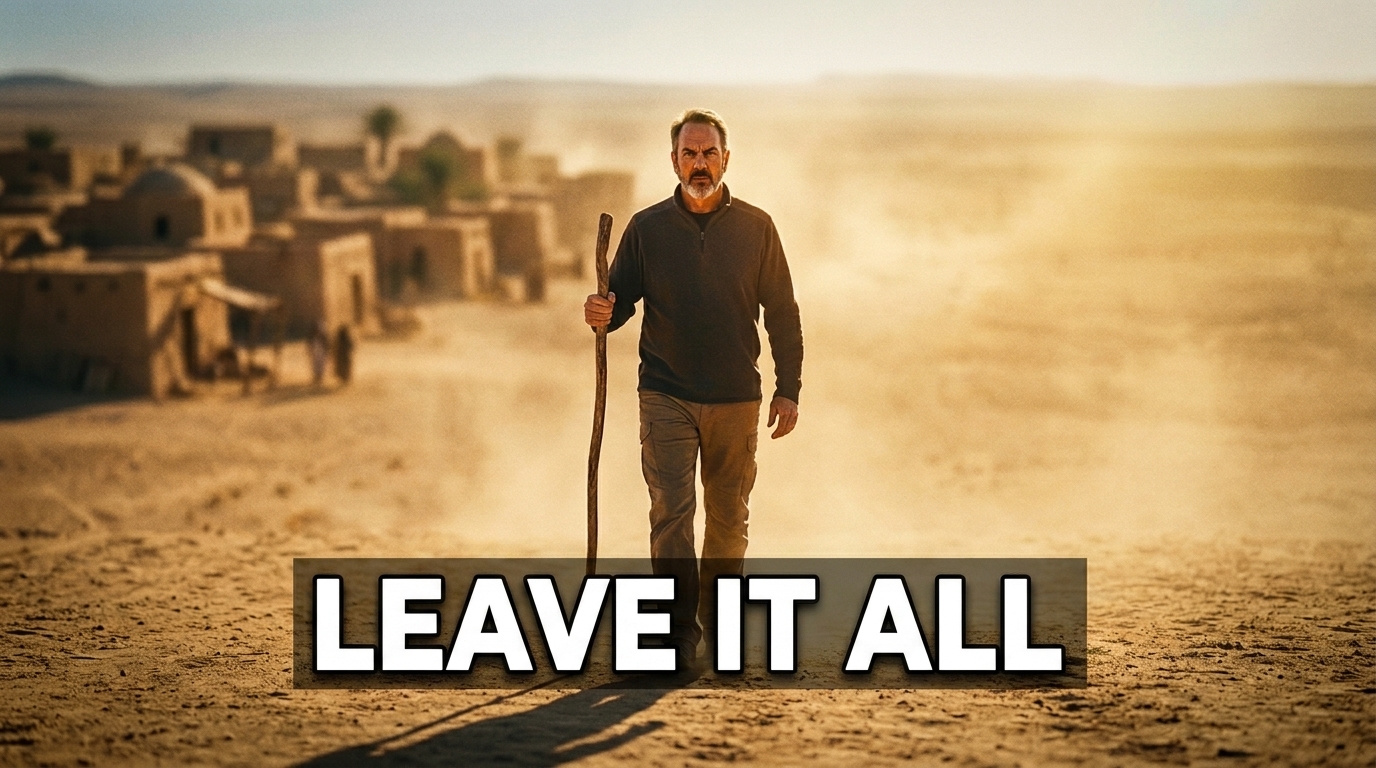
Some are in Ur, hearing God call them out of what’s familiar.
Some are in Egypt, panicking under pressure.
Some are standing before Sodom and Salem, trying to discern who gets to define their future.
Some are under the stars with Abram, wondering whether God’s promise can really survive their weakness, age, regret, delay, or fear.
That’s why these texts don’t feel old. They feel current.
Because the human heart hasn’t changed.
We still try to secure what only God can give.
We still fear scarcity.
We still mistake movement for maturity.
We still think visible structure means lasting peace.
We still wrestle with whether God can be trusted when the promise takes too long.
But these chapters call us back to reality.
Babel falls.
Egypt fails.
Sodom cannot bless you.
Human strategy cannot save you.
But the God of covenant still speaks, still calls, still preserves, still blesses, and still binds Himself to His Word.
That means your life doesn't have to be built on the bricks of self-protection.
It can be built on the promise of God.
A Closing Word
If Days 6 through 10 teach us anything, it is this:
When man builds by pride, everything fractures.
When God binds Himself in covenant, everything begins to realign.
That is the story.
That is the hope.
And that is the choice.
You can keep building your own tower.
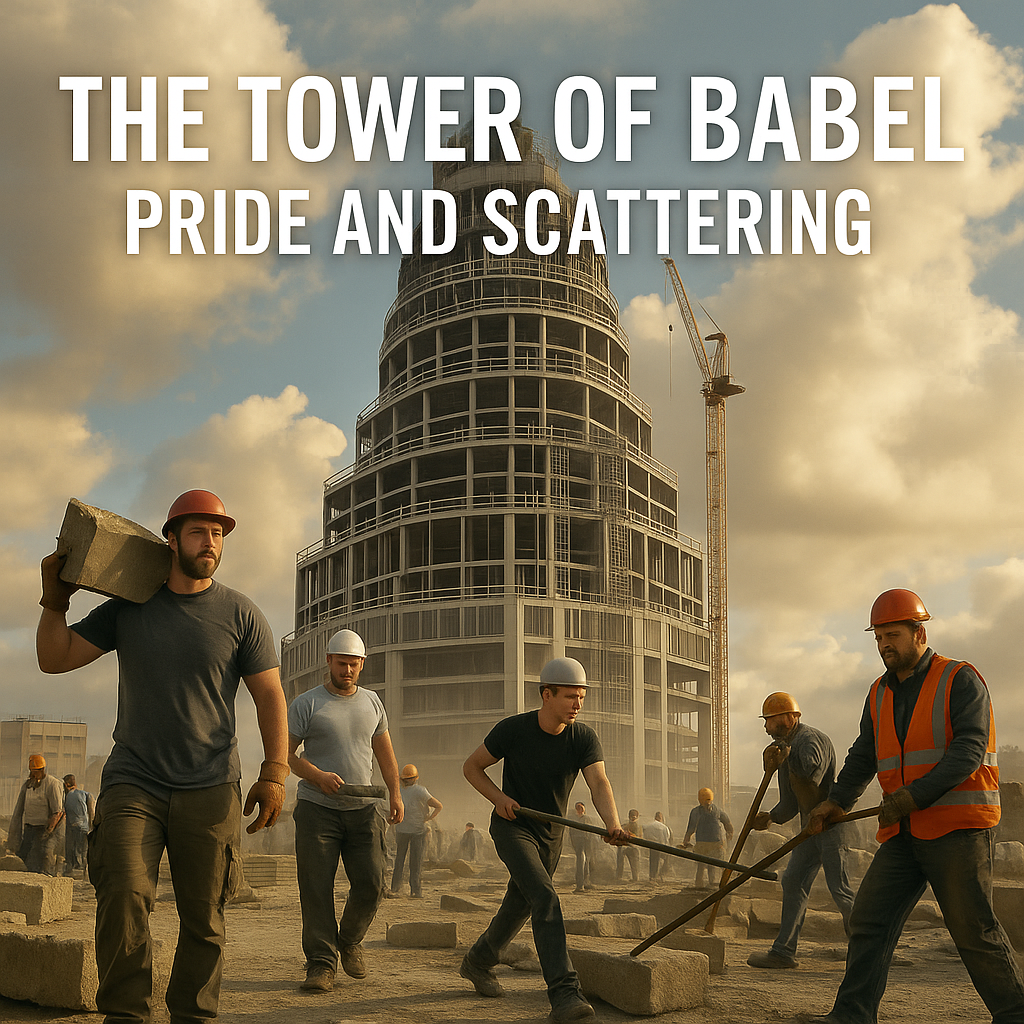
Or you can walk out when God calls.
You can keep running to Egypt when pressure hits.
Or you can come back to covenant trust.
You can take the deal from Sodom.
Or receive the blessing of the Most High.
You can live terrified under the night sky.
Or you can look at the stars and remember that the God who made them is still able to keep His Word.
So ask yourself this:
Where in your life are you still trying to secure by human strength what can only be received by covenant trust?
That’s not just a Bible question.
That’s today’s question.
Footnotes
1. John H. Walton, Genesis, NIV Application Commentary (Grand Rapids: Zondervan, 2001), 391–94.
2. Gordon J. Wenham, Genesis 1–15, Word Biblical Commentary 1 (Dallas: Word, 1987), 235–39.
3. John H. Walton, The Lost World of Genesis One: Ancient Cosmology and the Origins Debate (Downers Grove, IL: IVP Academic, 2009), 114–18.
4. Victor P. Hamilton, The Book of Genesis, Chapters 1–17, New International Commentary on the Old Testament (Grand Rapids: Eerdmans, 1990), 372–78.
5. Nahum M. Sarna, Genesis, JPS Torah Commentary (Philadelphia: Jewish Publication Society, 1989), 89–92.
6. Kenneth A. Mathews, Genesis 11:27–50:26, New American Commentary 1B (Nashville: Broadman & Holman, 2005), 118–27.
7. Hamilton, Genesis, 386–91.
8. Wenham, Genesis 1–15, 314–22.
9. Michael S. Heiser, The Unseen Realm: Recovering the Supernatural Worldview of the Bible (Bellingham, WA: Lexham Press, 2015), 121–24.
10. Sarna, Genesis, 108–12.
11. Ronald E. Clements, Abraham and David: Genesis XV and Its Meaning for Israelite Tradition (London: SCM Press, 1967), 54–59.
12. Genesis 15:6; cf. Hamilton, Genesis, 422–27.
13. K. A. Kitchen and Paul J. N. Lawrence, Treaty, Law and Covenant in the Ancient Near East, Part 1 (Wiesbaden: Harrassowitz, 2012), 49–58.
14. Scott W. Hahn, Kinship by Covenant: A Canonical Approach to the Fulfillment of God’s Saving Promises (New Haven: Yale University Press, 2009), 121–28.
Shalom b’Shem Yeshua.
© 2026 Dr. Shawn M. Greener. All Rights Reserved.
True Word, Faith for LIFE!
The Bible Rebinder I Mentioned on the Podcast
These are the three Bibles Melissa of MooseWorks Bible restored for me, beautifully rebound with a rugged new cover and exceptional attention to detail.

A Bible is more than a book. It is often a treasury of prayers, notes, promises, memories, and the record of a life spent seeking God.

If you have a treasured Bible that deserves to be preserved with excellence, I am honored to recommend Melissa of MooseWorks Bible.

Her work is marked by beautiful craftsmanship, thoughtful detail, and genuine kindness. She does not simply repair Bibles. She helps preserve the story they carry.
Visit MooseWorks Bible today:
Click HERE to contact MooseWorks Bibles
Get Your Bible Rebound! Click HERE!
© 2026 Dr. Shawn M. Greener. All Rights Reserved.
True Word, Faith for LIFE!
STUDY GUIDE
From Babel to Covenant: Days 6 to 10
Primary Bible Readings: Genesis 11:1 to 15:21
Focus Keyphrase: Abraham Covenant
Summary
Days 6 through 10 trace one of the most important theological movements in the Bible. The story begins with Babel, where humanity unites around self-exaltation and attempts to secure identity, glory, and future apart from God. It then shifts to Abram, whom God calls out of that fractured post-Babel world as the beginning of a covenant line through which all the families of the earth will be blessed. The week then shows Abram tested by famine, exposed by fear in Egypt, strengthened through encounter with Melchizedek, and finally anchored by the covenant-cutting ceremony of Genesis 15.
These passages are best read as one story. Babel is not merely an ancient judgment event. It is the exposure of the human pattern of self-salvation. Abram’s call is not merely a private religious awakening. It is God’s missional response to the scattered nations. Egypt is not merely a travel detail. It reveals what fear does to the human heart under pressure. Melchizedek is not a random insertion. He is a theological signpost of priestly and royal realities that reach beyond Levi. Genesis 15 is not simply encouragement for Abram. It is covenant architecture for the whole biblical story.1
In ANE cultural context, the movement from city, tower, and imperial consolidation in Genesis 11 to covenant and land promise in Genesis 12 to 15 carries enormous significance. God is not repairing the world through empire. He is beginning again through covenant fidelity. Human ambition builds upward. God’s redemptive work begins with obedient trust.2
Anchor Line
When man builds by pride, everything fractures. When God binds Himself in covenant, everything begins to realign.
Key Terms
Babel
Associated with Babylon and human prideful centralization. In context, it represents humanity’s attempt to define significance and security apart from God.3
Name
A “name” in the ANE world was tied to identity, legacy, and reputation. Babel seeks to seize a name. God promises to give Abram a great name. The contrast is theological, not merely literary.4
Blessing
In Genesis 12, blessing is not reduced to material increase. It is bound to covenant vocation, divine favor, and the restoration of the nations through Abram’s seed.5
Egypt
A literal place in the narrative, but also a recurring biblical symbol of visible power, security, and human dependence outside surrendered trust.6
Melchizedek
King of Salem and priest of God Most High. His name likely means “king of righteousness,” and his appearance joins kingship, priesthood, blessing, and Jerusalem-like geography in one figure.7
Covenant
A solemn binding relationship, often formalized in the ANE through oath, sign, sacrifice, and legal obligation. Genesis 15 presents covenant in deeply dramatic form.8
Righteousness
In Genesis 15:6, Abram’s faith is counted as righteousness. In covenant context, this points not to abstract moral perfection but to right standing before God grounded in trusting response to His promise.9
Context and Exegesis
15. Babel as Unified Rebellion
Genesis 11 presents human unity in service of defiance, not worship. The people settle in Shinar rather than filling the earth as God had commanded humanity earlier. They build a city and tower, seeking permanence, centralized power, and a great name for themselves. This is not innovation condemned for its own sake. It is organized resistance to creaturely dependence.10
ANE parallels matter here. Mesopotamian cities often used monumental structures, including ziggurats, to signal sacred and political power. In that light, Babel is a counterfeit sacred center, one built from below rather than established by divine initiative. God’s descent in Genesis 11 is deeply ironic. Humanity imagines it is rising high; God must “come down” even to inspect the project.11
The scattering of the nations is both judgment and restraint. By confusing language, God prevents evil from becoming even more consolidated. This also sets the stage for the Table of Nations and for the post-Babel world into which Abram is called.12
16. Abram’s Call as God’s Answer to the Nations
Genesis 12:1 to 3 is one of the Bible’s most foundational covenant texts. God calls Abram to leave land, kin, and father’s house and promises land, descendants, name, blessing, and a global mission. All the families of the earth will be blessed through him.13
This is the direct theological counterpoint to Babel. At Babel, man says, “Let us make a name.” In Abram’s call, God says He will make Abram’s name great. Babel seeks security through human construction. Abram is called into vulnerability and trust. Babel centralizes rebellion. Abram is sent as the vehicle of redemptive blessing.14
This also clarifies election. God’s choosing of Abram is not bare favoritism. It is covenant vocation for universal blessing. The nations scattered under judgment are not abandoned from the story. They remain the horizon of God’s plan.15
17. Egypt and the Exposure of Fear
Genesis 12:10 to 20 shows how quickly promise is tested. Famine enters the land. The very land of promise becomes a place of scarcity. Abram goes to Egypt, and the text records a cascade of fear-driven decisions. He tells Sarai to say she is his sister, fearing for his own life.16
This moment is vital because it destroys simplistic views of faith. Abram is not presented as flawless. He is faithful in trajectory, but still vulnerable in fear. The Bible tells the truth about its central figures. That honesty is part of its theological power.
Egypt in the narrative becomes a place of visible security pursued at spiritual cost. Abram’s strategy preserves him temporarily but endangers Sarai and compromises integrity. Yet God intervenes and preserves the covenant line. That means divine promise does not depend on human perfection, though human fear can still bring painful consequences.17
18. Melchizedek as Priestly and Royal Signpost
Genesis 14 interrupts the Abram narrative with war, rescue, and a remarkable meeting. Melchizedek, king of Salem and priest of God Most High, blesses Abram, and Abram gives him a tithe.18
This figure is brief but loaded with meaning. He joins priesthood and kingship. He is linked to Salem, likely an early form of Jerusalem. He represents the Most High God in a context wider than Abram’s immediate household. In doing so, the text signals that God’s sovereignty and priestly presence are larger than later Israelite institutions alone.19
Abram’s refusal of the king of Sodom’s wealth immediately after receiving Melchizedek’s blessing is also instructive. He will not let a wicked ruler claim credit for his future. He discerns between corrupt political patronage and genuine priestly blessing. That contrast still matters for believers navigating power, success, and compromise today.20
19. Genesis 15 and Covenant-Cutting
Genesis 15 begins with fear and reassurance. Abram still has no son. God invites him to look at the stars and reiterates the promise of offspring. Abram believes, and that trust is reckoned as righteousness.21
The second half of the chapter intensifies into covenant ritual. Animals are cut, and the pieces are arranged. In ANE covenant practice, such rituals symbolized self-maledictory oath. The message was effectively, “May I become like these slain animals if I fail my covenant obligation.”22
The astonishing feature of Genesis 15 is that God alone passes through the pieces, represented by the smoking fire pot and flaming torch. Abram does not. The covenant is therefore grounded ultimately in God’s unilateral fidelity. This does not eliminate human responsibility in later covenant life, but it does establish that the promise rests first on divine commitment.23
This scene also deepens the theology of redemption. God is not merely giving Abram encouragement. He is establishing the covenantal framework through which land, seed, blessing, and future judgment and deliverance will unfold. The chapter also anticipates Israel’s later affliction, exodus, and inheritance. It is personal, national, and cosmic all at once.24
Discussion Questions
20. Why is Babel more than a story about pride in general? What specifically were the people trying to secure for themselves?
21. How does Abram’s calling answer the crisis created by Babel?
22. Where do you see “Egypt” as a recurring temptation in real life, meaning the pull toward visible security over obedient trust?
23. Why does Melchizedek matter so much, even though he appears so briefly?
24. What does it mean that God alone passed through the covenant pieces in Genesis 15?
25. How does Abram’s fear in Genesis 12 help us read him more honestly and profitably?
26. What does Genesis 12 teach us about election and mission?
27. How should Genesis 15 shape the way we think about assurance, promise, and God’s character?
Practical Application
First, reject Babel habits in your own life. Ask where you’re still trying to make a name, secure an identity, or build a future without surrendered dependence on God. Babel is not only ancient history. It is a living temptation.
Second, obey before you can see everything. Abram was called to go, not to master the entire map first. Faithful obedience often begins with clarity about the next step, not the whole journey.
Third, identify your Egypts. Name the places you run when pressure rises. It may be control, money, image management, distraction, anger, or manipulation. Fear tends to reveal where trust still needs to deepen.
Fourth, cultivate discernment about blessing. Not every open door is from God. Abram refused Sodom’s offer because he understood that the source of provision matters as much as provision itself.
Fifth, rest in covenant faithfulness. Genesis 15 reminds us that the deepest ground of hope is not our steadiness, but God’s. That does not make obedience optional. It makes obedience possible, because hope no longer depends on our perfection.
Primary Texts for Reflection
Genesis 11:4, ESV: “Come, let us build ourselves a city and a tower with its top in the heavens, and let us make a name for ourselves, lest we be dispersed over the face of the whole earth.”
Genesis 11:4, CJSB: “Come, let’s build ourselves a city, with a tower that reaches into heaven, so that we can make a name for ourselves and not be scattered all over the earth.”
Genesis 12:2 to 3, ESV: “And I will make of you a great nation, and I will bless you and make your name great, so that you will be a blessing. I will bless those who bless you… and in you all the families of the earth shall be blessed.”
Genesis 12:2 to 3, CJSB: “I will make of you a great nation, I will bless you, and I will make your name great; and you are to be a blessing. I will bless those who bless you… and by you all the families of the earth will be blessed.”
Genesis 15:6, ESV: “And he believed the LORD, and he counted it to him as righteousness.”
Genesis 15:6, CJSB: “He believed in ADONAI, and he credited it to him as righteousness.”
Footnotes
28. Gordon J. Wenham, Genesis 1–15, Word Biblical Commentary 1 (Dallas: Word, 1987), 235–39, 314–31.
29. John H. Walton, Genesis, NIV Application Commentary (Grand Rapids: Zondervan, 2001), 391–94; Kenneth A. Mathews, Genesis 11:27–50:26, New American Commentary 1B (Nashville: Broadman & Holman, 2005), 94–101.
30. Nahum M. Sarna, Genesis, JPS Torah Commentary (Philadelphia: Jewish Publication Society, 1989), 76–81.
31. Victor P. Hamilton, The Book of Genesis, Chapters 1–17, New International Commentary on the Old Testament (Grand Rapids: Eerdmans, 1990), 372–78.
32. Christopher J. H. Wright, The Mission of God: Unlocking the Bible’s Grand Narrative (Downers Grove, IL: IVP Academic, 2006), 199–205.
33. Mathews, Genesis 11:27–50:26, 118–27.
34. Wenham, Genesis 1–15, 314–22.
35. K. A. Kitchen and Paul J. N. Lawrence, Treaty, Law and Covenant in the Ancient Near East, Part 1 (Wiesbaden: Harrassowitz, 2012), 49–58.
36. Hamilton, Genesis, 422–27.
37. Sarna, Genesis, 76–81.
38. John H. Walton, The Lost World of Genesis One: Ancient Cosmology and the Origins Debate (Downers Grove, IL: IVP Academic, 2009), 114–18.
39. Michael S. Heiser, The Unseen Realm: Recovering the Supernatural Worldview of the Bible (Bellingham, WA: Lexham Press, 2015), 113–24.
40. Genesis 12:1–3.
41. Hamilton, Genesis, 372–78.
42. Wright, The Mission of God, 199–205.
43. Mathews, Genesis 11:27–50:26, 118–27.
44. Hamilton, Genesis, 386–91.
45. Genesis 14:18–20.
46. Wenham, Genesis 1–15, 314–22.
47. Sarna, Genesis, 108–12.
48. Genesis 15:1–6.
49. Kitchen and Lawrence, Treaty, Law and Covenant, 49–58.
50. Scott W. Hahn, Kinship by Covenant: A Canonical Approach to the Fulfillment of God’s Saving Promises (New Haven: Yale University Press, 2009), 121–28.
51. Ronald E. Clements, Abraham and David: Genesis XV and Its Meaning for Israelite Tradition (London: SCM Press, 1967), 54–59.
Bibliography
Clements, Ronald E. Abraham and David: Genesis XV and Its Meaning for Israelite Tradition. London: SCM Press, 1967.
Complete Jewish Study Bible. Peabody, MA: Hendrickson Bibles, 2016.
Hamilton, Victor P. The Book of Genesis, Chapters 1–17. New International Commentary on the Old Testament. Grand Rapids: Eerdmans, 1990.
Heiser, Michael S. The Unseen Realm: Recovering the Supernatural Worldview of the Bible. Bellingham, WA: Lexham Press, 2015.
Kitchen, K. A., and Paul J. N. Lawrence. Treaty, Law and Covenant in the Ancient Near East. Part 1. Wiesbaden: Harrassowitz, 2012.
Mathews, Kenneth A. Genesis 11:27–50:26. New American Commentary 1B. Nashville: Broadman & Holman, 2005.
Sarna, Nahum M. Genesis. JPS Torah Commentary. Philadelphia: Jewish Publication Society, 1989.
Walton, John H. Genesis. NIV Application Commentary. Grand Rapids: Zondervan, 2001.
Walton, John H. The Lost World of Genesis One: Ancient Cosmology and the Origins Debate. Downers Grove, IL: IVP Academic, 2009.
Wenham, Gordon J. Genesis 1–15. Word Biblical Commentary 1. Dallas: Word, 1987.
Wright, Christopher J. H. The Mission of God: Unlocking the Bible’s Grand Narrative. Downers Grove, IL: IVP Academic, 2006.
Shalom b’Shem Yeshua.

© 2026 Dr. Shawn M. Greener. All Rights Reserved.
True Word, Faith for LIFE!

Author / Host / Theologian
I am just a beggar who found Bread, helping other hungry beggars to find Him too. My life has certainly been complex and I and my halo has many dents. Heschel said; "Something Sacred hangs in the balance of every moment." I live like it. I teach like it.
As a person who survived a fatal 92 mph vs 51 mph head on crash, after dying and re-animating, and surviving several other brushes with death, my perspective is, let's say, unique. I haven't always been a theologian and I'm living REAL life, just like you... I have my hurts, habits and hangups too.
I've learned a few very important things along the way that I'm confident you'll find useful... butter for the Gluten free Bread so to speak.. Oh, you may chuckle or full on snort along the way, but you might also shed a few tears... Faith for LIFE... That's how it happens.

The Stone Was Moved, But Not for Him

