

 Apple Podcasts
 Spotify
 Are YOUR Choices Destroying YOU?
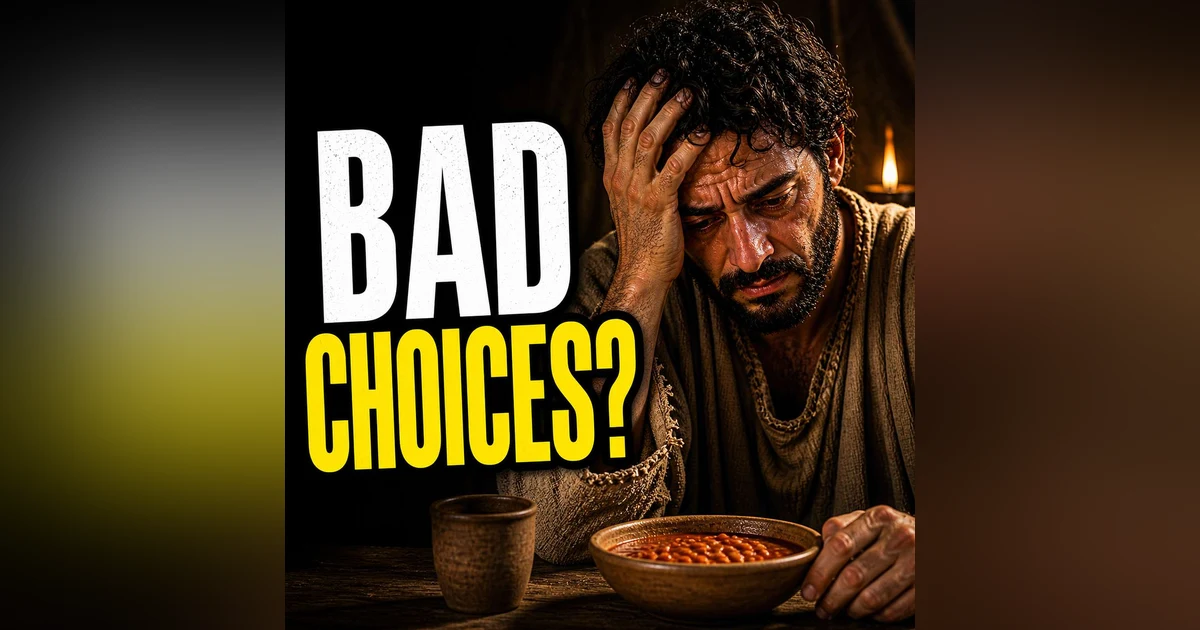
ARE YOU LIVING BY COVENANT OR IMPULSE? What if your problem isn’t that you don’t believe God, but that fear still gets your mouth, appetite still gets your choices, opposition still gets your emotions, and compromise still gets your excuses? In this Sunday Summary and Deepening of Through the Bible in a Year: Walking the Story of God, Dr. Shawn M. Greener walks through Genesis 25:1 to Genesis 26:35 and ties the entire week together with one direct question: are you living by covenant, or are...
Key Takeaways
- Identify if your decisions are driven by impulse (fear, appetite, opposition, compromise) or by covenant faithfulness.
- Recognize how seemingly small, careless choices, like trading sacred things for temporary relief, can bring lasting bitterness into your home.
- Break generational patterns of fear by consciously choosing faith over impulse, just as Isaac learned to navigate his challenges.
- Actively resist opposition and compromise by grounding your emotions and excuses in God's unwavering covenant promises.
- Apply practical biblical wisdom to your real-life decisions in marriage, family, and personal struggles by understanding the Hebraic worldview.
- Trust that God’s covenant faithfulness remains steadfast, offering hope and redemption even when you falter in your choices.
ARE YOU LIVING BY COVENANT OR IMPULSE?
What if your problem isn’t that you don’t believe God, but that fear still gets your mouth, appetite still gets your choices, opposition still gets your emotions, and compromise still gets your excuses? In this Sunday Summary and Deepening of Through the Bible in a Year: Walking the Story of God, Dr. Shawn M. Greener walks through Genesis 25:1 to Genesis 26:35 and ties the entire week together with one direct question: are you living by covenant, or are you living by impulse?
This week brings Abraham’s ending, Isaac’s inheritance, Ishmael remembered, Jacob chosen, Esau exposed, Isaac repeating Abraham’s fear, contested wells, God making room, and two quiet verses where one careless choice brings bitterness into the home.
This is not ancient family drama. This is real life.
Appetite still trades sacred things for temporary relief.
Fear still repeats old family patterns.
Opposition still makes faithful people wonder if God left.
Small compromises still bring large grief into homes.
And God still keeps His covenant.
Through Hebraic worldview, Ancient Near Eastern context, and practical Bible teaching, this episode speaks directly to real people, real families, real marriages, real fears, and real decisions.
Which one hit you hardest this week, appetite, fear, opposition, or compromise?
Special Saturday Episode:
Listen to “Are Biblical Miracles Logical?” under the LIVE tab:
https://www.youtube.com/live/SWNdzcTv...
The Bible Rebinder I Mentioned on the Podcast
This is one of the three Bibles Melissa of MooseWorks Bible restored for me, beautifully rebound with a rugged new cover and exceptional attention to detail.
A Bible is more than a book. It is often a treasury of prayers, notes, promises, memories, and the record of a life spent seeking God.
If you have a treasured Bible that deserves to be preserved with excellence, I am honored to recommend Melissa of MooseWorks Bible.
Her work is marked by beautiful craftsmanship, thoughtful detail, and genuine kindness. She does not simply repair Bibles. She helps preserve the story they carry.
Visit MooseWorks Bible today:
Click HERE to contact MooseWorks Bibles
https://www.etsy.com/shop/MooseworksB...
Music Licensing:
Artist Name: Ben Laver
Song Name: Keeper (Instrumental)
License #: 8866631411
Project Type: Shortfilm
Distribution: Social-Media
#BibleInAYear
#Genesis26
#ChristianDiscipleship
Send Dr. Shawn a Message. Please leave your contact information if you’d like a reply!
Thank you so much for listening! Please subscribe to the True Word, Faith for LIFE! YouTube channel, please click this link. Thank you again!
Shawn
https://www.youtube.com/channel/UCo1sLYz6J4FTUFwR5yjReMw
Frequently Asked Questions
How can my choices be destroying me?
This episode reveals how decisions driven by impulse – fear, appetite, opposition, and compromise – can lead to bitterness and self-destruction, instead of the life-giving path of covenant faithfulness.
What is the difference between living by covenant and impulse?
Living by covenant means anchoring your life in God's promises and faithfulness, while living by impulse means letting immediate desires, fears, or external pressures dictate your choices, often leading to negative consequences.
How do biblical stories like Genesis 25-26 apply to my life today?
Through a Hebraic worldview, this episode unpacks stories of Abraham, Isaac, Jacob, and Esau to show how themes of fear, appetite, opposition, and compromise are relevant to real people, families, and marriages facing similar challenges.
How can I overcome fear and compromise in my decisions?
By understanding God’s enduring covenant, you can consciously choose faith over fear and truth over compromise, preventing small missteps from creating large grief in your life and relationships.
Are your choices secretly ruining your life? What if the problem isn't that you don't believe God? What if the problem is, well, you believe him in theory? But fear still gets your mouth. It's still, you know, appetite still gets your choices, oppositions still get your emotions. Compromises still get your excuses. That's where this week has been taking us. Not into cute little Bible stories, not into ancient family drama we can safely admire from a distance. But into the uncomfortable mirror of Genesis. Abraham dies. Isaac inherits. Ishmael is not forgotten. Jacob is chosen. Esau is exposed. Isaac repeats Abraham's fear. Enemies stop up wells. God makes room. Then two quiet verses show Esau bringing bitterness into the home. It's not random. It's not disconnected. That's the Bible putting its finger on the deepest places people really live. Calling. Appetite. Real places. Family patterns. Can you identify? Fear. Can you identify? Compromise? Can we identify? Marriage? Home? Legacy? And the question hanging over all of it is simple. Will you live by covenant or will you live by impulse? Tough one. Will you live by covenant or will you live by impulse? Because I don't like the questions to be too easy. Will you trust God's word or will you keep negotiating with fear? We're on a roll here. I might as well ask this one. Will you honor what God calls holy or will you call it small because dealing with it, well, would cost you something? In the comments below if you want. This past week, if you if you watched, and even if you didn't, if you can identify, which one of these hit you hardest this past week? Appetite? Fear? Opposition? Or compromise? Welcome. Welcome back to true to true word, faith for life with Dr. Sean. I'm Dr. Sean Jacomi Sean. Welcome to Through the Bible in a year, walking the story of God. This is our Sunday summary and deepening. This week we walked from Genesis 25.1 through 26.35. This is not going to be a race, but we'll get done in a year. But I want you to understand what the Bible actually means and more than anything, what it means in your life. You know, if you listened carefully, the Bible didn't just tell us what happened to Abraham, Isaac, Rebecca, Jacob, and Esau. It showed us how life works. It showed us how God keeps his word across generations. It showed us how families carry blessing and brokenness at the same time. I don't know if someone out there can identify with that. It showed us how appetite can cheapen what is holy. It showed us how fear can repeat what wounded us. It showed us how blessing can attract opposition. And it showed us how small choices can bring large grief into a home. Maybe some of you can identify with that. This episode is brought to you by True Word Faith for Life by Dr. Sean Michael Greener, that would be me. It's available at TruewordfaithforLife.com store. Easy peasy. It's a good book. I encourage you to read it, I really do. We take any profit that we make from that, we put it back into this. Thank you, by the way. I don't I don't have permission to say your names, uh, but the people who there's one in particular that sews a little bit into what we're doing here every month. It's a lot to me. Um and we're very thankful for it. Both Miss Skyleen and I are very thankful for it. We really appreciate it. There's lots of different ways you can give. I am not a 501c3. I'm not a church. Um, I don't have any of that stuff. And so you won't get some little slip in the mail saying, hey, here's your here's your tax write-off. But I appreciate it no matter how you give. You can you can also find a lot of stuff at TruewordfaithforLife.com. It's all free. It's uh the blog underneath the blog in the same, you know, it's under blog, but you the study guide for each episode is underneath where you read the blog post. There's one there already for today. There's one there for yesterday's episode. How many of you, how many of you listened to yesterday's episode, special Saturday episode? I appreciate, I appreciate that. I appreciate all of you doing that. I appreciate all of you that are here. You got other places you could be and you choose to be here. So um I'm gonna welcome the folks in live chat. You are awesome and wonderful as always. I hope the sound is good. Um, and that you know you can hear me and see me, and if you can't see me, that might be beneficial. You know what I mean? I'm not a looker. All right. Let's get started where the week started. Abraham, well, his story. Thank you, Robert, Robbie, thank you so much. So kind. This one gutted me. Guts me every time I read it. I know it's coming. And it still kicks me in the gut. Abraham's story ends, but you know, Genesis, it doesn't rush past that. And it doesn't rush past that, and that matters because modern people rush endings, right? When we read a book, we we rush to the end. There are a lot of through the Bible in a year um programs out there, and it's all about finishing, finishing it, finishing it, finishing it, finishing it. This is what you need to read in order to get to the end in time in a year. It's not my thing. I want you to understand it in its ancient Near Eastern language, culture, and context. So modern people rush endings. We hate silence, we hate, oh, we hate burial, we hate transition, we hate change, we hate the moment when one chapter closes and nobody can pretend it's still open. But Genesis slows down a little bit. Keturah. More sons, gifts, inheritance, Isaac, Ishmael, Burial, Machvala, generations. Why? Well, because God doesn't handle covenant history carelessly. In the ancient Near Eastern world, inheritance wasn't just money, it was identity, it was authority, it was household continuity, it was future, legal standing, family direction. So when Abraham gives all he has to Isaac, while giving gifts to other sons and sending them away from Isaac, that's not petty. That's order. That's covenant clarity. That's Abraham refusing to leave confusion where God already spoke. And we need that word right now. Because we live in a culture that often calls every distinction hatred, every boundary, rejection, every hierarchy, abuse, every moral line intolerance. But Genesis says God can be precise without being cruel. God can choose Isaac without forgetting Ishmael. God can narrow the covenant line and still show mercy behind. And mercy behind beyond God can do things that we just We're in amazement. Nicole said, God takes ordinary to extraordinary, that's for sure. Look, that's not contradiction, by the way. God can narrow the covenant line and still show mercy beyond it. That's not contradiction, that's the character of God. Some of us, we need to hear that in our homes. You are wearing yourself out. You're wearing yourself out because you're trying to make everything equal when God hasn't made everything equal. Every voice doesn't get the same authority in your life, every relationship doesn't get the same access. Every desire doesn't get the same weight, every opportunity doesn't get the same. Yes. Clarity isn't hatred. Boundaries are not cruelty. Order isn't arrogance. Sometimes clarity is mercy because confusion creates damage. Abraham doesn't leave the next generation with a spiritual mess. He orders the house according to the word of God. That's not cold, that's faithful. And some of you are afraid to make a clear decision because somebody might misunderstand you. But you've your fear of being misunderstood can leave your family carrying chaos. Genesis 25 says, Mature faith doesn't blur what God has defined. Breathe in. Because it always makes me sad every time I read. Every time I read it. Because I like Abraham. He was chosen by God for one of the most important things ever. One of the hardest things ever. And he was normal. He did a lot of the same stuff I do. Abraham dies, and then Isaac and Ishmael, they bury him together. And that moment is heavy. The Bible doesn't pretend that family history was simple then, and he doesn't pretend it's simple now. He doesn't pretend Hagar's pain disappeared. Doesn't pretend Sarah's decisions had no consequences. Oh, they did. We saw them. It doesn't pretend Ishmael and Isaac grew up in some emotionally tidy story. They didn't. But there they are. Two sons, one grave, one father, one God who has not lost the thread, and that should speak to real people like you and I. A full life is not a flawless life. Abraham's life wasn't clean from start to finish, I'm here to tell you. He feared, he lied, he obeyed, he waited, he grieved, he interceded, he failed, he trusted him, then he buried his beloved Sarah. And then he was buried. But the Bible said he died full. Look, some of you, you think the failures in the middle, in the middle of your life, maybe in the middle of this story, ruined the whole story. You think they ruined that story, and they think you think that the mistakes, the failures in the middle, have ruined your story. Genesis says no. God says no. Failure in the middle isn't the final sentence when covenant mercy is holding the pen. Come on, somebody. That's not permission to keep sinning. That's hope for people who know they've stumbled and still want to finish under God's hand. Amen. Welcome to you all. I see live chat, you all are treating each other well. By the way, we're streaming to um eight different locations live to include basically all the social medias. And uh, and then if you're listening on playback, welcome if you're listening on Apple Podcasts, Spotify, Amazon Music, iHeartRadio, Pocket Cast, Overcast, Cast Box, and Good Pods. Appreciate it. Give us a review if you would. Go over to true wordfaithforlife.com, give us a review there. Check it out though. There is so much there. I know, because I practically kill myself writing it all. People who know we've stumbled, and we still want to finish under God's hand. Is that you? I know it's me. But then the story moves to Isaac and Rebecca, and that's a real story. Immediately, barrenness appears again. Sarah was barren, now Rebecca is barren. The promised lines still can't be manufactured by human strength. I mean, did that ever occur to you when you were reading through scripture? Did it ever occur to you? Wow. Peyton, that's a great question. Peyton asks, are you a part of a denomination? I am a follower of the way. I was ordained in uh by the Summit Baptist Association and the Southern Baptist Association, but I am not Southern Baptist, um, but I am a follower of the way. And if you go to True Word Faith for Life, I explain all that there in a lot of detail. But I appreciate you asking. It's a good question. I get asked that a lot. People really don't know what box to put me in. Look, the promise line, it can't be manufactured, it can't be pushed through, it can't be rushed by human strength. That's the Bible shouting quietly. God's promise doesn't advance because people are naturally impressive, it advances because God is faithful. Isaac prays, God answers, and the answer hurts. The children struggle in Rebecca's womb, and she cries out, in essence, if this is the answer, why does it feel like this? Have you ever done that? Have you ever been there? That's one of the most honest places in the entire Bible. Man, if you're in this, why does it feel like this? Real people know this. Maybe you prayed for the marriage and now it's harder than you thought. It is almost always harder than you thought. You prayed for the child, and parenting exposed every weakness you could ever imagine yourself having. Parenting is so hard. You prayed for the opportunity, and now the pressure is crushing you. You prayed for healing, and now God is touching places you prefer to keep buried. You prayed for the next season, and now you're asking, Lord, why does the answer hurt so much? God doesn't mock that question. Rebecca inquires of the Lord. That's the pattern. When pain and promise collide, don't just spiral, don't just vent, don't just numb yourself. Inquire of the Lord. Prayer. Right? I taught about prayer. It's another free thing on YouTube. Um, true word faith for life with Dr. Sean channel on YouTube. We're also on Rumble if you prefer Rumble, same title. And we're in there. If you search it, you'll find that we teach about prayer. People are afraid to pray. What if he answers? God answers her with a word that overturns human expectation. Two nations are in your womb. Two peoples will be divided. The older shall serve the younger. And in the ancient Near Eastern world, that statement was explosive, can you imagine? The firstborn was expected to carry privileged status, inheritance, family leadership, and future. Esau came first. Esau looked like the obvious choice. Esau looked like the natural heir. But God says, Jacob. And here's where it gets real. God doesn't ask human custom for permission to fulfill his promise. Just like he doesn't consult science. In Saturday's episode, I it's a rare thing that I do because that was seven episodes, and that was intense. That was uh over an hour and a half. In that episode, I talk about, you know, science. God created science. Not bound. He's not bound by that. He doesn't, he doesn't have to ask human humans, us, me and you. He doesn't have to consult our customs for permission to fulfill his promise. Thank God he doesn't. He doesn't consult our ranking systems. He doesn't bow to our expectations. He doesn't choose by what looks strongest, oldest, loudest, most polished, most impressive. Or most socially obvious. And that should humble you too. I know it humbles me. Because we're addicted to visible logic. We assume the loudest voice is the strongest. We assume the most talented person is the chosen person. We assume the public winner is the covenant bearer. We assume the person who looks most put together, I guess we'll say, is the one God must be using. Genesis. Genesis says, be careful. God sees deeper. God chooses wisely. And his wisdom often humiliates human pride. Then comes Esau and the stew. I prefer to think of it as a red lentil stew. I don't know. Probably had meat in it. Uzander. I gotta get up on some red lentil stew every now and then. Little bit. Imagine there was lamb or something in it. Not a big lamb fan. I can't get past the image. But look that scene is one of the one of the most modern passages in Genesis. Isn't it you ever think about it that way? Esau comes in exhausted? Jocob is Jacob is Cooking. Esau wants the red stew, man. I gotta get that stew. I gotta get up on some of that stew. Jacob says, All right, I'll give you some stew. I only got a little bit left, but I'll give it to you for your birthright. Jacob isn't being noble here. He's grasping, he's opportunistic, he sees weakness and presses advantage. But Esau's exposed to. He says, I'm about to die. About to die of hunger. Of what use is a birthright to me? Now, kind of laugh, but we don't know how long he was really out there. We don't know what he went through. It was a wild world, right? These are some of the first people. Stuff was wild. But look, this is appetite talking. Appetite always exaggerates the urgency. They say never go to the grocery hungry. Never go somewhere where there are people of the opposite sex, and you're lonely, or your self-esteem is a little low. Appetite says, I need this now. Appetite says I can't wait. Appetite says this feeling is more urgent than obedience. Appetite says the holy thing can be handled later. Appetite says, just feed me and feed me now. And then the Bible gives its verdict. Esau despised his birthright. He didn't misplace it. Not misunderstood, despised. Can you imagine? He treated something sacred as expendable. And as Heschel said, something sacred hangs in the balance of every moment. This isn't ancient trivia. That's today. People are trading marriages for moments. Integrity for advancement, purity for attention, prayer for scrolling, truth for applause, children's formation for convenience. Bible faithfulness for cultural approval. Covenant for craving. Then we act shocked when the trade costs more than we thought. Esau didn't just sell a birthright. He revealed a value system. It was a jacked-up value system, nonetheless. But look, don't let Jacob escape here. Don't give him too much space. Jacob is chosen, but he's not mature. And that's important. God's calling doesn't mean Jacob's character is finished. Jacob is still grasping. Remember, he was grasping at the heel in the womb. He's still controlling, he's still calculating, he's still trying to seize what God already said. And that's real too. Some of us aren't Esau in this season. We're Jacob. We're not throwing away the holy thing because we don't value it. We're grasping at the promise thing because we're afraid God won't give it in time. Control can be just as fleshly as appetite impulse says, feed me now. Control says I'll secure it myself. I'll handle this all myself. Don't need God. And both refuse to rest under God's word. So Genesis holds up two mirrors. Think about it. Esau asks, what are you trading because you're hungry? Jacob asks, What are you grasping because you're afraid? And most of us, most of us can find ourselves in both. Take a deep breath on that one. Let that sink in. Then we come to Isaac and Jurar. Sounds like a roar. Genesis 26 opens with famine. In the ancient Near Eastern world, where all of this happened, famine was an inconvenience. It wasn't. It was threat. Famine meant empty fields, weak animals, crying children, migration pressure, household vulnerability, fear in the doorway. God tells Isaac not to go down to Egypt. He says, stay. Stay, Isaac. And that word matters. Egypt looked secure. Egypt had the Nile. They had grain. They had systems. Egypt looked like the logical and reasonable answer, but visible security isn't always as covenant. It's not always covenant obedience. That's a word for our people right now. Everything that lowers your anxiety isn't necessarily where God sent you. We run from anxiousness because we're terrified of anxious, just like we run from physical pain. Sometimes we run from emotional pain. Everything that looks stable isn't necessarily faithful. Everything that feels practical isn't automatically obedient. Sometimes God's word, sometimes God's word isn't move. Sometimes God's word is stay. Stay where I placed you, stay where I'm forming you, stay where fear tells you to run. Stay until trust becomes, until your trust becomes deeper than your panic. And God speaks to Isaac personally. That's mercy. That's mercy. Isaac can't live forever on Abraham's encounter, can't. He has to know the God of Abraham for himself. It's one of the one of the great Sunday deepening points for this week. Spiritual heritage is a gift, it's not a substitute for personal obedience. You can be raised around Bible truth and still have to obey. You can absolutely admire your parents' faith and still have to pray. No one can pray on your behalf unless they're praying on your behalf, but they cannot pray what you should be praying. And lots of people hate praying. That's why I did that. I think I've done two or three episodes all totaled on it. I've done thousands of episodes, but yeah, on prayer. Look, you can inherit a Bible and still have to open it. This is a beautiful Bible. It's beautiful. Mooseworks Bible on Etsy, Melissa at Mooseworks Bible on Etsy did this for me, and that's stunning. It probably doesn't render. You can see it on the true word, faith for life, but you gotta open it, man. It's great to have a beautiful cover, but you gotta open it. If you don't open it, it does nothing. If you don't understand it. It does nothing. You've Look. I get it. It's a microwave society, everything we want to be easy. Chat GPT, we want everything to be super easy. We want it fast, we don't want to have to do it. We just want to have to tell me the answer right now. Don't make me research anything. You can sit under strong teaching and still have to tell the truth when fear gets close. And Isaac, he has the promise, he has the lineage, he has the blessing, and Isaac still repeats Abraham's lie. He says Rebecca is his sister. Remember when Abraham did that? He says Rebecca is his sister. Why? Because fear got into his mouth. That's painfully human. Have you ever repeated something you hated? You're like, what in the world? That's coming out of my mouth. I can't believe it. Have you ever heard your look, I'm never gonna, I'm never gonna talk like my father talked. I'm never gonna talk like my father talked to anybody because you know what? He talked all the time with anger, uncontrolled anger, out of his mouth. And I ain't gonna do it. And all of a sudden, something hits your buttons. And there it comes. Comes right out of your mouth. Come on, be honest. Have you ever felt your mother's fear rise in your chest? Have you ever watched yourself withdraw like the person who wounded you? Have you ever said, I'll never do that? I will never do that. And then under pressure, there it was. Genesis doesn't give fake heroes. Look, man. Look, lady. Genesis does not give fake heroes. It tells the truth. Isaac obeys God by staying in the land, but he he still responds wrongly in character. That's a serious warning. You can be in the right location and still have the wrong reaction. You can be in ministry and still be driven by fear. You can be in church and still be hiding. You can be in the marriage and still be manipulating. You can be in the land of promise and still talk like Egypt owns your heart. Fear can make covenant people lie. Isaac's lie puts Rebecca at great risk. That's what fear does. Fear says, I'm protecting myself, but somebody else has to carry the danger. Your spouse carries it, your children carry it, your church carries it, your employees carry it, your friends carry it. Your fear-driven survival plan becomes somebody else's wound. Then Abimelech sees the truth and confronts Isaac. A pagan king again rebukes the covenant man. That should sober us. It should, it should sober us. Sometimes people outside the faith can still smell our inconsistency, our fakeness. Oh more Christian soldiers. Mm-hmm. Sometimes the world isn't rejecting our Bible. Sometimes it's reacting and it's rejecting our hypocrisies. Look, it's not always. It's not always. But sometimes. And if we're serious people, we should be humble enough to hear that rebuke. Abimelech gives the public protection Isaac tried to secure through deception. Do you see the irony there? God didn't need Isaac's lie. God didn't need his panic. God didn't need his compromise. God didn't need him to endanger Rebekah to preserve the promise. God doesn't need your manipulation to keep his covenant. God doesn't need your lie to protect your future. God doesn't need your secret compromise to guard your calling. God is faithful enough without your fear helping him. That's not cute, that's deliverance. Then the story moves from fear to opposition. Isaac sows in famine and reaps a hundredfold. That's divine favor. That's God making obedience fruitful in a place that shouldn't be fruitful. But then the Philistines, they envy him. The blessing becomes visible and resistance rises, and that's real life. Some people were fine with you when you were stuck, when you were addicted, when you were fearful, when you were lacking, when you were easily manipulated. They were fine with you then. They were fine with you when you were heavy. But then you started losing weight, and then family and friends go, oh, you look really skinny. I'm gonna give you an opportunity to do that in just a few minutes, but then when you were when you were a person that didn't have your faith, I'm not saying perfect, I'm saying your faith. Place your faith in Christ. We're not saying you're perfect, we're just forgiven. The grace and mercy bought for us through the cross of Jesus Christ, through the empty grave, through the risen Christ. Look, those people, those people, they were fine with you when you were stuck in whatever you were stuck in. They were fine with you when you were wounded. A wounded person is easily manipulated. They were fine with you when you were small. They were fine with you when you needed their approval. But when obedience started producing fruit, something shifted. And now your growth feels like a threat. Your healing feels like an accusation. Your dis your your discipline feels like judgment. Well, I don't need you judging me. Maybe you maybe you and your spouse, you know, trying to lose some weight. You go to a family party, celebrating whatever, and you bring salad or or fruit dish or something helpful. You think, oh, what do you think you're better than us? Well, that's not food. Or you say, hey, I can't go out to the bar with you. I can't go partying. Why? Because I'm following Jesus. I place my faith in him. And I'm trying to clean my life up and let God clean my life up. Oh, well, you think you're better than us? Your discipline feels like judgment. Your peace irritates their chaos, your fruitfulness exposes their barrenness. Genesis is, oh, Genesis says, Don't be surprised. Blessing can attract opposition. Obedience can be fruitful and be contested at the same time. Breathe that in. The Philistines stop up Abraham's wells. Oof. That detail is massive because in that world, water wells were survival. Water meant animals could live, families could stay in that area, crops could grow, servants could remain, a household could have a future in the land. But when you stopped up a well, that wasn't childish vandalism. It was an attack on Isaac's ability to remain. God opens water. Envy throws dirt into it. Oh man. Anybody? God opens water and envy throws dirt in it. That's what envy still does. You ever catch yourself envying someone that wants to bury what God opened, but Isaac reopens the wells. God he look, he doesn't invent some new faith. He recovers what hostility buried. That's a powerful word for this generation. Some wells need to be reopened. I'll tell you a well that I'm trying to open for you, free of charge, Bible literacy, prayer, holiness, not perfectness. Listen, listen, don't get it twisted. Don't get it twisted. We aim for that. That's our goal. But I'm here to tell you we need to be humble, or God will humble us. He whispers to us in our pleasure and he shouts to us in our pain. Bible literacy, listen, Bible literacy, it's devastating how few people have any Bible literacy at all. They just don't try. They go, that's not my thing. I mean, I have faith, but it's just not my thing. Prayer. Prayer's hard. It's not easy. You're confronting the living God, the creator. You know, it's you know, that's a lot, and it should be. Family worship. Oh, come on. Family worship. It's easy. It's not hard. People make it out to be some hard thing. It's not. Start with just praying for a few minutes with your family. Then crack open the Bible and say, hey, here's three verses that really hit me this week. What do you mean hit you this week? Well, I was reading. I you read the Bible? Yeah. I read every day. You see me over there at the kitchen table? How about this one? You're gonna hate it. I know you're gonna hate it. Marriage seriousness. Marriage is serious. Courage. Courage. Truth telling, the fear of the Lord, covenant faithfulness. These wells have been filled with dirt by compromise, distraction, laziness, worldliness, and shallow religion. Sometimes the holiest thing you can do isn't flashy. It's digging dirt out of old wells. It's slow, it's sweaty. Don't nobody like to be down in the well digging. And it's certainly not glamorous, but it gives life. But Isaac digs, and they quarrel. The word in Hebrew there, ancient Near Eastern languages, Isek. Isek means contention. He digs again, they fight again. Sidna, which means hostility. Then he moves and digs again. Rehoboth means room. The Lord has made room for us. That rhythm matters. It doesn't matter. You might want to write this down. Dig. Conflict. Move. Dig. Conflict. Move. Dig. Room. Most of us want Rehoboth without a second signa. We want open space without contested ground. We want fruit without friction. We want obedience without applause. But Genesis tells the truth. Sometimes God makes room after you've walked through places that tried to close you in. The mature believer learns to name the conflict honestly without living there permanently. I wrote a grief ebook in a three to four-day workshop for Gold Star families to help them deal with their grief. Living through grief on purpose. Yay, though I walk through the valley of the shadow of death. Walk through. Walk through. And look, sometimes you got to name it. You got to name it. In fact, I would say almost all the time, you got to name the conflict. And you got to name it honestly. You can't butter it up. But you can't live there permanently. That cannot be your thing. Your hurt, your habit, your hang up, what someone did to you can't be your thing. It can't define you. You you have got to rise above and through. Look, in this scripture, this was contention, it was hostility. But this isn't my address. That's what he said. This isn't my address. I don't live up and under all that. That's wisdom. You don't have to make every conflict your final battlefield. Some fights are assignments, some fights are distractions, some wells are worth contending for, and some wells are worth leaving behind because God is leaving, He's He's He's leading you to room. Faith doesn't mean every well opens easily either. Faith means you don't stop obeying when the ground gets hard. This one gets me. Then Isaac builds an altar. He pitches his tent. His servants dig a well. Worship. Dwelling. Work. That order in and of itself is a sermon. We usually reverse it. We dig first. We panic second. We worship last. Isaac shows us the better order. Build the altar first. Let God's presence. Border your home, then dig from worship, not panic. That's for entrepreneurs, that's for parents, that's for pastors, that's for marriages, that's for anyone rebuilding after a conflict in their life. Don't chase the well before you build the altar. Provision matters, but presence matters more. If you have room without God's presence, you're still empty. If you have success without God's presence, you're still thirsty. But if God is with you, contested ground can become holy ground. Well, how did the weekend? The week ended with two verses. Two. Genesis 26, 34, and 35. Esau marries two Hittite women. The Bible says they made life bitter for Isaac and Rebekah. They're just two verses. No thunder, no angel, no battle, no sermon from heaven, just a choice. And bitterness enters the house. That may be the most frightening kind of warning because it's just so ordinary. He's not a child, by the way. He's not making some teenage mistake. He's a grown man making covenantally careless decisions. In the ancient Near Eastern world, marriage wasn't just romance, folks. It joined household, it joined loyalties, futures, worship, assumptions. It shaped children. It shaped inheritance. It shaped the atmosphere of the home. So Esau's choice wasn't merely personal, it was covenantal. By the way, it wasn't a racial choice. People try to make that out today. Oh, it's racism, it was all the way back in the Bible. No, it had nothing to do with that. You see, the modern tether here. Esau's choice wasn't merely personal, it was covenantal. That's the modern tether. We keep pretending private choices stay private. They don't. A private appetite becomes a family's grief. A private compromise can become public consequence. A private alignment can become a generational wound, and a private yes can bring bitterness to the table. This teaching isn't it's not teaching arrogance. This passage, it's not teaching arrogance. It's not teaching ethnic superiority either. It's not saying despise people from other backgrounds. The issue is allegiance. Who is shaping your house? Who is disciplining and discipling the heart? What gods, what values, what loyalties, what assumptions are being brought into the future? Esau had already treated the birthright like a bowl of stew, like it was worth more. I mean, it was probably good stew, but he was probably very hungry, but your birthright? Now he treats covenant alignment like it's optional. That's not an isolated mistake. That's a pattern. One decision may surprise you, a pattern exposes you. And this is where the Bible becomes uncomfortably direct. Most people don't destroy their lives in one dramatic explosion. Most people don't. They drift. One compromise at a time, one relationship at a time, one ignored conviction at a time, one tolerated habit at a time, one little sentence at a time. It's not a big deal. It's not a big deal. That sentence has wrecked homes. It's not a big deal. That sentence has numbed consequences. It's not a big deal. That sentence has discipled children into utter confusion. It's not a big deal. That sentence has brought bitterness into houses that once had peace. So let's stop. Let's stop beating around the bush. We gotta stop doing that. What are you calling small that God is calling serious? Serious question. What are you allowing into your home because confrontation feels uncomfortable? Maybe it's a movie if you have children in the home or grandchildren in the home, they live with you. Maybe it's that movie they want to see, maybe it's that video game they want to participate in, and you're like, I don't want to cause friction, but you know it's not right. That's an example, that's one of. There's a bajillion of them. We allow stuff into our home because confronting it feels uncomfortable. What are you tolerating because what are you tolerating in your heart, let's say? Because nobody can see it. Yet what relationship is pulling you away from covenant faithfulness while you keep calling it love? What habit is training your body to disobey while your mouth still says believe? What influence is reshaping your children? How you pretend it's harmless? What bitterness are you letting grow because repentance would require humility? Genesis 25 and 26 aren't asking us to admire old stories. They're asking us to choose covenant or appetite, truth or fear, alter or panic, wells or bitterness, obedience or drift. Now, let's pull the whole week together. As you can see, if you're the first-time listener, you should like, subscribe, click on the little bell for all notifications because we're here every Monday through Friday, 7 a.m. Eastern Standard Time. You can listen on playback. But there's something special about being involved in the live. It's powerful. One of the ladies listening now, it's four in the morning for her, and she gets up. She has stuff to do. She has a busy life, but she does it. I'm not saying that's for everybody, but I'm saying don't say you can't do it. So we're going to pull together this whole week. And it was intense. Abraham's ending says God is precise and merciful. Jacob and Esau say God's promise doesn't bow to custom, and appetite can despise what's holy. Isaac and Gerard says inherited blessing doesn't replace personal obedience. Isaac's Wells say opposition doesn't mean abandonment. I didn't see you there. Love you. Small choices can carry generational grief. How many out there? You made a choice to marry someone you never should have married. You knew you shouldn't marry them. And maybe you're the person that the person who had it all together married. And you made everything a mess. That's one message. That's one message. I could have preached all week long on that. God keeps his covenant. But covenant people still have to choose faithfulness in the ordinary places, not just the dramatic places, not just the altar call, not just in public, in hunger and in fear, in family history, in conflict, in marriage, in alignment, in what you tolerate and what you refuse, in what you call holy and in what you call harmless. That's where real discipleship becomes real. And all of it points to Yeshua. Abraham dies full, but Yeshua rises victorious. Jacob grasps, but Yeshua receives the kingdom in perfect obedience. Esau despises the birthright, but Yeshua, but Yeshua treasures the Father's will. Isaac lies to protect himself, but Yeshua tells the truth when the truth costs him everything. Isaac endangers his bride through fear, but Yeshua gives himself to save his bride. Isaac digs wells, but Yeshua gives living water. Esau brings bitterness into the house, but Yeshua drinks the bitter cup to bring sons and daughters home. And that's where Genesis is going, not to moral self-improvement, not to family management tips, not to vague spirituality, to the faithful son, the faithful son, to the promised seed, to the king who obeys where we fail and calls us out of fear. Appetite compromise and death itself into covenant life. So here's the Sunday word. Stop treating your appetite like it's harmless. Stop calling fear wisdom. Stop letting old patterns run your life. Stop assuming opposition means God abandon you. Stop calling compromises small when they're already shaping your house. Stop asking God to bless the future you're actively undermining with your choices. I don't know if you heard nothing else. If you heard nothing else, hear this with compassion. Not condemnation. God exposes to redeem. God warns to rescue. God confronts to heal. God names the pattern so that the pattern doesn't have to own you. You are not trapped. You're not trapped in Esau's appetite. You're not trapped in Jacob's grasping. You're not trapped in Isaac's fear. You're not trapped at ASIC. You're not trapped at Sidna. You're not doomed to bring bitterness home. But you do have to stop pretending. You do have to tell the truth. And some folks listening, I know. I know your story. I'm in your story. When you told the truth, when you stood your ground, terrible things happened. And they affected you. I don't know, maybe. You're gonna have to put it in comments if you don't want. But this is something important. It's a question to ask yourself. What's one small choice you need to correct before it becomes a large grief? God whispers to us in our pleasures and shouts to us in our pain. I have for you this Sunday, as I do every day, a challenge and a choice. So here's the question. Where has God been precise? But you've been offended because He didn't arrange things your way? Where has appetite been louder than holiness? Where has fear been writing your script? Where have you confused opposition with abandonment? Where have you stopped digging because someone threw dirt on what God opened? Where have you called compromise small because obedience would be uncomfortable? And here, here's the choice. Here's the choice. You can live. You can. You can live by impulse. You can. You can live by fear, you live by resentment, you can live by drift. Or you can live by covenant. You can keep feeding what weakens you, or you can starve what's been mastering you. You can keep protecting yourself with lies, or you can trust God enough to tell the truth. You can keep arguing at every contested well, or you can let God lead you to Rehobath. You can keep saying it's not a big deal, or you can ask God what that small thing is becoming. Choose covenant, choose truth, choose worship, choose alignment, choose obedience while the decision is still small. Because appetite has a cost. Fear has a cost. Opposition has a test. Compromise has a harvest. But God still keeps his word. God still makes room. God still gives living water. God still redeems real people and real families with real scars. Some of you know you you need to pray this prayer. You need to place your faith in Jesus Christ, Yeshua Hamashiach. You know you need to do it. You knew you've known it for a long time, but you keep putting it off. Let tonight be the night. Prayer isn't asking for an easy journey, it's asking for a strong back. I want you to pray this with me. Father, I know I've done wrong things. And I need your mercy. I believe Jesus died for me, was buried, and rose again. Today I turn from my sin and I place my trust in him as my Lord and my King. Forgive me, make me new, and fill me with your spirit. From this day forward, I want to follow you in Jesus' name. Amen. Oh man, awesome. If you prayed that prayer today, I want you to hear me clearly. You aren't alone. Reach out to me through true wordfaithforlife.com slash contact. I mean it. I will personally help you. As soon as I get the message, I will personally help you take your next steps and walk with you in the way. Don't trade your birthright for stew. Don't let fear borrow your mouth. Don't stop digging because the first well was contested. Don't bring bitterness home and call it freedom. Build the altar. Pitch the tent. Dig the well. Trust the God who keeps the thread while your hands are shaking. If this message touched your heart, share it. Why not? Why wouldn't you? Why wouldn't you? It's free. Seriously, it's free. Why wouldn't you do it? I don't understand it. Somebody out there needs truth and hope today. Post the link. Hey, this touched my heart. Link. That's it. Put it on your social media. Tomorrow morning, we're getting back after it. 7 a.m. And when I say we're gonna get after it, we're gonna get after it. I'm eager to teach day 25. By the way, for more teachings, go to true wordfaithforlife.com. It's free. Till tomorrow morning at 7 a.m. Eastern live. Shalom Bisham Yeshua. Shalom Ilaqum.